Published on: 15 November 2019
Last Updated on: 08 August 2023
It's easy to find people who will swear that getting a massive ROI from a trade show booth is nearly impossible. That is not the case, by any means. Most likely, those people failed to use some of the tips in this article. Companies that have, however, have experienced massive success with their trade show booth. Here's what they did.
1. Putting Branding First
For people who have never heard of your organization before, your booth is their first impression of your brand. If you can make it a positive one, that will result in them being more eager to do business with you. That's why it's crucial to make sure that your booth reflects the unique features of your brand.
Incorporating creativity into your branding can help, as it allows you to stand apart from other booths, encouraging more people to take an interest.
2. Having a Friendly Design
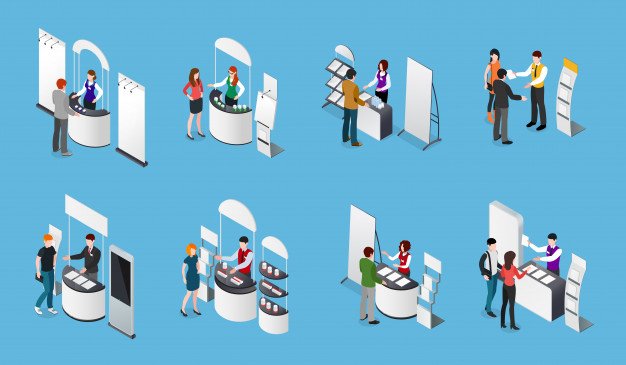
It's almost certain that there will be other booths around, and attendees might not have enough time to have an in-depth interaction with all of them. That's why having a design that not only showcases your brand but invites people is important. Brands that have worked with ExpoMarketing to create high-performing booths have been presented with unmatched designs.
It also helps to have staff surrounding the booth, so that people have someone to talk to and interact with when they decide to explore it. Attendees can also be treated to interactive such as touchscreens, through which they can learn more about your business while having fun.
3. Capitalizing on Word-of-Mouth Marketing
A successful trade show booth generates buzz long after the trade show itself. To do this, you need to have something that ensures that people keep talking about your business and the way you presented it. One of the most successful ways to achieve that is to hand out things like stickers and wearables. StickerYou has wide options of premium custom stickers for all your business printing and branding needs.
At the end of the event, you can give out prizes to people who wear your merch. It's important to be strategic about the prizes and to make them things that people are likely to display in full view of others. That way, you'll keep generating conversations about your brand and winning over new customers and clients.
4. Networking
Meeting attendees before the trade show can have a profound effect on how your booth performs. You'll also be able to gather contact information from people so you can stay in touch and have a chance to convert them later on. When meeting people before a booth, you can
On the day of the trade show, people will be more likely to visit your booth because they'll feel a sense of familiarity with it, unlike others that will seem completely alien. When meeting them, however, it's important to focus less on talking about your business and what it does. Rather, you can try to gather as much information about them and what they do.
When people do visit your booth, you'll be able to start a conversation based on how you're equipped to help them with the problems they mentioned to you earlier.
Combining all these tips will ensure that you have a booth that will have a huge positive ROI, resulting in more clients and customers. The sooner you start thinking about how you're goese tips, the more success you're likely to have with your trade show booth.
Read Also:
Content Rally wrapped around an online publication where you can publish your own intellectuals. It is a publishing platform designed to make great stories by content creators. This is your era, your place to be online. So come forward share your views, thoughts and ideas via Content Rally.
The Internet is indispensable for any business in the digital world.
Given that customers are increasingly using the internet to locate products and services, companies should be present online. Goods and services searching, procuring, and marketing have been revolutionized by the digital age. Subsequently, an increasing number of companies are moving into the digital world and understanding that digital marketing has become important not only in Singapore but around the globe.
Your position in this digital transformation is that it puts you as a business owner/manager in the middle. You can see that digital marketing is a crucial factor in expanding your company but if you have no clue how to handle this intricate environment, it may turn out to be a problem. Here the right digital marketing agency in Singapore is everything.
Learn how to select the best digital marketing agency for your business and unlock the potential of the internet in this article.
The Competitive Landscape of Digital Marketing in Singapore
The influence of the Internet on our everyday lives is such that more and more businesses tend to pay attention to the importance of creating and using effective e-marketing tools. With such changes taking place speedily in Singapore companies are seeking to not only survive but also flourish by adopting digital marketing systems. This part looks at the competitive edge of digital marketing in Singapore and why staying ahead matters for businesses in this dynamic setup.
Singapore is renowned for its strong economy and cutting-edge technologies. Such an environment creates a very competitive marketplace. It is also worth noting that companies from different sectors are competing for the attention as well as the loyalty of consumers, and this competition is much more vigorous in the digital environment. The transition from the analog world to the digital world has completely changed how businesses can attract, involve, and transform their clients. However, it means simply being online is not enough for businesses to survive as they need to actively separate themselves from the crowd.
This differentiation is now being based upon digital marketing, which offers flexible instruments and information-driven perceptions. In effect, it enables companies to come up with tailor-made strategies that are relevant to each of their target audiences, giving them an edge in the market. Personalization is a very important power to reckon with in the era of consumers whereby the users demand tailor-made experiences.
Another thing that gives companies an advantage is the agility of digital marketing. The digital landscape is ever-changing, comprising various new technologies, trends, and platforms. In order to stay ahead in the face of these changes it is a question of making use of them to outperform competition in terms of customer experience too.
The Power of Digital Marketing in SG
For companies of all sizes in Singapore, digital marketing is synonymous with success. As the online consumer number rises, the online market cannot be skipped. Here are a few reasons why digital marketing is vital:
Wider Reach
The internet knows no borders. Using digital marketing, you can reach customers around the world, allowing you to increase your customer base beyond physical borders.
Cost-Effective
Digital marketing is often cheaper than traditional marketing. It enables you to make your budget allocation efficient and select a specific audience to target.
Data-Driven Insights
The access to valuable data and analytics in digital marketing is critical. Using such data helps you make effective marketing strategies that translate to better results and high return on investment.
Competitive Edge
With a market like Singapore, digital marketing provides a competitive edge over others through tailored strategies and approaches. This makes you unique and enables you to connect with your audience while building your brand among the leaders in the market.
Related: How Can Digital Marketing Increase Your Business?
Discovering the Right Digital Marketing Agency
Now that we understand the significance of digital marketing, let's explore how you can discover the best digital marketing agency in Singapore for your business:
1. Define Your Goals
Before you start your search, it's crucial to have clear objectives. Determine what you want to achieve through digital marketing – whether it's increasing website traffic, generating leads, or boosting sales.
2. Assess Their Expertise
Look for a digital marketing agency with a proven track record. Check their portfolio, client testimonials, and case studies. An agency's past successes can give you insights into its capabilities.
3. Range of Services
Different agencies offer varying services. Ensure that the agency you choose can cater to your specific needs. Services can include SEO, PPC advertising, social media management, content marketing, and more.
4. Customised Strategies
Your business is one of a kind and so digital marketing should follow suit. To work with the agency, it should be ready to build customized solutions specific to your objectives and target customers.
5. Transparency
In the digital world, transparency is all that matters. Be sure that this organisation will be transparent about its activities and will make regular reports. It will also keep dialogue with you during the entire campaign.
6. Budget Considerations
Though one has to consider cost, one must strike a balance between the budget and the best of services. Quality is usually preferred over quantity in digital marketing.
7. Stay Updated
Change is ever-evolving in the digital landscape. Keep the agency abreast of the current trends and technologies in digital marketing.
8. Communication
Partnerships require effective communication. Make sure that you can easily contact the agency, and that they respond quickly to your questions.
Conclusion
It is not a luxury but a necessity to tap into the power of digital marketing in Singapore – a digital world that is experiencing a booming online marketplace. Picking the right digital marketing agency that helps you unlock the potential of the digital landscape could be a game changer.
To find the best agency in Singapore for digital marketing of your business, you must first define what you want to achieve, evaluate which agency is the proper one in terms of their experience and then take into account factors such as transparency, communication and others to choose which will Do not miss this chance to leave a trace in the virtual space—start your way now! Contact us for more info.
Read Also:
Partner For Success: 7 Tips For Choosing The Best Digital Marketing Agency For Your Ecommerce SEO
Understanding The Role Of SEO In B2B Digital Marketing: Optimising Your Website For Success
What is a Digital Marketing Agency and What Can It Do For You?
Despite being one of Southeast Asia's smallest countries, Singapore has a highly advanced economy.
The country is a consistent global business hub, with many multinational companies setting up headquarters there. One primary reason is its strong economy, but its strategic location also plays a key role.
This location allows for a unique cultural mix of Asian, European, and American influences. This advantage makes Singapore a top international business community.
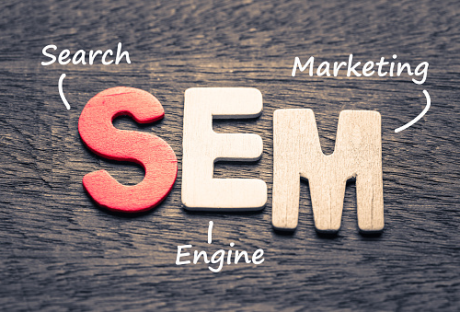
Over the years, competition has intensified, making marketing more critical than ever. Working with an SEM agency in Singapore is now standard practice.
Many businesses are trying to gain an edge over their competitors. Creating strong Search Engine Marketing campaigns is vital to your company’s success.
However, doing this is easier said than done. If you're new to SEM techniques, here are a few tips to help your small business stand out.
Tips on Doing Search Engine Marketing for Your Small Business
Here are some basic tips to begin your SEM journey, whether for a new business or job.
Choose the Right Keywords
Search engines use keywords to match web pages with user searches. So, choosing the right ones is crucial.
Doing so ensures your site reaches your target audience. When using pay-per-click (PPC) advertising, keyword optimization is vital to ranking high in search results.
Various tools can aid in keyword research. With them, you can analyze competition, search volume, and relevance. Doing this ensures that your investments are well spent.
Create Quality Content
Content is king in any marketing strategy, and Search Engine Marketing is no exception. A visually appealing ad or website is important to catch attention.
But your content is what keeps users engaged and interested. Creating valuable, high-quality content shows your expertise and credibility.
As a result, users feel inclined to trust your brand. With this, you can generate more leads and boost conversions.
Know Your Competition
Consider your business, audience, and objectives when creating a Search Engine Marketing plan.
But also look at the bigger picture and analyze your competition. Working with an SEM agency in Singapore can provide more insights with professional tools and expertise.
Competitive analysis shows you what others are doing. You can see what methods work and find ways to differentiate yourself.
Monitor Your Strategy
A common misconception about Search Engine Marketing is that it’s over after executing your campaign.
However, like SEO, Search Engine Marketing is an ongoing process.
It’s not just a one-time strategy that you can leave alone. Consistently monitor your strategy to see if it’s generating the desired results.
Technology is constantly evolving, and new SEM practices are coming over time.
Staying updated ensures you don’t miss out on potential opportunities to boost returns.
Post March Update SEM for Beginners
Now that we are done with the basics, here is how you can do SEM right with the current Google Update.
Search Engine Marketing (SEM), it’s time to step up your game. After Google updated in March this year, keeping up with the changing times and how things are done is crucial.
Here are seven tricks to help you do SEM with the new Google update.
First things first: Mind your keywords
Don’t forget that the recent update has made Google much smarter at understanding user intent. This means that you might need to change your old keyword strategy.
Go through your list of keywords and find those that match as closely as possible to what your target audience is looking for.
Lastly, long-tail keywords have become extremely important because they cater to potential customers typing in exactly what they want.
Ad Copy
Next, let’s discuss ad copy. Google is now favoring relevant and engaging ads. Your ad copy must be crisp and clear and speak your customers' language.
Don’t beat around the bush; be very specific with your messaging. Highlight what sets your product apart from the competition (if possible, use dynamic text in your ads for added personalization).
User Experience
Another factor you should remember is the landing page experience after this update. Google now considers how users engage with a website when they land on it after clicking on an ad.
A quick, mobile responsive site with easy navigation is critical to keep a tab on here. Check if your pages are optimized for mobile viewing (they should also load quickly across devices).
Also, ensure the context matches pre-click expectations and provides visitors with a seamless user experience through their conversion journey.
SEM Tools
Budgeting is another area you need to be strategic about. The update has more advanced bidding available now, so make sure you make the most of what you spend using those tools.
Consider Google’s automated bidding strategies, for example. They do all the heavy lifting and ensure you achieve your desired goal without constant manipulation.
Never Stop Researching!
Also, continue testing and trying new things. The digital marketing industry changes almost daily – get comfortable being uncomfortable, especially after this last update, as some things may remain unnoticed for longer than others.
Following these tactics and remaining flexible, you can use the March update to increase your SEM efforts and results. Keep testing and learning, and you’ll learn the most.
Read Also:
8 Key SEO Strategies for E-Commerce Websites
Required Content Marketing for Your E-Commerce
Curious About Search Engine Optimization? Let’s Get to Its Roots
Online Marketing: Selling Your Product And Services
A digital marketing agency is not a typical traditional marketing service. A digital marketing agency is a resource that aims to help its client reach customers through multi-channel marketing, single-channel marketing, or omnichannel marketing. To learn more about digital marketing and traditional marketing, visit american-image.com
If you desire to hire a digital marketing agency, they will be your ticket to help promote your business, raise brand awareness, build a strong foundation of customer loyalty, and increase your online and offline sales. This can be done through digital marketing efforts using different elements like Search Engine Optimization (SEO), social media marketing, pay-per-click ads (PPC), stylish website design, data statistic reports, and other online marketing strategies.
With the right digital marketing agency, you can utilize many if not all different digital marketing techniques. The right digital marketing agency can give you the flexibility you need to handle many digital marketing components so that you can focus on other important things like running your business.
5 Benefits of Hiring a Digital Marketing Agency
1. Manage your business more effectively:
You may be an expert in your business but not in digital marketing. When you hire a digital marketing agency, they can help you plan and develop strategies so that you can promote your business online. They have experts who will help you manage various digital platforms and help build a strong online presence. By hiring a digital marketing agency, you will benefit from their structure and procedures in marketing your business digitally.
2. More customers:
Digital marketing agencies have the right resources to put on pay-per-click advertising on popular social media platforms like Facebook, Twitter, Google, or Instagram. What you just need to do is pay for the ad space fee.
It is not just about putting an ad online, you need the right agency who will make your ad look good so that customers will find it visually appealing enough to click on it and find out more. More appealing online ads will reach many potential customers.
However, online ads on popular social media platforms are not cheap. But if you think about it, your initial investment now on online ads might yield a high investment as it can have the potential to bring in more customers. If you pick the right digital marketing agency, they already know how to reach your target customers and bring a positive return on the investment you spent.
3. You are in expert hands:
If you are the only one running your business you might be overwhelmed with aspects beyond the day-to-day operations of your business. Hiring a digital marketing agency might be the better choice rather than hiring one employee to do the digital marketing aspect of your business. Labor costs and time will be lost to you if you take the time to hire an employee.
But, if you hire a digital marketing agency, there is no need to think about training and developing an employee on digital marketing, an agency has all the right resources and marketing professionals who will do the job for you. They have all the necessary skills and industry know-how to bring your digital marketing strategy up. So, save your energy and money and look for the digital marketing agency that is right for you and for your budget.
4. Gain valuable resources:
A reputable and competent digital marketing agency will have access to various resources that will help you further your online presence. They have all the necessary tools to monitor and create your online reputation.
The digital agencies often have their tools and will be able to give you ideas and technical knowledge from them so that you don’t need to buy these tools. These tools will help your business increase your abilities so that your brand can be marketed online in the best ways possible.
5. You keep up with the latest online trends:
It is the digital marketing agency’s mission and objective to know and to stay on top of the latest trends. If your business does not keep up with the latest trends then any potential and current customers may view your business as outdated. This is not a good way to retain customers and increase customer loyalty.
An agency whose job is to learn and apply these top trends will help inform you about the latest trends so that you can use them for the benefit of your business.
Read Also:
Why Should You Hire a B2B Digital Marketing Consultant?
Why Email Marketing is the BEST Digital Marketing Outreach in Singapore














 It's almost certain that there will be other booths around, and attendees might not have enough time to have an in-depth interaction with all of them. That's why having a design that not only showcases your brand but invites people is important. Brands that have worked with ExpoMarketing to create high-performing booths have been presented with unmatched designs.
It also helps to have staff surrounding the booth, so that people have someone to talk to and interact with when they decide to explore it. Attendees can also be treated to interactive such as touchscreens, through which they can learn more about your business while having fun.
It's almost certain that there will be other booths around, and attendees might not have enough time to have an in-depth interaction with all of them. That's why having a design that not only showcases your brand but invites people is important. Brands that have worked with ExpoMarketing to create high-performing booths have been presented with unmatched designs.
It also helps to have staff surrounding the booth, so that people have someone to talk to and interact with when they decide to explore it. Attendees can also be treated to interactive such as touchscreens, through which they can learn more about your business while having fun.
 Meeting attendees before the trade show can have a profound effect on how your booth performs. You'll also be able to gather contact information from people so you can stay in touch and have a chance to convert them later on. When meeting people before a booth, you can
On the day of the trade show, people will be more likely to visit your booth because they'll feel a sense of familiarity with it, unlike others that will seem completely alien. When meeting them, however, it's important to focus less on talking about your business and what it does. Rather, you can try to gather as much information about them and what they do.
When people do visit your booth, you'll be able to start a conversation based on how you're equipped to help them with the problems they mentioned to you earlier.
Combining all these tips will ensure that you have a booth that will have a huge positive ROI, resulting in more clients and customers. The sooner you start thinking about how you're goese tips, the more success you're likely to have with your trade show booth.
Read Also:
Meeting attendees before the trade show can have a profound effect on how your booth performs. You'll also be able to gather contact information from people so you can stay in touch and have a chance to convert them later on. When meeting people before a booth, you can
On the day of the trade show, people will be more likely to visit your booth because they'll feel a sense of familiarity with it, unlike others that will seem completely alien. When meeting them, however, it's important to focus less on talking about your business and what it does. Rather, you can try to gather as much information about them and what they do.
When people do visit your booth, you'll be able to start a conversation based on how you're equipped to help them with the problems they mentioned to you earlier.
Combining all these tips will ensure that you have a booth that will have a huge positive ROI, resulting in more clients and customers. The sooner you start thinking about how you're goese tips, the more success you're likely to have with your trade show booth.
Read Also: