Published on: 11 August 2023
Last Updated on: 11 February 2026
In the modern business landscape, the significance of quality assurance cannot be overstated. It serves as a critical component in ensuring customer satisfaction, a descriptor that goes beyond delivering a product or service that merely meets the basic requirements. Quality assurance is the process of systematic monitoring and evaluation of various aspects of a project, service, or facility to maximize the probability that minimum standards of quality are being attained by the production process.
This article delves into the pivotal role that quality assurance plays in achieving customer satisfaction, and why businesses should prioritize implementing robust quality assurance strategies.
Quality Assurance: What It Is And Why It's Important
In essence, quality assurance is a set of practices that businesses use to deliver the best possible service or product in a given market. It involves checking and auditing products and services for quality at each step of their development process. This helps keep track of any issues or discrepancies along the way and ensures that customer requirements are met consistently. By conducting regular reviews and tests throughout the production process, any mistakes can be quickly identified and corrected.
How Quality Assurance Impacts Customer Satisfaction
The concept of customer satisfaction is widely acknowledged as a key indicator of a business's success. Quality assurance plays an essential role in achieving this goal since it helps to ensure that any product or service offered meets the expectations and needs of customers. This leads to higher levels of customer satisfaction, which can have a significant impact on your bottom line.
Having an effective quality assurance system in place can also reduce the chances of customer dissatisfaction. By having a proactive approach to monitoring and testing products or services, businesses are better equipped to identify any issues before they become too big and start to affect customers. This allows them to take swift action and address any problems that arise.
The Role Of QA In Building Trust With Customers
Quality assurance is also important when it comes to building trust with customers. By having a systematic system in place that helps to ensure the highest quality of products and services, businesses can demonstrate their commitment to delivering an outstanding customer experience. This not only gives customers peace of mind but reinforces their confidence in the brand, leading to long-term loyalty and repeat business.
Strategies For Quality Assurance
Businesses should strive to develop comprehensive quality assurance strategies that are tailored to their specific needs. This includes compliance training for staff, frequent audits and reviews of products or services, as well as regular feedback from customers. By taking these steps, businesses can be confident that they are providing the best possible service and meeting customer expectations.
Challenges Of Implementing Quality Assurance
While quality assurance is essential for customer satisfaction, its implementation can be a complex and time-consuming process. It requires significant resources and an efficient workflow to ensure that it runs smoothly. Additionally, businesses may face difficulties in gathering accurate customer feedback or developing effective strategies for testing products or services.
The Value Of Quality Assurance
Overall, quality assurance can make a big difference in customer satisfaction and business success. It is an essential process for ensuring the highest standards of product or service, while also boosting customer confidence and loyalty to the brand. With the right strategies in place, businesses can ensure that they consistently meet customer expectations and achieve their desired outcomes.
By leveraging quality assurance practices, businesses can create a competitive edge and ensure their success in the long term. The importance of quality assurance should be acknowledged, and businesses should make sure to invest sufficient resources into developing robust quality assurance strategies. This will help them stay ahead of the competition and maximize customer satisfaction.
Now that it’s clear how important quality assurance is for customer satisfaction, businesses should focus on building efficient strategies that are tailored to their needs. So, if your business is looking to enhance its customer experience and increase its sales, consider investing in a quality assurance system that can help you reach and exceed your customers' expectations.
Ankita Tripathy loves to write about food and the Hallyu Wave in particular. During her free time, she enjoys looking at the sky or reading books while sipping a cup of hot coffee. Her favourite niches are food, music, lifestyle, travel, and Korean Pop music and drama.
As the second decade of the 21st century is coming to a close, more and more companies are working with managed IT support company. When it comes to IT, even the smallest startups require a serious approach. However, maintaining a large IT department isn’t just costly, it’s time-consuming and often impossible.
That’s why many companies turn to managed IT support. This delegation scheme is useful for businesses of all sizes and types. You can get a variety of IT services at any time for a reasonable price, which is much lower than you would be paid as salaries to a full-time IT department.
Let’s take a closer look at what managed IT support is and how it can benefit your business.
What is Managed IT Support?
Essentially, by hiring a managed IT Managed Companies of Singapore, you are delegating all your IT-related affairs to a team of experts. Here is a detailed description of what managed IT Support is all about.
Instead of maintaining a large IT department, which may not have sufficient experience and expertise to attend to all problems, you get access to a large number of experts in different IT fields.
Depending on the type of contract you sign with the company, you can get 24/7 monitoring and support. These companies offer a wide variety of services, from cabling to software development. Anything in-between, such as antivirus updates, disaster recovery plans, hardware repair, can also be included.
You can either pay a flat rate or choose a “per device” plan. Additionally, you can remove and add services to your contract throughout the collaboration.
Unlike traditional IT services that companies use for fixing different problems, managed IT support is proactive. These specialists work to prevent various issues and offer professional advice about necessary changes according to the latest developments.
Most companies, which are choosing managed IT support, know the risks associated with a lack of professional IT assistance. They want to save time and money while staying ahead of the competition.
By 2024, the global managed service market is expected to reach $296.38 billion. Hundreds of thousands of companies are already taking advantage of such services. Thousands yet are contemplating them.
Benefits of Collaborating with a Managed IT Support Company
Besides saving time and money, numerous benefits of working with a managed IT support company exists.
1. Staying on Top of the Latest Developments
When working with a team of IT specialists, you can expect them to monitor the latest IT-related developments in your business niche. Today, failing to catch any changes in technologies could put you far behind the competition.
According to experts at preciseit.tech, even if your company doesn’t seem to have anything to do with tech, you may be surprised at how much such developments could affect you.
Monitoring the latest innovations in the IT field could be time-consuming. Doing that is part of the job done by managed IT support companies. As soon as they discover something important related to your business, they can take proactive steps to help you move forward.
2. Controlled Spending
When it comes to IT-related problems, it’s hard to predict how much money you would have to spend on dealing with them. It may not seem that much when one problem occurs. However, with time, you could find yourself paying large amounts to traditional IT support companies or hiring professionals, whose expertise you only need once or twice a month.
When you sign a contract with a managed IT, support provider, you get a clear picture of how much your company will spend on these services in the coming month or year. With this information readily available, you can plan your budget.
This controlled spending issue is especially important for small businesses, which often work with a limited budget.
3. Keeping Up with Large Companies
While small businesses are working hard to grow and develop, they often don’t get as many benefits as larger companies do. When it comes to IT support, the needs of small and large businesses don’t differ much. Only the scale does.
Why can’t small companies take advantage of the same 5-star IT support as their larger counterparts do? The reason is money. While a sizeable enterprise can hire a formidable IT team with a specialist for each of the company’s needs, a small business can hardly maintain an IT department.
That’s where managed IT support comes in. By delegating responsibilities to the managed IT support company, a small business can take advantage of the same services as larger enterprises do without paying a fortune.
4. Improved Security
Security is a serious issue faced by many companies today, especially when they are dealing with sensitive client information. Some businesses choose to hire security specialists to maintain a safe environment for their network. Meanwhile, outsourcing security issues to a third party may seem questionable.
When you work with a managed IT support company, you can be sure your security is in reliable hands. This company learns everything about the way your business functions and what security needs it has.
This helps IT experts set up powerful protection, create a disaster recovery plan, and ensure your clients’ safety. With cybercrimes costing American companies over half a billion dollars annually, paying for security could be the best investment in your company’s integrity.
5. Vendor Collaboration
One of the toughest tasks companies face is finding software and hardware vendors. While it may be time-consuming to choose the right hardware and software, it’s even tougher to find the right manufacturer and provider.
Managed IT support companies to research for you, looking for the most reliable vendors. Besides evaluating your company and figuring out which programs or hardware it needs, they can find the best place to buy them.
6. 24/7 Monitoring and Quick Response
Many companies require round-the-clock monitoring of their systems. In case something goes wrong during the off-hours, it could spell disaster to the functioning of the business. When a problem occurs, it must be fixed immediately.
Managed IT support companies have experts working round-the-clock to ensure your business is functioning flawlessly. In case something happens, these experts are ready to react ASAP.
7) Streamline Your Productivity
After researching the facts, it has been seen that managed IT support companies are dedicated to ensuring business procedures. This means that productivity and efficiency are critical to the entire IT environment. While working with an MSP, there is more minor network downtime.
On the other hand, the client data is safeguarded highly, ensuring you can efficiently regain it. In this way, users can access the crucial database during a network outage or disaster.
Further, MSPs will provide you with an on-call support service 24/7 to address the issues. In this way, MSPs will ensure that your business and its employees solve problems quickly.
8) Access Cutting Edge Technology
Another benefit of a managed IT Support Company is technology innovation. This will guarantee you a good fortune while working with an IT organization. Above all, this will focus on being a leading technical expert in the marketplace.
Multiple technicians regularly surround themselves with remarkable cutting-edge information.
On the other hand, the client benefit is that you will have the latest and most valuable technologies you can incorporate. Also, the clients are not responsible for paying to train the employees. This will be based on other advanced systems internally.
9) Ensure Experts have managed Your IT
With a remarkably managed IT support company, you can easily manage the IT environment with multiple experts. After all, the recent demand for IT infrastructure, software applications, and digitized businesses requires highly skilled and specialized employees.
In this way, users can fully optimize solutions. MSP already possesses remarkable knowledge where it would be costly to train in-house staff. These experts of MSPs are then held to high accountability standards via the Service Level Agreements. The SLAs will ensure accountability where the excellent service is enforced and outlined.
10) Improve RoI and Decrease Risk
With a remarkable IT provider of MSPs, your company will have access to the collective experience of several IT professionals. In addition, multiple reliable resources with outstanding technical expertise and knowledge. These are available to call you on such significant solutions. In this case, you can use this based on the industry's best practices.
11) Getting Benefits from Customized Solutions for Your Business
Managed IT Support company providers can quickly analyze business objectives. Do you know what your business goals are? How should MSP technology serve your business? And so on.
In this case, you can efficiently manage the service provider, which should not be an ad-hoc. It means that the sole goal is to fix the printer or reboot the computer.
The relationship should be about using IT strategically to reach the business goals. This would ensure further productivity, which would give you amplified and guaranteed.
12) Scale Your Operations
Being a technology expert, IT organizations will help you to understand what customers need and how they will develop the IT services. Understanding small and medium businesses requires a cloud computing solution, especially for their specific business operations.
Final Thoughts
Working with a large team of IT experts at a reasonable price has numerous benefits. More and more companies are getting rid of IT departments in favor of managed IT support services. Delegation is the future. Are you on the bandwagon? Managed IT Support company is critical to look at the technology landscape.
This happens especially with increasing cybersecurity attacks, companies continually going digital, and many others. Ensure your technology is also required to achieve the business goals. Above all, this is at the forefront of your technological relationship.
Thank you for visiting the website!
You May Also Like:
How To Sell A Small Business Without A Broker?
5 Intelligent Sources To Boost Business Strategies All Over The World
What is Business Intelligence And How Modern It Gadgets May Improve Them Effectively
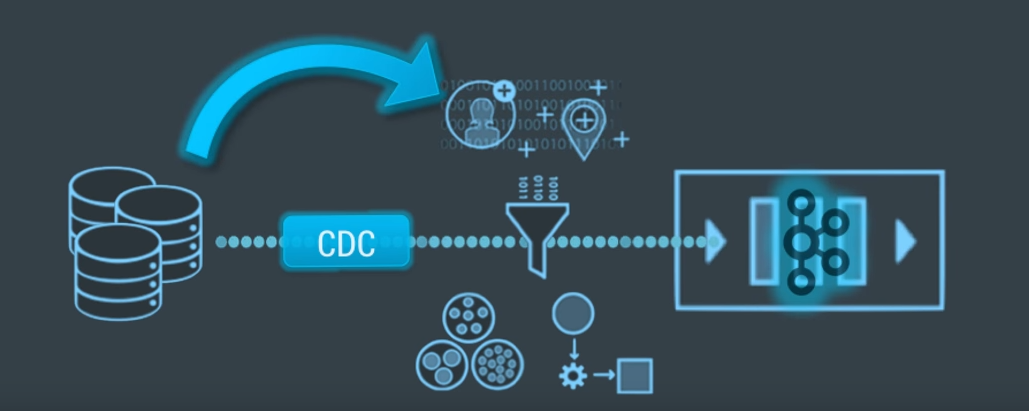
Do you need a more effective way to track changes to your business database? You can easily do this with the use of change data capture (CDC).
CDC is a useful tool for businesses using databases across a wide area network. Using one of four methods, you can easily become aware of any changes made to your database. Typically, this process is resource-intensive and takes a long time to complete.
There are several great benefits to using CDC, which includes enabling analytics on data in motion. This is a critical function because it allows you to make decisions based on the most relevant data available.
Let’s take a look at a few other advantages of the CDC so you can see if it will help your business.
Benefits of Using Change Data Capture:
All Changes Are Accurately Identified
The first benefit of the CDC is that all changes are accurately identified.
If you’re considering using CDC, then this is likely your primary objective. Understanding what has changed within your database is essential to know what is different.
CDC is excellent for this because it functions solely to identify changes. Knowing that something is different is one thing, but knowing precisely what has changed is critical.
When you understand the changes that have been made, you can critically analyze this data. Old information will never be as useful or relevant as your most recent changes.
Understanding this, you need a technique for streamlining the acquisition of changes made. Manually searching for changes is tedious and leaves room for error. Using the CDC, you can quickly and accurately see the changes that have been made.
Greater Business Analysis and Decision Making
With the most relevant data available, it allows for greater business analysis and decision making.
Business analysis is imperative if you want to understand the trends of your operations. The data you process can indicate when something isn’t working and needs to be changed.
Furthermore, conducting business analysis will improve your ability to grow and become more efficient. If you can complete the same tasks at a quicker pace, it saves you precious time and money.
From your business analysis, you can then better craft your decisions. As you likely know, solid decision making has a direct impact on how successful you are.
Because of this, you need data to back up your decisions. With the use of Change Data Capture, you’ll have the most useful data available to digest and make decisions with.
Undisturbed Production Workflow
Another amazing perk of implementing the CDC is an undisturbed production workflow.
When you need to analyze the changes of information in your database, it holds up everything that you need to do. This process can be quite time-consuming and will delay more important work.
The problem with tracking changes without CDC is that you don’t have real-time insight. This means that any changes you come across will be from a few days ago and may no longer be relevant.
When you do use CDC, there’s no need to stop what you’re doing and investigate for changes. All of your updates are easily accessible and production can continue to flow.
Lower Data Transfer Costs
The last benefit of using the CDC is lower data transfer costs.
Depending on the size and reach of your business, you may be accessing data from across the country. This can get expensive, especially when you’re working with a large volume of data.
You’re likely using a wide area network to do this. If you were to transfer data across your wide area network without Change Data Capture, then you’re likely working with a lot of unnecessary data.
This translates to paying for data transfer that you don’t need. CDC simplifies this by only transferring data incrementally.
More specifically, the CDC will only move the changes that you make. This means that only critical information is being transferred, which allows you to pay for exactly what you need and nothing more.
Even if you don’t need CDC for the other benefits, a lower wide area network cost may be worth it by itself.
Closing Thoughts
If you need an effective way of tracking changes made to your database, then change data capture (CDC) is the answer that you’re looking for!
This technology simplifies the process of keeping tabs on new data and provides several great benefits. This includes accurate identification of changes, better business analysis and decision making, undisturbed production workflows, and a cheaper data transfer cost.
Should any of these advantages be useful to you, then find a great Change Data Capture delivery method that works for you! There’s no need for change tracking to be difficult. Use CDC for live insights into your business that aren’t achievable in any other way!
Read Also:
Best Deleted photos recovery Apps for Android
We have all seen what a pandemic can do to the event industry. Not only that, but we have also seen how hard it is to organize a small gathering without breaking any laws. Depending on where you live, the laws may have been even worse than that.
However, things are starting to get more relaxed in many parts of the world. We can’t guarantee the complete legality of events in your area, as we are not a law firm of any kind, but we can give you some sound advice to keep your events as much within the safety standards as possible.
Venues Need to Rethink Their Communication Strategy
Communication is the key to creating a seamless experience for everyone involved. And in the current context, that is more evident than ever. Venues need to lay out their entire set of rules for the event to all the guests and staff. That way, you’ll be able to ensure that everyone knows what they need to do and that there won’t be any mishap.
Ensure that your message gets across well without creating panic or confusion. The last thing we need after such a long pandemic is to prolong people’s fears.
Use Digital Tools to Make Everything Better
We live in a world where technology is widespread. Using the internet is as easy as ever, and staying connected is stupid-simple given the fact that almost everyone carries a smartphone.
Make sure to use every tool at your disposal to plan ahead of time, keep in touch with vendors, sell tickets more easily, and plan out the layout of the building for the event. From mail apps to getting insurance for special events online, you can get a lot of things done with a simple computer or smartphone connected to the web.
Practice Social Distancing When Planning Out the Seating
Ideally, you’ll want to leave a seat empty in every straight direction that the participant will be juxtaposed against. In short, leave one seat empty in front, in the back, and on the left and right side of each participant. Or, at the very least, leave a seat empty on their left and right, and try to distance the rows in front and back of each participant.
Food and Beverages - Basic Rules
If you’re going to organize a corporate event, then you’ll probably want to have a self-service buffet. That’s out of the question, unfortunately, given the current context. As long as you have a good catering service and preferably some professional waiters, you could try to organize a seated dining scenario.
Alternatively, you could ask each participant what they would like to eat and order every meal in separate packaging. A more cost-saving solution would be to order pre-packed meals and keep them in the fridge until the attendees arrive. You will then place the meals on each attendee’s desk before they arrive. Handling meals carefully is a must.
Ticketing Alternatives
While there are bound to be people who will prefer physical tickets, we’d advise you to encourage them to grab their tickets online. Creating a purely online ticketing system saves you money, reduces the risk of spreading viruses, and greatly reduces the overall waiting time.
Not only that, but it allows people to order their tickets from wherever they might be. So you won’t have to keep a physical operator at your booth and you’ll be able to sell tickets much more efficiently.
Your Thoughts?
If you follow our guidelines, your events should be practically safe against any virus. However, we’re curious to see if you’ve got any other suggestions to make events even safer for everyone involved.
With that in mind, feel free to leave us a comment down below and share your thoughts with the rest of our community. Also, we would really appreciate it if you shared this article with your contact on social media. Thank you!
Read Also:
Choosing the best Photographer for your Event













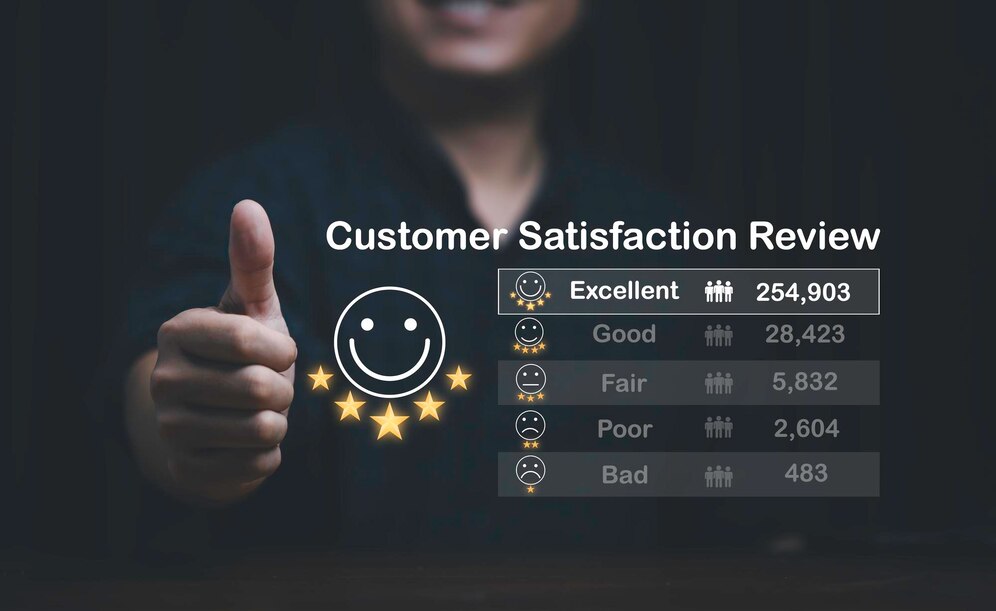
 The concept of customer satisfaction is widely acknowledged as a key indicator of a business's success. Quality assurance plays an essential role in achieving this goal since it helps to ensure that any product or service offered meets the expectations and needs of customers. This leads to higher levels of customer satisfaction, which can have a significant impact on your bottom line.
Having an effective quality assurance system in place can also reduce the chances of customer dissatisfaction. By having a proactive approach to monitoring and testing products or services, businesses are better equipped to identify any issues before they become too big and start to affect customers. This allows them to take swift action and address any problems that arise.
The concept of customer satisfaction is widely acknowledged as a key indicator of a business's success. Quality assurance plays an essential role in achieving this goal since it helps to ensure that any product or service offered meets the expectations and needs of customers. This leads to higher levels of customer satisfaction, which can have a significant impact on your bottom line.
Having an effective quality assurance system in place can also reduce the chances of customer dissatisfaction. By having a proactive approach to monitoring and testing products or services, businesses are better equipped to identify any issues before they become too big and start to affect customers. This allows them to take swift action and address any problems that arise.