Published on: 02 August 2023
Last Updated on: 07 February 2026
Nowadays, with awareness and proper knowledge, people are getting more and more conscious about the products they use; hence it has led to a rise in demand for organic haircare products. With a focus on organic ingredients, organic haircare offers a greener and healthier alternative to conventional haircare products. However, as the market grows, it becomes essential for consumers to differentiate genuine organic shampoo and conditioner from those that merely claim to be so.
In this blog, we will dive into the world of certifications in organic haircare products, understanding their significance, and how they ensure transparency and quality.
What Are Certifications In Organic Haircare?
Certifications are endorsements from reputable organizations or governing bodies that validate the authenticity of organic claims made by haircare brands. They act as a reliable assurance for consumers, indicating that the products have undergone stringent evaluations and meet specific standards.
Why Do Certifications Matter?
Transparency and Trust: Certifications offer transparency about the sourcing, production, and ingredient quality of organic haircare products. Consumers can easily trust that the products they are using align with their ethical and environmental values.
Quality Assurance: Certifications ensure that organic haircare products meet certain standards in terms of ingredients, manufacturing processes, and sustainability practices. This assurance promotes higher-quality products for consumers.
Avoiding Greenwashing: Greenwashing is a marketing practice where companies falsely claim to be organic or eco-friendly to attract environmentally conscious consumers. Certifications help distinguish genuine organic products from deceptive marketing tactics.
Common Certifications In Organic Shampoo And Conditioner:
USDA Organic: One of the most well-known organic certifications, the United States Department of Agriculture (USDA) Organic label verifies that the product contains at least 95% organic ingredients. The remaining 5% must be from an approved list and must not contain any synthetic chemicals.
ECOCERT: ECOCERT is a globally recognized certification that ensures the organic and natural integrity of products. They assess the product's ingredients, manufacturing processes, and environmental impact.
Leaping Bunny: While not specifically for organic products, the Leaping Bunny certification is crucial for cruelty-free hair care. This certification confirms that the product and its ingredients were not tested on animals.
Tips For Choosing Organic Haircare Products:
Look for Recognizable Certifications: Prioritize products with well-known organic certifications like USDA Organic, ECOCERT, or COSMOS.
Read the Ingredient List: Check the ingredient list for natural and organic components, avoiding products with harmful chemicals like sulfates, parabens, and phthalates.
Research the Brand's Values: Investigate the brand's sustainability practices, ethical sourcing, and commitment to the environment.
Read Reviews: Look for consumer reviews and feedback on the product's performance and authenticity.
Conclusion:
Certifications play a vital role in verifying the authenticity of organic haircare products, providing consumers with confidence in their purchases. When armed with knowledge about these certifications and label claims, consumers can make informed decisions, selecting high-quality, organic haircare products that align with their values and contribute to a greener, more sustainable future.
Ankita Tripathy loves to write about food and the Hallyu Wave in particular. During her free time, she enjoys looking at the sky or reading books while sipping a cup of hot coffee. Her favourite niches are food, music, lifestyle, travel, and Korean Pop music and drama.
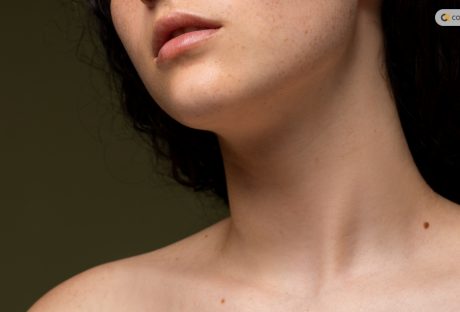
Beauty marks are common in many women.
However, if you wonder what a beauty mark is, you are not alone. Generally, they are widespread and are a natural skin trait. In some cases, people will call it a mole. However, there is a slight difference. Hence, to know what is a beauty mark, read on to the end of the article.
In this article, you will learn what is a beauty mark and what it means for the female body. Apart from that, this article will also explain a variety of facts about beauty marks (spots). Moreover, you will also find out the significance of having beauty marks on your face and body.
Finally, the article will discuss cultural perspectives on beauty marks.
What Is A Beauty Mark?
The phrase “beauty mark” is a cultural term that is basically a dark spot on the face or the body. In fact, many people find it attractive. Generally, people use it as a euphemism for a dark facial mark. Hence, it tends to be a term that people use broadly for any type of facial mole or freckle.
According to L’Oreal, “In truth, beauty mark is a term that was coined to describe a dark spot on your face that is considered attractive or beautiful. Most of the time, a beauty mark is a mole, freckle or spot on your skin that has been there since you were born (a birthmark).”
In fact, you will find that more people are likely to have beauty marks on their faces without them knowing. Moreover, if there are a lot of beauty marks on your body, you must be concerned about it.
Understanding Beauty Marks
Generally, beauty marks are beauty spots on your body that are small, dark spots on the skin and are visually attractive. Basically, many people think them to be pleasant or attractive.
Apart from that, many think that it improves the appearance of the person. In addition to that, it can actually be a lovely feature for the face or the torso.
On the other hand, there are moles (also called nevi). These are skin growths that happen when you accumulate pigmented cells in your body. These cells are called melanocytes. Apart from that, it is interesting to note that moles are frequent in the female body and is usually an innocuous feature of the skin.
Who Has Beauty Spots?
A beauty spot is possible in people of all skin tones. Generally, these are dark spots on your face that make you look attractive (that’s what most people think). In fact, beauty spots include birthmarks, moles, and freckles on the skin (especially the face and torso).
However, people with a lighter skin tone can have around 20 beauty spots. On the other hand, people with a darker skin tone have fewer beauty spots.
The reason for beauty spots is generally sun exposure. However, most beauty spots are harmless and non-cancerous in nature. Apart from that, some beauty spots are atypical and dysplastic. This means they have a higher risk of developing melanoma.
Moles or nevi are generally of these types:
1. Common Nevi: Actually, these are small moles that can be pink, brown, or tan in color. Also, they have a distinct shape.
2. Congenital Nevi: Generally, these include those moles that are present at birth. Also, there is a slight risk of developing skin cancer due to congenital nevi.
3. Dysplastic Nevi: Actually, these are very rare. In fact, these moles are larger than a pencil eraser. Also, they have an irregular shape. Furthermore, they have an uneven color. On the other hand, they also come with dark brown centers and lighter and uneven edges.
Interesting Facts About Beauty Spots
The following are some of the most interesting facts you need to know about beauty marks:
1. Many people do not recognize the fact that most beauty marks are moles. However, all beauty marks are not moles. For instance, if the mark is on your face, it is a beauty mark. On the other hand, if the mark is anywhere else in the body, it is a mole.
2. Only 1% of babies are born with beauty marks on their skin. Basically, beauty marks can appear in childhood, teenage years or even during adulthood.
3. In his play Cymbeline, Shakespeare gave the character Imogen beauty marks. This shows that he appreciated the beauty marks on the face.
4. In the 18th century, smallpox was common among women. Hence, they used to cover their smallpox scars with mouse fur. As a result, this turned those scars into beauty marks.
5. Marilyn Monroe was known for her beauty marks. However, its authenticity is still debatable. Moreover, it reshaped the meaning behind beauty marks on women’s faces. In fact, some sources say that she concealed her beauty marks in her early roles.
Can Beauty Spots Make You Sick?
Generally, most beauty marks are harmless in nature. Also, they appear early on in life and are benign. Moreover, they are not contagious. Hence, they do not hurt, itch, or bleed. However, a mole can be cancerous in nature (but rarely). For instance, it can turn into skin cancer.
Hence, the following are some of the cases where you need to be concerned:
1. The mole appears to change in some way.
2. The mole shows up after the age of 20.
3. It becomes larger than 4-6 cm and keeps growing.
4. The mole itches and oozes continuously.
Wrapping Up
What is a beauty mark? Now you know the answer. Actually, these are small and dark spots on the face and in the torso. Apart from that, they can also come in other parts of the body.
However, if those marks appear on the face, they are called beauty marks. However, if they appear on other parts of the body, they are called moles.
Is it dangerous? It is only dangerous when it comes to 20 years of age and grows in size.
What is your experience with beauty marks? Please share your ideas and opinions in the comments section below.
Read Also:
7 Tips for People with Hypersensitive Skin
The Profound Impact Of Well-Groomed Nails On Confidence
Achieving Aesthetic Excellence: How Skin Clinics Deliver Beautiful Dermal Results
Stage makeup might be the new norm. However, the 1920s flapper makeup is nothing short of a sensation.
Artists see it as a timeless token of expressive beauty, style, and sensational glamour. Let’s check out the main touch points of the artisanal and aesthetic flapper makeup.
No doubt the 1920s looks were iconic. So, it’s worthwhile to understand the styles that inspired flapper makeup. We can also try to explore the twenties’ spirit that was depicted through the bold makeup looks. After all, expressing the inner self is the prime function of beauty.
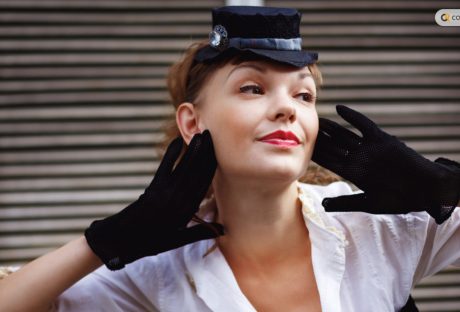
Before we know in detail, can you tell what flapper makeup was precisely? Well, long eyelashes, neatly defined brows, and scarlet lips are the tokens defining flapper makeup. That’s not all. The advent of rosy cheeks for that doll-like look can also be credited to the 1920s.
What Defined Flapper 1920s Makeup?
Eager to get into the crux of flapper makeup? Modern makeup enthusiasts are obsessed with the right nude look or depicting a sensational minimalist look. But the 1920s saw makeup and beauty differently.
Remember the characters from The Great Gatsby? The youthful quest of character and dollish overtones dominated the thoughts of the 1920s artists.
Today, you won’t celebrate such layered makeup. Instead, models proposed in angled foundations with neatly chiseled jawlines are today's front runners. Moreover, the heavy blushed, and brighter skin toning of flapper makeup has found a replacement in the contoured makeup of today.
So, the basics of the flapper makeup look is getting dolled up with makeup. Since the makeup was ceremonial, events like dancing and night parties were so. Many of you may think- What about nails? Trust me, your favorite ombre nail designs 2024 versions would not have made any mark in that look.
The face was still the epitome of beauty.
Types Of Flapper Girl 1920s Makeup
There were many flapper styles during the 1920s. In our imagination, the bold 1920 makeup girl would have liked some of these flapper styles:
1. The Classic Decor
Dark and smoky eyes dominated this look. Remember the goth scenes with grim female characters? Yes, you’re thinking right. Sharp eyebrows, blood-red lips, and pale white complexions complemented the classic flapper makeup look.
2. The Bob
Rain or shine, girls would go gaga over a playful twist. The definition of the bold flapper makeup completed with the faux bob.
Short hair was the norm of the day. No commitment. Just do a contemporary transition and have fun!
3. The Cost-Effective Version
Flapper makeup had a cost-effective version, too. If you don’t want your flapper makeup experiment to cause a hole in your pocket, here’s your solution. Firstly, grab any light foundation.
Go for the wet n wild photo focus matte/gloss liquid foundation. It costs $5.47 and is available in classic, beige, and other shades. You can also go with the e.l.f. Flawless Finish Foundation. The latter would be better for the glossy, bold look.
It covers uneven skin tones like MAC, The Whoo, or any in that category. Remember, the foundation is the basis of the cost-effective flapper makeup.
Secondly, your primary role is to create smoky eyes using your regular eyeshadow palette.
Lastly, go for a cheap radiant red lipstick for those popping red lips. BAAM! Your pocket friendly flapper makeup looks completed in 30 minutes or so.
4. The Zombie Flapper Makeup Look
Today, I suggest a mattifying primer with a matte foundation, contour for cheeks, and dark shades for eye sockets. Of course, a makeup setter spray to top it up. But do you want to know how a 1920s makeup flapper would look like?
Complement your flapper style with an authentic macabre look. Create a makeup base to begin with. After that, create defining under-eye circles, draw cracks, and apply fake blood in patches and splashes on your skin.
Could you spot the difference? The 1920s flapper is so much more high definition than today’s looks. That’s the beauty of the bold makeup sensation we’ve left behind.
How To Use 1920s Flapper Makeup: Tutorial
The prime element in your 1920s flapper look would be how you groom your eyes. The eyes are an actual package here. Similarly, I’m talking about eyebrows, lashes, lids, and under-eye.
Secondly, you must draw bold lips. No extraordinary treatment. But well-defined bright lipstick.
Lipstick
However, I find that MAC’s Locked Kiss Transfer Resistant Creamy Matte would be an iconic lipstick I’d choose for realistic flapper makeup. After all, you must make your lips feel soft, thick, and plushy yet neatly chiseled.
Mascara, eyeliners, eye shadows, etc
After that, we will focus on the eye section. First, apply your eye shadow. You will find film stars staging dark eye shadows at that time. I also feel that the darker eye shadows preserved the real essence of the flapper makeup.
It’s not the twenty’s spirit if it’s not bold and defining! For parties, most women flaunted their dark, smoky eyes. I was so hooked on that look.
Indeed, my suggestion for eye shadows would be the same.
Secondly, we will focus on the eyeliner. Start by drawing a thin line with your eyeliner. Let the top lash line be smudged; use a thin eye shadow brush. However, something still seems incomplete.
Complete your eyeliner effect with an added eye shadow shade on the eyeliner.
Caution: The to-eye shadow layer should only go down the point once the smudged eyeliner liner is marked. Otherwise, you won’t be able to conceal the extra eye shadow.
I prefer the NYX eye pencils for the above. However, you can go with the brand of your choice.
Thirdly, I would suggest a lash mascara brush. Brush your mascara more towards the center of your traditional long eyelashes. Don’t focus much on the sides.
Brow Pencils
Finally comes the eyebrows. The typical choice would be long and thin eyebrows. Meanwhile, don’t forget to use brow pencils to perfect your brows. Certainly, thin, chappy, or sparse eyebrows won’t make sense if we’re speaking flapper makeup here.
However, there’s something more important here. Don’t draw a clean eyebrow arch. Rather, slop downwards. Most experts would not go any further. However, I am skeptical about the look and more about the finish. So, I would like yur blush to be perfect as well.
Don’t taper the blush. Instead, try to give it a rounded appearance. After all, the blush is the crux behind the more youthful look.
Other than the face, hands and feet also mattered in the 1920s. Back then people knew what is pedicure. The introduction of hemlines popularized nail care and pedicure trends. But nail makeup was not highly defined. So, they did not know what is builder gel.
Related: Get Part Ready In No Time with These Hair And Makeup Hacks!
The Flapper Era: A Cultural Revolution
The flapper makeup is no less than a revolutionary look. It was the prime movement that resulted in the rise of a subculture. When a group of young people wished to defy social norms and sexual definition, they chose the flapper over minimalist makeup.
Moreover, flapper makeup was a strong connotation of the fact that 1920s women were trying to break free. They needed to make accurate, bold statements that came in the first look.
Flapper makeup looks aligned with style, approach, and cultural tastes. For example, flappers liked jazz. They also had bold lifestyles.
Key Elements Of Flapper Makeup
That’s easy. Flapper makeup uses all high-definition components. So, there was minimal layering in the makeup.
Firstly, the flapper's makeup is incomplete without dark and smoky eyes.
Secondly, a pale white skin tone is a definition look for a flapper.
Don’t go by the racial connotation of the makeup essentials. After all, these elementary things defined a revolutionary generation.
After dark eyes, flappers could not feel complete without firm lips and blush.
Iconic Flapper Makeup Products
Here are the main kits you would find in the makeup box of any flapper:
1. A heavy-duty mascara
2. Sets of long eyelashes
3. White toners, foundations, contours, etc. for base makeup
4. Eyelash curler
5. Eye pencil
6. Lipstick
7. Powders for touch up
Flapper Makeup Techniques
I have defined the flapper makeup essentially briskly already. So, I will talk about five master flapper makeup techniques only-
1. Have thin and long eyebrows and use a kohl liner for the best effect
2. Don’t forget false lashes.
3. Create a smoky eye effect as it would suit you
4. Plumm red, burgundy or any rich shade of red would do good
5. Carry Face powder
Flapper Makeup In Modern Culture
Days have changed. People don’t prefer the bold look that may seem prosthetic to the modern generation. However, bold makeup was an expression of revelation from shackles for women back then.
So, it’s natural that the essence of flapper makeup still exists today. If you’re curious too, here are two unmistakable things that have become timeless.
Firstly, the smoky eyes look. Women still use the smudgy and messy eye-shadowed look for that bold statement.
Secondly, we see the cupid’s bow lips quite often. That is another gift of the flapper makeup era.
If you want to know more about flapper makeup or want to offer tips, comment your doubts or queries in the following section. I will check the comments in no time!
Additional Resources:
Polish Your Creativity: A Colorful Journey into Self-Care With Nail Polish
Smashbox Primer: Use It To Make Your Makeup Last Longer
Essential Eye Care Tips That Can Improve Eyelash Hygiene
Among all cosmetic treatments, pedicure is one cool thing. All of you know what is pedicure. So, I won’t go into the basic nitty gritty. However, we have to focus on all four segments of it equally. Certainly, nail and cuticle care are the most important.
The term pedicure is coined from the Latin “pedis,” meaning “of the foot,” and cura. Generally, when you speak of pedicure, it implies cosmetic pedicure. However, pedicures can be used for therapy and medical purposes, too.
In this article, we will discuss the perks of pedicure and the outcomes you expect of it. We will also suggest some tips for DIY pedicures at home. But first, let’s start with what is pedicure.
It is one of the beauty enhancers and, of course, maintaining better nail and foot hygiene. After all, the function of beauty is marinating better outer health.
How often do you get a pedicure?
A pedicure is a process of skin exfoliation. However, you may think of it as a skin treatment, too. It is a complete package of nail care, skin care, cuticle care, and dead skin removal.
Now, the question is, how often do you need this set of treatments?
The ideal gap is a month. In between these 30 days, the skin can regrow and regenerate. However, you must not overdo it. Firstly, the skin may feel irritated if pedicures become frequent.
But pedicure isn’t one straightforward process. You may frequently repeat switching your Polish grade. But don’t barge into the exfoliation process every time.
Types of Pedicures
I already mentioned- a pedicure is not a simple process. So, it’s crucial to discuss the types of pedicures and their importance for your skin health and hygiene.
Basic Pedicure
It is the most common form of pedicure. It includes cuticle refining, shaping, and polishing. This package costs $35 and takes around 30 minutes.
Spa Pedicure
Next in line is a spa pedicure. It is a smooth process. People generally visit salons to get it done. First, it involves a deep cleansing and massage of the feet. The average cost of your spa pedicure could be $50 to $60.
But experts say getting it done from a good spa for better effect is better.
Paraffin Pedicure
If you want a hydrating nail and cuticle treatment, go for the paraffin pedicure. Most of you may know what is pedicure. But do you know about paraffin and gel pedicures? Most nail designs 2024 updates include gel treatment.
Firstly, a paraffin pedicure is a process where salon specialists use paraffin wax to reduce cracks and barriers. After that, they moisturize the feet. If you have cracked or frizzy skin, you must get a paraffin treatment once or twice a year.
Gel Pedicure
Here, nail treatment is the prime focus. Most importantly, experts curate your nails with UV or LED light after applying builder gel. But what is builder gel? It is a natural viscose gel base that increases nail strength, thickness, and length. It adds a gloss glass look to the nails. However, the look would last two weeks at best.
Stone Pedicure
One of the seldom-used types of pedicures is the stone pedicure. It is no prosthetic treatment. However, the spa specialists only use stones to massage the feet.
The prime benefit of the same is better blood circulation in your feet. Hence, the skin remains naturally well.
Benefits of Pedicures
Pedicure sessions have specific benefits for sure. Some of these are apparent, and others are long-term gains. Here are the prime benefits you expect out of a pedicure:
Your Skin Health
Pedicures help to improve skin health. Hence your skin will immediately look fresher and youthful. It is the most significant outcome of the exfoliation process.
Better blood circulation
If you want better massage and foot care during pedicures, go for a classic and a stone treatment. What is pedicure? It is the mere exfoliation of the skin so that it respires better.
Meanwhile, blood circulation through and around the cutaneous players also improves. It keeps the skin fresh and youthful as well.
Exfoliation
A pedicure is the best way to remove dead cells from the two upper layers of the skin. Hence, it prevents skin infection since all toxins are given away.
Stress relief
The pedicure process releases endorphins. Hence, you feel calm and breezy. Meanwhile, your feet feel relaxed as the blood circulation improves.
Other Benefits
There are other benefits of pedicure, too. Most importantly, it can resolve foot odor issues. At the same time, it can release muscle tension and cure back pain to some extent.
What to Expect During a Pedicure
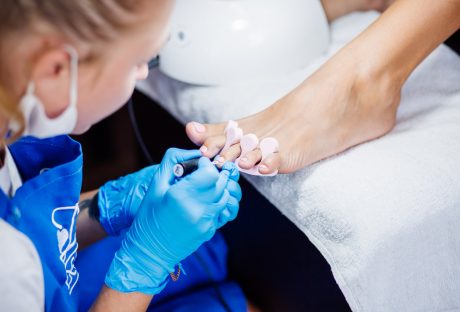
Let's see what makes up a classic pedicure session. What is a pedicure? It is the treatment of your skin. There are 6 to 7 basic steps of this treatment. It starts with soaking your feet in warm, lather-rich water. Consequently, your nails and the skin of your feet will become mushy.
After that, it is time for exfoliation. The process involves using a foot tile to remove the upper dead skins. Thirdly, pedicure involves nail care, too. Most importantly, the trimming, filing, buffing, etc. Moreover, there is cuticle work to be done.
The last three steps are:
Moisturizing
Massaging, and
Polishing
The process lasts between 30 to 90 minutes. However, there are two types of pedicure treatment. These are basic and luxurious. Other than small detailing like nail shaping, gel polishing, and cuticle work, the rest is the same for luxury treatment.
How much does a pedicure cost?
In the US, the cost of pedicure might vary. It may range from $20 to $75. However, the average price of a basic pedicure from a standard salon would be $45.
It is also apparent that the salon brand and location would be reasons for variation in the prices of the same pedicure services.
DIY Pedicure at Home
A DIY pedicure is easy. However, you need to prepare the ingredients from scratch using natural elements when you do it first. After that, you can reuse the same products and save time and resources.
To do the same, you need a natural scrub first. A pumice stone can be one. It can substitute cosmetic foot scrubs. But the treatment should start the same way it does in any salon.
Firstly, soak your feet in a bucket or tumbler. Combining lukewarm water, Epsom salts, and a few drops of essential oils. Remember, what is pedicure? It treats the external skin and blood vessels on the inner lining. So, a home pedicure can be as effective as a salon treatment.
Just use the proper steps and a set of the right organic ingredients.
Done with soaking? Apply Pumice stone for natural foot scrubbing. Once done, just trim your toenails and push back the cuticles. Finally, apply a base coat to the nails. Any nail color would do. At the end, apply the topcoat. While applying it, you should check out the best ombre nail designs 2024 ideas.
Flaunt your best nails before Christmas!
Massage the feet with moisturizer, lotion, or oil to finish the process.
Choosing the Right Salon
Finding the right salon for a pedicure can give you a heck of a time. So, keep this basics in mind when selecting one:
1. Ask friends and family members for recommendations. Meanwhile, check the ratings, reviews, and recommendations for that salon on local community groups.
2. Read customer reviews and expert opinions of the listed salons.
3. Most importantly, know your budget. The services that cost $30 at your local salon might cost you $150 at Bastian Gonzalez. So, choose wisely.
4. Book an experienced nail technician. Novices may often do it wrong, causing nail infections and plumps.
5. Hygiene is the first thing you should check when you visit any nail salon. Meanwhile, check the cleanliness as well.
Common Myths About Pedicures
Go, get your pedicure done in a sweep. Many people don’t know what is pedicure. They often create or spread false rumors about the process. I’ve heard people say paraffin pedicure is for people with dry feet and heavy skin barriers. However, it is a process that benefits anybody.
Secondly, knowing that a stone pedicure is for relaxation only gives me a good laugh. However, the truth is that it can relax your whole body. It can also relieve you from muscle and bone-related diseases.
Don’t Go for a Professional Pedicure! I won’t say that ever. However, it is one of the most outstanding rumors about pedicure. Just ignore such small talk! Meanwhile, enjoy your pedicure session. Also, let me know your experience at your local salon.
We will survey who has the best salons in their area. Share the article and ask people to comment on the same too.














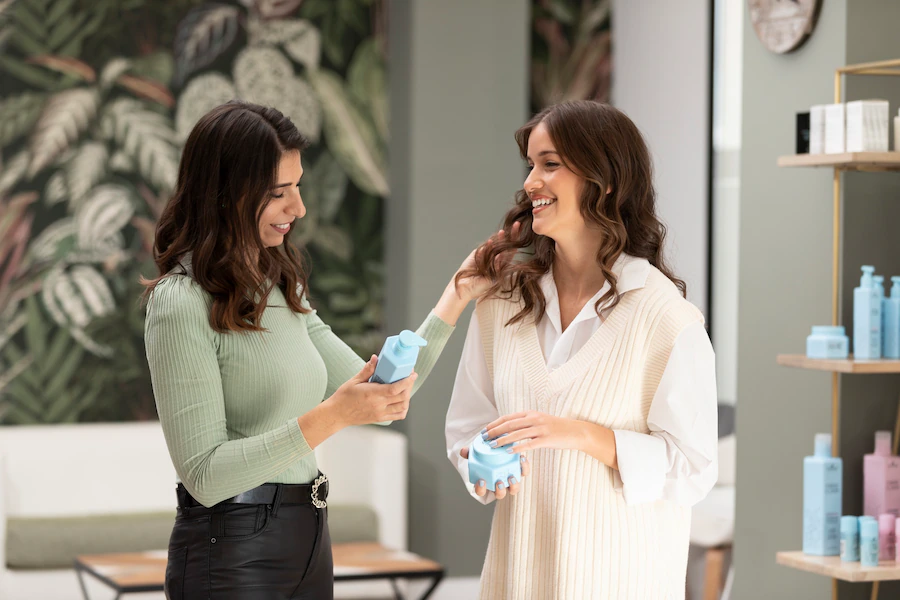 Certifications are endorsements from reputable organizations or governing bodies that validate the authenticity of organic claims made by haircare brands. They act as a reliable assurance for consumers, indicating that the products have undergone stringent evaluations and meet specific standards.