Published on: 24 May 2021
Last Updated on: 03 January 2025
Deciding which college to go to is hard enough; choosing a major is even more challenging. Students worldwide frequently report having a hard time narrowing things down when it comes to a major.
Both fresh high-school grads and undergraduates may not know how to go about locking themselves down. We often forget that we don't just have to choose our subjects once we can change midway.
However, after graduating with their bachelor's, students claim that choosing a specialization becomes even more complicated. Not only does a master's degree hold a lot more weight than a regular college degree, but it also streamlines you for your career.
Therefore, if you are having trouble choosing a subject as a high-school grad or undergrad, you might want to read on further.
This article will be looking at a guide to choosing the best education majors. We will be looking at several aspects to consider when making the decision. By the end of it, you will be better equipped to pick a major and pursue a career finally. Therefore, here is a career counselor's guide to choosing the best education major.
Pick a career with a promising future:
Before you go ahead and choose an unpopular degree, make sure you read up on the field's future. For instance, the field of technology holds excellent prospects and advancing opportunities. With trillions of dollars flowing in and out of the technology industry, it would be a viable option to pursue a degree in it.
With online degrees making things considerably easier for working individuals, you can pursue your masters and continue work. Therefore, if you have sought a career in information technology and all the signs indicate good news for the industry, go for it. A masters in MIS online will provide comprehensive information about the IT industry and the necessary skillsets to make a career for yourself.
Strive for your passion:
When choosing a major, ensure to evaluate your preferences. Students have to subdue the desire to follow their dreams from an early age because of peer pressure. However, now that you have the chance to choose your college major, select an academic endeavor that you genuinely like.
Think about what YOU want to do and where your interests lie. Students who were passionate about arts when growing up now have the chance to do what they love. It doesn't just have to be the hobbies that you can pursue. You can go for new, emerging subjects that spike your interest.
Millions of people have pursued psychology as a career because of recent mental health awareness movements. Others are looking at environmental studies as a way to raise global awareness of climate change.
Don't make money the sole motivator:
Pursuing a degree only for its monetary returns isn't a viable option; perhaps you should consider money as a secondary benefit.
We aren't saying that money shouldn't be a factor in your life. Just don't make it the primary motivator. Many people pursue a degree only for the monetary benefits and end up ruining their career life. It can pose severe consequences as your career can become stagnant with less growth and development opportunities.
Therefore, instead of eyeing a field only for its monetary gains, opt for one that entices you.
Plan for the future:
Looking into the future, where do you want to see yourself? Do you want to see someone who neglected their passions only for making other people happy? Do you see yourself as someone who made their own choices but is having a hard time in life? The future can be exciting for some yet scary and daunting for others.
It's always good to take calculated risks, evaluate opportunity costs, and play it safe when you feel puzzled. Ensure to strike a balance. Preparing for the future usually puts things into perspective and gives you much-needed clarity for narrowing down a specialization.
Take your time. It's okay to be nervous:
If you aren't comfortable with making a decision just yet, don't compel yourself. It's better to wait it out and take some time off to clear your head than to commit to something and have to see it all the way through.
It's all too common to hear about college dropouts who had no passion for what they were studying. A fair amount of the time, they were either forced into the degree or felt pressured to choose something they didn't enjoy.
Don't be one of those people. If you need to, take a year off and think about what you want to do for your career. Seek academic counseling, approach mentors, and plan out everything for the future.
Conclusion:
Deciding on a degree major can be challenging; however, you should take things one step at a time. Fortunately, counselors are always looking to keep the student's best interests in mind when recommending options. With that said, a counselor can evaluate your interests, skills, and aspirations to guide you properly.
Content Rally wrapped around an online publication where you can publish your own intellectuals. It is a publishing platform designed to make great stories by content creators. This is your era, your place to be online. So come forward share your views, thoughts and ideas via Content Rally.
Hey there! Remember I mentioned about Blooket? Well, I am here to talk about a very important segment of it.
In today’s digital classroom, you need to keep students engaged. This is more important than ever. That’s where Blooket Host comes in.
Blooket is an exciting educational game platform. It allows teachers to transform quizzes into interactive sessions.
Additionally, it creates unique and competitive learning experiences that students actually enjoy.
As a Blooket Host, the teacher or organizer creates or selects a quiz. Then, he/she launches it for students to participate in live.
Whether you’re teaching in person or online, Blooket is a great way to enhance participation. Also, you will be able to keep students engaged.
It’s especially effective in U.S. classrooms, where digital learning tools are becoming more popular.
What Does The Blooket Host Actually Need To Do?
In Blooket, the "host" is the person who sets up and runs the game, and that’s usually a teacher.
However, sometimes students can take on this role too! As the host, you get to pick the questions, choose the game mode, and help everyone play through the game.
Blooket is perfect for classroom settings. This is because it encourages active learning through:
Fun quizzes
Games
Plus, it’s super flexible with different game styles. This makes it easy to align with various teaching goals.
How To Become A Blooket Host: A Step By Step Guide
Now, in order to host a game carefully and efficiently, you must pay good attention to these steps. Let’s check these out:
1. Pick Your Questions
The first thing you need to do when hosting a game on Blooket is to choose a set of questions.
You have the option to create your own set. Additionally, you can also browse the platform’s extensive collection. It has over 20 million sets!
These cover a wide range of topics. So you’re sure to find something that fits your needs.
Just head over to “My Sets” or “Discover” on the dashboard to get started.
2. Choose a Game Mode
Blooket offers a variety of fun game modes like:
Monster Brawl
Gold Quest
Crypto Hack
And the best part? You will find out that each with its own twist on gameplay.
For example, in Gold Quest, students earn gold by answering questions. Additionally, in Tower Defense, they defend against challenges by answering correctly.
Each mode provides a unique way for students to engage with the material.
3. Launch the Game Session
Once you’ve picked a game mode, hit the “Host” button. Here, you can set the rules.
Also, you can set the time limits based on what you want to achieve. Additionally, you have to keep in mind what your students can handle.
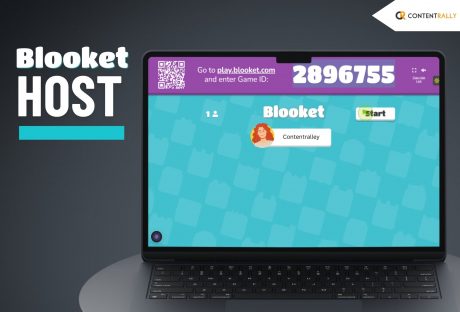
When you’re ready, click “Host Now”. This will generate a game code. Share this code with your students so they can join in on their devices.
4. Invite Students to Join
Students can jump into the game right away. They just have to enter the game code at play.blooket.com.
They don’t need to create an account to play. But signing up gives them the chance to track their progress. Additionally, this will help them to access more features.
For online classes, they can also join by scanning a QR code. Alo, they can use a shared link.
This makes it super easy for everyone to get involved.
5. Start the Game
I suppose by now, all your students have joined. Now, you simply click “Start” to kick off the game.
During the session, students will answer questions. Additionally, they will compete based on the game mode you've chosen.
You can monitor their performance in real-time. This helps you see how each student is doing.
Also, you will be able to identify where they might need a little extra support.
How Can You Create And Use Question Sets In Blooket?
As a host, you will have complete control over what you wish to present to your students.
1. Customize Questions:
You have the freedom to create your own question sets from the ground up.
This customization helps you tailor questions to align with your students' learning goals.
Whether you're teaching math, history, or science, you can design fun and engaging questions that reinforce key concepts.
2. Importing Question Sets:
If you're already using Quizlet for quizzes, Blooket makes it easy to bring those question sets over.
Additionally, you can do this with just a few clicks. Then you can import your existing questions into Blooket.
After that, you can turn them into interactive games for your students in no time.
3. Blooket’s Library:
If you’re pressed for time or just need some fresh ideas, check out Blooket's library of pre-made question sets.
It’s a great resource for inspiration and can give you new ways to approach topics in class.
How Can A Blooket Host Games On The Platform?
Blooket is a great tool for making learning fun and engaging in the classroom through exciting games.
1. Choose a Game Mode:
Blooket offers different game modes to suit various learning styles. You can pick from fun options like Gold Quest.
This is where students race to collect gold. You can also check out Tower Defense. This one challenges them to protect their towers while learning.
There’s also Cafe Mode. It's my favorite. Here, students run a virtual cafe. They answer questions to serve customers.
For those who enjoy competition, Battle Royale is an excellent choice. Blooket keeps students entertained and allows them to change the game based on the topic.
2. Set Up a Live Game:
It’s easy to host a live game. Just select the game mode and your question set.
Then create a Game ID. Share this ID with your students, and they can join the game on their devices by entering the code on the Blooket website.
This setup encourages active participation as students compete with each other in real-time.
3. Assign Homework:
Blooket isn’t just for live play; you can also use it for homework. You can assign a game for students to play at their own pace, making it a fun way to review class concepts outside of school hours.
This approach allows for flexible learning and makes studying enjoyable for students.
What Are The Additional Features Available for The Blooket Host?
You thought that’s it? Well, seems like you're wrong! There are many more features that you will enjoy as a host. Let’s check these out:
1. Personalizing Your Games:
You have the flexibility to adjust the number of questions. Additionally, you can decide on how long the game lasts.
In addition, you can also fix the difficulty level to match what your class needs.
2. Insights and Feedback:
Once the game wraps up, you’ll get in-depth reports. It will detail each student's performance.
This includes what answers they got right. Also, it also shows you how long they spent on each question.
Additionally, it will also include the overall results. So, this will help you fine-tune your future lessons.
3. Homework Feature:
Blooket is also great for homework! You can set up games for students to tackle outside of class.
Additionally, you can also give them a chance to review material or practice extra.
What Are The Benefits Of Using Blooket Host Across Grade Levels?
Blooket is a fun learning tool for students of all ages. Additionally, it helps teachers engage students across different grade levels.
1. Elementary School Students
Blooket works well for young learners. It turns basic concepts into fun games.
Game modes like Cafe Mode and Gold Quest are popular among this age group.
These games help students practice basic math skills. In addition, they also work on other skills like reading and general knowledge.
2. Middle School Students
For middle school students who like competition, Blooket offers exciting game modes like Tower Defense and Battle Royale.
These strategic games promote critical thinking and problem-solving. They motivate students to explore content and learn effectively.
3. High School Students
High school students need advanced thinking skills. So, Blooket supports their learning by providing games on complex topics in:
Math
Science
History
Literature
High school teachers can even use Blooket for SAT lessons. Additionally, this adds fun to important study material.
The Dynamics And Importance Of The Blooket Host Explained
So, if you are an educator, I strongly suggest that you use Blooket in your classroom.
Trust me, it can change how students learn. Additionally, Blooket helps teachers make lessons fun and memorable.
You can use Blooket to create a learning engaging and motivating.
In addition, you can also create an effective learning environment that your students will enjoy.
The role of the Blooket host is even more important because the host is the one organizing and conducting the tests.
Are you worried about your grades? Or have you been unable to match your previous academic performance?
The question ‘or’ is prevalent among students and has bothered every learner at least once in their lifetime.
When you are experiencing a level of failure, it is essential to take responsibility for this performance and start thinking about a plan to change your situation.
Whether you are failing your class, have experienced a drop in your grades, or have a tough time achieving set goals, it is never too late to change. Experts like Tutor Hunt are everywhere to help you out with your grades.
Fortunately, there are strategies to help you improve your academic performance. At the same time, there are some things that you are currently doing that are adversely impacting your academics that you might benefit from not doing.
Here are some Dos and Don’ts to help you improve your academic performance and grades shared by a professional academic writer from the top writing service DoMyEssay specializing in the write my research paper for me requests.
Things To Do To Boost Academic Performance
Here is how you can become a better student (from expert straight A students).
1. Have An Optimistic Attitude
When you are getting low grades, it is natural to feel disappointed with yourself. If it happens over a more extended period, you might start feeling defeated or depressed and are more likely to give up. However, the first step towards enhancing your grades is turning off negative self-thoughts.
A positive mindset goes a long way, and being optimistic about your current position gives you better prospects. First, acknowledge that your grades are sub-par and believe that you can do something to improve them. Taking mental control over your situation is the difference between remaining stuck and progressing.
Usually, poor performance in school also indicates that your classwork and homework aren’t up to standard either. Before you get your footing, consider getting help from a reputable paper writing platform, PaperWritingService.
2. Identify Where You Are Struggling
After transforming your mindset, the next step is to identify the areas where you are struggling. It is best to do this before drawing up your action plan. Find out where you are lagging and why. For instance, are you having poor results in just one class or across all your classes?
Is there a particular topic within a subject that you are struggling with?
Analyze your performance over the last few weeks or months to look for patterns. You might discover that your performance has been declining steadily or that you’ve had issues with a subject for an extended period. After clarifying this matter, the next step is to brainstorm why you’re underperforming.
The factors could be external, such as family issues that affect your performance in school. They could also be internal, such as having difficulty understanding some topics.
3. Communicate With Your Teachers
Your teacher is an excellent authority to look up to on academic matters. Consulting them about coming up with an action plan to boost your grades is a good idea. Ask them what they think you need to change or improve. They’ll always have some advice that you can use.
Coupled with the other tips mentioned in this article, you will be on your way toward better grades.
4. Make The Learning Process Exciting
Sometimes, you might underperform because you are simply unmotivated to learn. This is more common than you think, usually because of the pressure to do well and exams. Such things take the fun out of the learning process. But when the learning process is more exciting, it also becomes easier.
If studying feels much like a chore, try coming up with ways to incorporate fun back into the process. One way to do this is by gamifying your studies.
Related: Academic Writing for UK Students – Why It’s Important?
Things To Avoid To Boost Academic Performance
Want to improve academic performance? Quit these following habit today!
1. Too Much Caffeine
Many people have a lower attention span nowadays, which affects their concentration. Cases of students drinking too much coffee or caffeine-induced beverages to stay up very late and improve their concentration are not uncommon. However, unless recommended by your physician, this is dangerous and unsustainable.
There are other methods to improve your focus and have adequate study time. For the former, you can use exercises like solving crossword puzzles or creating your own using a crossword puzzle maker. For adequate study time, you just need to develop a plan for better time management.
2. Throwing In The Towel
Remember that it is always possible to improve your grades, so failure shouldn’t be at the top of your mind. If you are really struggling, get help instead of giving up. It is okay to feel disappointed sometimes but focus on progress.
3. Stay Up The Entire Night
Staying up all night to cram for the next test is exhausting and adverse. Your body needs sleep, and a lack of it affects your immunity.
Adequate sleep also enhances your concentration and decision-making ability. Exhaustion does the exact opposite. Proper time management will remove the need to stay up all night.
How To Build A Routine For Better Academic Performance
Building a routine is one of the most effective ways to improve your academic performance. It gives you structure and helps you stay on top of your tasks.
But how do you create a routine that works for you? Start by identifying your most productive times of the day.
Are you more focused in the morning, afternoon, or at night?
Once you know, schedule your most important tasks during these peak times.
Identify Your Productive Hours
Building a routine begins with knowing when you’re most productive. Are you a morning person, or do you work better at night?
Once you figure that out, schedule your important tasks during these peak hours. This way, you’re working when your energy and focus are at their best.
Create Consistent Study Sessions
Consistency is your friend when building a routine. Try to study at the same time every day. This not only helps form a habit but also minimizes procrastination.
Don’t forget to break up your study sessions. You can use techniques like Pomodoro (study for 25 minutes, rest for 5 minutes) to keep things fresh and productive.
Prioritize Your Tasks
You can’t do everything at once!
List your assignments and rank them by urgency and importance.
This helps avoid last-minute rushes and ensures that you stay on top of your workload. Consider using a planner or digital tools to track everything and keep organized.
Balance Study With Breaks
While your routine should focus on study, don’t forget to make time for rest. Include breaks, exercise, and leisure in your schedule.
Having a balanced routine will keep you motivated and prevent burnout, which is just as important as staying focused on schoolwork.
Stay Flexible
Things don’t always go as planned. When unexpected events occur, adjust your routine instead of stressing.
Flexibility is key to making your routine work for you. As long as you’re prioritizing your tasks and staying consistent, you’re on the right track!
Additionals:
Workload Survival Guide for Academics
10 Best Sports Scholarship Programs In The World
What Is An Essay? Definition And What Are Its Parts
Features To Look For When Investing In Teacher Desks For Your Institution
Crafting an essay is akin to navigating a labyrinth of ideas, where the path to clarity can be fraught with pitfalls, especially in the context of essay writing in UK institutions. Yet, amidst this labyrinth, there exists a beacon of proficiency: the ability to mitigate errors specific to the expectations of UK academic standards.
Whether you're a seasoned wordsmith or a novice writer delving into the complexities of essay writing in UK universities, the pursuit of error-free essays remains a perpetual endeavor. Errors not only compromise the credibility of your work but also impede the communication of your message within the rigorous academic environment of the UK. Therefore, mastering the art of error avoidance is paramount for any proficient writer navigating the landscape of essay writing in UK academia.
Steps To Take To Avoid Errors In An Essay?
In this discourse, we'll delve into the strategies and techniques that can help you traverse the labyrinth of essay writing in UK institutions unscathed. Also, with the help of such strategies, you can ensure your work aligns seamlessly with the expectations of UK academic standards.
1. Understanding The Assignment
The genesis of error-free writing lies in a comprehensive understanding of the assignment. Before embarking on the writing process, take ample time to dissect the prompt. Identify the key components, such as the topic, scope, and any specific requirements or restrictions. This initial step serves as the foundation upon which your essay will be built. Failure to grasp the nuances of the assignment can lead to tangential arguments or incomplete analyses, ultimately resulting in errors.
To ensure clarity, consider creating a checklist or outline based on the assignment requirements. This will help you stay on track and avoid veering off course, ensuring that your essay aligns seamlessly with the expectations of your academic institution.
Break down the prompt into actionable tasks.
Consult with your instructor or peers if aspects of the assignment are unclear.
2. Research And Note-Taking
A well-researched essay is a formidable shield against errors. Engage in thorough research to gather relevant information and diverse perspectives on your topic. Take meticulous notes, citing sources meticulously to avoid inadvertent plagiarism. Organize your notes in a systematic manner, categorizing them based on themes or subtopics.
This approach not only facilitates the synthesis of ideas but also minimizes the risk of overlooking crucial information. Remember to critically evaluate the credibility of your sources, distinguishing between reputable sources and dubious ones. Incorporating a variety of credible sources enriches the depth and credibility of your essay, bolstering your argument with evidence and expert opinions.
Utilize digital tools like reference managers to streamline the citation process.
Keep track of sources and page numbers for easy referencing during the writing process.
3. Planning And Time Management
While writing an essay, there is always a scarcity of time. Hence, the pressure of limited time often results in poor planning. Hence, as time runs past, the writer of the essay might rush through the essay. As a result, the writer neglects essential steps like outlining and brainstorming.
Hence, to avoid this, make sure you do the following:
Start practicing writing essays in a time-bound manner.
Before you start an essay, always prioritize time for brainstorming, outlining, and idea creation.
Create a clear-cut structure for the essay before you start writing. Also, at the same time, make sure you write within the recommended time limit.
4. Clarity And Flow
Make sure that you are writing the essay for someone else to read. Hence, you need to be clear with your language. Basically, if your essays lack the necessary clarity and flow, the reader might find it challenging to follow. Furthermore, if your essay has disconnected paragraphs and ideas, it is even difficult to grasp. Hence, do the following to avoid such mistakes:
One of the best ways to improve clarity in your essays is to write more. This will help you to put what is on your mind into paper.
Make sure that you use transitional phrases and connective words. This will ensure a smooth flow of ideas within the paragraphs.
Always ensure that each of your paragraphs within your essay logically follows the previous one.
5. Give Evidence To Support Your Arguments
Whenever you make a claim or an argument, make sure that you provide evidence to substantiate them. However, if you do not do so, this will weaken the influence of your essay on the mind of the reader of the essay. Hence, take the following steps to avoid this error:
Use relevant examples, facts, real-life examples, statistics, etc., to support your claims and arguments.
Also, make sure that the evidence you are providing is relatable to the points that you make.
6. Avoid Complex Language
There are some essay writers who overly use complex vocabulary and difficult sentences. Some of them even feel that the essay is a place to show their strength in English vocabulary. As a result of using complex language in the essay, it becomes unclear and confusing for the reader. Hence, to avoid such mistakes, follow these steps:
Make your language clear and concise.
Avoid trying to pull all known vocabulary in your essay.
Ensure there are no unnecessary complex words and jargon in the essay. However, you can use one or two if they have a direct relation with the topic.
7. Writing and Revision
The process of writing is inherently iterative, punctuated by cycles of drafting and revision. Approach the initial draft with a mindset of exploration, allowing your ideas to flow freely without succumbing to self-censorship. Focus on articulating your argument coherently, paying attention to the logical progression of ideas and the clarity of expression.
Once the draft is complete, embark on the revision phase with a critical eye. Scrutinize each sentence for grammatical errors, awkward phrasing, and inconsistencies in tone or style. Consider seeking feedback from peers or mentors to gain fresh perspectives on your essay. Embrace constructive criticism as an opportunity for growth, iteratively refining your work until it attains a polished sheen of excellence.
Take breaks between writing and revising to maintain clarity and objectivity.
Utilize online writing tools and grammar checkers to identify common errors and improve readability.
Wrapping Up
In the labyrinth of essay writing, errors lurk around every corner, ready to derail even the most meticulously crafted arguments. However, armed with the strategies and techniques outlined above, you can navigate this labyrinth with confidence and precision. To avoid errors in an essay, it must not be your destination. Rather, you must travel a continuous journey of refinement and self-improvement.
By honing your understanding of the assignment, conducting thorough research, and embracing the iterative process of writing and revision, you can elevate your essays to new heights of clarity and coherence. So, go forth with pen in hand and mind ablaze, and conquer the realm of error-free essay writing with finesse and flair.
You May Also Like..
8 Easy Ways for Students to Improve Their Writing Skills
Understanding The Role Of SEO In B2B Digital Marketing
A Step-By-Step Guide To Building Brand Awareness














 Before you go ahead and choose an unpopular degree, make sure you read up on the field's future. For instance, the field of technology holds excellent prospects and advancing opportunities. With trillions of dollars flowing in and out of the technology industry, it would be a viable option to pursue a degree in it.
With online degrees making things considerably easier for working individuals, you can pursue your masters and continue work. Therefore, if you have sought a career in information technology and all the signs indicate good news for the industry, go for it. A masters in MIS online will provide comprehensive information about the IT industry and the necessary skillsets to make a career for yourself.
Before you go ahead and choose an unpopular degree, make sure you read up on the field's future. For instance, the field of technology holds excellent prospects and advancing opportunities. With trillions of dollars flowing in and out of the technology industry, it would be a viable option to pursue a degree in it.
With online degrees making things considerably easier for working individuals, you can pursue your masters and continue work. Therefore, if you have sought a career in information technology and all the signs indicate good news for the industry, go for it. A masters in MIS online will provide comprehensive information about the IT industry and the necessary skillsets to make a career for yourself.
 Looking into the future, where do you want to see yourself? Do you want to see someone who neglected their passions only for making other people happy? Do you see yourself as someone who made their own choices but is having a hard time in life? The future can be exciting for some yet scary and daunting for others.
It's always good to take calculated risks, evaluate opportunity costs, and play it safe when you feel puzzled. Ensure to strike a balance. Preparing for the future usually puts things into perspective and gives you much-needed clarity for narrowing down a specialization.
Looking into the future, where do you want to see yourself? Do you want to see someone who neglected their passions only for making other people happy? Do you see yourself as someone who made their own choices but is having a hard time in life? The future can be exciting for some yet scary and daunting for others.
It's always good to take calculated risks, evaluate opportunity costs, and play it safe when you feel puzzled. Ensure to strike a balance. Preparing for the future usually puts things into perspective and gives you much-needed clarity for narrowing down a specialization.