


Ecommerce Software Development Trends

Published on: 04 June 2021 Last Updated on: 25 February 2026
Ecommerce Software Development Trends

In the past year, eCommerce has expanded from being something that would guarantee convenience to become somewhat of a necessity. In fact, according to experts, it has been one of the major avenues that have kept the global economy going.

When the pandemic hit and lockdowns ensued, policymakers quickly realized that Ecommerce could be a major way for enabling people to access resources.

Even before the pandemic hit, Ecommerce commerce was growing at staggering double-digit growth rates. According to UNCTAD, global Ecommerce has hit 25 trillion in 2018!

For businesses, this means an exciting new opportunity. You can either take your physical brick-and-mortar store online or you can simply start an eCommerce platform and become an aggregator.

In this resource article, we are going to focus on the best Ecommerce software development trends for businesses.

1. The Rise of Ecommerce Platforms-

1. The Rise of Ecommerce Platforms-

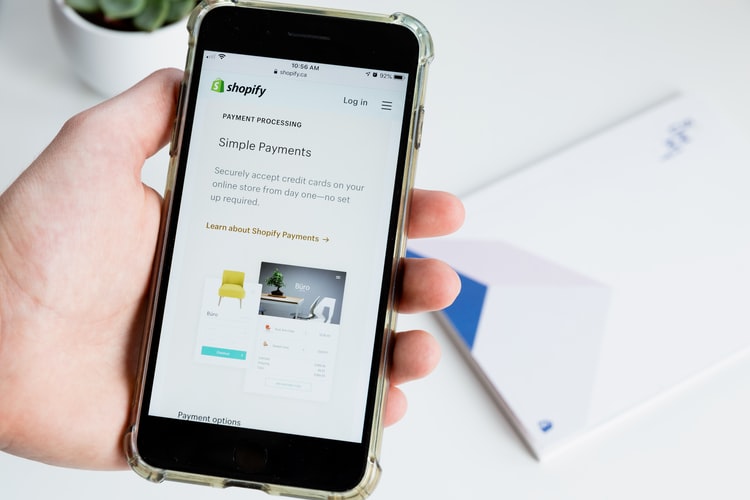
Retail software development has benefitted from the emergence of easy and simple eCommerce platforms. You do not need to spend a ton of money to start your own venture. You can easily choose between great platforms like WooCommerce, Shopify, Joomla, and BigCommerce. This has made it easier for people with lower investments to get into business in a short time.

2. The Growth of PWAs to boost Ecommerce-

Ecommerce is all about the app experience. The rise of smartphones and internet technologies have made it possible to create immersive shopping experiences in apps. However, just like the last point, small businesses cannot afford to break the bank in terms of custom app building. Enter PWAs or Progressive Web Apps. These mimic the website experience like an app.

3. Voice Search Influencing Ecommerce-

3. Voice Search Influencing Ecommerce-

Look around you. There is a huge proliferation in the number of smart devices we are using to communicate with the internet. From home assistants like Alexa to connected Car technology and Google Assist on our phones, we are speaking to search engines and allowing them to help us. Ecommerce web development should take into account the role of voice search. Advanced implementations now use custom AI software development to understand intent behind voice queries and deliver more accurate results

4. Social Media and Omnichannel Ecommerce Sales-

You would have heard your friends or relatives bragging about how they got a great lamp from Facebook’s Marketplace. In fact, for experts, this is the next logical step in the evolution of eCommerce. As a business that is looking to get into this field, you must focus on omnichannel eCommerce sales and marketing. This can open up entirely new avenues for sales.

5. The Impact of Augmented Reality on Ecommerce-

Tech innovators and software developers are now looking at ways and means of creating as realistic an eCommerce buying experience as possible. This is why Augmented Reality or AR is going to become the next big thing in eCommerce software development. People want to see how they would look if they would be able to have a virtual try for the products they buy.

The Ecommerce Software Development Support System: What is it?

While the above technologies are some of the biggest trends in the eCommerce software development ecosystem, there is more that meets the eye.

Every developer or entrepreneur who has started an Ecommerce venture knows one thing for sure- it is all about the experience.

To support this, there are three major verticals that you need to take into consideration. In this section, we are going to list them down-

The Cloud Support-

When you are hosting an Ecommerce website you are handling tons of data and details that not only need lightning-fast processing speeds but also guarantee a safe and secure environment. This is where the Cloud becomes important when it comes to creating a good user experience for the platform.

Payment Solutions Providers-

Payment Solutions Providers-

The growth of Ecommerce happened around the same time when the Fintech industry started booming. The better the payment solutions providers, the easier and comfortable will be the user experience. As a business, you will have to pick the ones that can benefit the business to the greatest possible extent.

Mobile Commerce-

Do you think that the Ecommerce industry would have taken off in the way it did if smartphones did not exist? Probably not. This is why mobile or M-commerce has become such an integral part of Ecommerce software development. Mobile responsiveness, experiences, and speed are what make a good platform great.

The Bottom Line:

There is a reason why the advent of new technology is taking Ecommerce software development to new heights. In this article, we have tried to look at some technologies that are redefining the Ecommerce ecosystem. We have also looked at technologies that are considered as the bare foundations that help in setting up an Ecommerce platform that is solid in terms of UI and UX. If you have any other questions that you want us to answer, drop them in the comments section below.

 

Content Rally wrapped around an online publication where you can publish your own intellectuals. It is a publishing platform designed to make great stories by content creators. This is your era, your place to be online. So come forward share your views, thoughts and ideas via Content Rally.

View all posts

Leave a Reply

Your email address will not be published. Required fields are marked *

Related

UX Design

Simplifying Finance: The Role Of UX Design In Financial Services

Exposure to financial services in this busy economic market is sky-high. However, not every financial service is up to the mark with its customer-centric approaches. In turn, FinTech is the next big thing in the financial world. Digital platforms are engaged in interacting and perceiving with the users. The innovative capabilities of FinTech applications largely determine user experience (UX). To make financial services more accessible and approachable to users, ux design financial services are far better than traditional complex financial services. The world of digital finance might seem intimidating to many for its complex terminology and lengthy processes. Moreover, a lack of customer-centricity is the main concern for many while dealing with the complex economic market. Simplifying finance is best possible through “Humanizing FinTech,” which is largely convinced with UX design. What is UX design? Well, at the core, the main terminology here is to define an intuitive design to embrace a better user experience and bridge the gap between financial services and users. Prominent Roles Of Ux Design In Financial Services The pivotal experience of financial service should be ecstatic for the users. It cannot be complex and boring. Financial aspects are already boring, and things need to be easy with digitalization. So, FinTech, through UX designs, can be more accessible and engaging for the users. Every financial sector is trying to solve the users' problems and manage the people's concern. Apart from that, a financial service cannot be vulnerable to its security aspects. However, the best part is that UX designs can provide you with a streamlined process to simplify financial services and engage better digital finance to ensure security while bridging the services gap with users. Bridge The Gap One of the main roles of UX design is to eliminate the gaps between user understanding and financial services. UX designers want users to understand the financial concepts and also become intuitive to the processes. What do you want? A boring spreadsheet? Or a colorful graph with pie charts? No one wants a boring data sheet that is complex to navigate and also not eye soothing. In contrast, UX designers help accomplish financial tasks quite easily for any user. For instance, transferring funds, managing insurance policies, and considering stocks are different financial services, but UX designs make it all easy for you to understand and navigate. No one wants to increase their learning curves while using financial services. Common people do not use complex financial data. They are unaware of the critical financial exposures but need to manage their finances instead. So, if you are using an app, you would like to get some attractive features that are easy to understand and ready to help you with colorful approaches. Well, demystifying complex financial data and presenting it easily to the users is the foremost priority of a UX designer. Focusing On User Trust And Security The role of UX design in financial applications is fostering customer loyalty and creating a positive user experience. However, gaining the audience's or users' trust in the FinTech industry is quite tough. Well, a streamlined process is the only solution to generate an intuitive design for a better user experience. However, it does mean anything to gain the trust of the users. If you want to trust them, you must focus on creating a better security process. For instance, if you use a biometric authentication process like facial recognition or fingerprint scanner, it can generate a better user experience. These are the ultimate solutions to present a user-friendly approach in advanced ways to engage people in a non-intrusive way. Reinforcing the trust of the people is best possible with UX designs like encrypted notifications and secure connections. So, it is time for you to foster user experience and gain their trust. Streamlining The Complex Financial Process The biggest role of UX design is to transform the traditional banking process into a digital landing platform. Well, what are the features of the traditional banking process? Lots of paperwork. Lack of transparency. Lengthy approval times. However, with digitalization, things are changing. Financial sectors are becoming more and more efficient in dealing with the instances of consumers and getting friendly. This is where digital landing platforms efficiently manage your concern with various features. Real-time updates. Time efficient services. Ensures transparency. The whole approach of UX design is to provide you better user experience by analyzing the streamlining process. So, now the loan approvals will be quick through digital applications, and you will also get the best seamless experience. Engaging User Satisfaction The difference between UX designers and graphic designers is that UX designers follow a user-focused and multidisciplinary approach. In contrast, Graphic designers maintain the curves with specialized pixel-focused consequences. Apart from that, emotional design, creative thinking, and prototyping are the common responsibilities of these designers. It is hard to believe that 90% of people stop using an app due to poor performance. So, a positive user experience with better quality and usability is expected. Enhanced user satisfaction with customization may increase the retention rate for a financial service. For instance, if you are using a banking app, you would like to check your account balance or transact money quickly. Now if it has an easy-to-use interface and you can work on it quickly, then you would like to keep the app on your phone. Digital financial services are difficult to avoid in this fast-paced world but also cumbersome to use in many cases. Finding a better UX-designed financial service is always a better resolution to avoid inconsistency and engage proximity. Read Also: Guide to Hiring a WordPress Developer 7 Advantages of Using Website Design Templates Why Prototype Design Is A Way To Make Your UX Design Perfect

READ MOREDetails
Personalized Inflatables

Crafting Personalized Inflatables: Aligning Designs With Your Unique Taste And Preferences

Do you want an inflatable in your own personal design? That's a great choice! Or maybe you want an inflatable sign for your business. Or maybe you're looking for something more fun, like a bounce house or an inflatable slide. Whatever you need, there is a wide variety of options to choose from. And if you can't find what you're looking for on the market, you can have it custom-made. How cool is that? Two of the most defining benefits of inflatables are their versatility and customizability. Versatility, because they can be used in a variety of settings, from indoor parties to large festivals. You can use them for party decoration, amusement park rides, advertising, and many more. And customizability, because they can be made to match your vision. If you have a specific need or preference, you can simply give your designs to an inflatable manufacturer and have it done in that exact image. You can choose the size, shape, color, and design of your inflatable. The ability to customize inflatables allows you to add a personal touch and create a unique design that is not available anywhere else. In this article, we will explore the idea of crafting inflatables that reflect your unique tastes and preferences, helping you to create designs that express your individuality. Let’s dive into it. Why Personalized Inflatables? The market is already saturated with generic inflatable designs. If you go online or visit inflatable stores, you will find almost the same designs everywhere. So if you want to stand out, you need to be different from the rest. And to be different, you need to be unique. Your custom inflatable design should not be ordinary, or else you will run the risk of looking like everyone else and having no special edge. Here are some more reasons to consider crafting personalized inflatables. Uniqueness Crafting your own personalized inflatable designs helps you to get a one-of-a-kind design that nobody else will have now - and in the future. This gives you a sense of exclusivity, as you know that your inflatable is unique and that no one else has the same one. Express Your Individuality It also allows you to express your own personal style and creativity, as you can choose the colors, patterns, and design elements that you want. As a result, your inflatables become an extension of your personality. This can be particularly valuable for businesses that want to advertise their brand identity to potential customers. For instance, if they want to appear as a fun brand, they can use certain blow up inflatables or replicas of their products to mesmerize potential customers and get them hooked on it. Memorability Something that stands out is sure to be remembered. People will remember the unique inflatable that caught their eye and was different from the others. So if you want to create an inflatable that truly leaves a lasting impression on people, you should definitely consider creating a personalized inflatable. How to Craft Personalized Inflatables The process of creating your own personalized inflatables begins when you have a clear idea of what you want. It may seem like a daunting task, but don't be discouraged; the inflatable manufacturer will handle most of the heavy lifting. With the right guidance and a touch of creativity, your unique inflatable vision can come to life. Here is a simple breakdown of the process. Choose the Right Type of Inflatable Consider your specific needs and goals when choosing an inflatable. What do you need it for? Will you be using it for a business exhibition? If so, you may want to consider a product replica, inflatable signage of your business logo, or regular inflatables designed with your brand elements. The Design Concept Think creatively about your inflatable design. What message do you want to communicate, or what theme do you want to explore? You could sketch it out on paper or simply describe your ideas to an inflatable manufacturer. They will have a designer create a visual representation of your concept. Material and Size Once you are happy with the design, you can move on to choosing the material for your inflatable. PVC and nylon are the most popular choices, but you should make your decision based on your needs. Both materials have different strengths and prices. Nylon is generally stronger than PVC. So if you need something that can withstand rough handling and the test of time, nylon may be a better choice. However, keep in mind that it is more expensive. The size is also important. You need the exact size of the inflatable that meets your needs, as this will help ensure that it fits properly and is not too small or too large. Measure the dimensions of the area where you want to put them. Complete Your Order Make payment. Then wait. It usually takes a while for your inflatable designs to be manufactured. Finally, when your inflatable is ready to go, make sure to inflate it properly according to the instructions provided. Then sit back, relax, and watch as your inflatable designs come to life! Just remember to take good care of your inflatable so that it lasts as long as possible. In Conclusion If you think the world is already too full of generic designs, then personalized inflatables are the way to go. With these custom creations, you can express your individuality and capture attention like never before - whether it's for personal celebrations, marketing campaigns, or special events. Trust me, they're sure to make an impact! Read Also: Where To Display Large Halloween Inflatables: Transform Your Front Yard, School Front, And More What Type Of Inflatables Should You Opt For At Your Business Event 6 Steps to make Your Trade Show a Success

READ MOREDetails
Structurespy com

Structurespy com: Is This Informational Website Worth Your Time?

I often get very confused when I come across a PERFECT website, but something just feels off.  Do you know what I mean? Have you ever come across such a website? I am talking about a particular one that claims to explain how things are built.  Additionally, it also looks quite well built, both physically and digitally.   That’s the case with Structurespy com. It shows up in searches for:   Engineering tools  Architecture ideas   Digital analysis platforms   But what exactly is it? Is it safe? Does it work as promised?   In this guide, I aim to clarify those questions. You’ll discover what Structurespy.com offers and how it works.  Additionally, I will also explain everything about its features and its limitations.  What Is Structurespy com? Structurespy.com is a web platform that covers a broad range of "structures."   This includes physical structures like bridges and skyscrapers. Additionally, it includes digital structures such as data systems and website frameworks.   Its primary goal is to educate users about building, maintaining, or analyzing different structures.   It combines case studies and visual explanations. Additionally, it also uses some analytical tools.  You can think of it as a blend of an online learning hub for engineers and a simple toolkit when you are in the mood to explore system structures.   Of course, the choice depends on your needs. But, this can be either very helpful or somewhat confusing.  How Structurespy com Works? Using Structurespy com is simple. Here’s how it generally works:  1. Sign Up Or Browse Freely: You can view certain parts of this site even if you don’t have an account.  Although advanced tools or interactive content might require registration.   2. Choose A Purpose:   You can either explore educational content like articles and case studies or use analytical features for digital systems.  3. Explore Or Analyze:   For physical structures, you might find breakdowns of well-known bridges or towers.   For digital systems, you can see how they are structured. Additionally, you will also notice how they detect errors.  In fact, I also check how they visualize performance issues.  4. Use A Few Visual Tools:   The platform focuses on visual learning. You will find diagrams, models, and images that simplify complex concepts.  5. Collaborate Or Share:   Since it’s cloud-based, users can access it from anywhere and share models or reports, which is great for teams, students, and remote workers.  In short, Structurespy.com mixes education with functionality. It’s not just software or a blog; it falls somewhere in between.  What Are The Key Features And Functions Explained? Here’s what Structurespy.com claims to offer:  1. Structural Case Studies:   These are detailed looks at famous engineering projects. These show how designers solved real problems using specific materials or methods.   So, they help students and professionals learn from real examples.     2. Digital System Analysis:   Are you someone who is interested in IT or data? Well, lucky you! This site includes a section for analyzing digital structures.   So, this includes examining system architecture. Additionally, it includes finding vulnerabilities.  In fact, it also has a section that steadily reviews web frameworks.  3. Visual Learning Tools:   Most content relies on visuals. Sometimes it's photos and diagrams.  Additionally, you can also sometimes need short videos. These help simplify complicated topics like data structure flow or load distribution.  4. Cloud-Based Access:   Being web-based means you don’t need to download heavy software. You can log in and work online while saving your progress.   Reviews mention team features for collaborative editing, useful for group projects.  5. Educational Resources:   It’s not just a tool. It’s also a knowledge hub. There are guides and simple explanations for those wanting to learn the basics of structural design, engineering, or digital architecture.  6. Reporting And Exporting Options:   Users can create quick summaries. Also, they can export findings. While it’s not as powerful as an engineering software, it can handle basic reporting and presentation-ready data.   Overall, the platform feels like a mix of educational content and analytical tools.   It focuses more on insight and visualization than on deep computational analysis. What Are The Common Issues People Have Faced: Analyzing The User Experiences  Users have shared mixed experiences. Here’s a summary:  What people like:  Simple interface that is easy to navigate.  Engaging case studies along with high-quality visuals  Useful for students. Also, it can be used by hobbyists as well as for general learning.  What people don’t love:  It has a limited depth for professional engineers.  Additionally, some advanced tools may require payment.  Also, it has some features that are more conceptual than practical. Yes, they are good for learning, but less so for real analysis.  In addition, you might face occasional slow loading. In fact, you might even face login problems, especially with large visual content.  Plus, there is confusion about whether it’s an educational platform or a software service.  Finally, there is a visible lack of detailed technical support.  Overall, the feedback highly suggests that Structurespy com offers good value for learning.  Additionally, it also gives a good light analysis. But you should not confuse it with full-scale engineering software.  What Are The Best Alternatives To Structurespy Com?  If Structurespy.com doesn’t quite meet your needs, there are several strong alternatives:  First, I have STAAD.Pro for you. It is a powerful and standard tool for structural design. In fact, you can also use it for load analysis.  Then, we have ETABS. This is great for building design. You can use it especially for complex shapes and skyscrapers.  Another amazing one is Autodesk Robot Structural Analysis. It works with Revit. Also, it supports BIM workflows.  Lucidchart is another one that is ideal for mapping out the digital system architecture as well as flowcharts.  Microsoft Power BI helps you visualize data structures. Additionally, you can use it for performance metrics.  Then, we have Neo4j. It is really good when you need to analyze graph-based data structures and relationships.  There is also ArchDaily, which focuses on design and architecture with practical insights.  I also really like the Skyscraper Center. I find it to be the Database of tall buildings. Additionally, it has all their structural details.  Finally, I want to mention Engineering.com. It offers educational articles. Additionally, it also covers news as well as case studies. The Most Significant Difference Between Structurespy And Its Alternatives: The most significant difference in this case is that while most websites focus on information that is easily available on the internet, some sites even add visuals for aesthetic appeal, Structurespy focuses on performance statistics.  Moreover, there are so many sites highlighting biographical sketches and beautiful pictures of famous architects.  In contrast, Structurespy offers an x-ray vision of the actual structures of buildings.  As a result, the difference here is Structurespy’s Interactive 3D Structure Deconstruction. This feature can explore underlying systems, relationships, and layers that hold a building together.  Also, the website recently added an actionable feature called Spy Tools, including Load Estimator and R-Value Calculator for users. Additionally, the detailed Material & Systems Library offers technical information, including design references in contrast to inspirational galleries on other sites. Information Covered By Structurespy com: The content on the platform has been curated meticulously.  Moreover, it spans the overall spectrum of the architecture world, touching upon concepts of building and design in detail.  On that note, let’s check out the type of information that Structurespy covers.  1. Architectural Structure: The category for architectural structure highlights the skeletal structure of buildings and engineering principles.  Moreover, it covers information on earthquake-resistant structures, base types, truss typology, material properties, automated design processes, long-span structures, and structural systems.  2. Building Envelopes And Materials: This category covers information related to the mass surface that controls the visual, mechanical, and thermal effects.  Also, this section highlights topics on smart glazing, curtain wall systems, moisture barrier detailing, sustainable cladding, material life-cycle analysis, and thermal bridges.  3. Interior And Product Design: The interior and product design category on the website covers topics on universal design principles, acoustics, lighting design, and object design theory.  4. Sustainability And Technology: This category highlights how modern design solutions are responding to the diverse environmental demands in the context of technological advances.  Moreover, here discussions usually focus on rainwater harvesting systems, smart building technology integration, BIM workflows, net-zero buildings, and passive house standards. Is The Platform Structurespy Com Worth It?  If you are a learner or just an enthusiast, Structurespy.com can be a good starting point.   But if you need technical calculations, choose an alternative.  Additionally, if you need to do code compliance or need simulation tools, one of the alternatives may work better.  Structurespy.com is a mix of a learning hub and a structured visualization tool.   It’s safe to explore, easy to use, and engaging for students or design enthusiasts.   The visuals help you learn how things are built, and the cloud-based setup lets you access them anywhere.  However, it’s not a substitute for real structural analysis software. You should look at it as a secondary platform if you are a professional who needs:  Precision   Compliance   Simulation Features   But, for anyone interested in learning about how things hold together, it’s worth checking out.

READ MOREDetails