Published on: 03 August 2021
Last Updated on: 10 January 2025
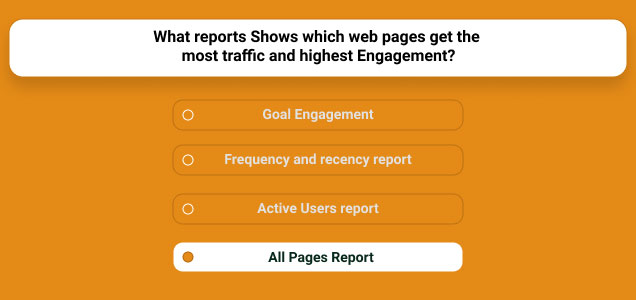
What report shows which web pages get the most traffic and highest engagement? Google Analytics is the treasure trove of information, and with the help of this, marketers analyze the performance of their website from time to time. In this article, I will explain in detail how Google Analytics Page Reports helps you access the performance of your content and the actions visitors take on your site.
What Report Shows Which Web Pages Get The Most Traffic And Highest Engagement?
The answer to your question What report shows which web pages get the most traffic and highest engagement? is All Pages Report. This ‘Pages Report’ displays the top pages on your website based on traffic, page value, % exit, bounce rate, entrances, average time on page, unique page views, and each page’s page views.At the same time, this report is going to help you to find quick and low-performing or low-quality pages that should be upgraded to enhance your content marketing strategies in the long run. Now, you need to understand that there is some difference between landing pages and all pages in Google Analytics. All Pages Report will show you the entire performance of your website, whereas landing pages will show you how people entered your website.
How Can Pages Report Help You To Optimize Your Content?
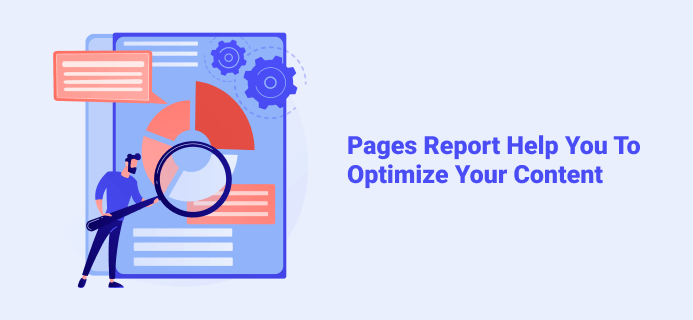
Pages Report will help you to quickly view the top content along with the average amount of revenue each page makes. In addition, this report helps you determine what content performs best on your website.At the same time, you will be able to view the top content section via this report. Keep in mind that this report will help you know where visitors are interacting with the events. This way, you will be able to determine both low quality and top pages on your website.The low-quality or outdated pages can be improved with dates, images, videos, or even you can add the latest infographic to make the content more useful for the audience. Thus, this way, Pages Report can help you to optimize your content to a great extent.
Sample Site Content Report In Google Analytics
The site content reporting sections contribute unique content-focused views revealing how users can interact with your site content.
1. Exit Pages Report:
Report that highlights data related to where users leave your site form. This report is useful in calling the attention pages which should be given the most priority to drive traffic to your website.On the other hand, it’s excellent that some pages should be left often that include high traffic pages, goal confirmation pages, order confirmation pages, etc.
2. Landing Pages Report:
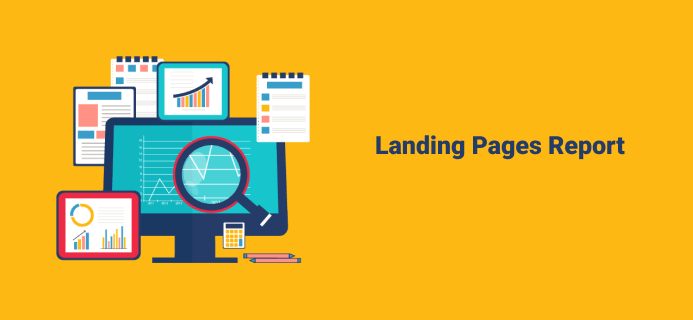
This report focused on examining landing page metrics and behavior. It analyzes pages from the view of how often your visitors are landing on your website and what their duration is. Moreover, landing pages are great for distinguishing which pages have the highest and lowest bounce rates. You can also identify conversions from this report.
3. All Pages Report:
Report that provides behavioral stats on every single page of your site. This includes page value, exit, entrances, time on page, page views, etc.All Pages Report is one of the most important portions of Google Analytics that helps to improve the performance reports of your website.
The Final Thoughts
All Pages Reports is the answer to your question what report shows which web pages get the most traffic and highest engagement. I have tried my best to explain to you in detail about Google Analytics Page Report and its uses for your website. Besides, if you come across any doubts, please don’t hesitate to mention them in the comment section below!More Resources:
Content Rally wrapped around an online publication where you can publish your own intellectuals. It is a publishing platform designed to make great stories by content creators. This is your era, your place to be online. So come forward share your views, thoughts and ideas via Content Rally.
Exposure to financial services in this busy economic market is sky-high.
However, not every financial service is up to the mark with its customer-centric approaches. In turn, FinTech is the next big thing in the financial world.
Digital platforms are engaged in interacting and perceiving with the users. The innovative capabilities of FinTech applications largely determine user experience (UX). To make financial services more accessible and approachable to users, ux design financial services are far better than traditional complex financial services.
The world of digital finance might seem intimidating to many for its complex terminology and lengthy processes. Moreover, a lack of customer-centricity is the main concern for many while dealing with the complex economic market.
Simplifying finance is best possible through “Humanizing FinTech,” which is largely convinced with UX design.
What is UX design?
Well, at the core, the main terminology here is to define an intuitive design to embrace a better user experience and bridge the gap between financial services and users.
Prominent Roles Of Ux Design In Financial Services
The pivotal experience of financial service should be ecstatic for the users. It cannot be complex and boring. Financial aspects are already boring, and things need to be easy with digitalization.
So, FinTech, through UX designs, can be more accessible and engaging for the users.
Every financial sector is trying to solve the users' problems and manage the people's concern. Apart from that, a financial service cannot be vulnerable to its security aspects.
However, the best part is that UX designs can provide you with a streamlined process to simplify financial services and engage better digital finance to ensure security while bridging the services gap with users.
Bridge The Gap
One of the main roles of UX design is to eliminate the gaps between user understanding and financial services. UX designers want users to understand the financial concepts and also become intuitive to the processes.
What do you want?
A boring spreadsheet? Or a colorful graph with pie charts?
No one wants a boring data sheet that is complex to navigate and also not eye soothing. In contrast, UX designers help accomplish financial tasks quite easily for any user.
For instance, transferring funds, managing insurance policies, and considering stocks are different financial services, but UX designs make it all easy for you to understand and navigate.
No one wants to increase their learning curves while using financial services. Common people do not use complex financial data. They are unaware of the critical financial exposures but need to manage their finances instead.
So, if you are using an app, you would like to get some attractive features that are easy to understand and ready to help you with colorful approaches.
Well, demystifying complex financial data and presenting it easily to the users is the foremost priority of a UX designer.
Focusing On User Trust And Security
The role of UX design in financial applications is fostering customer loyalty and creating a positive user experience. However, gaining the audience's or users' trust in the FinTech industry is quite tough.
Well, a streamlined process is the only solution to generate an intuitive design for a better user experience. However, it does mean anything to gain the trust of the users. If you want to trust them, you must focus on creating a better security process.
For instance, if you use a biometric authentication process like facial recognition or fingerprint scanner, it can generate a better user experience. These are the ultimate solutions to present a user-friendly approach in advanced ways to engage people in a non-intrusive way.
Reinforcing the trust of the people is best possible with UX designs like encrypted notifications and secure connections.
So, it is time for you to foster user experience and gain their trust.
Streamlining The Complex Financial Process
The biggest role of UX design is to transform the traditional banking process into a digital landing platform.
Well, what are the features of the traditional banking process?
Lots of paperwork.
Lack of transparency.
Lengthy approval times.
However, with digitalization, things are changing. Financial sectors are becoming more and more efficient in dealing with the instances of consumers and getting friendly. This is where digital landing platforms efficiently manage your concern with various features.
Real-time updates.
Time efficient services.
Ensures transparency.
The whole approach of UX design is to provide you better user experience by analyzing the streamlining process. So, now the loan approvals will be quick through digital applications, and you will also get the best seamless experience.
Engaging User Satisfaction
The difference between UX designers and graphic designers is that UX designers follow a user-focused and multidisciplinary approach. In contrast, Graphic designers maintain the curves with specialized pixel-focused consequences.
Apart from that, emotional design, creative thinking, and prototyping are the common responsibilities of these designers.
It is hard to believe that 90% of people stop using an app due to poor performance. So, a positive user experience with better quality and usability is expected.
Enhanced user satisfaction with customization may increase the retention rate for a financial service. For instance, if you are using a banking app, you would like to check your account balance or transact money quickly.
Now if it has an easy-to-use interface and you can work on it quickly, then you would like to keep the app on your phone.
Digital financial services are difficult to avoid in this fast-paced world but also cumbersome to use in many cases. Finding a better UX-designed financial service is always a better resolution to avoid inconsistency and engage proximity.
Read Also:
Guide to Hiring a WordPress Developer
7 Advantages of Using Website Design Templates
Why Prototype Design Is A Way To Make Your UX Design Perfect
A website is essential today to grow your business in this technological era. To launch a website, you need domain registration and name, which helps the visitors identify and visit it.
A domain name acts as an address and guides the customers or visitors to your website. This demands a business to create or find a suitable name to bring traffic to its website and increase its sales.
For a business to improve its brand image, a website with a good domain name and design and high-speed hosting services are important. Therefore, searching for a distinct domain using a search tool and buying it from a reliable source helps you do the domain registration at an affordable price.
3 Factors Which You Have To Know About Domain Registration
Nevertheless, finding a suitable domain requires you to put some effort into creating a name that represents your business, brand, service, or product.
The IP address of your website consists of several numbers, which are not easy to remember. A domain registration name replaces the series of numbers to help one remember a website’s address easily.
A name that is easy to remember needs to follow certain requirements. Here are some points to consider when choosing a domain name.
1. Choose A Perfect Domain Name
To have your domain easy-to-remember and accessible to your customers, choose short names that include keywords related to your business or industry. For better traffic, your website anime selections are essential.
Avoid using hyphens, numbers, or special characters because they will confuse Internet users, who will find them difficult to type or remember when they search your website online.
Moreover, you need to do the domain registration and name with the right extension, which can be any of the generic top-level extensions such as .com, .org, .net, online, .site, .club, .biz, .info, .host, etc. The domain extensions will help give your business and brand more visibility and reachability.
2. Use The Domain Name Search Tool To Find A Perfect Name
With more than 2 billion websites on the web, it is not easy to just register domain instantly. To help you with it, you can get the assistance of a domain name service provider, who can offer you a domain name search tool, which will help you find the availability of your desired domain.
To use the tool, you need to enter your preferred name in the tool’s search bar and click on the ‘search' button. If the mentioned name is available, the page will redirect you to the purchase page or else. You will be prompted with the message “domain name not available.”
In such cases, you can change the spelling or change the extension and search until you get the domain registration. Relevant niches names are the best pick as the website’s names.
3. Protect Your Domain From Malicious Intrusions
A domain registered or bought should be safeguarded from malicious intrusions. Once the domain registration is done, all your personal data provided for registration is available for the public to view.
Keep your domain secure. All the search engines are giving the maximum preferences to secure websites. The security maintained is not only giving your customer a safe place for transactions. It is also going to boost the positions of your websites.
To avoid viewing it, you can shield your information with security tools like the privacy and protection scans available with the registrar or web hosting service provider. By paying extra, you can opt for privacy protection.
Conclusion:
For your domain registration, you must have to follow these things and factors. Because you are doing the analysis about the registration process, you will have to know more about it. But if you have any plan to set up an e-commerce based website, you have to analyze the websites’ risky factors especially. And build the website as secure as possible. So take a look at the characteristics and investigate everything before going for the registration process.
Read Also:
SEO Website Design Tips for Small Businesses
Tips on Building Your Resume for a Website Design Company
How to Design an Effective Company Website
7 Rules of Effective Ecommerce Web Design
As the world continues to shift towards a more digital landscape, the significance of quality web applications has become progressively apparent.
Given the vast array of tools and technologies at the disposal of web developers, determining an appropriate starting point can prove challenging. Debugging is the method of identifying and fixing bugs or errors in software.
It is a vital aspect of web automation testing as it contributes significantly to the dependability and precision of the automated test results. Playwright is an open-source cross-browser testing framework released by Microsoft in 2020.
As stated by Systems Sciences Institute, the expenditure of addressing an error or bug discovered after product release was 4 to 5 times higher than pinpointing it during the configuration phase. The detected value during the maintenance phase can be exceeded by up to 100 times. Playwright developers operate at the API level and offer comprehensive tooling through the integrated Playwright Inspector.
Playwright Inspector is a powerful tool that authorizes developers to efficiently test and debug their web applications. Also, it facilitates creating automation scripts by furnishing auto code generation capabilities. Playwright Inspector allows you to inspect the Document Object Model (DOM) structure of a webpage, interact with web elements, and inspect CSS styles utilizing the Playwright API. It authorizes stepping through tests, picking locators, editing live locators, and seeing actionability logs.
This blog will dive into the basics of Playwright Inspector and explore its many features. So if you're ready to take your web development skills to the next level, buckle up and dive into the world of Playwright Inspector.
Before that, let's have a brief understanding of Playwright.
What is Playwright?
Developed by Microsoft, Playwright is an end-to-end open-source web testing and browser automation framework. Playwright offers outstanding cross-browser compatibility and convenient features. This makes it a perfect choice for automation and quality assurance purposes. The playwright is a flexible, robust, and efficient framework. It supports multiple languages like JavaScript, Java, Python, C#, and TypeScript.
Playwright utilizes a single automation API. This makes it steadfast and quick and produces consistent outcomes while running cross-browser testing. It provides a powerful set of testing features. These features can be utilized to simulate end-user interactions with the web application. Also, the framework authorizes testing complex scenarios such as file uploads, login flows, and other interactions. These test scenarios can be tough to test with other testing frameworks.
The software platform furnishes developers with a comprehensive selection of standard and personalized locators. This facilitates the straightforward and effective identification of elements on web pages. These locators can pinpoint elements based on a variety of attributes, including text content, position on the page, and other distinguishing features. With Playwright locators, developers can confidently identify elements on the DOM, ensuring the creation of substantial and steadfast test suites.
What is a Playwright Inspector?
Playwright Inspector is a Graphical User Interface based tool that helps testers and developers record scripts and debug Playwright tests. The tool helps generate boilerplate code. This can be a suitable starting point for building codes. Also, it assists developers and the Quality Assurance teams save time when writing the test script from scratch. Software developers can utilize the time saved to comprehensively understand the codebase and make informed modifications, as required, to enhance the efficacy of the testing suites.
The Playwright Inspector simplifies the process of debugging web applications. It is a browser-based development tool that facilitates developers to inspect, debug, and troubleshoot web applications. The tool authorizes developers to record user interactions, capture screenshots, and inspect HTML elements, CSS styles, and JavaScript code. Playwright Inspector furnishes a console for developers and testers to run arbitrary JavaScript code in the context of the inspected page.
To scale Playwright Inspector, an AI-powered test orchestration and test execution platform like LambdaTest offers an online farm of 3000+ browser and OS combinations to execute the Playwright test. You can effortlessly test your application as its scalable cloud infrastructure enables parallel test execution where you can run test cases altogether. It can also integrate with your existing testing infrastructure.
It effortlessly plugs into your Playwright tool, eliminating the need for complex configurations. LambdaTest's Playwright Inspector
empowers you to debug and analyze Playwright scripts effortlessly. Inspect element properties, verify page behavior, and optimize automated tests using this user-friendly tool.
Installation and Setup Instructions
Installation and setup instructions are crucial for any software tool, and Playwright Inspector is no exception. As a beginner, it's essential to follow these instructions carefully to ensure that you can start using the tool without any issues. To install Playwright Inspector, first, you need to make sure that you have Node.js installed on your computer or laptop. Once you have Node.js, you can install Playwright Inspector through npm by running the command "npm i -g playwright-inspector" in your terminal.
Upon successful installation, the tool can be initiated by executing the command "playwright-inspector" in your terminal. You can also use Playwright Inspector with other browsers like Firefox and Safari by installing the corresponding browser extensions. Following these instructions will give you a smooth and hassle-free experience of using Playwright Inspector, authorizing you to debug and troubleshoot your web applications with ease.
How to Inspect Elements in Playwright Inspector
If you are new to Playwright Inspector, you may be wondering how to inspect elements within your web page. Fortunately, Playwright Inspector comes equipped with a number of useful tools and features to assist you in efficiently identifying and inspecting elements on your web page. To start, simply launch Playwright Inspector and navigate to the web page you want to inspect.
Once you are on the page, right-click on any element within the page and select "Inspect element" from the context menu. This will bring up the Playwright Inspector pane, where you can view the HTML and CSS code for the selected element. You can also view any associated styles and properties. From there, you can use the various tools and features within Playwright Inspector to further inspect and manipulate the element, making it easier than ever to identify and troubleshoot any issues within your web page.
Benefits of Playwright Inspector
The Playwright Inspector tool presents lots of benefits. Let us consider a few pivotal benefits of the Playwright Inspector:
1. Easy Debugging:
Playwright Inspector facilitates the process of debugging Playwright scripts by furnishing a visual interface. This authorizes developers to inspect the page, make alterations to its state, and swiftly identify the cause of issues.
2. Record and Replay:
The tool presents a record and replay feature that authorizes testers and QA teams to record end-user activities on the page and replay them for debugging purposes. The record and replay feature can help pinpoint issues that may occur only during specific user interactions.
3. Robust Logging:
Playwright Inspector presents robust logging abilities that authorize testers and QA teams to outline the execution flow of the test script. This helps swiftly determine issues and fix them, thereby enhancing confidence in the code and application itself.
4. Intuitive Interface:
The Playwright Inspector boasts an intuitive and user-friendly interface that is simple to navigate and operate, even for testers and QA teams who are new to the Playwright platform.
5. Cross-Browser Support:
The Playwright Inspector facilitates the testing and debugging of applications across various platforms as it supports multiple Chromium-based browsers such as Chrome, Edge, and Firefox. This enables developers to ensure their applications perform optimally on different browsers.
6. Breakpoints:
The Playwright Inspector tool is designed to enhance the testing process for software testers and QA teams. With this tool, users can set breakpoints in their test scripts, enabling them to pause test execution at specific points and thoroughly investigate the page's state. This increased level of control and visibility allows for improved efficiency and effectiveness in the testing process.
Best Practices for Using Playwright Inspector
The Playwright Inspector tool furnishes developers with an intuitive solution for testing web applications at scale. With the help of Inspector, developers and testers can debug their web automation scripts, view page elements and attributes, and pinpoint issues that may be causing the tests to fail. To make the most out of this tool, it is paramount to follow the best practices for using it.
Here are eight best practices for using Playwright Inspector:
● Familiarize yourself with the Inspector UI.
● Utilize the search feature to swiftly pinpoint page elements.
● Utilize the highlight feature to visually locate elements on the page.
● Utilize the console to test JavaScript code and interact with the page.
● Utilize the network tab to inspect network requests and responses.
● Utilize the performance tab to pinpoint performance issues.
● Utilize the snapshot feature to capture a snapshot of the current page state for later analysis.
● Utilize the playback feature to replay test scripts and identify errors.
By following these best practices, you can utilize Playwright Inspector to its full potential and optimize your web automation testing process.
Conclusion
Playwright Inspector is a powerful tool that can help developers troubleshoot issues and enhance the quality of their web applications. With its user-friendly interface and wide range of features, Playwright Inspector is a prominent addition to any developer's toolkit. By following the steps outlined in this beginner's guide, you can start utilizing Playwright Inspector today and take advantage of its many benefits. Whether you are a seasoned developer or just starting out, Playwright Inspector is a must-have tool for anyone looking to enhance their web development skills.
Read Also:
Mobile Testing With Appium On Lambdatest
10 Reliable Free Currency APIs For Your Business
Using Tracking Code, Google Analytics Can Report On Data From Which Systems?














 In this article, I will explain in detail how Google Analytics Page Reports helps you access the performance of your content and the actions visitors take on your site.
 Pages Report will help you to quickly view the top content along with the average amount of revenue each page makes. In addition, this report helps you determine what content performs best on your website.
At the same time, you will be able to view the top content section via this report. Keep in mind that this report will help you know where visitors are interacting with the events. This way, you will be able to determine both low quality and top pages on your website.
The low-quality or outdated pages can be improved with dates, images, videos, or even you can add the latest infographic to make the content more useful for the audience. Thus, this way, Pages Report can help you to optimize your content to a great extent.
Pages Report will help you to quickly view the top content along with the average amount of revenue each page makes. In addition, this report helps you determine what content performs best on your website.
At the same time, you will be able to view the top content section via this report. Keep in mind that this report will help you know where visitors are interacting with the events. This way, you will be able to determine both low quality and top pages on your website.
The low-quality or outdated pages can be improved with dates, images, videos, or even you can add the latest infographic to make the content more useful for the audience. Thus, this way, Pages Report can help you to optimize your content to a great extent.
 This report focused on examining landing page metrics and behavior. It analyzes pages from the view of how often your visitors are landing on your website and what their duration is.
Moreover, landing pages are great for distinguishing which pages have the highest and lowest bounce rates. You can also identify conversions from this report.
This report focused on examining landing page metrics and behavior. It analyzes pages from the view of how often your visitors are landing on your website and what their duration is.
Moreover, landing pages are great for distinguishing which pages have the highest and lowest bounce rates. You can also identify conversions from this report.