










Seen the Rago Fabrication Website Guides & Videos?
Published on: 13 May 2021
Last Updated on: 02 January 2025
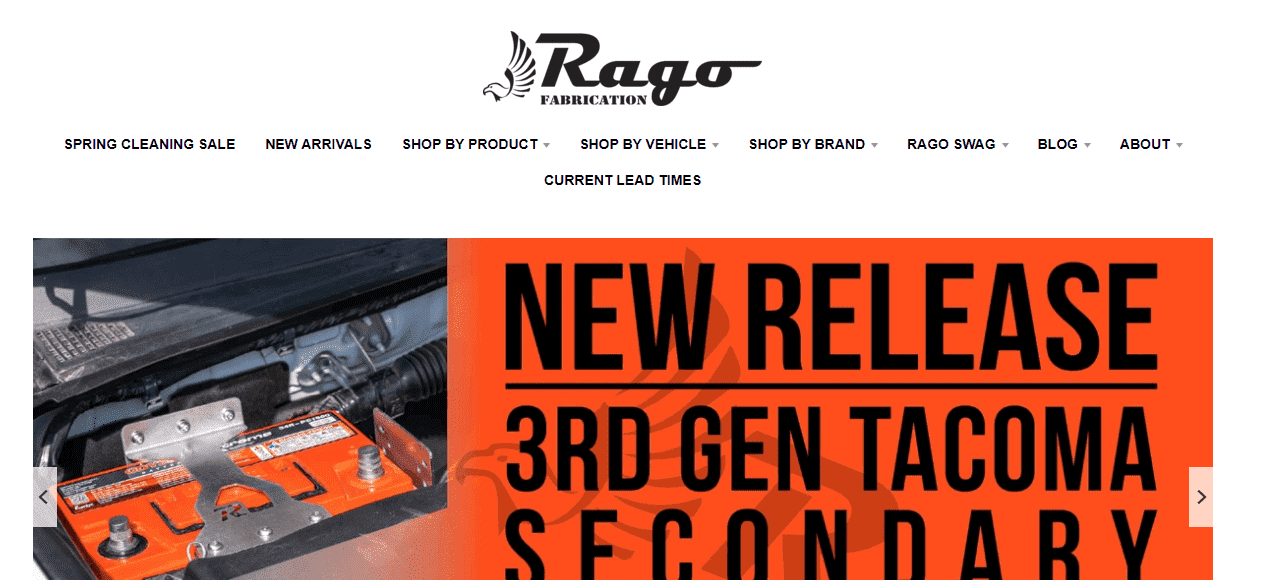
I’ve got a 4Runner and I ordered an antenna mount for my new CB radio from the Rago Fabrication website. It took a couple of days to arrive and I was struck when I opened the packaging that the product itself was nice and robust and of high quality.
I got to the weekend and I had a spare afternoon to try and install myself - as I wanted to save on the cost of having it professionally done. The problem is that I couldn’t quite work out how it bolted onto my Toyota, so I kinda thought “that was that” and that I should start calling around for a company to put it on for me.
However, before I made that booking, I went back to the Rago Fabrication website to see if there was any help I could get. I was very pleasantly surprised.

Popular

Technologies For Creating A Startup Idea
20 Feb 2023

How to Download Facebook Videos on Android?
07 Feb 2019

7 Rules of Effective Ecommerce Web Design
28 Jan 2021

Why Are Online Transactions Convenient?
07 Dec 2023

Recent


Related

Ecommerce Software Development Trends
In the past year, eCommerce has expanded from being something that would guarantee convenience to become somewhat of a necessity. In fact, according to experts, it has been one of the major avenues that have kept the global economy going. When the pandemic hit and lockdowns ensued, policymakers quickly realized that Ecommerce could be a major way for enabling people to access resources. Even before the pandemic hit, Ecommerce commerce was growing at staggering double-digit growth rates. According to UNCTAD, global Ecommerce has hit 25 trillion in 2018! For businesses, this means an exciting new opportunity. You can either take your physical brick-and-mortar store online or you can simply start an eCommerce platform and become an aggregator. In this resource article, we are going to focus on the best Ecommerce software development trends for businesses. List of 5 Major Ecommerce Software Development Trends 1. The Rise of Ecommerce Platforms- Retail software development has benefitted from the emergence of easy and simple eCommerce platforms. You do not need to spend a ton of money to start your own venture. You can easily choose between great platforms like WooCommerce, Shopify, Joomla, and BigCommerce. This has made it easier for people with lower investments to get into business in a short time. 2. The Growth of PWAs to boost Ecommerce- Ecommerce is all about the app experience. The rise of smartphones and internet technologies have made it possible to create immersive shopping experiences in apps. However, just like the last point, small businesses cannot afford to break the bank in terms of custom app building. Enter PWAs or Progressive Web Apps. These mimic the website experience like an app. 3. Voice Search Influencing Ecommerce- Look around you. There is a huge proliferation in the number of smart devices we are using to communicate with the internet. From home assistants like Alexa to connected Car technology and Google Assist on our phones, we are speaking to search engines and allowing them to help us. Ecommerce web development should take into account the role of voice search. Advanced implementations now use custom AI software development to understand intent behind voice queries and deliver more accurate results 4. Social Media and Omnichannel Ecommerce Sales- You would have heard your friends or relatives bragging about how they got a great lamp from Facebook’s Marketplace. In fact, for experts, this is the next logical step in the evolution of eCommerce. As a business that is looking to get into this field, you must focus on omnichannel eCommerce sales and marketing. This can open up entirely new avenues for sales. 5. The Impact of Augmented Reality on Ecommerce- Tech innovators and software developers are now looking at ways and means of creating as realistic an eCommerce buying experience as possible. This is why Augmented Reality or AR is going to become the next big thing in eCommerce software development. People want to see how they would look if they would be able to have a virtual try for the products they buy. The Ecommerce Software Development Support System: What is it? While the above technologies are some of the biggest trends in the eCommerce software development ecosystem, there is more that meets the eye. Every developer or entrepreneur who has started an Ecommerce venture knows one thing for sure- it is all about the experience. To support this, there are three major verticals that you need to take into consideration. In this section, we are going to list them down- The Cloud Support- When you are hosting an Ecommerce website you are handling tons of data and details that not only need lightning-fast processing speeds but also guarantee a safe and secure environment. This is where the Cloud becomes important when it comes to creating a good user experience for the platform. Payment Solutions Providers- The growth of Ecommerce happened around the same time when the Fintech industry started booming. The better the payment solutions providers, the easier and comfortable will be the user experience. As a business, you will have to pick the ones that can benefit the business to the greatest possible extent. Mobile Commerce- Do you think that the Ecommerce industry would have taken off in the way it did if smartphones did not exist? Probably not. This is why mobile or M-commerce has become such an integral part of Ecommerce software development. Mobile responsiveness, experiences, and speed are what make a good platform great. The Bottom Line: There is a reason why the advent of new technology is taking Ecommerce software development to new heights. In this article, we have tried to look at some technologies that are redefining the Ecommerce ecosystem. We have also looked at technologies that are considered as the bare foundations that help in setting up an Ecommerce platform that is solid in terms of UI and UX. If you have any other questions that you want us to answer, drop them in the comments section below.
READ MOREDetails
Top 10 FAQs You Need To Know About Reseller Hosting
With more and more businesses shifting their focus to the online market and setting up shops online, hosting is becoming increasingly popular. Many entrepreneurs are jumping into the concept of online marketing and reseller hosting in the hope of growing their businesses. With the increasing demand for hosting, a new industry has been formed in the market in the form of reseller hosting. As a result, reselling hosting is getting traction as one of the most profitable businesses today. What Is Reselling Hosting? Reseller hosting is a method where a hosting selling company rents hard drive space to another company. The other company then resells it to a third party. The owner who owns the account in the hosting is a reseller. As the demand for hosting is increasing, the market is filled with reselling hosting services. If you can see yourself doing this business or have a market in your area where you can launch this business, you can take help from unlimited reseller hosting. How Does Reselling Hosting Work? Establishing your reselling hosting business is a matter of a few steps. Just follow the steps given to launch your reseller hosting company today. Find a marker first. Do thorough research to see whether you know about a market where you can sell your services. Now purchase a reseller package that best suits your needs. Next, locate potential customers that are willing to pay for your services. Do not forget to create your brand. Finally, sell them to clients. FAQs: Everything You Need To Know With the high demand for hosting platforms due to the business shift on online platforms, entrepreneurs and business owners are leveraging this growth opportunity to build a business on reselling the hosting. This business startup has become quite popular among the younger generation because of its low initial cost and overall simplicity. Are you a web designer who is looking for another source of income? Or perhaps you have been mesmerized by this business opportunity that you want to try for yourself? No matter what your reasons are, we have compiled the top ten FAQs regarding reseller hosting. Q1: The Details Of Reselling Hosting? Some of the host contracts are based on per-client charges. So whenever a new client joins the network, the host charges a set amount. Well, that's a basic plan. There are packages with different payment systems. No matter which package you choose, there are few standard features that you should know. Reseller hosting gives you the ability to brand your own web hosting company. The ability to manage your plans. Disk spaces. Domain hosting. Bandwidth. Q2: What Are The Benefits Of Reselling Hosting? When it comes down to the benefits of reseller hosting, the list is rather longer than expected. You get to establish your own reseller hosting company. Make profits easily. Design your own web hosting plans and packages. Host and bill your customer using your unique brand. Low initial cost with a simplified process. Q3: Is It An Easy Way To Make Money? No! It is not as easy as you think. Remember, reselling hosting is similar to small business. And setting up a business is never an uneasy task. While you are establishing your reselling hosting company, you will encounter several problems. However, once you have established the business, it will provide you with a steady income without much effort. Q4: Are You Going To Need A Hosting Expert? Nope, you don’t have to be an expert. The provider will handle all the backend processes. You simply need to focus on building up your business. Server. Hardware. Connectivity. Network Infrastructure. Security. Updates. Everything mentioned above will be taken care of by the reseller hosting provider. However, it is a good idea that you check on these things to have additional information. Q5: How To Choose The Best Hosting Provider? Being a customer, you would always want to have the services of the best reseller hosting provider. Hence, in the same way, your customers will look for hosting that offers solutions to their problems. Therefore, here are a few features that you need to keep in mind while selecting a web hosting provider. Private nameservers. Brandable client panel. Impeccable customer support system. Easy to use cPanel. Fully-managed services. Q6: Do You Have Capital To Invest? If you think that setting up a reselling hosting business needs fortune in the form of investment, you are wrong. A reseller hosting business is a business that can be easily set up at an initial low cost. However, after the setup is complete, there are the following factors that you need to consider. Design of your business website. Marketing costs. Business insurance. Software license. Taxes. Q7: Will This Business Be A Career Path? The initial phase of this reseller hosting business career will be challenging. However, once the business has established itself, it will give you a steady flow of income. If you are thinking of taking this business as your career, it is important that you have some additional financial support to get you through the initial phase. Q8: Will The Clients Know It Is Your Service? The clients will have no idea that you are reselling the hosting. Therefore you can run your hosting business under your online banner and digital market your brand without your clients identifying who the original provider is. Hence, with that being said, you have total control over your reseller hosting business with your name written all over it. Q9: Can You Upgrade Your Business Anytime? Of course, you can. You are always open with the option to upgrade your plans as your business starts expanding. This helps you easily scale up your reseller hosting business. Q10: How Do I Get Started? To get started, you simply need to follow the steps mentioned in the section above talking about how reseller hosting works. The success of your business will lie in what type of hosting provider you are selecting and how high the demand is in your target market. Conclusion We hope that this gives you a good overview of what reseller hosting is all about and how you can establish your own reselling hosting business. If you have any other questions related to reselling ghosting, feel free to drop your queries in the comment section. Read Also: Is InterServer The Best Web Hosting Platform Of 2020? Why A2 Hosting Is One Of The Best Hosting 6 Things To Know Before Choosing Web Hosting For Your Website The Complete Guide To Choosing VPS Hosting
READ MOREDetails
Crafting Personalized Inflatables: Aligning Designs With Your Unique Taste And Preferences
Do you want an inflatable in your own personal design? That's a great choice! Or maybe you want an inflatable sign for your business. Or maybe you're looking for something more fun, like a bounce house or an inflatable slide. Whatever you need, there is a wide variety of options to choose from. And if you can't find what you're looking for on the market, you can have it custom-made. How cool is that? Two of the most defining benefits of inflatables are their versatility and customizability. Versatility, because they can be used in a variety of settings, from indoor parties to large festivals. You can use them for party decoration, amusement park rides, advertising, and many more. And customizability, because they can be made to match your vision. If you have a specific need or preference, you can simply give your designs to an inflatable manufacturer and have it done in that exact image. You can choose the size, shape, color, and design of your inflatable. The ability to customize inflatables allows you to add a personal touch and create a unique design that is not available anywhere else. In this article, we will explore the idea of crafting inflatables that reflect your unique tastes and preferences, helping you to create designs that express your individuality. Let’s dive into it. Why Personalized Inflatables? The market is already saturated with generic inflatable designs. If you go online or visit inflatable stores, you will find almost the same designs everywhere. So if you want to stand out, you need to be different from the rest. And to be different, you need to be unique. Your custom inflatable design should not be ordinary, or else you will run the risk of looking like everyone else and having no special edge. Here are some more reasons to consider crafting personalized inflatables. Uniqueness Crafting your own personalized inflatable designs helps you to get a one-of-a-kind design that nobody else will have now - and in the future. This gives you a sense of exclusivity, as you know that your inflatable is unique and that no one else has the same one. Express Your Individuality It also allows you to express your own personal style and creativity, as you can choose the colors, patterns, and design elements that you want. As a result, your inflatables become an extension of your personality. This can be particularly valuable for businesses that want to advertise their brand identity to potential customers. For instance, if they want to appear as a fun brand, they can use certain blow up inflatables or replicas of their products to mesmerize potential customers and get them hooked on it. Memorability Something that stands out is sure to be remembered. People will remember the unique inflatable that caught their eye and was different from the others. So if you want to create an inflatable that truly leaves a lasting impression on people, you should definitely consider creating a personalized inflatable. How to Craft Personalized Inflatables The process of creating your own personalized inflatables begins when you have a clear idea of what you want. It may seem like a daunting task, but don't be discouraged; the inflatable manufacturer will handle most of the heavy lifting. With the right guidance and a touch of creativity, your unique inflatable vision can come to life. Here is a simple breakdown of the process. Choose the Right Type of Inflatable Consider your specific needs and goals when choosing an inflatable. What do you need it for? Will you be using it for a business exhibition? If so, you may want to consider a product replica, inflatable signage of your business logo, or regular inflatables designed with your brand elements. The Design Concept Think creatively about your inflatable design. What message do you want to communicate, or what theme do you want to explore? You could sketch it out on paper or simply describe your ideas to an inflatable manufacturer. They will have a designer create a visual representation of your concept. Material and Size Once you are happy with the design, you can move on to choosing the material for your inflatable. PVC and nylon are the most popular choices, but you should make your decision based on your needs. Both materials have different strengths and prices. Nylon is generally stronger than PVC. So if you need something that can withstand rough handling and the test of time, nylon may be a better choice. However, keep in mind that it is more expensive. The size is also important. You need the exact size of the inflatable that meets your needs, as this will help ensure that it fits properly and is not too small or too large. Measure the dimensions of the area where you want to put them. Complete Your Order Make payment. Then wait. It usually takes a while for your inflatable designs to be manufactured. Finally, when your inflatable is ready to go, make sure to inflate it properly according to the instructions provided. Then sit back, relax, and watch as your inflatable designs come to life! Just remember to take good care of your inflatable so that it lasts as long as possible. In Conclusion If you think the world is already too full of generic designs, then personalized inflatables are the way to go. With these custom creations, you can express your individuality and capture attention like never before - whether it's for personal celebrations, marketing campaigns, or special events. Trust me, they're sure to make an impact! Read Also: Where To Display Large Halloween Inflatables: Transform Your Front Yard, School Front, And More What Type Of Inflatables Should You Opt For At Your Business Event 6 Steps to make Your Trade Show a Success
READ MOREDetails