












Published on: 13 April 2021
Last Updated on: 30 December 2024
Hearing loss is one of the most emerging issues in the world right now!!
There are no age boundaries for developing this condition. And you must have seen many people wearing a device on their ears.
-Yes, like earphones!!!
But those are not earphones. Instead, those are hearing devices people with mild or severe hearing loss use.
Deafness, partial deafness, or sudden hearing loss disable people from hearing to sudden sound frequencies.
Researchers are still on the go to find the perfect remedy for hearing loss but are still far from achieving the goal!!!
Until now, one of the most effective remedies for deafness has been hearing devices or hearing aids.
Therefore, through this article, I’ll tell you what hearing aids are and what you should grab for your hearing loss.
So read till the end to the “ULTIMATE GUIDELINE” of hearing aids!!!!
Hearing Aids: What Is It?
These are small devices that people wear behind their ears. Hearing aids are designed in such a way that they can amplify or make the sounds louder.
Therefore, those who face issues in hearing or communicating can easily use them.
The specialty of these devices is that they can help you hear in both noisy and quiet environments. This device has three different compartments: a microphone, an amplifier, and a speaker.
The microphone captures the sound, converts it into electrical signals, and sends it to the amplifier. The amplifier then boosts the sound and releases it into the ear with the speaker’s help.
These are the essential functions of a hearing aid device, which don’t cost much.
How Can It Help?
The primary job of this device is to help you hear sounds so that you can easily communicate with the people around you.
It can be challenging for many people, especially those with severe hearing loss. Just imagine, there was a time when you used to communicate with your friends and family, but now you cannot communicate at all because you cannot listen to what they say.
Painful, isn’t it?
The same thing happens to those who suffer from such conditions.
But these hearing aids can be a gift to their “soundless lives.” They can hear people speaking, and they also communicate with them.
Before these devices were invented, those who had hearing loss isolated themselves and put them away from environmental communications. That’s because they feel embarrassed to show up in front of the public.
But now, with these hearing devices, they can relive the moments that they thought were lost!!!!
How Will You Know If You Need An Aid?
In this case, you can always go for a check-up with your audiologist, who will help you carry out a hearing test.
These tests can also be carried out online. The benefit of an online hearing test is that you don’t have to go to the clinic; instead, you can take the test just by sitting at home.
But make sure when you are taking these tests the rooms are pin-drop silent. Otherwise, you won’t be able to take the test correctly, and it will affect your test results. Also, keep in mind to use good quality earphones for these tests.
I suggest you go to the clinic and talk with the audiologist directly, as he’ll help you out with this hearing issue!!!! As they are highly professional, they’ll help you with all the ins and outs regarding this matter!!!
Types Of Hearing Aids That You Can Get
There are various types of hearing aids that you’ll find!!!!
These have different features and designs. Each suits another purpose, but one common thing between all these devices is that they will help you hear again.0
Behind-The-Ear:

These hearing aids are made up of hard plastic, and it’s worn behind the outer ear. All electronic compartments stay behind the ear. The tube that’s connected to the hearing aid is put inside the ear. The sound then passes through the line and into your inner ear.
A new version of the device has no sort of outer fits; instead, it’s open-fit, making it look like a “Bluetooth Earphone.” And this new version of the device is also very reliable!!!
These devices are used by people of all ages who suffer from ”mild” hearing loss or partial deafness.
In-The-Ear:

These devices are more high-tech than the behind-the-ear devices. People of all ages also use in-the-ear hearing aids and are only applicable for mild deafness.
The hearing aid is directly connected to the outer ear, and in this device, you’ll also find an extra feature that’s the “telecoil.” Telecoils are tiny magnetic coils that help the user receive the sound through the circulatory instead of the microphone.
This can be very helpful to people, especially when they talk over the phone or are in crowded places.
But it’s highly recommended for adults of all ages but not for young children as the casing of this hearing aid might need to be replaced often as the size of the ear increases.
Canal:
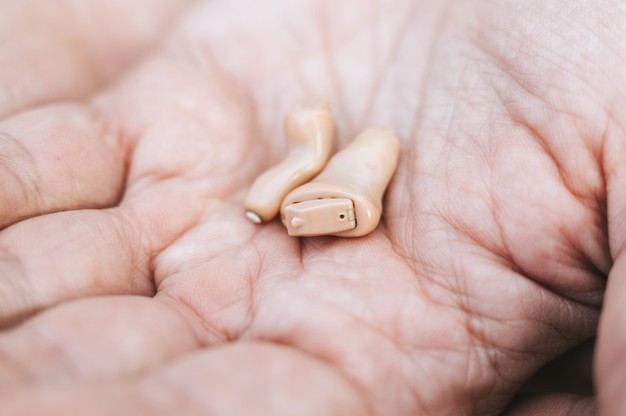
Canal aids come in two forms: the “in-the-canal” and “completely-in-canal.”
The in-the-canal is designed so that it easily fits the shape and size of a person’s ear. The completely in-canal is more advanced as this hearing aid directly fits into the ear canal, keeping it hidden.
The best part of this aid (completely-in-canal) is that people will not see this device; hence, there will be no chance for them to identify whether you are suffering from hearing loss or not.
But the only issue that you might face is adjusting these devices as they are tiny in size. These devices are not usually suggested for young children.
Moreover, this device should only be used for mild or moderate hearing loss and only when your audiologist will recommend it!!!
I hope this article will now give you a complete guide to hearing aid devices!!
Choosing Hearing Aids: 5 Things To Consider Before Buying
You must explore the options of hearing aids you have before you choose something. There’s more to it than just the types of aids available in the market. Here are a few things to remember when choosing a hearing aid.
Get Yourself A Checkup.
First, get your hearing tested and checked by a specialist. If the reason for your hearing problems is temporary, then they’ll help you decide accordingly. But, if it’s because of earwax or infections, then they might rule out the need for one.
Consult With An Audiologist
The best thing would be to take a referral to an audiologist from your doctor. They’ll check your hearing abilities and adjust a device tailored to your needs. This might be for one ear or for both.
Ask For A Trial Period
When getting a hearing aid, make sure that you are buying one with a trial period. This is important since you don’t know if the product you are buying will fit you or not. If it’s not your size or feels discomforting, you may want to exchange it.
That’s why it’s important to know whether there’s a trial aid or not. Also, consider if the amount of the device’s trail period is adjusted to the final price or not. It’s also good to consider if they have a refund policy.
Think For Future Needs
When considering a hearing aid, consider one that’ll work with increased powers. If your hearing capability reduces, you’ll need something better to help you listen. But, if you have to change it, then it’s better to opt for other options.
Check For A Warranty
Some hearing aids provide you with a warranty for a period. Also, in that period, check if you can claim part replacement or get any technical problems solved through their technicians. Warranty periods and terms are also considerable parameters for choosing the right hearing aid.
How Much Does Hearing Aid Cost?
Hearing aids cost around $1000 to $3500. If you are getting one that costs around $3000, then you’re spending around $5.50 to $6 dollar per day for the next 4 years. However, it does not necessarily have to be of the same price since the price range starts at $1000.
Bottom Line
No two products are the same. So, when buying your hearing aid, first consider what helps your health. Take help from your audiologist in choosing the right specifications. Then, take your budget and warranty into consideration. In many cases, you can also get your hearing aids insured when they are expensive.
But the best results won’t come until you keep using them and adjust your hearing capabilities with their help.
A passionate writer and an avid reader, Soumava is academically inclined and loves writing on topics requiring deep research. Having 3+ years of experience, Soumava also loves writing blogs in other domains, including digital marketing, business, technology, travel, and sports.
Power tools have become indispensable for professionals and DIY enthusiasts, making tasks more accessible and efficient. RYOBI stands out as a reliable choice among the numerous brands in the market.
However, like all power tools, RYOBI devices can occasionally encounter issues. In this guide, we'll explore techniques for troubleshooting for RYOBI power tools and power tools in general, focusing on the common problems and solutions that can apply to various brands and models.
Power Issues
Begin by examining the power source. Ensure that the cord is securely connected for corded tools and that the battery is adequately charged for cordless ones. For persistent issues, inspect the tool's switch for damage or debris. Also, check for loose or frayed wires and replace them as needed.
If you're dealing with a cordless tool and it's not turning on, the battery might be the culprit. Before assuming the worst, try charging the battery fully and then attempt to use the tool.
Sometimes, a drained battery can give the appearance of a malfunctioning tool. Consider using a different, fully charged battery if this doesn't work. If the device still doesn't work, the issue may be with the tool itself or the charger.
Loss Of Power In Power Tools
Power loss may result from a worn-out or damaged motor or brushes. Inspect the brushes for signs of wear and tear and replace them if necessary. Clean the air vents and cooling fans to prevent overheating, which can lead to power loss.
If your tool still experiences power loss after checking the brushes and vents, it may be due to an issue with the motor. Motors can wear out over time, mainly if the tool is used heavily. In this case, it might be necessary to replace the engine, which is a job best left to professionals unless you're experienced with power tool repair.
Overheating
Overheating can damage your tool and pose safety risks. Proper maintenance is crucial in such cases. Ensure air vents are clean and unobstructed.
If overheating persists, consider shorter usage intervals and allow the tool to cool down between sessions. Regularly check for proper lubrication in moving parts and replace worn-out components.
Excessive heat buildup in a power tool often indicates it's being pushed too hard or used beyond its recommended capacity. Pay attention to the tool's specifications and try to match it with the right type of work. If you frequently overheat a device, consider upgrading to a more robust model that can handle the demands of your projects.
Vibrations And Noise
Vibrations and noise can indicate loose or damaged components. Tighten all screws, bolts, and nuts. Inspect the blade or bit for damage and replace it if necessary. Lubricate moving parts following the manufacturer's recommendations to reduce friction and noise.
Excessive vibrations and noise are annoying and can indicate potential safety hazards. Loose parts in power tools can lead to accidents or damage to the tool. Regularly inspect your tool for loose fasteners and tighten them as needed. If you notice unusual vibrations or noise persisting after this, it's advisable to have the device checked by a professional technician.
Battery Troubles
Battery issues can stem from a lack of use, overcharging, or a faulty battery. Always follow proper charging and storage guidelines from the user manual. If battery performance remains subpar, consider investing in a replacement battery.
Batteries, especially rechargeable ones, have a finite lifespan. Over time, they can lose their ability to hold a charge effectively. If your cordless tool's battery life has significantly decreased, it may be time to invest in a new battery pack. Make sure to recycle old batteries properly, as they can be hazardous to the environment.
Blade/Bit Issues In Power Tools
Dull or damaged blades/bits can hamper performance. Sharpen or replace them as needed. Ensure you're using the appropriate type of blade/bit for the material at hand, as using the right one can lead to efficiency and damage.
The blade or bit's quality and sharpness directly impact your power tool's performance. When you notice a decrease in cutting or drilling efficiency, it's time to inspect and maintain these essential components.
Regularly sharpen blades or replace them if they're excessively worn or damaged. Also, be mindful of the material you're working with, as using the wrong type of blade or bit can result in subpar performance and even safety hazards.
Trigger Sticking
Disassemble the tool's handle and clean the trigger mechanism. Lubricate moving parts with a manufacturer-recommended lubricant. If the problem persists, consult your user manual or contact the manufacturer's customer support.
A sticking trigger can be a frustrating issue, and it can also be a safety concern. Before attempting any repair, ensure the tool is disconnected from its power source.
Disassemble the handle carefully and clean the trigger mechanism. Lubricate any moving parts as recommended in the user manual. If the issue persists, consult the manufacturer's customer support or take the tool to a professional repair service.
Conclusion
These tips are not limited to RYOBI tools; they apply to various power tool brands and models. Always refer to your user manual for specific guidance and safety precautions. Safety should be your top priority when troubleshooting and repairing power tools.
Read Also:
Home Warranty Plans: How To Choose The Right One
We Buy Houses Companies Saving Homeowners From Foreclosure
Top Fixer-Upper Improvement Ideas That Make A Huge Impact
A modern home seems useless without having the best smart home devices.
This is the main reason most homeowners like to install smart home devices.
That makes their home a better place to live, what you understand by the best smart home devices. From the door to the alarm everywhere, you will require intelligent equipment like familychristiandoors.
Let’s have a look at the definition of smart home devices.
Top 10 Smart Home Devices For Your Home:
What do you understand by the name of the smart home? The fact is when you are having a smart home you can complete every household work within a very small time frame.
Here are the names of the top ten most popular smart home devices which can easier your living styles.
1. Honeywell Thermostat:
A great choice for those who want to save money on their energy bills, the Honeywell thermostat can be controlled remotely via a smartphone or tablet.
It also features a 7-day programmable schedule, so you can always keep your home at the perfect temperature.
2. Wifi Router:
A must-have for any smart home, a wifi router allows you to connect all of your devices to the internet without having to rely on Ethernet cables.
It also provides a better range and speeds than other types of routers, making it ideal for large homes or homes with multiple floors.
3. Smoke Detector
A vital part of any home safety system, smoke detectors can alert you to fire even when you're not at home.
Many smart smoke detectors also feature carbon monoxide detection, so you can be sure your family is safe from both fires and poisonous gas.
If you're looking for a reliable, wired smoke and carbon monoxide detector, the google nest protect wired is a great option.
4. Smart Light Bulbs
One of the simplest ways to make your home smarter, smart light bulbs can be controlled remotely via a smartphone or tablet.
They can also be set to turn on and off at specific times, or even change colors to suit your mood. Looking for an energy-efficient way to light your home? LED light bulbs are a great option! energy efficient led light bulbs use less energy than traditional ones.
5. Smart Door Locks
A great way to increase security in your home, smart door locks allow you to remotely lock and unlock your doors as well as see who is coming and going.
Some models even allow you to grant access to specific people for specific periods of time.
6. Smart Thermostats
As well as being able to save you money on your energy bills, smart thermostats can also be controlled remotely via a smartphone or tablet.
Many models also feature heating and cooling schedules that can be customized to suit your needs.
7. Home Security Cameras
A great way to keep an eye on your home, security cameras can provide peace of mind whether you're at home or away.
Some models even allow you to view live footage from your smartphone or tablet.
8. Wireless Speakers
The perfect way to enjoy music in any room of your home, wireless speakers can be controlled remotely via a smartphone or tablet.
They can also be linked together to create a surround sound system for your TV or home cinema.
9. Water Leak Detectors
Water leak detectors are an important part of any home's plumbing system. They can help you save money on your water bill, and they can also prevent serious damage to your home.
There are a few different types of water leak detectors on the market, but the most common is the float switch. This type of detector is installed in there are many advantages to using smart home devices. They can help you save energy, stay connected, and automate your home.
If you're like most people, you probably don't give much thought to your garage door. But what if your garage door could be smarter?
10. Smart Garage Door
A smart garage door opener can make your life more convenient and secure. With a smart garage door opener, you can control your garage door from your smartphone, tablet, or computer. You can also get alerts if your garage door is open or closed, and set timers to automatically close the door.
If you're looking for a smart garage door opener, check out our top picks. We've got options for every budget, including models from Chamberlain, Genie, and more.
Pros Of Installing The Smart Home Devices
There are many advantages to using smart home devices. They can help you save energy, stay connected, and automate your home.
Here are some of the advantages of installing smart home devices at your home.
Smart home devices can help you save money on your energy bills by making your home more efficient. Hence you can also use smart devices to stay connected to your family and friends, even when you’re away from home.
Automating your home with smart devices can make your life easier by controlling your lights, locks, and thermostat from your smartphone or tablet.
If you’re looking for ways to save money, energy-saving smart devices are a great option. Smart thermostats can help you regulate the temperature in your home, so you’re not wasting energy heating or cooling an empty house.
Smart lights can also be programmed to turn off when you’re not home, so you’re not needlessly using electricity.
If you want to stay connected to your loved ones, there are plenty of smart devices that can help. therefore they use the smart doorbell comes. You can see who’s at your door, even when you’re not home.
Smart security cameras can also be placed around your home to keep an eye on things while you’re away. And if you have young kids, you can use a smart baby monitor to check in on them from anywhere.
Frequently Asked Questions!!! (FAQs):
Q1: Is A Smart Home Actually Worth It? Yes, a smart home will make your life easier. The devices which are performing based on voice commands are improving your quality of life. The most important part is enhancing the convenience. Q2: Are Smart Homes Going To Save Money? Smart home devices are not just making your life simple. Your safety and security of the houses will also increase. But smart homes are increasing the energy use ratios. People can get all sorts of help by simply taking the facilities. Q3: How Much Do You Have To Invest For An Entirely Smart Home? The average four-bedroom flats and the three-bath homes require nearly $15,000. Investments. But for luxury apartments, costs are much higher. That cost is going to touch the bar of $10,000 to $150,000.
Wrapping It Up:
All of these smart home devices are designed with the latest smart technologies. So if you want to lead the order fast convenience life style. Then these are the most essential items you need. But every smart device requires a well-revised maintenance system. So it will be better to tap on that point. What is your opinion? Do not forget to share your opinion through the comment section.
Additionals:
10 Effective Homework Tips for Your Kids
Basic Idea on Power Tools for Home Improvement
Benefits Of Having A Cordless Vacuum Cleaner At Home
Let’s see if this situation sounds familiar.
You just bought the latest phone on the market. And, like any responsible citizen, you took the old gadget to an e-waste recycling center and deposited it. You walked out of the center confident that the old phone would be taken care of safely. You then forgot about the gadget altogether.
Well! The story doesn’t quite end there. And, if you are an environmentally conscious person, you may want to take a closer look behind the scenes to identify what happens to the redundant and used devices once they leave your ownership.
Did You Check for the Certification of the E-Waste Recycling Center?
Should you check this feature on MoneyCrashers, you will come across an interesting observation. Delivering your e-waste to a recycling agency does not guarantee safe disposal. That’s because many such centers use unscrupulous methods to get rid of the gadgets. While the measures they use may comply with U.S. e-waste management regulations, they could cause severe damage to the environment in other offshore locations. The only way you can get complete assurance that the old electronics will be taken care of the right way is if you deposit them at certified recycling centers.
Alternatively, you can exchange them at the original manufacturer. It might interest you to know that in the year 2015, Apple accepted and recycled 90 million pounds of electronic gadgets to extract usable materials. These materials included plastic, 6612 pounds of silver, 2.9 million pounds of copper, and 2204 pounds of gold.
Choosing a certified e-waste recycling agency when getting rid of old and used electronics ensures that your gadgets will not end up in landfills and pollute the environment around your hometown. But, that’s just one good reason. Here are 4 more.
1. Recycling Agencies Choose Supposedly Economical Methods for IT Asset Disposal:
You might think that you’re doing your bit to help the environment by recycling cell phones and other devices. But, keep in mind that although the recovered materials are valuable, the recycling process is not exactly economical for regular agencies. Extracting metals for reuse involves a careful process using the right kind of equipment and trained personnel. To save on the expense of dismantling old gadgets and separating the useful materials, most agencies simply ship them off to third-world countries.
Would you like to know how the process works? Containers reaching the shores of the U.S. from Hong Kong and other vendor companies across the world are typically sent back empty after the goods are unloaded from them. In an attempt to cash in on the reverse transportation, the giant cargo boxes are now filled with used electronics and sent to Far East destinations under the guise of donations for philanthropic purposes.
2. Environmental Damage is Transferred to Third World Countries:
When the gadgets make their way to countries like China, Ghana, and India, unskilled laborers including young children burn them in giant pits. Once the process is complete, all that remains is the precious metals that are sorted out without any regard for the toxic materials in the ashes. These poisons like arsenic, bromates, lead, and cadmium not only leach into the soil and underground water, but also cause various illnesses among the people who handle them or live around the processing plants. To know more about the extent of the damage, read this article in the Smithsonian magazine.
If you’re looking for e-waste recycling procedures that protect the environment not just in your country, but also in any other location around the world, deliver your devices to certified agencies.
3. Irresponsible E-Waste Recycling is the Largest Cause of Data Breaches:
Should you work with a licensed recycling company, the expert professionals will make sure to dispose of the hard drives in them securely. They may use DoD-approved multiple overwriting or shredding protocols to erase the data and make it impossible to decipher.
Why is this important? According to PBS, The U.S. State Department has identified Ghana as the top sources of data leaks in the world. Hard drives from discarded electronics are easily available to hackers here at $35 apiece. Even novice cybercriminals can retrieve records of online transactions, credit cards, personal financial data, and various other kinds of sensitive information.
Enoch Kwesi Messiah is a computer scientist at the Regent University in Accra. He reveals, “I can get your bank numbers and I retrieve all your money from your accounts. If ever somebody gets your hard drive, he can get every information about you from the drive, no matter where it is hidden.”
A shocking incident reported in recent times involves the details of a government contract worth $22 million that were extracted from an old hard drive. When attempts were made to locate the source, it was traced back to Northrop Grumman, one of the military contractors of the country. The drive also held highly classified information about contracts with Homeland Security, NASA, and the U.S. defense intelligence agency.
Think about it! If government agencies can become the targets of millions of dollars worth of data breaches, your information is a much easier target.
4. Recycling Lowers Wastage of the Earth’s Resources:
Reusing gadgets and recovering reusable materials from them will help reverse some of the wastage of the earth’s resources. Should you check some of the statistics revealed by ThoughtCo., you will learn that the power saved by recycling a cell phone can run a laptop for 44 hours. If all of the 130 million phones annually discarded in the U.S. were recycled, the energy saved could power 24,000 homes for a whole year. Other than gold, silver, and copper, cell phones also contain palladium, platinum, tin, and zinc, all of which are metals that can be used and reused several times over simply by adopting the proper e-waste recycling methods.
Responsible e-waste recycling is now more about protecting the environment in your country. The problem has become so huge that you need to take a step back and carefully view the big picture. Saving the earth begins with every citizen who upgrades to a new gadget. Have you REALLY done your bit?
Read Also:
Layman’s Guide For Improving Your Phone’s Signal Strength
Best IPhone Spy Apps Without Jail Breaking