Is Quality Assurance A Good Career Path in 2021? How many jobs are available in the quality assurance industry? What are the best paying jobs in the quality assurance sector? Let’s discuss these in detail. Quality control officers may also be referred to as samplers, inspectors, and testers. A rise in the demand for software products has given a lift to tech businesses like never before. Individuals who are specialized in quality assurance can be guaranteed a steady and reliable job.The job of quality assurance is to prevent bad software from being seen by customers or users. Quality assurance engineers are responsible for making sure the code other developers write is up to a certain standard. Let’s discuss the same in detail.
What Is Quality Assurance?
Quality assurance is the process of evaluating a product to determine its ability to meet requirements. Those individuals who work in quality assurance discover a process for creating and testing products before production or release.Businesses either small or big, need quality assurance experts in order to meet the needs of the audience. A good quality product can increase your brand visibility and trust in the long run.Popular firms who are willing to stay ahead in their business cannot afford the absence of quality assurance experts. So they make sure that other developers meet their deadlines and inform other developers of issues in their code.
What Is Quality Assurance Used For?
The main objective of quality assurance is to distinguish bugs and potential problems within the software. The primary role of QA engineers is to:
Document test cases
Track test results
Perform manual and Automated Testing
Identify any issues that users may encounter
Create policies and standards to ensure high-quality code
Discover problems or bugs within a program
Create software test plans
Code automated tests
Types Of Quality Assurance
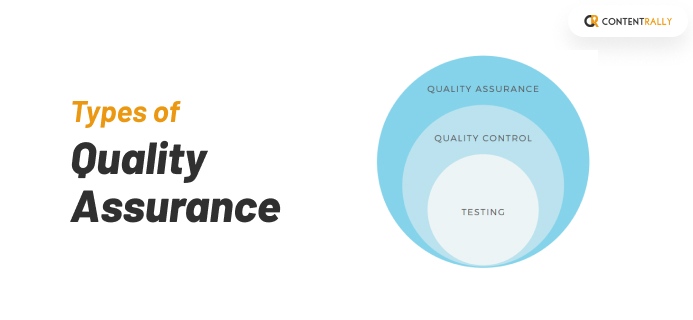
Quality assurance engineers oversee feature testing and system testing. If you are willing to grow your career path in quality assurance, then you must consider the following types of quality assurance engineers and their duties:
i). Usability Testing
Quality assurance engineers test the usability of the product before its release. This test lets the team view how well the product is received and make all the end changes before the product is launched. Moreover, this test makes sure that the product functions in the way a customer expects.
ii). Feature Testingsting
Feature testing is done before an application is updated. The engineers who are performing this work must find any problems or bad user experiences that come from the updated software.
iii). Integration Testing
Integration testing is another type of Quality assurance that explores the several components of an application. At first, it evaluates how the individual component works and how it is tested as a whole. This is usually done before system testing.
iv). System Testing
This testing is a form of quality assurance that is done on a full project. It is actually the last test done before the product is released into the market. Moreover, it ensures all components of the software function properly.
Is Quality Assurance A Good Career Path In 2021
The answer to this question is an absolute Yes. Quality assurance is a good career path in the long run because this testing is in high demand, and testers get good pay. If you have good experience in the quality assurance industry, you can upgrade your profile as well as your skills. It is also relatively easy to come back after a career gap. These specialists are very important in an organization because they help in making the reputation of a brand grow and prove its dedication to excellent goods and services. If you have decided to become a quality assurance, then the first thing you need to consider is how much education you need. You may discover that other jobs can also help you to become a quality assurance.
How Many Jobs Are Available in Quality Assurance Industry?
According to our research, about 55k openings for quality control inspectors are projected each year, despite declining employment. Moreover, demand for Software Quality Assurance Engineers and Testers is expected to go up with an expected more than three lakhs jobs filled by 2029.Now, let’s discuss the best paying jobs in the quality assurance industry in 2021.
i). Test Engineer
A test engineer develops assessments that firms use for all production processes. They also create effective plans for evaluation with the design and testing team.These engineers develop proper documentation guidelines in order to make sure that the teams can replicate results.
ii). Project Manager
Project Manager is another best paying job in the quality assurance sector. These managers oversee the entire production process.They develop a project plan, goal, requirements, and necessary resources to meet the company’s objectives. At the same time, they monitor their progress, assign project tasks, and plan to their team.
iii). Quality Assurance Tester
A Quality Assurance Tester performs evaluations to identify defects in a product. They use debugging programs to help identify issues in thousands of lines of code and communicate results to the rest of the team to get the solutions.
iv). Quality Assurance Analyst
Quality Assurance Analyst is one of the best paying jobs in this sector. These individuals oversee the complete testing process for products.They prepare for possible external audits and executes internal auditing tests. Also, they make sure that the products produce the right results.
The Final Verdict
Is Quality Assurance A Good Career Path In 2021? You have now got an answer to this question with top reasons why you should pursue this industry in the long run. Quality assurance professionals are required by all manufacturers to make sure that all products are of premium quality.Read Also:
Content Rally wrapped around an online publication where you can publish your own intellectuals. It is a publishing platform designed to make great stories by content creators. This is your era, your place to be online. So come forward share your views, thoughts and ideas via Content Rally.
Entering the job or internship market as a high school student can be intimidating. Plus, writing your first resume can feel overwhelming. Fear not, because free resume builders for high school students are here to help!
These platforms allow students to create professional-looking resumes with no prior experience needed.
Easy-to-use, ATS (Applicant Tracking System)- friendly layouts and modern designs make these the best resumes for showcasing academic accomplishments, extracurriculars, and volunteer work.
Below, I’ve outlined the best free resume builder tools specifically designed for high school students, along with some helpful tips and tricks.
Resume Builder For High School Students Free
Without any further ado, let’s get into the free tools that will help you in your future.
1. Canva: Drag-And-Drop Simplicity
Canva is one of the best design platforms offering many resume templates for students in the International School in Singapore.
It is even easy to use with the drag-and-drop interface. In fact, you can also easily customize your resume to fit your style and taste.
You will need no design skills to work through the application features.
A large selection of free, professionally designed templates will appeal to many users.
Allows creative resumes with color and layout variations.
Resume Tips: Use templates that balance creativity and professionalism. The design should not overpower the content of your resume since the purpose is to present your conceptual skills and experiences clearly.
2. Zety: ATS-Friendly Templates
Among the free resume builders for high school students!
Zety provides templates that will get through the ATS, which is important if you apply to larger corporations.
ATS is an applicant tracking system that could get some of them to use this software to filter resumes. So, your resume needs to be ATS scannable.
Do not worry! With Zety, your resume comes out already ATS approved. They also provide real-time tips as you build your resume, so you do not doubt what’s expected.
Why It’s Great for High School Students:
Provides ATS-compliant templates.
Gives you comments for each part as you are writing it.
You get the resume free when finished.
Resume Tips: Avoid overly creative designs if you apply to corporations or internships with strict ATS systems. Stick to clean, simple formats that highlight key information.
3. Resume.com: The All-Rounder
If you're looking for a free online resume builder for high school students without experience creating one, we've got you covered!
These templates are downloadable and easy to use, so you can spend more time doing what you love. The best part is that each download comes with expert advice on creating an effective high school resume.
It's free, and there's no charge at any time.
Simple interface, perfect for beginners.
Real-time previews as you type so you can see exactly what your resume will look like.
Resume Tips: The first section of your resume should introduce you to the reader positively and enthusiastically. If you are a high school student, this is usually not an issue, and you can move on to the next section.
4. Kickresume: Customization With Real-Time Tips
Kickresume is a resume builder that enables you to create, edit, and share your resume. All in one!
It also offers customization resources with pre-written real-time tips and samples. For people who have never created a resume, this application also has them covered.
Yes, you will get a quarter of a million resumes for inspiration.
Why It’s Great for High School Students:
Customizable templates with real-time suggestions.
Access to templates for various fields.
Free option but only with access to basic tools.
Resume Tips: List your extracurricular activities and volunteer experiences. These are valuable when you don’t have much job experience. Tailor them to reflect relevant skills like leadership or teamwork.
5. VisualCV: Portfolio And Resume Combo
Want to send a CV alongside the cover letter? This free resume builder for high school students is the one for you!
VisualCV allows students to build a resume/portfolio hybrid, which is great for creative fields like design or media. You can craft a PDF visual resume or build a portfolio from scratch.
Ideal for students with creative projects or personal websites.
A free version is available and has basic features.
Resume meets portfolio all in one place.
Resume Tips: If you’re applying to creative fields, use VisualCV to share your school projects or other work outside of class. You can even include a link to your website or portfolio.
6. Indeed Resume Builder: Built For Job Seekers
While primarily a job search engine, indeed also provides its users with a resume-builder tool. Plus, it is very helpful for high school and college students.
In fact, their resources are simple to use. Once you are done creating your resume, you can also apply for jobs with just a click of the mouse through the same application.
Why It’s Great for High School Students:
Quick and easy interface.
Resume Tips: Use the resume builder to make a resume with a foundation for jobs.
8. Novoresume: Professional Templates With Extras
Novoresume offers premium and free resume templates. However, you do not need to pay for the advanced features if you are new to resume-making.
Because whatever you need as a student, you don’t need to pay to get access to good-looking ATS-compliant templates.
Why It’s Great for High School Students:
ATS-optimized, modern templates.
Step-by-step instructions on what to include.
The free version contains all the important features.
Resume Tips: Be sure to add in any special skills you have, such as being good with software (i.e. Microsoft Office, Adobe Suite). High schoolers usually forget this section and it’ll make you different from others applying.
8. ResumeGenius: Step-by-Step Guide
ResumeGenius will walk you step-by-step through the resume creation process. Therefore, ensuring you do not miss anything when creating your first resume is particularly useful.
Because It’s Awesome for High Schoolers:
Simple step-by-step.
Pre-written bullet points you can customize.
ATS-friendly templates.
Resume Tips: If you’re having trouble writing your experience or skills section, ResumeGenius has many pre-written examples. This can help you tailor your resume. In fact, it's particularly helpful if you don’t know what to write.
9. MyPerfectResume – Pre-Written Examples
For starters, MyPerfectResume, a free resume builder for high school students has one of the largest pools of pre-written examples on the internet.
If you don’t know how to put your skills or experience into words, it gives you ideas by sending lists of phrases everyone uses. However, do not overdo it because it will make your resume sound too cliche!
Why It’s Great for High School Students:
Offers examples you could use right away.
Possibility to easily alter the patterns.
Download resumes in several formats.
Resume Tips: Use their examples as a starting point, but always personalize them to reflect your ideas and experience. Even if you’re using a sample, ensure it’s for the same reason as your intended role.
Enhance Template - For All the Fancy Resume
If you are one of those who wants their resume to look close to perfect, then this is for you!
Enhanced templates are visually appealing without compromising professionalism.
You’ll get basic templates as a free user, but they are more than enough for a student entering the professional arena.
Why It’s Great for High School Students:
Free templates that have basic features.
Drag-and-drop sections.
Customizable layouts that are still professional.
Resume Tips: Choose a design that reflects your personality but doesn’t distract from your qualifications. Avoid overly complex designs that may be hard to read.
How To Make The Most Of Your Resume Builder Tools
Now that you know what the best free resume builder for high school students, here are a few additional resume tips to perfect it
Proofread Everything: Even if the tool says they do this, never use something without doing manual proofreading. You don't want a typo in what could have been the perfect resume.
Tailor Your Resume: Make sure that every resume you send out has specific information relevant to the employer you’re targeting. Highlight skills and experiences most applicable to the position for which you’re applying.
Keep it Concise: Generally, employers and intern coordinators prefer a one-page resume. This is usually enough space to include all necessary information. Only include the most important things employers need to know about you, and don’t include “fluff” or irrelevant information.
Use Action Verbs: Try to begin each bullet point in your experience section with an action verb. Leading with passive language dilutes the impact of your achievement.
Emphasize Soft Skills: Soft skills, like leadership or problem-solving, can make a big difference in any role. Be sure to emphasize these as well.
Happy Job Hunting!
It might seem like a lot of work to create a resume, but with the right tools and helpful tips, it's not as tough as you think.
If you're applying for part-time jobs, internships, or scholarships, these great free resume-builder apps will guide you through creating an awesome resume!
In fact, high schoolers can do it all themselves — for free!
Just make sure to tweak each resume for each job or opportunity to make yourself stand out!
Read Also:
Student’s Guide: 14 Essay Types from the Easiest to the Hardest One
8 Tips for Tech CV Writing to Highlight Skills & Experience
Is Hotels/Resorts A Good Career Path In 2021
Networking is the process where you make connections and build productive relationships in your professional field.
It is an important factor if you want to grow professionally and seek new employment opportunities. A major aspect of networking is to get referrals. In this article, you will learn how to ask for a referral request.
Here, you will learn how to use your network to get referrals. As a result, you will have a better likelihood of getting access to new opportunities or cracking interview processes. Thereby, you can get better job offers and get professional growth. Hence, to learn more, read on to the end of the article.
What Is A Referral Request?
Having a professional network is essential for every employee or businessperson. This helps you get access to referrals faster. Basically, when you ask a member of your professional network to endorse or introduce you to a prospective employer, it is a referral request.
For example, it can be something like reaching out to a recruiter on LinkedIn or asking a previous employer to refer you.
In fact, if you have a referral in your arsenal, you give employers a chance to distinguish you from other job candidates. This will increase your chances of getting an interview or getting the job offer itself. Generally, employers go for candidates with referrals since it shows that the candidate has skills and experience.
Apart from that, if you have a referral with you, it shows that you can form and maintain good work relationships. Also, it shows that you can form and nurture networks. For instance, you can request a referral from a personal acquaintance. Moreover, your interview preparation gets easier if you have a referral.
Hence, you must ensure that you are choosing the right person for the referral. Moreover, you must approach them in the right manner.
How To Ask For A Referral? – Steps To Follow
The following are some steps you must follow if you want to ask for a referral from a professional you know:
1. Choose The Right Medium
While asking for a referral, you must consider your relationship with your referrer. Generally, the best medium to reach a referrer is through writing. For example, it can be a message, an email, a LinkedIn chat, etc.
Basically, the choice of medium depends on your relationship with the person. If the relationship with the person is formal, the best option is to use a written medium. However, if you have a causal relationship with the person, a face-to-face conversation can be handy.
2. Find The Right Person To Ask
Another important factor to consider is whom to ask for a referral. This can be anyone you know, a former employer, a friend, or anyone else. Moreover, you can also ask someone in your existing network.
However, the best person to ask for a referral is someone you already know. In fact, that person can attest to how you work and what your character is. Basically, the stronger the connection, the better the chance of getting a referral. Hence, the best option is to ask an ex-boss, colleague, former client, or even a college professor.
Additionally, make sure you are honest with the referrer and explain what you need. Also, explain to them how they can help you and how beneficial it will be for your career.
However, don’t ask for a referral from someone close to you, like a family member or a friend. In such cases, the referral request is obvious and does not help you during an interview.
3. Give The Referrer More Context And Reasons
It is important to provide your referrer with the context of the referral. In fact, tell them why you need the referral and what exactly you want to achieve with it.
For instance, if you apply for a job, be sure to attach a resume and the job listing to your request. Moreover, mention why you are asking them for a referral. For example, if you ask your previous employer for a referral, include a note that you have worked together.
Additionally, you can also include a portfolio of your other work if you want to provide extra context.
Here, you must make sure your request is not vague where your referrer is unsure about what you want. Also, ensure you give them an idea of how they can help you in the first place.
Actually, this extra information will make it easier for them to agree with you. Hence, they will be eager to give you a referral that will help you grow professionally.
4. Ensure The Process Is Easy And They Say “Yes”
When the referral process is easier, it will provide you with better results. Apart from providing them with a context, make sure they find it easy to refer you professionally. Additionally, you can also send your referrer with your career portfolio or your website. However, it needs to be relevant and must be an easy reference to consider.
On the other hand, you can face a situation where the referrer wants to provide you with a referral but does not have the time to do so. In such cases, you can offer a draft letter on your referrer’s behalf. This way, they can just add a signature to it or attest to it.
Hence, you make it easier for them to give you a referral. Moreover, they do not feel like they must push themselves to give a reference to you.
However, if you are an independent professional, you can make it easy for your clients to refer you. Here, you just need to create and provide marketing materials for them. For instance, you can use a business card, an email template, or just a website button. This way, they can quickly refer you to their network with minimal effort.
5. Give Them The Option To Opt Out
You can request someone to provide you with a referral. However, that does not mean that they will agree to provide you with that. On the other hand, you can feel that an ex-employer or a friend can help you. However, they might not feel comfortable referring you to their network.
Hence, you must accept the possibility of rejection and move on. Therefore, to prevent an awkward situation, you can provide an opt-out option in the referral request.
For instance, in your request, you can write, “It’s alright if you can’t provide a referral…” Hence, you are giving your referrers an option to exit. Also, you are not jeopardizing the relationship with them.
6. Ensure A Follow-Up And Express Gratitude
When you receive a referral, you need to express gratitude. In fact, it is not a good idea to take a referral for granted. For instance, if someone refers you to their network, make sure to send them a thank you note. This way, you are expressing appreciation.
Moreover, if a professional contact offers you a dream role, you must thank them for their time and support. Furthermore, even if you do not land the job, you must still express your gratitude.
How To Ask For A Referral? – Tips To Consider
Apart from conceptual skills, companies also look for networking and communication skills. You can prove your networking skills with the help of a referral. Hence, getting a referral is essential for business growth.
The following are some of the tips you must follow if you want to ask for a referral from a professional network:
1. How you ask for a referral depends on your relationship with the referrer. For instance, if you ask someone an authority figure, you must use a formal tone.
2. You can also personalize your request if you understand it will work. For instance, you can include a thoughtful message. Apart from that, even if you are asking different people, make sure to write each referrer differently.
3. By being specific and providing context behind your referral request, you increase your chances of getting a referral.
4. Timing is the most important aspect of your referral request. For instance, if you know that the potential referrer is currently busy or not in the right mood, you must hold your request. Basically, you can yield better results if you ask at the right time.
5. You must build your network and grow it with time. In fact, once you prioritize your networks, you will not need to ask for referrals, as they will start coming your way. For instance, you can use a mutual connection when you are looking for a job or building a business from scratch.
Referral For Professional Growth: The Way Forward
Now, you know how to ask for a referral from someone from your network. Understand that the best referral comes from people you already know. Basically, if you have built professional relationships in your network, always feel free to ask for referrals.
Do you have more suggestions to offer on how to ask for a referral? Please share your ideas and opinions in the comments section below.
Read Also:
Best LinkedIn Recommendation Example – How to Write a Great LinkedIn Recommendation
The Secret To Finding A Career That You’ll Actually Love
What Is a Remote Job? Everything You Need to Know
Do you know where strategic sales are the most underrated? It is a retail store! Yet, we as consumers are also looking for a retail worker to help us out.
As someone with an aptitude for sales, and np “fancy degree” retail is the first job which you should look into. In fact, to prepare you better, let’s look at the different retail interview questions that you could ask.
...and the most loved answer!
Top Retail Interview Questions
When I asked a few retail managers, what are the few core characteristics they are looking for in terms of retail workers, they often have these keywords:
They need to be extroverted, and ready to help.
Their demeanor should be relatable & approachable to every customer.
Meticulous about which are in the store. Cluelessness is a big no-no!
Managers should be able to rely on them because retail workers work even when most of the country is celebrating. Although it can be one of the most profitable times of the year, only some are accustomed to the hectic and can deny coming and working.
Lastly, staying calm under pressure. No one deals with more customers than the folks in the service industry. Plus, you can always dress the part with the help of these interview attire for men.
Now, add subtle sales tactics to the picture, and the work could be challenging. Therefore, managers are looking for retail workers who in general do not react to will be the preferred choice.
Therefore, when you go you answer your retail interview questions!
1. Have You Used Our Product Before?
Ans. This is a common question for retail interviews, which you can expect. It is better to go for a retail store of which you have been a fan rather than one of one you have never heard of.
Begin answering with specifics. What is best about the retail store, and what products do you think are the best?
If your interviewer is friendly, you could also state ways to improve the retail experience in the store. As a customer yourself, you can always give them feedback from a customer’s point of view.
If you are not a regular shopper, there is a way to answer the question too.
Give them a genuine reason why you didn’t buy from the store as often as you would want. Plus, also give them ideas on how they can attract customers like yourself and turn them loyal.
2. What About Working During The Rush Of The Holiday?
Ans. Now this is a tricky question. Not all of us are working during the holidays, but being a part of the retail industry, you will have to.
A good way to begin is to tell how your personal strength can help you during the rush hours.
Plus, also nudge a little towards how you will have to stop working when it gets too overwhelming, and hope the other retailers work as a team and ensure someone can take up when you are too tired.
"I love feeling the energy of the people around me and thrive in fast-paced environments. Yes, I realize how crazy busy it gets during the holidays, and I remember being a shopper myself!
But I don’t get overwhelmed easily, and I can still perform duties while multitasking. And let’s be honest, holiday shopping is just fun! It is understandable why helping families would be fun."
3. How Would You Deal With A Difficult Customer?
We all know not every customer will be easy to please. Employers want to know if you can maintain professionalism, even when a situation gets tense. You know, if you ever deal with a "Karen" with whom you simply cannot reason.
Dealing with difficult customers is a normal part of the job. Therefore, preparing this answer is crucial. Here is how you can answer and show them how you are also understanding towards the customers from a humanitarian
Ans. "I would just listen to what they have to say without interrupting. Sometimes, people just need to vent and feel like someone is listening to their concerns.
Once I understood their issue, I would do my best to fix the problem, or if I couldn't, I would get them a manager who could help. The main thing is not to get all upset yourself; be calm and let them know you are there for them."
4. What Do You Think About Good Customer Service?
This is one of the classic retail interview questions. Therefore, rather than taking a trendy route, it is better to take a traditional route.
Especially if your interviewee has a few years of experience in the retail industry, show that you understand the importance of putting the customer first.
Ans. “Good customer service is about making customers feel welcomed, heard, and completely satisfied with their transaction. It’s about being friendly and open to questions, as well as willing to put in the time and effort to make sure that when a customer walks out of your store, they’re walking out happy! Return customers are happy customers!”
5. What About A Busy Day? How Can You Manage The Busy Days?
Again, these are very plausible questions that they will ask. The trick is not to feel overwhelmed by the question itself.
The chances of the retail store being busier than ever are rare. These are only a few days of the year, so, you wouldn't have to deal with it daily.
Here is a good answer to this question:
Ans. "In my last job, I worked at a big sales event for the day; as you can imagine, it was all hands on deck.
We had to work out our shifts over time, deal with stock, and make sure every customer was seen. My co-workers and I performed brilliantly that day – we exceeded our target because we all supported each other so well. During busier times, it is all about teamwork."
6. How Would You Promote A Product To A Customer?
Sales are a big part of this job, so expect these kinds of interview questions for retail!
Ans. “I would first ask the customer some questions to help me get an idea of what they are looking for. Then, I would go on to tell them about the features that the product has and how it can benefit them. It is important to know what the customer wants before you can show them products which they apparently do not need."
7. Longer Working Hours will Require More Time On Your Feet
The nature of retail work can be physically demanding; employers do not want to take a risk with anyone who may struggle.
Ans. “Yes, I know that in retail, you must be on your feet a lot, and I am okay with that. I have done things like this before, and it doesn’t bother me. I will still be able to work hard and get my job done.”
8. Why Do You Want To Work For Us?
This is your opportunity to demonstrate that you have done your research into the company & prepared yourself with the right interview skills.
Plus, you shouldn't talk about superficial things like their products or beautiful department stores.
Ans. "I like your company's commitment to customer satisfaction and quality products. Your positive work culture draws my interest as well. With my communication and sales skills, I think I would be a great fit to help you achieve your goal and push the business."
9. How Do You Prioritize Tasks When The Store Is Busy?
Multi-tasking is key in retail. Therefore, when you are asked this kind of retail interview question, you must take this chance to demonstrate how you stay organized.
Ans. "When it is really busy, I make sure to do the most time-sensitive things first. Like helping a line of customers waiting. This gives me a good idea of what I need to do as far as cleaning/stocking goes, and I adjust it day by day to the pace of the store."
10. What If Someone Asks you A Question You Have No Answer To?
No one expects you to know everything, but they want to see how you can think on your feet and remain positive.
Ans. "If I don’t know the answer to a customer’s question, I would tell them the truth and let them know I’m going to find out.
I would ask someone who has been there longer or look it up so I can give the customer the right information."
11. Tell Me About A Time You Worked Under Pressure
This is a question that will help the interviewer understand how well you handle the stress that can come with retail.
Ans. "During a previous job, we had a last-minute sale announcement, and the store was so busy. I had to use the cash register and to answer customers' questions.
Plus, watching the stock at the same time. I stayed calm and just did what I had to do & helped each customer as quickly as possible."
12. What Motivates You To Work In Retail?
Managers want to know what makes you tick, let alone in retail. Please, do not give them the idea that this is a last-minute job.
Ans. “I enjoy helping people and finding exactly what they need. I think retail is all about the customer experience, and that’s why I like it so much. It’s also fast-paced, which keeps me going!”
Plus, if you plan to pursue a marketing degree afterward, this is a good way to begin. So, do not forget to mention that.
13. What If Someone Gives A Negative Feedback About You?
Negative feedback is inevitable. The issue is whether you let it control you.
Therefore, when it comes to them, your approach should always be neutral, with an enthusiasm for solving the problem, even if you cannot solve the problem sometimes.
Ans. "I see negative feedback as a chance to make something good! I read and re-read the customers' comments and responded to them as soon as possible.
If an apology is in order, I apologize immediately (no pride here) and begin working on changing their thought of us. Stay positive & don't take it personally."
14. Ever Used A Cash Register?
If you’ve ever worked in retail before, you’ll be familiar with this. If not, don’t worry – just let them know.
Ans. “Yes, I’ve used cash registers in my last job, and I’m happy to be dealing with cash and card transactions. I pick up new systems quickly, and I’m sure I can get the hang of the register system you have here.”
"No, I have never worked on a cash register. However, I have worked in retail before, and I know how it works. Therefore, you should always get some of the
15. How Would You Deal With A Coworker With Whom You Do Not Get Along
Whenever you are asked retail interview questions like this, it is your chance to show how professional you are. Begin your answer with this:
“I'm okay with that. I pick my battles, and one person in a company isn't going to ruffle my feathers enough for me to worry.”
Teamwork is important. Your ability to work as part of a team is just as important as standing out and getting things done on your own.
Ans. "I believe in keeping direct confidence with people. If, however, there is a misunderstanding, I will clear that thing up one-on-one and professionally with my colleague. I would find a way to work together as the team's success is more important than a personal one."
Read Also:
What Is a Remote Job? Everything You Need to Know
55+ Unique Interview Questions to Ask Your Future Employer
7 Proven Tips To Leave A Lasting Impression On Your Interviewer














 Quality assurance is the process of evaluating a product to determine its ability to meet requirements. Those individuals who work in quality assurance discover a process for creating and testing products before production or release.
Businesses either small or big, need quality assurance experts in order to meet the needs of the audience. A good quality product can increase your brand visibility and trust in the long run.
Popular firms who are willing to stay ahead in their business cannot afford the absence of quality assurance experts. So they make sure that other developers meet their deadlines and inform other developers of issues in their code.
Quality assurance is the process of evaluating a product to determine its ability to meet requirements. Those individuals who work in quality assurance discover a process for creating and testing products before production or release.
Businesses either small or big, need quality assurance experts in order to meet the needs of the audience. A good quality product can increase your brand visibility and trust in the long run.
Popular firms who are willing to stay ahead in their business cannot afford the absence of quality assurance experts. So they make sure that other developers meet their deadlines and inform other developers of issues in their code.
 Quality assurance engineers oversee feature testing and system testing. If you are willing to grow your career path in quality assurance, then you must consider the following types of quality assurance engineers and their duties:
 The answer to this question is an absolute Yes. Quality assurance is a good career path in the long run because this testing is in high demand, and testers get good pay.
If you have good experience in the quality assurance industry, you can upgrade your profile as well as your skills. It is also relatively easy to come back after a career gap. These specialists are very important in an organization because they help in making the reputation of a brand grow and prove its dedication to excellent goods and services.
If you have decided to become a quality assurance, then the first thing you need to consider is how much education you need. You may discover that other jobs can also help you to become a quality assurance.
The answer to this question is an absolute Yes. Quality assurance is a good career path in the long run because this testing is in high demand, and testers get good pay.
If you have good experience in the quality assurance industry, you can upgrade your profile as well as your skills. It is also relatively easy to come back after a career gap. These specialists are very important in an organization because they help in making the reputation of a brand grow and prove its dedication to excellent goods and services.
If you have decided to become a quality assurance, then the first thing you need to consider is how much education you need. You may discover that other jobs can also help you to become a quality assurance.
 According to our research, about 55k openings for quality control inspectors are projected each year, despite declining employment. Moreover, demand for Software Quality Assurance Engineers and Testers is expected to go up with an expected more than three lakhs jobs filled by 2029.
Now, let’s discuss the best paying jobs in the quality assurance industry in 2021.
According to our research, about 55k openings for quality control inspectors are projected each year, despite declining employment. Moreover, demand for Software Quality Assurance Engineers and Testers is expected to go up with an expected more than three lakhs jobs filled by 2029.
Now, let’s discuss the best paying jobs in the quality assurance industry in 2021.