


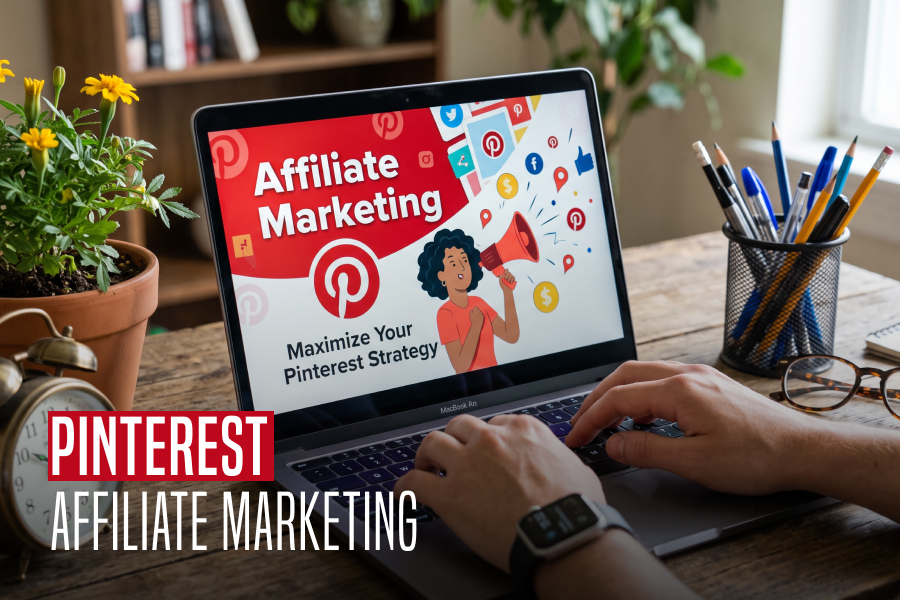
For affiliate marketers seeking high-conversion traffic in August 2026, Pinterest is the ultimate growth engine.
It functions not as a traditional social network. Instead, it acts as a hyper-visual search machine that is driven by deep buyer intent.
While traditional marketers face struggles with plummeting organic reach on oversaturated platforms such as Facebook and X (formerly Twitter), smart creators are quietly capturing highly lucrative traffic streams. That is by scaling their presence here.
The platform represents a massive structural advantage. That is because its users are actively looking for purchasing ideas, saving actionable recommendations and planning future purchases.
By positioning your affiliate products directly inside their discovery feeds, you tap into an audience that has already made the mental decision to buy.
If your marketing portfolio ignores this ecosystem, you are leaving your most profitable revenue stream completely unmonitored.
This definitive roadmap breaks down exactly how to construct a competitive and automated Pinterest affiliate machine built for today’s algorithm.
Overview
In this cutthroat industry, using Pinterest for affiliate marketing allows you to target those who are already considering making a purchase. Additionally, it is much simpler to profit from someone who is willing to lose money.
To start earning money automatically, all you need is a basic awareness of graphic design principles, some marketing expertise, and an understanding of your niche. Pinterest users are also open to recommendations and ideas. Here are a few more justifications for why affiliate marketers should choose Pinterest.
Why Choose Pinterest?
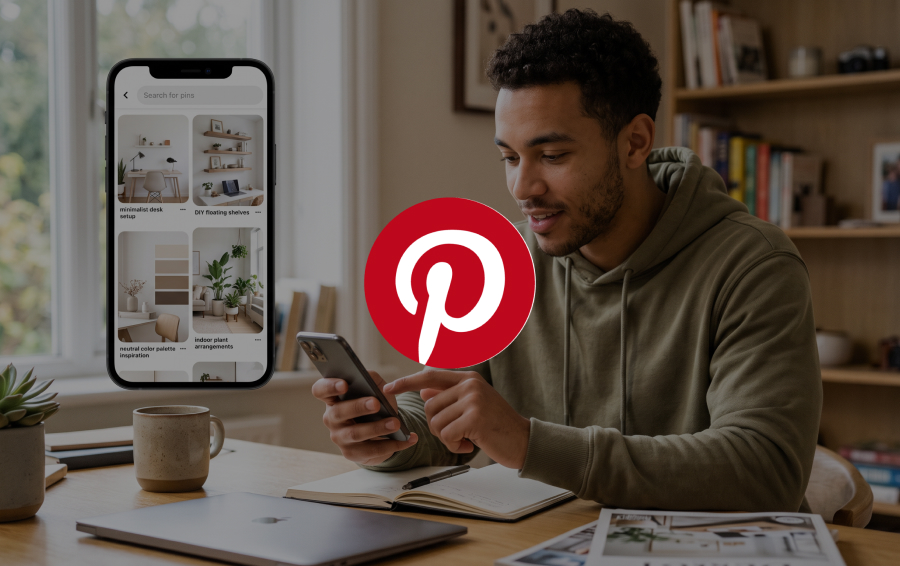
Think of Pinterest as an image search engine with social features integrated.
In August 2026, Pinterest’s scale was unprecedented, with it commanding a massive footprint of 631 million monthly active users globally. Moreover, this immense engine captures over 1.3 billion unique monthly sessions.
That is driven by a highly interactive community. While the platform’s core user base remains predominantly female at roughly 70%, the demographics have drastically diversified.
Gen Z has rapidly expanded to become the largest generational cohort at 42% of all users. Furthermore, Gen Z men and Millennial men stand out as the fastest-growing demographics on the platform.
The monetization potential is exceptionally high. That is 40% of the US households on Pinterest, where they earn an annual income exceeding $150,000.
Additionally, these shoppers routinely spend twice as much monthly compared to users on competing networks.
Crucially for independent marketers, an astonishing 96% of Pinterest searches are entirely unbranded.
Users search for open-ended solutions. Instead of looking for concrete corporate brands that level the playing field for affiliate links, it includes “minimalist workspace gear” or “organic skincare routines.”
Using straightforward, appealing pins on Pinterest, you can suggest affiliate links and products to your audience. Writing blog entries, reviews, or tutorials, on the other hand, takes a lot of time.
To succeed, focus on building an engaged audience through consistent and high-quality pinning rather than relying on rapid follower growth. By curating boards that address specific problems, you can position your curated affiliate links directly in front of motivated buyers.
It also bypasses the high-effort and low-traffic trap of traditional social media marketing.
Numbers On Pinterest Affiliate Marketing
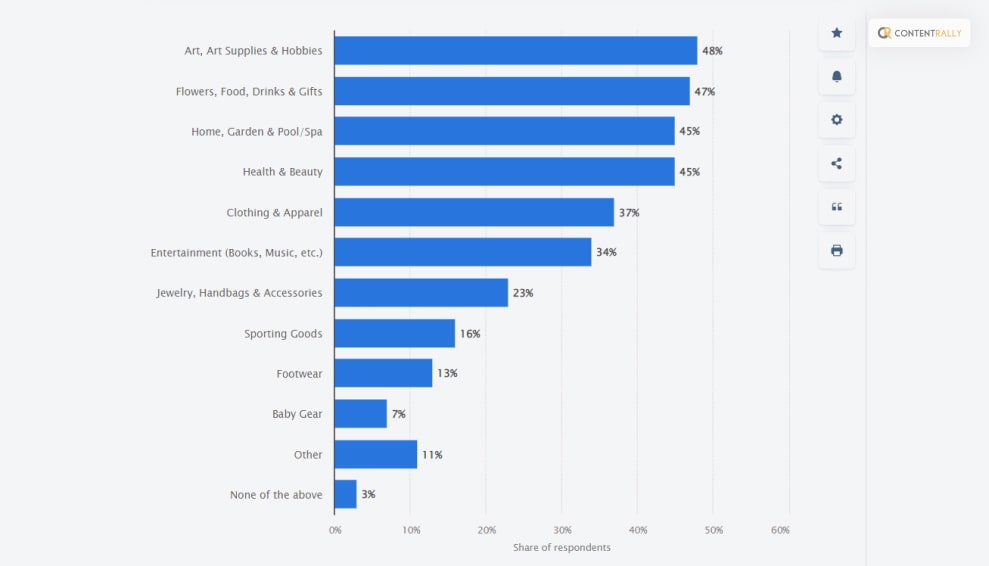
The top-performing product categories on Pinterest include Home Decor, Fashion, Beauty and DIY Crafts.
You can use this as your niche selection starting point. But you must also do your homework on how to pick affiliate programs with larger payouts.
You can advertise your affiliate programs on social media if you've previously signed up for a couple of them.
If not, you'll need to choose a specialty before choosing an affiliate network to start your Pinterest affiliate marketing campaign.
Find out how to choose high-paying affiliate programs before you join up for any.
How To Monetize Pinterest?
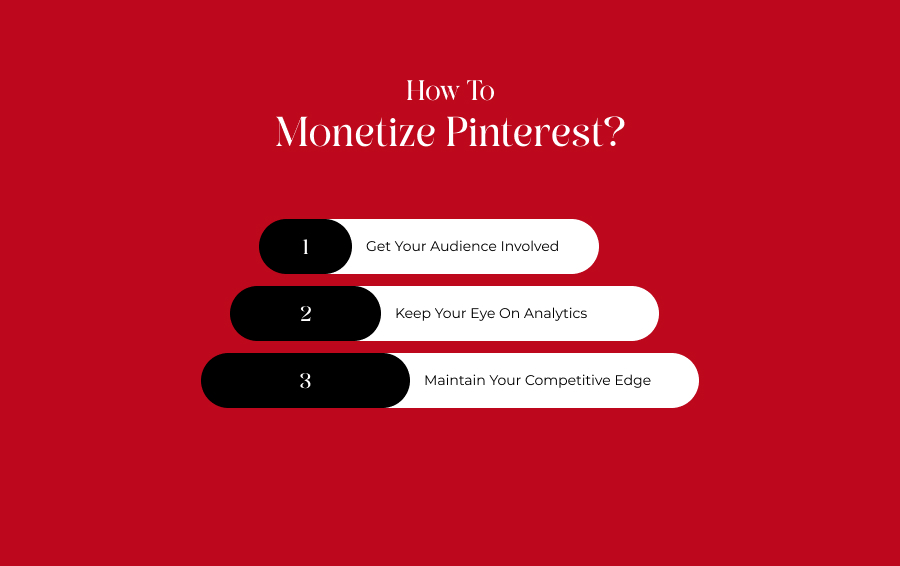
To strengthen your brand identity on Pinterest, post frequently and keep your style and theme consistent. Here are a few tips:
Get Your Audience Involved
To establish connections and expand your following, reply to messages and comments left by others and engage in conversation with them.
Building active community engagement signals to Pinterest’s algorithm that your content is valuable. As a result, this increases your organic distribution.
Keep Your Eye On Analytics
Track your progress and find areas for development by keeping an eye on your Pinterest analytics. Moreover, put a prime focus specifically on outbound clicks and saves.
This is because these metrics directly reflect buyer intent as well as affiliate revenue potential.
Maintain Your Competitive Edge
Stay up to date with Pinterest's best practices, algorithm changes, and new features.
In 2026, this means regularly shifting your strategy toward interactive and shoppable content formats and mobile-first tagging to capture maximum traffic.
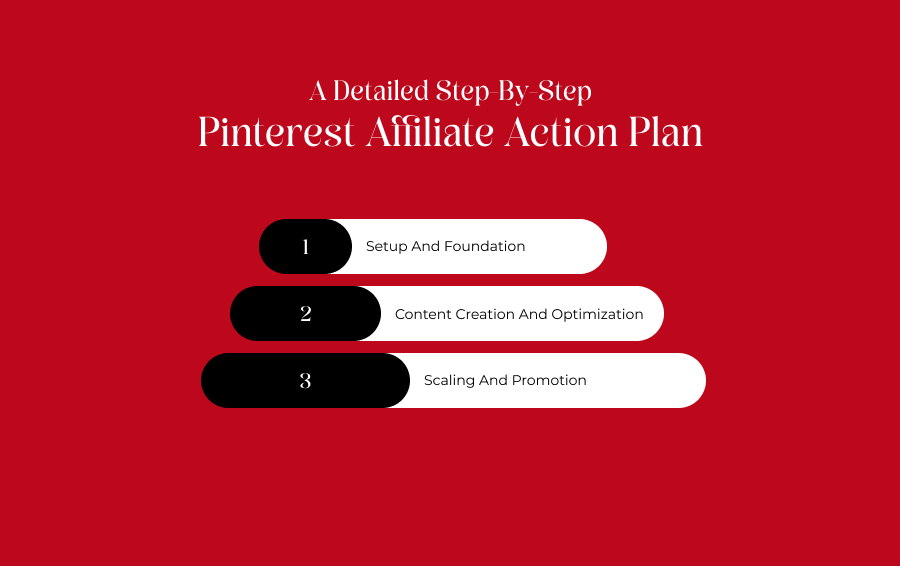
A Detailed Step-By-Step Pinterest Affiliate Action Plan
On Pinterest, affiliate marketing is a well-established way to make money.
Furthermore, it entails marketing goods or services from other companies in exchange for a commission on each purchase through your special affiliate link.
Phase 1: Setup And Foundation
The very first phase includes a good setup and a solid foundation.
Decide On A Niche
Choose a specialization that will fit your hobbies as well as your area of expertise. Moreover, it will be simpler to produce content and interact with your target market as a result.
Become An Affiliate
Find affiliate programs that sell goods or services that are relevant to your niche and enroll in them.
Open A Company Account
To gain access to tools such as analytics, promoted pins, and rich pins, set up a Pinterest business account. Additionally, use compelling descriptions, high-quality images, and pertinent keywords.
This will allow optimizing your pins while making them stand out. Besides that, you can include a direct link to your website’s page featuring the product or service.
Phase 2: Content Creation And Optimization
Following phase 1, your next step includes content creation and optimization.
Make Interesting Content
Create visually appealing boards on Pinterest that feature the goods or services you are trying to sell.
Moreover, the 2026 algorithm heavily prioritizes high-energy, short-form video pins instead of static images.
Also, ensure you are creating quick and engaging video clips showcasing the products. Put your affiliate link in the description of the pin or as a clickable symbol on the image.
You can now add direct and clickable affiliate links straight onto video content. This bypasses the need for a bridge page.
Furthermore, create blog entries, articles, or other information that is valuable to and appealing to your target audience.
Utilize Rich Pins And Shopping Features
Use rich pins to immediately add extra information to your pins, such as price and availability. Users can now purchase products more easily as a result.
In addition, make full use of Pinterest’s native ‘Shop the Look’ and mobile product tagging tools. This allows users to check prices and buy items directly inside the app without ever leaving.
And if you want to make your content more visible and popular, think about using promoted pins.
Phase 3: Scaling And Promotion
The final phase includes effective scaling paired with promotional tactics to achieve maximum reach.
Improve Your Abilities
Learn about Pinterest’s best practices and keep up with the most recent features. Also, check the algorithm changes on the site.
Ensure that your Pinterest profile appropriately portrays your business and contains a link to your website by optimizing it.
Create visually stunning pins that represent your content. As a result, you can persuade readers to visit your website in order to design attention-grabbing pins.
Publicize Your Offerings
Make a portfolio to highlight your expertise and accomplishments and demonstrate your Pinterest management skills.
Moreover, connect with potential customers through social media, internet discussion boards, or neighborhood business activities.
To draw in more customers, promote your services on your website or blog and think about providing a free consultation.
Next-Gen Apps That Help In Pinterest Affiliate Marketing
Success on a highly visual platform requires the right software stack to streamline your content creation and tracking. While standard design tasks used to take hours, modern platforms leverage automation to handle heavy lifting.
Moreover, when you use these advanced toolkits, you save your time as well as maximize your campaign efficiency.
AI-Assisted Design Toolkits: Canva Magic Studio & Adobe Express
While traditional graphic design used to consume hours, modern workflows lean heavily on artificial intelligence.
Platforms such as Canva feature a tool called Magic Studio. On the other hand, Adobe Express allows affiliate marketers to generate hundreds of distinct high-converting vertical pin templates in seconds.
You can batch-produce cohesive aesthetics, swap color schemes instantly and resize product mockups for mobile screens automatically.
The Native Pinterest Scheduler
Historically, premium third-party tools such as Tailwind or Buffer were considered mandatory requirements for scheduling.
However, Pinterest’s native platform scheduler has improved drastically.
Moreover, beginners can now queue visual pins, organize scheduled video releases, and optimize posting timelines weeks in advance directly inside the platform for free.
As a result, this makes premium external subscriptions completely optional.
Critical Legal Compliance: Affiliate Disclosures
The landscape for digital marketing compliance is stricter than ever.
Additionally, to protect your business from immediate suspension by both Pinterest and consumer protection regulators like the FTC, you must follow certain rules.
Mandatory Text Disclosures
You must clearly and conspicuously include #ad, #sponsored, or #affiliate at the absolute beginning of your Pin description.
No Link Cloaking
Do not use link-shortening services like Bitly, TinyURL, or Pretty Links. Pinterest's security algorithms flag hidden URLs as spam.
As a result, it can lead to permanent account bans. Moreover, your destination link must show the transparent affiliate domain destination.
Mastering the Scroll: Your Blueprint for Pinterest Profits
Navigating the Pinterest affiliate ecosystem in August 2026 is an incredibly rewarding and low-friction framework for the generation of automated revenue streams.
By treating the platform as a data-driven search engine instead of a traditional social feed, you can completely bypass the algorithmic headaches found on other applications.
Moreover, success is dependent on mastering high-quality and vertical short-form video creative and capitalizing on the platform’s new in-app checkout features.
Prior to choosing the appropriate boards to pin your affiliate pins on, you must first learn how to generate highly engaging targeted pins.
Also, avoid choosing generic boards. This is because they reduce the visibility associated with your content. In addition to this, they confuse the search algorithm.
By matching your curated product links with the aesthetic ideas users are searching for daily, your Pinterest profile can easily scale into an elite digital income generator.
Learn More About: