













How To Become A Data Scientist? Skills, Courses, And Institutions Explained

Published on: 29 March 2024 Last Updated on: 04 November 2024
Data Scientist

In recent times, data science has been everywhere. Businesses across the globe are turning to data science, which will help you to solve the most diversified issues out there. This situation has put data scientists in advantageous positions in terms of payment and employment.

Data scientists are part of the IT or data science team who can help analyze the data to provide the information. It allows the organization to make data-driven decisions and easily create strategic plans.   

With the network economy’s improvement, the data generation pace has increased. This leads to the single step of strengthening the demand for other data scientists. Artificial Intelligence Architect leads to problem-solving with the help of high-quality technology. It would be the same for data scientists. After all, this can be a good career option for you.

What Does A Data Scientist Do?

What Does a Data Scientist Do

After researching the facts, I developed significant factors for a data scientist. Below, I am going to discuss what a data scientist does.   

After researching the facts, a data scientist can work intensely to understand and analyze the data, providing such actionable insights. In this business environment, they can work across several other teams where they will lay down the foundations for robust analytics. It means developing such significant strategies so they can easily capture, garner, and clear the cache from the range of several sources.   

Aside from that, once they are done exploring and analyzing such data, they can quickly build several other solutions and efficiently communicate their findings to an extensive range of business fields.

The Step-by-step Guide of How to Become a Data Scientist:
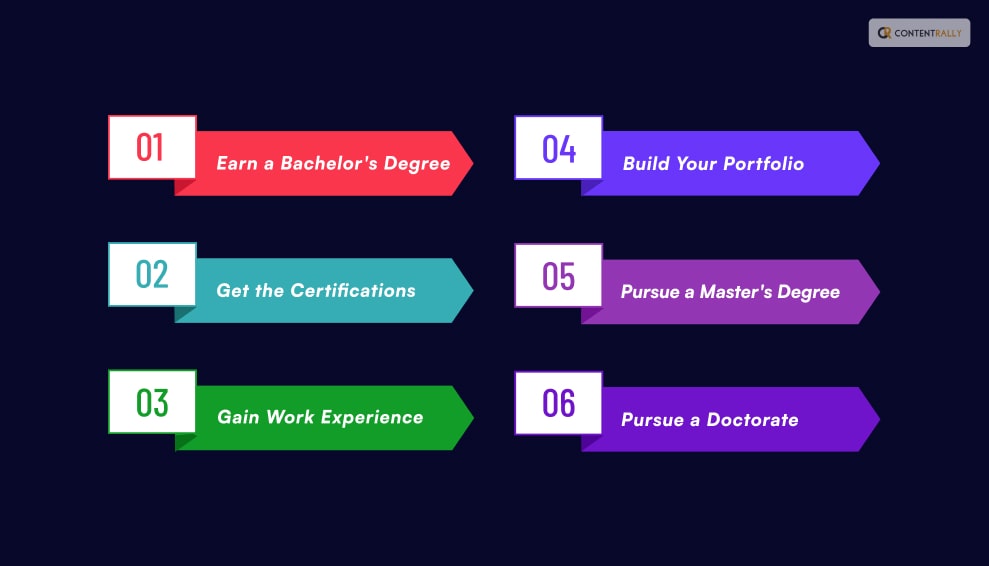
The Step-by-step Guide of How to Become a Data Scientist

Usually, many people are becoming interested in this data science domain. Below, I will discuss a step-by-step guide on how to become a data scientist.   

1) Earn a Bachelor’s Degree

Several data scientists can earn a bachelor’s degree, preferably in science streams like engineering, IT, math, or other related fields. You will improve your problem-solving abilities after completing your bachelor’s degree in quantitative domain.   

This will only be possible through critical thinking and analytical skills, some of the most significant skills to possess as a data scientist. Aside from that, you might also pursue an internship during your bachelor’s degree, which would help you to get an entry-level job in this domain.

2) Get the Certifications

Multiple certifications will help you develop your skill set and showcase your interest. This way, you can become a data scientist for several other potential recruiters. A vast number of courses regarding data science and data analytics are available online on several different websites.

In this case, you should consider joining any of these courses to develop your skills and chances of securing a job. This would apply to becoming a data scientist. After all, consider getting these certified by several other educational institutes in India. This also provides courses in data science.

3) Gain Work Experience

Data Scientists continue to be in high demand across several other industries. You might consider getting other relevant experience as a data scientist by pursuing internships or entry-level jobs. This happens as a junior data analyst.

On the other hand, gaining relevant work experience can help develop your skills. It means you must acquire corporate expertise.

Also, if you are working in an entry-level position, several other businesses might provide on-the-job training and other certifications. This can lead to such significant promotions.

4) Build Your Portfolio

It would help if you considered building a portfolio of some significant projects, which means you have previously worked. In this way, you can easily showcase your abilities to recruiters and gain an advantage over other candidates.

After all, you can also include several other examples of projects through which you can manage this in previous organizations in the visual format. Likewise, you can also get assistance from different online resources on such things as templates to use while building your working portfolio.

5) Pursue a Master’s Degree

Another best and most significant way to build your career in data science is to pursue your master’s degree. In this case, pursuing your master’s degree will quickly help you obtain a leadership position in the data science domain.

Not only that but having a master’s degree might also benefit you significantly from other data scientist candidates. This is mainly applicable while you are applying for higher-paying jobs.

6) Pursue a Doctorate

There are several data scientists who also prefer to pursue their careers in computer science or other related fields. In this way, they can quickly achieve leadership positions in their organizations.   

Above all, you can quickly get high-paying jobs. Even more, having a doctorate might give you a significant position as a nurse anesthetist through which you can earn a teaching position or a higher-paying role.

What Is the Skill Set Required to Become a Data Scientist?

What Is the Skill Set Required to Become a Data Scientist

If you want to become a data scientist, you must enhance several skills required in this domain. Below, I will discuss the skill set that you must have to become a data scientist.

1) Technical Skills

  • If you want to become a data scientist, then you must acquire some relevant data scientist skill set. It includes the following:
  • Proficiency in other programming languages such as R or Python.
  • You must acquire a strong knowledge of mathematics and statistics.
  • Ensure you have experience with machine learning techniques and algorithms.
  • Ensure you are familiar with data visualization libraries such as Tableau and Matplotlib.
  • Ensure you can utilize several other big data technologies like Spark and Hadoop.

2) Analytical Skills

Data scientists have superior analytical skills, which helps them visualize problems. This happens from all possible angles. It provides several other solutions after evaluating and considering all other potential solutions.

In this case, they review and check the accuracy of information and data. Aside from that, they have the analytical skills which would help them pursue their career seamlessly. They have the analytical skills that would help them do things seamlessly.

After all, your ability to visualize numbers and analyze them to other mathematical relations can provide such solutions. Furthermore, this can help them become good data scientists with that visualizing power. This will also help them improve business-related management skills.

Data Scientists might be required to work on multiple other projects with such strict deadlines. In this case, time management skills are essential to ensure they deliver on time. Aside from that, time management skills help data scientists efficiently use their time.

Even more, they can quickly achieve the desired objectives and outcomes. It means preparing schedules, following them, and managing time effectively will help you assign a significant skill set and proficiency in time management skills.

In Conclusion

I have discussed the step-by-step guide of how to become a data scientist above in this article. Being a data scientist, you must be professional and must acquire significant knowledge of statistics, mathematics, and several domains like these.

Aside from that, you also must gain knowledge about how to solve such complicated issues and ensure you have enough capacity to make data-driven decisions for your organization.

I hope you found this article helpful. If you have queries, please comment below!

Learn More About:

Content Rally wrapped around an online publication where you can publish your own intellectuals. It is a publishing platform designed to make great stories by content creators. This is your era, your place to be online. So come forward share your views, thoughts and ideas via Content Rally.

View all posts

Leave a Reply

Your email address will not be published. Required fields are marked *

Related

Is marine transportation a good career path

Is Marine Transportation A Good Career Path?

If there is something that young adults worry about, then it is hands down their career and future. And speaking of that, there is one question that I have frequently come across in my life. It goes something along the lines of "is marine transportation a good career path?" If you are someone who is thinking about having a career in the marine industry, then this article is for you. Want to know more about marine transportation and whether Transportation is a good career path or not? If yes, then keep on reading this article till the end… Overview Of The Industry  The maritime sector presents numerous prospects for advancement and is an exciting and fulfilling area of work. Although it has been a part of the economy for centuries, this sector has expanded significantly in the last several years. One of the biggest and fastest-growing segments of the world economy is the marine transportation sector in particular. This sector of the economy includes cargo ships, cruise ships, ferry services, and all other forms of maritime shipping and goods transportation. It makes sense that so many people are interested in this exciting field. There is always something new to discover and learn in the maritime industry, given the growing demand for freight and marine travel services. Individuals who choose to work in this field should anticipate intellectual challenges as well as numerous opportunities for professional development. Salary For individuals who are enthusiastic about the sector, a career in maritime transportation can be very profitable. When making decisions about the future, it's critical to take into account the potential salary of a given profession. Let's examine a range of salaries for various job titles in the maritime logistics industry as of March 2023 to aid with this. The Bureau of Labor Statistics (BLS) reports that in 2021, the median annual wage for workers in the marine transportation industry was $62,768. Pay varies according to job title and location. Salary levels for the most sought-after jobs are typically higher than those for less desirable positions. Many people can gradually increase their salary with training and experience. It's crucial to take into account a variety of factors, including travel opportunities and personal interests, in addition to the potential salary when deciding whether or not a career in marine transportation is right for you. What Is Marine Transport? Also known as maritime transportation, it is a job that refers to the transportation of cargo or passengers through sea routes. Currently, it is one of the major ways of transportation when it comes to transporting goods. These goods can be anything. Some of the items that are transported through marine transportation are: Oil Spices Medicines Electronics Beverages Vehicles Machines It is undoubtedly one of the strongest sources of trading and transportation in the world when it comes to transporting heavy and bulky commodities. Moreover, it is still the backbone of the international economy and trading. So, if you are asking, "is marine transportation a good career path," the answer to that is positive. Skills: What Do You Need To Become A Part Of The Journey? Even if a particular job exists, you cannot just be eligible for the role. You need to have certain skills to be a member of that industry. The field of marine transportation is no exception to that rule. Here are the skills that you need to bag a job in marine transportation: 1. Communication Skills I cannot stress this point enough. You must be able to communicate with the crew members while you are on board. That is because, in the field of marine transportation, people come from different backgrounds. This makes it necessary for everyone to interact with each other. Therefore, it not only facilitates brotherhood but also ensures smooth functioning. 2. Mechanical Skills If you want to become successful in the field of marine transportation, it is important that you have knowledge about mechanical things. This skill will come in handy in times of need and urgency. That's the reason why it is necessary for all crew members on the ship, irrespective of their posts and ranks, that they have mechanical skills. 3. Vision (Eyesight) This is one of the most important things that you need to have is great eyesight. The fact that you are working in a shipping vessel, away from the land, makes it crucial for you to be able to see things afar. This is because you need to scout the horizon to notice the smallest changes. Job Types: What Jobs Can You Find In Marine Transportation? If you think that there is no variety in the field, then I would ask you to reconsider. There are a lot of jobs that you can find in the field of marine transportation. Some of them are as follows: Marine Engineer Port Engineer Port Captain Naval Architect Deckhand Employee Motor Man Employee Foodservice Oiler There is much more to this list, but here are the basics. Answering The Question, “Is Marine Transportation A Good Career Path?” Now, coming to the pain questions. Is marine transportation a good career path? The answer to that is YES, it is. If you are someone who loves to travel overseas and likes to explore, then you are going to love this job. At the same time, the payment or the wage in the field of marine transportation is also not that bad. The best paying jobs in the field of marine transportation are Vessel Captain, Marine Engineer, Naval Architect, Data Scientist, and Port Captain. If you are someone who is looking for a high paying job, then this might be the key for you. This is because, according to reports, the average salary of a Vessel captain (the one who is in command of the ship) is nearly 100,000 dollars USD. However, even if you want to settle for the role of a Port captain, you will still be able to have a comfortable life at home. The salary of the Post Captain is nearly 65,000 dollars USD on an average. In simpler words, marine transportation is a great career path for people who are looking for a secure future, a steady and good source of income, and the opportunity to travel overseas and over seas (get the pun?) Frequently Asked Questions (FAQs): Now that you have almost read the end of the article, I really hope that most of your questions have already been answered and cleared. If, however, there is still some confusion left, I would advise you to read some of the questions that users frequently ask. Q1. What Is Marine Transportation Management? The task or job of being able to manage and shift the rules and policies of the marine industry, specifically the marine transportation industry, regarding safety and other important points is called marine transportation management. Q2. Which Job Pays You The Highest? There are many jobs at present that can provide a high salary. Some of them are:1. Machine Learning.2. Medical Professionals.3. Data Scientists. 3. Is Marine Transportation A Risky Job? Even though it is true that marine transportation is a job that pays you well and also gives you the opportunity to travel overseas, it is still a little risky. That is because any problem that occurs in and on the ship or vessel can be life threatening to the crew. Bottom Line: Decide If You Want A Job In Marine Transportation! Marine transportation is one of the most stable jobs that you can apply for. But, at the same time, if you are looking for the opportunity to travel while earning a sufficient amount as salary, then marine transportation is the career that you should choose. In case you were looking for the answer to the question “is marine transportation a good career path,” I hope that you found this article to be of help. If there are any questions or doubts regarding the same, kindly write them down in the comment section below. Till then, Stay safe! Read Also: Is Capital Goods A Good Career Path? Is Precious Metals A Good Career Path Is Medical/Dental Instruments A Good Career Path How Many Jobs Are Available In Real Estate Investment Trusts?

READ MOREDetails
Nursing Field

5 Biggest Challenges in The Nursing Field Aspirants Should Know

The healthcare profession is brimming with obstacles and challenges, and the recent pandemic has further added to them. Medical professionals work gruelingly long hours to ensure patient well-being and safety. However, most of these obstacles and challenges are typically seen in a particular sub-division of the healthcare field: the nursing field. Undoubtedly, the nursing profession is not for individuals who are faint of heart. Moreover, to succeed as a nurse and perform your duties with utmost efficiency, you must have the drive, passion, and knack for helping people in need. Some challenges plaguing the nursing field include difficulty acquiring further education, understaffing issues, and overtime work. Likewise, workplace stress and hazard are also growing concerns for medical workers. Whatever issues the nursing field faces, nurses remain a vital part of the world’s healthcare workforce. They put other’s needs first and dedicate their entire lives to helping their patients. For instance, the Covid-19 pandemic also made us realize how essential nurses are. However, before you start a career in the nursing field, knowing about all the challenges you'll face while working is vital. So, let’s determine some of the biggest challenges in the nursing field that aspirants should know. 1. Difficulty continuing education The healthcare industry requires individuals to remain up-to-date with the latest medical practices, techniques, and procedures. However, as nurses serve as the first point of physical contact for patients, these medical professionals also need to polish their soft skills. Therefore, expanding your knowledge base and honing soft skills are critical components of becoming a successful nurse in today’s competitive healthcare setting. And to do such a thing, they must invest time and money in continuing education and obtaining advanced nursing academic credentials. Unfortunately, acquiring further education while working as a nurse is no cakewalk. As these healthcare professionals work for long, grueling hours, sometimes 24-hour shifts, taking out time for studies can be challenging. However, if you’re a nurse striving to climb the ladder to success and seeking career advancement, eLearning can benefit you. You can enroll in masters of nursing online programs and study with ease while managing your workload. An online nursing degree will provide you with the flexibility and convenience of learning from home or even work. 2. Overtime issues Due to high employee turnover and understaffing, aspirants need to be aware of overtime before diving into the nursing profession. Many nurses state that healthcare facilities utilize overtime to counter the after-effects of understaffing. Unfortunately, this usually leads to overworked nurses, resulting in medical errors, treatment inaccuracies, inaccurate diagnoses, driving away aspiring candidates from the nursing field altogether. That said, medical facility owners and healthcare leaders must focus on overstaffing issues and try to solve them with a different approach. A viable way to do this is by hiring more competent nursing staff. In addition, they must encourage aspiring medical students to give nursing a go over other health-related careers. After all, nurses are frontline warriors, working at the heart and soul of every healthcare organization worldwide. 3. Understaffing issues Short staffing is amongst the most common issues in the nursing field. An AMN Healthcare survey shows that about seventy-two percent of healthcare leaders say that they are understaffed in the nursing department. Not to mention, this issue is growing with every passing day, especially since the pandemic struck. Furthermore, the BLS states that there will be a demand for one billion nurses around 2022 due to the rise in diseases and viruses, and most importantly, Covid-19. Staffing issues usually affect patient health and safety and drastically lower the quality of care at healthcare facilities. Moreover, it can also result in increased injury rates, fatigue, and work pressure. 4. Workplace stress Healthcare professionals such as nurses and doctors face work-related stress and burnout, primarily stemming from the unpredictable nature of their work. It mainly affects nurses dealing with high-volume urban departments, senior care, acute psychiatric services, and more. Not to mention, excessive workload and fatigue are ever-present in every healthcare workplace. And nurses bear their fair share of burnout issues, as discussed above. That said, such a thing shouldn’t put off aspiring candidates. ANA, OSHA, and other government organizations work tirelessly to control workplace stress through education, guidelines, and regulations. After all, nursing staff shouldn’t have to deal with burnout, whether it is because of their workload or job nature. 5. Workplace hazards Every workplace in every field has its fair share of hazards. However, the nursing profession, in particular, faces more than usual. Some potential hazards include exposure to pathogens, injuries, contracting viruses, and other germs. Not to mention, these healthcare professionals are at constant risk of hazards from patients carrying the deadliest viruses. The Covid-19 pandemic serves as an unfortunate reminder of how working in the healthcare sector can prove fatal. Many nurses and frontline warriors lost their lives battling the virus and serving the ailing. However, it explains why nursing is one of the most prestigious professions of our era. Nurses devote endless hours and put their lives at stake to ensure the well-being of their community and people. Conclusion Recognizing the obstacles and the challenges that the nursing field contains is the first step. However, the second, and probably the most important, is overcoming these challenges to ensure you advance in your nursing career. After all, nurses are crucial to every healthcare facility out there. There is no better way to help humankind than to take up the nursing profession. That said, you might find it challenging to overcome these obstacles initially. But if you remain persistent and focus on your end goal, you’ll reap countless rewards. Read Also: American Healthcare and its Woes How To Prevent Burnout As A Travel Nurse With These Simple Self-care Strategies

READ MOREDetails
Time Management Tips

Effective Time Management Tips for Entrepreneurs Scaling Their Business

As an entrepreneur, the journey of scaling your business is exhilarating yet demanding. With growth comes increased responsibilities, more tasks, and greater demands on your time. Effectively managing your time becomes paramount to not only survive but thrive in this dynamic environment. Here are some valuable time management tips explicitly tailored for entrepreneurs on the path to business expansion. This article will also look at the benefits of dedicating some of your valuable time to giving back to society and helping others along the way using the example of Peter Dodge Bridgehampton, Founder and Chairman of Hanover Research. Prioritize With Purpose Time management starts with prioritization. Understand that not all tasks are created equal. Begin by identifying your most critical and high-impact activities. These are the tasks that directly contribute to your business’s growth and success. By focusing on what matters most, you’ll ensure that your time is well spent. Set Clear Goals And Deadlines Goals give you a sense of direction, and deadlines create a sense of urgency. Establish clear, measurable goals for your business expansion. Break these goals down into smaller, actionable steps with associated deadlines. This approach helps you stay on track and avoid procrastination. Embrace The 2-Minute Rule The 2-minute rule is a straightforward yet efficient time management strategy. If you can do a task in two minutes or less, do it right away. Responding to short emails, jotting down quick notes, or making brief phone calls right away prevents these small tasks from piling up and becoming time-consuming later. Delegate Wisely Scaling your business requires recognizing that you can't do everything yourself. Delegate tasks that others can handle efficiently, allowing you to focus on strategic decisions and high-value activities. Trust your team and empower them to take ownership of their responsibilities. Time Blocking For Efficiency Time blocking involves allocating specific blocks of time to specific tasks or categories of work. This technique minimizes multitasking and helps you concentrate on one task at a time. Create a daily or weekly schedule that designates time blocks for essential activities like planning, meetings, and deep work. Harness The Power Of Technology Entrepreneurs have a wealth of technological tools at their disposal for efficient time management. Use project management software, time-tracking apps, and digital calendars to streamline your workflow and stay organized. Automation can also handle routine tasks, freeing up your time for more critical matters. Learn To Say No As an entrepreneur, you may find yourself bombarded with opportunities and requests. While it's tempting to say yes to everything, doing so can lead to burnout and inefficiency. Learn how to gracefully decline projects or opportunities that do not connect with your goals or consume too much of your time. Regularly Review And Adjust Time management is not a one-size-fits-all solution. It's essential to regularly review your strategies and adjust them as needed. Evaluate what's working and what's not, and be willing to make changes to optimize your time management practices. Mindfulness And Breaks Don't underestimate the power of breaks and mindfulness. Taking short breaks throughout the day can boost productivity and creativity. Incorporate practices like meditation or a quick walk to clear your mind and reduce stress. Continuous Learning And Improvement Effective time management is a skill that can always be honed. Invest in personal development by reading books, attending workshops, or seeking advice from mentors. Learning new techniques and strategies can help you refine your time management skills over time. The Power Of Philanthropy As your business grows, so do your influence and resources. Many successful entrepreneurs recognize the privilege they hold and choose to use it for the greater good. Philanthropy, whether through charitable donations, volunteering, or community involvement, not only benefits those in need but also enriches your own life and business. Peter Dodge Bridgehampton, for example, is the Founder and Chairman of Hanover Research, a multinational information services organization based in Washington, DC. Dodge is the Chairman of one of the world's fastest-growing companies and largest market research agencies. Peter Dodge also operates a nonprofit, devoting his time to assisting others in living lives free of addiction. The Peter G. Dodge Foundation exists to assist people in living lives free of the consequences of alcoholism. Conclusion In the fast-paced world of entrepreneurship, mastering time management is not just an option; it's a necessity. By prioritizing tasks, setting clear goals, and embracing efficient techniques, you can make the most of your valuable time while scaling your business. Remember that effective time management is an ongoing process, so be patient with yourself and keep refining your approach. As you implement these tips, you'll find that you have more control over your schedule, reduced stress, and greater success in your business expansion endeavors. Start managing your time wisely, and watch your business thrive. Additional Reading: 4 Tips To Maintain Your Fleet Deep Dive Into Project Management With Informative Podcasts The ROI Of Proactive Pest Control For Property Management

READ MOREDetails