











Corporate longevity requires swift adaptability, sharp omni-channel development, and controlled retail scaling.
When customer shopping habits transition toward digital spaces, traditional storefront chains must re-engineer their physical utility.
A primary historical baseline for structural collapse within the consumer retail sector is RadioShack.
Founded in 1921, RadioShack evolved into an absolute neighborhood powerhouse.
However, its aggressive brick-and-mortar footprint eventually encountered a severe liquidity crunch.
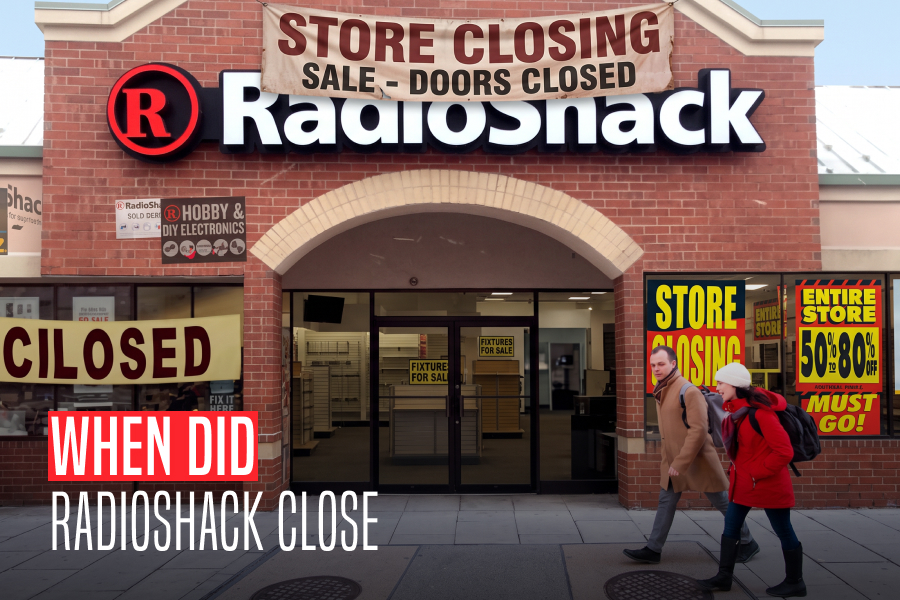
To understand the finality of this retail demise, analysts must evaluate the exact timeline of when did radio shack close its main operations.
The parent company did not drop its leases during a single fiscal cycle.
Instead, the brand dissolved through a rare, two-stage bankruptcy process spanning from February 2015 to June 2017.
The Timeline: When Did RadioShack Close?
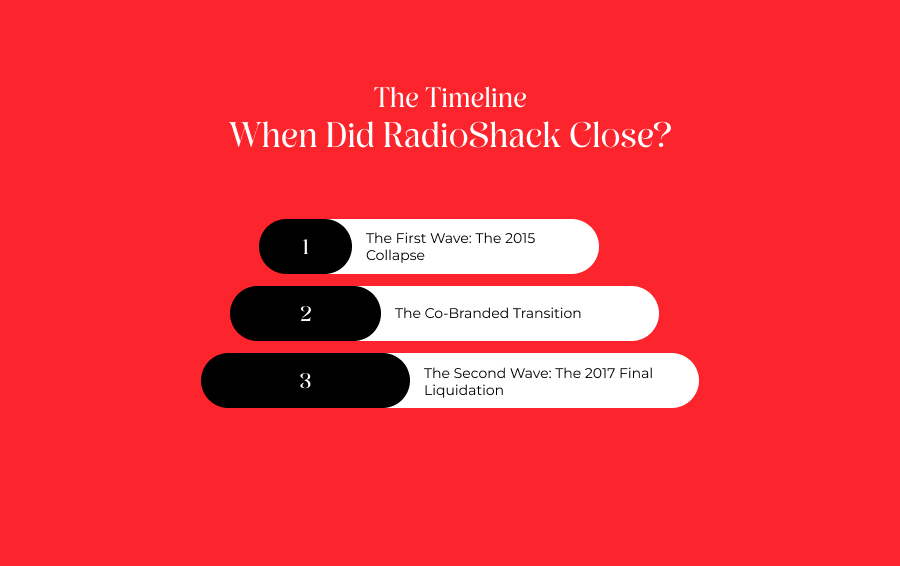
The destruction of RadioShack's commercial footprint occurred in two distinct, cascading corporate waves.
The First Wave: The 2015 Collapse
The first major structural default occurred on February 5, 2015.
Facing massive debt and negative earnings since 2012, RadioShack was officially delisted from the New York Stock Exchange.
Immediately after the filing, the company entered an agreement to close more than 1,700 underperforming locations.
The hedge fund Standard General then purchased the remaining corporate assets for $26.2 million under an affiliate named General Wireless.
The Co-Branded Transition
To sustain the remaining stores, General Wireless partnered directly with telecom provider Sprint.
They converted roughly 1,500 properties into co-branded tech hubs.
Sprint managed the highly concentrated mobile phone sales desks inside the properties.
Meanwhile, RadioShack handled parts, wiring components, and basic consumer electronics hardware.
The Second Wave: The 2017 Final Liquidation
This hybrid co-branded business framework proved too optimistic.
Poor mobile phone conversions and low retail traffic continued to burn through available cash reserves.
Consequently, on March 8, 2017, the parent company filed for bankruptcy protection a second time in two years.
This final restructuring triggered immediate liquidation notices across the country.
By June 2017, RadioShack closed its final 1,000 corporate-owned stores permanently.
This massive liquidation effectively wiped the brand off the physical American retail map, leaving the company to survive strictly as an online e-commerce platform.
RadioShack Corporate Performance Matrix
At its absolute commercial peak, RadioShack maintained an unrivaled retail density across North America.
Over time, bad timing, changing tech trends, and bad financing mechanics completely inverted the firm's balance sheet:
| Evaluation Category | Peak Retail Architecture (1999) | Bankruptcy Reality & Final Liquidation (2015–2017) |
|---|---|---|
| Market Identity | Evaluated as the ultimate global neighborhood hub for specialized parts and consumer electronics. | Consolidated as a permanent symbol of stagnant corporate culture and rapid physical retail decline. |
| Store Footprint | Operated a massive network of over 8,000 corporate locations across multiple countries. | Erased all corporate-owned storefronts, leaving only a tiny handful of independent dealers. |
| Consumer Access | An astounding 94% of the United States population lived within a 5-minute drive of a store. | Shoppers completely abandoned locations in favor of lower pricing and instant online ordering. |
| Product Concentration | Diversified across early home computers, radio kits, components, and batteries. | Over-concentrated in low-margin mobile devices, which generated 50% of total sales revenue. |
| Financial Health | Generated over $5 billion in annual revenue with highly profitable hardware margins. | Suffered 11 consecutive quarterly losses before facing total delisting and restructuring. |
The Strategic Missteps Behind The Downfall

These are some of the core reasons behind RadioShack's fall.
Pay attention, as these allegations had a huge impact on the end of this reputable company:
1. Severe Store Cannibalization
During its peak growth phase, RadioShack expanded its real estate footprint aggressively without analyzing geographic spacing.
By 2014, the brand operated roughly 4,300 North American properties located entirely too close to each other.
For example, Sacramento, California held 25 individual locations crammed within a tight 25-mile radius.
This dense packing caused individual stores to steal revenue directly from neighboring branches, multiplying rental overhead while producing zero net traffic gains.
2. Lethal Product Concentration In Mobile Units
To secure immediate revenue spikes in the early 2000s, corporate leadership pivoted sharply toward mobile phones.
By 2014, smartphone units and carrier plans accounted for 50% of total company sales.
This high product concentration proved to be an existential trap.
When telecom carriers cut back on third-party dealer commissions, RadioShack’s core profit model vaporized, leaving them exposed to low-margin cell phone upgrade cycles.
3. Complete E-Commerce Irrelevance
As shopping behavior migrated online, RadioShack failed to build a functioning digital ecosystem.
Digital marketplaces like Amazon made it effortless to source niche components with a single click.
Because RadioShack offered uncompetitive pricing and struggled with frequent brick-and-mortar inventory shortages, consumers stopped visiting stores entirely.
The company remained tethered to expensive commercial leases while its customer base moved online.
4. Intoxicating Credit Blocks And Management Churn
Turnaround efforts were constantly disrupted by executive instability.
From 2005 to 2014, the board cycled through seven different chief executive officers, destroying any hope of long-term strategic consistency.
Furthermore, when the company secured a $250 million term loan from Salus Capital in 2013, the restrictive credit contract backfired.
When cash flow deteriorated in 2014, executives attempted to close 1,100 failing stores to preserve capital.
However, Salus Capital legally blocked the closures because it lacked confidence in the turnaround path, trapping the brand in cash-burning locations and accelerating bankruptcy.
Core Lessons For Modern Omni-Channel Businesses
| Operational Imperative | The RadioShack Mistake | Sustainable Strategic Correction |
|---|---|---|
| Footprint Optimization | Built overlapping brick-and-mortar spaces that cannibalized existing local store revenue. | Maintain strict demographic distance limits; favor high-utility central hubs. |
| Inventory Diversification | Allowed a single low-margin item (mobile phones) to command half of all sales. | Balance high-volume core electronics with high-margin unique private label assets. |
| Digital Integration | Stood by as an outdated analog hub while consumer buying trends shifted online. | Implement real-time local inventory tracking linked directly to immediate home delivery. |
| Debt Covenant Management | Signed credit agreements that legally prevented them from closing unprofitable branches. | Maintain operational flexibility in financing terms to allow rapid down-scaling. |
When Did Radioshack Close And Why: The Historic Collapse Explained
The fall of RadioShack highlights that massive physical market density cannot save a business model that fails to evolve alongside technological change.
The electronics icon did not fail because customers stopped buying cables, adapters, or computer parts.
It collapsed because it drifted away from its specialized core audience, over-leveraged its balance sheet into thin mobile device lines, and completely missed the e-commerce transition. For modern business owners, RadioShack stands as a permanent warning: if your brand lacks a clear online and offline purpose, digital convenience will inevitably make your storefront obsolete.