











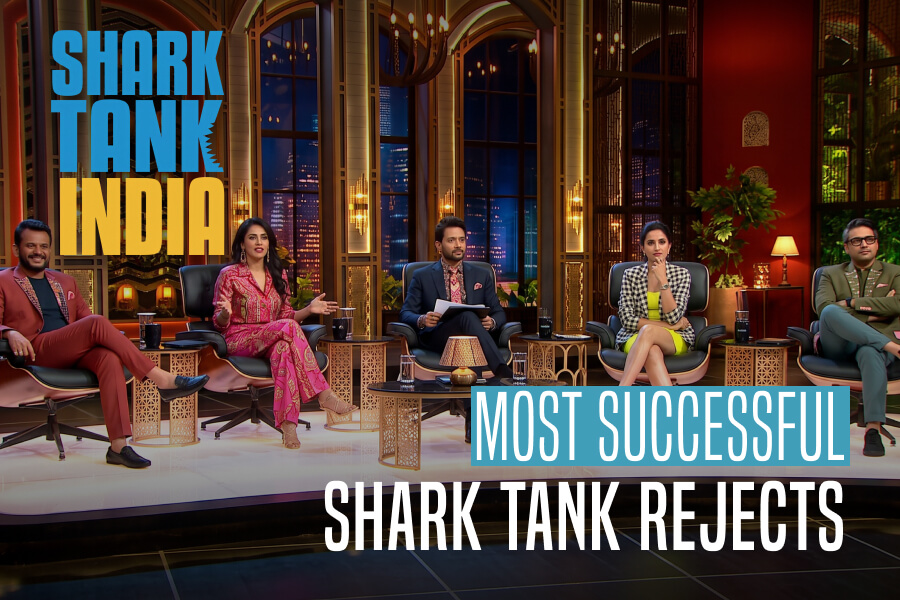
The baseline metric of success on Sony Entertainment Television’s Shark Tank India has historically been a live, televised handshake.
Also, it features a distinguished panel of Indian venture capitalists.
However, there is an objective analysis of the domestic consumer and tech markets.
It proves that leaving the studio floor empty-handed can serve as a massive, unintended launchpad for long-term growth.
A television rejection often becomes a powerful lesson in operational resilience when an Indian founder refuses to:
- Surrender massive equity slices
- Accept predatory loan terms
- Bow to lowball valuations
In India, evaluating the most successful Shark Tank India rejects reveals systemic blind spots within fast-paced pitch ecosystems.
The panel frequently prioritizes immediate cash flows, hyper-trendy D2C plays, or personal network protections.
Also, it occasionally misses major shifts in:
- Macro Industrial Infrastructure
- Deep-Tech Assistive Innovations
- Foundational Unit Economics
This granular corporate audit conducts an in-depth analytical review of 11 most successful Shark Tank rejects.
The Top 11 Most Successful Shark Tank Rejects: Getting Into The Details
These are multi-crore Indian brands that successfully bypassed the panel to dominate their respective markets.
1. Zypp Electric
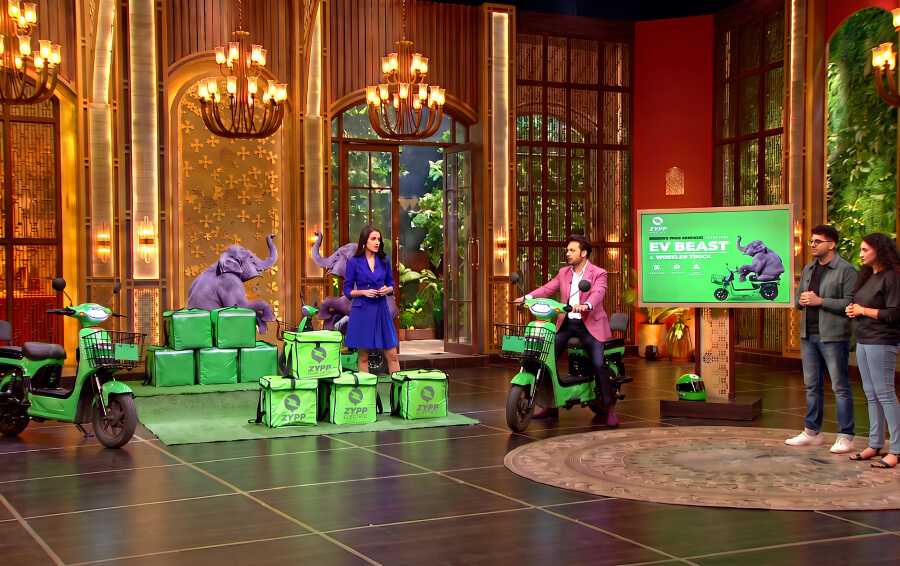
Zypp Electric’s founders: Akash Gupta and Rashi Agarwal
Zypp Electric at Shark Tank: Season 1, Episode 17
Investment: Asked for ₹2.2 Crores for 1% equity; left empty-handed with no deal from the Sharks (later raised Series C funding rounds on an institutional scale)
Zypp Electric operates a high-density, tech-enabled EV-as-a-service last-mile delivery fleet tailored for India’s booming quick-commerce and e-commerce sectors.
The company provides electric two-wheelers, integrated battery-swapping infrastructure, and trained delivery riders to enterprise giants like Zomato, Swiggy, Zepto, Blinkit, and Amazon.
· The Post-Tank Strategic Pivot
The Sharks flatly rejected the company's valuation, claiming an asset-heavy vehicle fleet was an unscalable cash drain.
Instead of backing down, the founders utilized the broadcast to showcase their enterprise utility to institutional funds.
Zypp moved away from loose retail rentals to lock down massive, multi-year B2B corporate logistics contracts.
· Modern Valuation And Market Stance
Proving the Sharks completely miscalculated the economics of green logistics, Zypp raised a massive Series C funding round led by global energy icon ENEOS.
The company’s operational fleet exceeds 21,000 active EVs, anchoring its market valuation at over ₹3,000 Crores.
2. Recode Studios
Recode Studios’ founders: Dheeraj Bansal and Rahul Sachdeva
Recode Studios at Shark Tank: Season 2, Episode 1
Investment: Asked for ₹1 Crore for 1% equity; rejected by the panel on television despite stellar, highly profitable bootstrapped sales metrics.
Recode Studios designs, manufactures, and distributes premium-grade mass-market cosmetics, skincare, and beauty utilities.
The brand targets tier-2 and tier-3 Indian urban centers.
Additionally, it utilizes an aggressive pricing strategy that undercuts mainstream international cosmetic houses.
Consequently, it delivers identical chemical parity and wear longevity.
· The Post-Tank Strategic Pivot
Despite presenting highly profitable numbers with over ₹15 Crores in bootstrapped sales, the Sharks completely refused to invest.
This was due to personal friendships with rival D2C cosmetics founders on the panel.
Recode instantly flipped this rejection into a powerful public relations asset.
Moreover, they leaned into a transparent "consumer-backed, elite-rejected" marketing campaign across social channels.
· Modern Valuation And Market Stance
The massive wave of organic public support accelerated their expansion of physical retail locations.
Recode successfully expanded its distribution network to operate over 250+ physical store layouts and counter modules across India.
So, it maintains a highly profitable, self-sustaining financial trajectory completely independent of mainstream capital networks.
3. Moonshine Meadery
Moonshine Meadery’s founders: Rohan Rehani and Nitin Vishwas
Moonshine Meadery at Shark Tank: Season 1, Episode 34
Investment: Asked for ₹80 Lakhs for 0.5% equity; walked away empty-handed due to unviable, heavy valuation cut counter-demands.
Moonshine Meadery is a pioneering alcobev brand that created India's very first licensed, commercial craft meadery.
The company sources pure, raw honey from local apiaries and ferments it with fruits and spices to produce a premium, gluten-free alcoholic beverage line targeting the rapidly growing alcobev segment.
· The Post-Tank Strategic Pivot
While the panel praised the product's taste and branding precision, they backed away due to the complex regulatory red tape, inter-state excise structures, and long distribution timelines tied to the Indian liquor market.
The founders flatly rejected the Sharks' heavy counter-demands for valuation cuts.
They systematically optimized their regional manufacturing loops, focusing on high-margin metro hubs like Mumbai, Pune, and Bengaluru.
· Modern Valuation And Market Stance
Moonshine successfully expanded its international distribution footprint, locking down exports to Europe and North America.
By retaining absolute control over their proprietary fermentation equations, they independently secured their corporate valuation at the ₹160+ Crore ceiling.
4. Urban Monkey
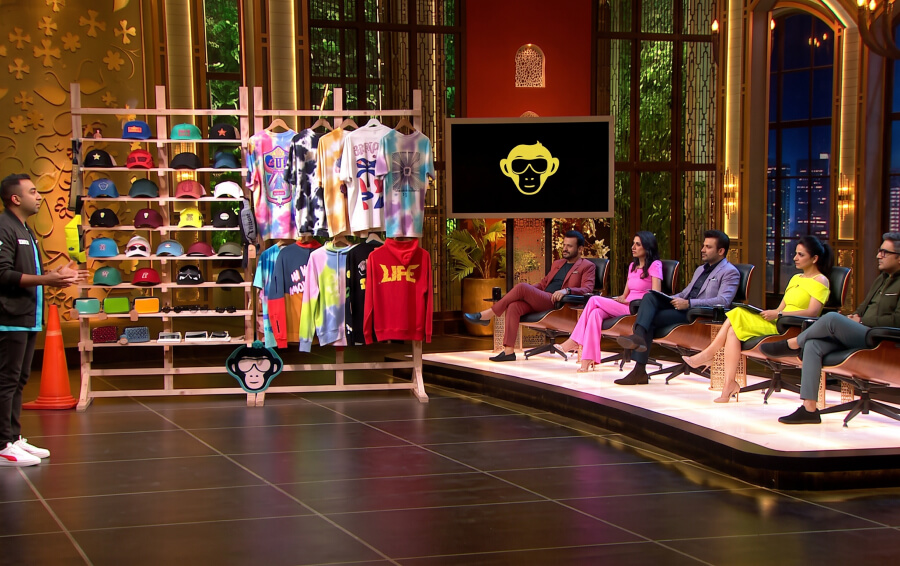
Urban Monkey’s founder: Yash Gangwal
Urban Monkey at Shark Tank: Season 1, Episode 35
Investment: Asked for ₹1 Crore for 1% equity; rejected flatly by the investor panel on the studio floor.
Urban Monkey structures, curates, and scales premium lifestyle products centered entirely around underground Indian street culture.
The brand manufactures:
- Highly Stylized Skateboarding Apparel
- Graphic Streetwear Tees
- Modular Corduroy Waist Bags
- Premium Snapback Caps
Therefore, it aims to build an authentic brand community around local hip-hop artists, street skaters, and break-dancers.
· The Post-Tank Strategic Pivot
The investment panel dismissed the pitch.
It labeled localized streetwear an unscalable, micro-niche category with highly volatile consumer loyalty.
The brand chose to skip traditional fashion marketing channels entirely.
Instead, they built an exclusive, high-margin direct-to-consumer (D2C) online framework.
Moreover, they scaled through organic product placements in top Indian hip-hop music videos and at underground, independent cultural events.
· Modern Valuation And Market Stance
Urban Monkey emerged as the definitive style statement for Indian street youth.
In fact, it has been frequently worn by major pop culture celebrities.
By bypassing traditional multi-brand retail margins, the company maintains high profit margins.
Furthermore, it sustains massive multi-crore annual organic revenues nationwide.
5. Livofy
Livofy’s founder: Sahil Pruthi
Livofy at Shark Tank: Season 1, Episode 18
Investment: Asked for ₹1.5 Crores for 1.25% equity; the founder flatly rejected the Sharks' heavy 16% equity dilution counter-demand and walked out deal-less.
Livofy is an advanced health-tech application that leverages:
- Customized nutrition plans
- Targeted coaching modules
- Machine learning algorithms
So, it assists users in managing chronic lifestyle conditions.
The platform targets metabolic health, delivering clinical remediation tracks to reverse PCOS, obesity, Type 2 diabetes, and elevated thyroid indices.
· The Post-Tank Strategic Pivot
Four out of five Sharks wanted to fund the company, but attempted to force a predatory 16% equity dilution counter-offer on the table.
Recognizing that surrendering such a massive chunk of early equity would ruin his long-term funding leverage, founder Sahil Pruthi walked away.
He used the massive broadcast publicity to expand his market positioning, rebranding the company from Keto India to Livofy to reach a broader wellness demographic.
· Modern Valuation And Market Stance
Moving forward on his own terms, Pruthi raised over $550,000 USD (approximately ₹4.5 Crore) in subsequent seed rounds from institutional angel funds, thereby protecting his founder wealth while scaling his health-tech engine among global NRIs.
6. Morriko Pure Foods
Morriko Pure Foods’ founders: Tanuja Shah and Pramod Shah
Morriko Pure Foods at Shark Tank: Season 1, Episode 34
Investment: Asked for ₹1 Crore for 3% equity; left empty-handed after refusing to compromise their business core or lower their valuation parameters.
Morriko Pure Foods operates a specialized food-processing framework that manufactures fruit and vegetable snacks that are:
- Clean-Label
- Preservative-Free
- Zero-Added-Sugar
The company utilizes proprietary, state-of-the-art solar dehydration technology to preserve full nutritional value.
Therefore, it aims to serve health-conscious snackers and clean-eating consumers.
· The Post-Tank Strategic Pivot
The Sharks attempted to alter the company's baseline operational model, demanding steep drops in retail valuation and a shift toward cheaper, sugar-infused candy formulations to maximize short-term retail velocity.
The founders flatly refused to compromise their healthy brand core.
Instead, they focused on high-margin niche wellness e-commerce portals, organic grocery networks, and high-volume corporate pantry supply channels.
· Modern Valuation And Market Stance
Morriko established itself as an essential clean-label partner for global corporate offices and fitness chains.
By building a dedicated, loyal audience that values genuine product purity over low-grade chemical pricing, the brand scales its multi-crore manufacturing infrastructure across regional health channels completely ad-free.
7. ExperientialEtc
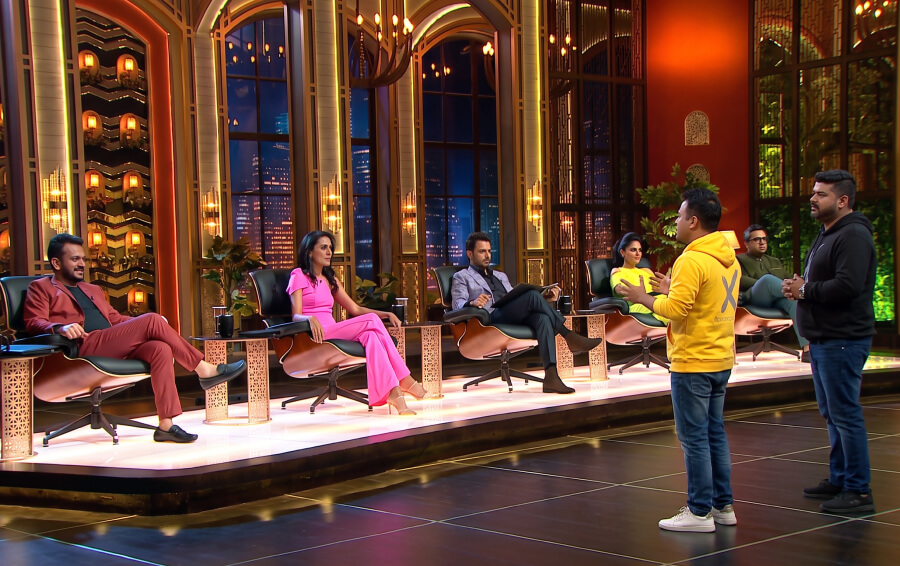
ExperientialEtc’s founders: Karan Bhardwaj and Sameer Bhatia
ExperientialEtc at Shark Tank: Season 2, Episode 40
Investment: Asked for ₹2 Crores for 4% equity; left with no deal as the panel passed due to technology scalability doubts.
ExperientialEtc is a high-end visual tech company that structures and deploys disruptive, immersive marketing campaigns for enterprise brands.
The agency manufactures, programs, and rents high-density kinetic light walls and 3D holographic displays.
Additionally, it works with interactive projection-mapping fixtures.
Also, it creates augmented-reality environments to maximize crowd engagement at physical venues.
· The Post-Tank Strategic Pivot
The investment panel struggled to comprehend the scalability of specialized, high-cost spatial tech, dismissing the pitch as an unpredictable event-management service rather than an enterprise software asset.
The founders pivoted by embedding their hardware rigs into a comprehensive, high-margin corporate licensing model.
They signed long-term retainer accounts with blue-chip global firms requiring recurring high-tech trade show displays and premium brand launches.
· Modern Valuation And Market Stance
The company has an ironclad reputation as a premier high-tech agency, serving major global corporate tech events in:
- Dubai
- Singapore
- Mumbai
Additionally, it generates stellar multi-crore service margins annually.
8. Torch-It
Torch-It’s founder: Hunny Bhagchandani
Torch-It at Shark Tank: Season 1, Episode 29
Investment: Asked for ₹2.5 Crores for 1% equity; rejected by the Sharks, who focus-tested the hardware model as low-margin charity rather than an enterprise asset.
Torch-It functions as a highly awarded deep-tech social enterprise that engineers assistive mobility hardware.
Also, it works with integrated AI software to empower visually impaired citizens worldwide.
Furthermore, their flagship product line uses predictive ultrasonic sensor arrays and spatial machine learning algorithms.
Therefore, this will help map physical obstacles. In fact, this will guide users safely with precise haptic vibration feedback patterns.
· The Post-Tank Strategic Pivot
The Sharks viewed the social-impact device as low-margin charity rather than a viable enterprise asset, passing on the investment.
Founder Hunny Bhagchandani leveraged his television exposure to secure institutional backing directly from the Government of India.
Also, he gets good support from corporate social responsibility (CSR) capital funds and international accessibility NGOs.
· Modern Valuation And Market Stance
Torch-It expanded its core technology stack to produce over 40+ distinct AI-enabled assistive solutions, including the Jyoti AI Smart Glasses.
The organization operates as a highly successful, self-sustaining assistive tech provider, deploying tens of thousands of units across Africa, South Asia, and the Middle East.
9. Shades of Spring
Shades of Spring’s founders: Nidhi Gupta and Anup Kumar
Shades of Spring at Shark Tank: Season 2, Episode 10
Investment: Asked for ₹3 Crores for 1% equity; walked away empty-handed after the panel passed due to aggressive tech-forward pricing disagreements.
Shades of Spring is an innovative, tech-enabled e-commerce platform that operates a direct-from-farm fresh-flower subscription network.
Moreover, this connecting flower farms directly with urban homes via automated cold-chain logistics.
By this, the platform completely bypasses traditional flower wholesale layers.
Furthermore, it ensures that blooms arrive at local doorsteps significantly fresher than those from traditional florist shops.
· The Post-Tank Strategic Pivot
The panel reacted with intense skepticism to the company's valuation metrics.
Moreover, the panel claimed that flowers were an unpredictable, seasonal commodity with zero long-term subscription retention.
Furthermore, the founders ignored the criticism.
They invested heavily in building automated sorting facilities.
Also, they built a seamless, user-friendly mobile application interface to streamline recurring weekly orders.
· Modern Valuation And Market Stance
The startup proved the massive potential of the localized home-curation market.
Today, Shades of Spring processes thousands of active subscription orders across major metropolitan areas.
It maintains a highly profitable model and a valuation that meets its initial enterprise milestones.
10. Agri Tourism India
Agri Tourism India’s founder: Pandurang Taware
Agri Tourism India at Shark Tank: Season 1, Episode 31
Investment: Asked for ₹50 Lakhs for 5% equity; flatly rejected by the panel, who classified the rural network as an unscalable, offline project.
Agri Tourism India operates a sustainable, community-driven eco-tourism aggregator model that connects urban travelers with working rural agricultural farms.
The platform allows tourists to experience authentic rural farm stays, traditional local culinary methods, and sustainable harvesting practices, funneling alternative revenue lines straight to local farmers.
· The Post-Tank Strategic Pivot
The Sharks flatly dismissed the pitch, filing rural eco-tourism away as a slow, unscalable, and unmarketable offline lifestyle project.
The founders stuck to their core vision, bypassing premium city marketing agencies to partner directly with local state tourism boards, environmental educational organizations, and international corporate eco-retreat planners.
· Modern Valuation And Market Stance
The platform scaled across multiple states, transforming thousands of remote rural farms into high-margin, self-sustaining hospitality centers.
The company remains the definitive pioneer of Indian agritourism, proving that eco-friendly, asset-light community systems deliver excellent long-term financial stability.
11. SamparkMe
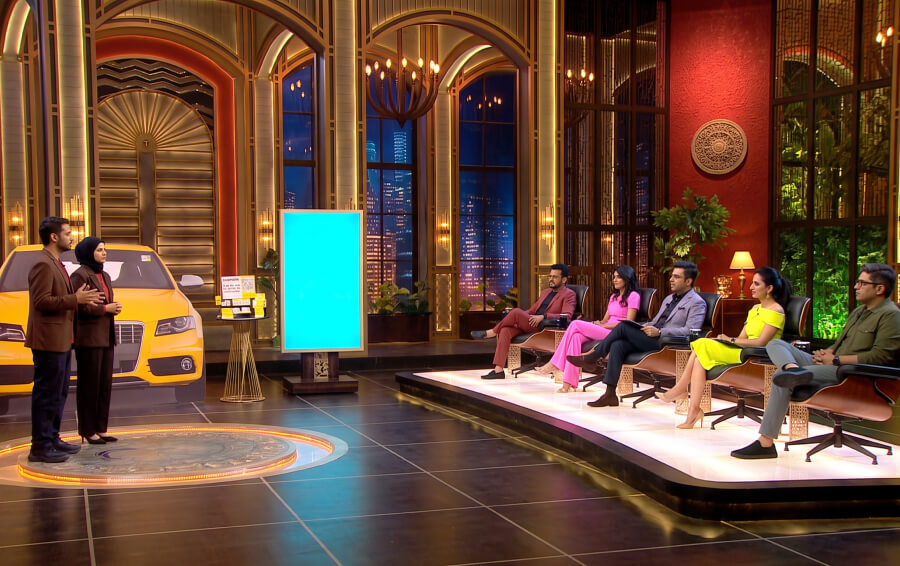
SamparkMe’s founder: Saurabh Garg
SamparkMe at Shark Tank: Season 2, Episode 45
Investment: Asked for ₹50 Lakhs for 5% equity; left with no deal after the Sharks claimed local drivers lacked the civic intent to adopt QR vehicular tools.
SamparkMe designs, manufactures, and scales localized QR-based vehicular communication tags and security ecosystems.
Additionally, this company places a secure, encrypted QR decal onto a vehicle’s windshield.
Therefore, the system allows the public or parking officers to contact the owner anonymously in an emergency, such as:
- Double Parking
- Towing
- Fire Risks
However, you can go forward with this without exposing private mobile phone numbers.
· The Post-Tank Strategic Pivot
The Sharks were highly critical of the app's community-driven model, with several panel members asserting that local citizens lacked the necessary "civic sense" to actively scan QR codes or respect drivers' anonymity.
Founder Saurabh Garg ignored the panel's negative review.
Then he pivoted his marketing strategy away from loose retail sales to focus on high-volume B2B corporate partnerships.
Additionally, he associated with car insurance networks, luxury residential real estate projects, and premium commercial parking garages.
· Modern Valuation And Market Stance
SamparkMe successfully transformed into a reliable, everyday safety asset across India’s crowded tier-1 metros.
The platform tracks a rapidly climbing active user base.
Therefore, this proves that when privacy and vehicular safety are combined with zero-friction mobile software, Indian drivers will adopt smart civic tools at scale.
The Most Successful Shark Tank Rejects Give Us A Lot To Learn
The long-term success of these 11 startups proves that a televised rejection on Shark Tank India can serve as a massive, long-term corporate asset. When a founder protects their early company equity and stands firm on their true valuation, they retain the freedom and financial leverage to build a highly successful, self-sustaining business on their own terms.