If you are working in a factory or the construction business, having the proper equipment is key to the efficiency of the business and the safety of your employees. Not only will having the right lifting equipment help you with the speed of your daily tasks, but it will help keep yourself and your workers safe.
Just think about it - if you are taking your workers lifting heavy objects repeatedly, there is a higher chance of injury to their muscles, repetitive joint injuries, accident possibilities, and physical stress.
Not to mention, some loads are just too heavy for workers to carry and lift off of the ground - if you find that you are having trouble completing your daily tasks in a factory due to the inability to lift heavy items, then you might find it beneficial to use a lifting gantry.
But how can you choose the best lifting gantry for factories? What is the best lifting gantry to lift heavy objects from your factory? By understanding the different types of lifting gantries, how you can choose the best one, and the different characteristics of lifting gantries, you can choose the top option for your factory.
Let's see more information about what a lifting gantry is, why you need one, and how to choose!
Need help with your factory? Use a lifting gantry to lift heavy objects!
If you are new to the factory or construction world, then finding out how to choose the best lifting gantry is key to being able to safely and effectively complete your daily factory tasks.
Portable lifting gantry (adjustable) -
If you need to move the lifting gantry between various spots in your factory, using an adjustable lifting gantry is an absolute must!
If you are using your portable lifting gantry in a workshop, factory, or business and you frequently need to lift heavy objects in multiple places, then using the adjustable lifting gantry is a must. Use the adjustable lifting gantry to change the height so you can accommodate various shapes and weights of objects!
Adjustable lifting gantry with a thicker beam -
If you are looking to lift heavier objects and need a less portable lifting gantry, using one that has a thicker middle beam is a must to lift weights that are between 120kg and 175kg. Using the stronger aluminum lifting gantry is the best way that you can avoid using multiple workers in your business to lift excessively heavy objects.
External trolley -
Another way that you can choose the lifting gantry for your needs is to be able to accessorize and customize the gantry. For some factories, you might need to use an external trolley to work in tandem with your aluminum lifting gantry to add extra versatility, movability, and transportability.
Parking jacks -
Another accessory that you can use with your lifting gantry is parking jacks - these stabilizers are ideal for helping keep your loads steady and avoid any mishaps.
Bigger gantry cranes
Another option you can consider using for your factory is a bigger gantry crane. Although these are typically used in a shipyard and outdoor spaces, if you have a big factory you can use the oversized gantry cranes to lift heavy and unwieldy objects, like big shipping containers and multi-ton objects.
Full gantry crane -
If you need to use a gantry crane to lift extremely heavy objects, consider using a full gantry crane to lift ships, big pieces of equipment, and heavy objects that cannot be moved with portable lifting gantries. Some of the biggest gantry cranes are as long as 140 meters!
Rubber tired gantry crane -
Smaller gantry cranes are another option for smaller factories that still need to lift heavy objects in outdoor spaces, such as containers and big pieces of equipment. Typically, you'll find that small rubber tire gantry cranes are straddle cranes that can effectively lift containers with ease.
Portable gantry crane -
As we mentioned before, portable gantry cranes are usually the best idea for those who are running factories. These portable gantry cranes are used to move small items that are usually less than 10 tons in weight.
Used frequently in the construction and machinery businesses, you will find that using a portable gantry crane is the best way that you can lift heavy objects with the added versatility of being portable and customizable
Benefits of lifting gantry
So why should you use a lifting gantrycrane for your business? There are many reasons why it will help your effectiveness, flexibility, and safety in the workplace.
Mobility -
Lifting gantries are more movable and contain more flexibility than other options. Instead of being stuck in one place where you cannot move the loads, or being tied down in one location, the flexible moving gantry lets you wheel the apparatus around your factory. This way, you can lift various objects between locations without having to worry about the safety of your workers or other equipment
Capacity -
The majority of mobile lifting gantries are very sturdy and durable. Typically, you will find that the lifting gantry options that are used for factories can lift up to 5 tons with ease. If you need stronger lifting gantries for your factory, consider using a full gantry crane for your outdoor spaces.
Custom height and accessories -
The last reason that you should consider using a lifting gantry for your factory is that you can customize the height of the gantry to work with various shapes of boats that you are lifting. Not to mention, you can add accessories to make your lifting gantry more versatile, easier to maneuver, and more stable.
Conclusion
Are you working in the faucet or construction industry? If so, using a construction lifting gantry crane is ideal to be able to lift heavy loads, keep your workers safe, and increase the flexibility of your workplace. By having portable lifting gantries, you can lift heavy objects between locations in your factory without worrying about the safety and health of your employees - not to mention, you will increase the efficiency and productivity of your workplace!
Read Also:
Content Rally wrapped around an online publication where you can publish your own intellectuals. It is a publishing platform designed to make great stories by content creators. This is your era, your place to be online. So come forward share your views, thoughts and ideas via Content Rally.
Hackathons are becoming a growing hit in the business world as a tool to encourage employee innovation and collaboration.
A hackathon is an event where employees from different departments come together to work on specific projects. It is usually a time-bound event, ranging from a few hours to several days.
The objective is to come up with creative solutions that businesses may use and leverage.
Hackathon events offer various advantages to workers. In this post, we'll talk about a few of these benefits and how they might raise an organization's general productivity and efficacy.
Virtual Hackathon Platform
An online platform that allows businesses to hold hackathons remotely. Regardless of their geographical location, it offers a digital environment for participants to interact, share ideas, and work on projects together.
Benefits of Virtual Hackathons
Flexibility: Virtual hackathons can draw a more excellent range of participants from different locations.
Businesses hosting a Corporate Hackathon where employees are globally located benefit from Virtual hackathon platforms. As it involves multinational teams, participants can work from anywhere with an internet connection.
Scalability: Compared to physical events, virtual hackathons are not limited by venue capacity or logistical problems.
Supports collaboration: This includes video conferencing, chat rooms, project management tools, and real-time feedback mechanisms.
Exciting and engaging experience: It makes sharing ideas, working together, and building innovative solutions easier.
In general, virtual hackathons offer a practical and effective approach to organizing hackathons. One of which is corporate hackathons. With a virtual hackathon platform, businesses can use the power of cooperation and creativity to advance their operations.
How to Host a Hackathon at Your Organization?
Set specific goals and objectives for your hackathon.
Decide on a theme or problem statement to focus on.
Invite participants from across your organization. Think about opening up participation to outside parties as well.
Choose the right hackathon software to facilitate the event. Consider from idea submission and team formation to project management and presentation.
Provide appropriate resources and support, such as access to technology, mentors, and refreshments.
Encourage teamwork and communication amongst participants.
Set realistic deadlines for the hackathon. Ensure that teams have enough time to develop their ideas.
Plan for a post-hackathon review and feedback. Determine future steps to be taken.
Benefits of Corporate Hackathons to Employees
Advancement in the Workplace
Corporate hackathons are an essential tool for the professional development of employees. Through hackathons, employees can acquire new skills and approaches that can help them advance in their careers.
Here are some of the ways that corporate hackathons can promote professional growth:
Exposure to new technologies: Participants can learn about new technologies and hackathon software, which can broaden their skillset and improve their problem-solving abilities.
Project management: Hackathons often have tight deadlines, which can help employees learn to deal with pressure and improve their resilience and adaptability.
Leadership development: Leading a project during a hackathon allows participants to develop their leadership abilities and hone their decision-making skills.
Encourages Creativity and Innovation
In today's fast-paced corporate world, it's easy for employees to get bogged down with daily tasks and lose sight of their creative potential. However, hosting a hackathon can provide a platform for employees to unleash their creativity and come up with innovative ideas.
By using hackathon software, employees can collaborate and build on each other's ideas. Together, they can generate unique and novel approaches. This kind of environment creates a space where employees can think beyond their comfort zones. It allows them to push the boundaries of traditional problem-solving methods.
Additionally, a hackathon can help identify the creative members of your team and encourage professional development in those areas.
Example: A company wants to improve its customer service experience. Employees from several departments collaborate to enhance customer support's efficiency and engagement. One employee introduces gamification components to make the experience more interactive. Another employee suggests utilizing chatbots to respond to frequent consumer inquiries. Then the team combines these ideas and creates a prototype for a chatbot. This chatbot uses gamification to make the customer service experience more enjoyable.
Advocates Cooperation and Teamwork
Teamwork and cooperation are vital for a successful and productive workplace. Corporate hackathons provide an opportunity to promote these values and foster a collaborative culture.
Corporate hackathons provide a platform for networking ideas. This exposure to various viewpoints and skill sets can lead to new solutions. Thereby, directing to a better understanding of business operations.
Employee skill development is possible through this cross-functional cooperation. It promotes a culture of collaboration and knowledge sharing. For example, a developer may learn about the user experience from a designer, whereas a marketing employee may work with a software engineer and learn to code.
The team-building component of a hackathon enables staff members to train in resolution techniques, enhancing interpersonal competencies.
Employees can leverage their individual strengths to achieve a common goal. This saves time, considering the pressure of time constraints and the need to produce a functional prototype.
Employees feel good that their ideas and contributions are acknowledged. They will likely have a positive attitude toward their work and the company.
Favors inclusion and diversity. By encouraging participation, hackathons can help break down barriers and promote a more inclusive work environment.
Boosts Morale and Motivation
Participating in a hackathon can be a great morale booster for employees. They feel satisfaction in their work and a sense of success. Staff members are motivated to put in more effort and advance the company.
Hackathons also provide employees with a break from their routine work. Staff members get to work on something different and exciting. This is helpful in reducing boredom and burnout. Increased job fulfillment and employee retention may also follow from this.
Hosting a corporate hackathon demonstrates the organization cares about its employees' growth and creative potential. Creating a fun and exciting work atmosphere can increase employee engagement.
Safe Space: Hackathons give workers a place to try out novel ideas and take chances without worrying about failing. Employees from discriminated groups who might be reluctant to speak up in traditional workplaces may find this beneficial.
Summing Up
Corporate hackathons are a remarkable resource for professional development overall. Corporate hackathons are a fantastic method to promote innovation and creativity among employees. They offer a distinctive setting for workers to cooperate and devise original answers to challenging issues.
Employees can gain new talents, improve their interpersonal skills, and network with coworkers from various departments. It is a powerful tool for promoting a culture of inclusivity in the workplace.
The benefits of hosting a corporate hackathon include professional development, innovation, collaboration, employee morale, and diversity and inclusion. Hackathon software has made it more exciting and enjoyable for participants.
Moreover, hackathon software allows companies to make these events more accessible and streamlined. Hosting a corporate hackathon has advantages for businesses trying to stay competitive in today's fast-paced business world.
Read Also:
5 Intelligent Sources to Boost Business Strategies all Over the World
Are There More Doors Or Wheels In The World?
Business To Business [B2B] Content Guide
Plant control instruments play an extremely important function in the constantly shifting environment of industrial operations. These devices monitor and control a variety of processes within the plant, which has a substantial impact on overall productivity.
This article digs into the quality plant control instruments available to study how they can work as catalysts for higher output.
Navigating the Industrial Landscape
Precision and control are of the utmost importance in the complicated ecology of the industrial sector. Instruments used for plant control are essential in preserving the delicate balance that must be kept for activities to go without interruption.
These devices are the unsung heroes behind the scenes, and their responsibilities range from temperature regulation to pressure management.
Sensors
Sensors are the "eyes and ears" of every control system, serving in this capacity as the system's "central nervous system." These devices monitor the environment for any shifts in conditions and relay that information to the control system in real-time.
Temperature sensors, for instance, can be installed in a factory to ensure the working environment is conducive to efficient output. This process minimizes damage to the equipment and guarantees that the end product will be of high quality.
Actuators and Control Valves
Actuators and control valves are the components that step into the spotlight when implementing changes based on sensor data. The actuators translate the signals from the control system into action.
Imagine a situation where exact fluid flow management is necessary; in this case, the control valves would take center stage. These instruments accurately control the flow, minimizing waste and making the most available resources.
PLCs and SCADA Systems
The efficiency of industrial processes is not solely dependent on the performance of its separate parts; rather, it is contingent on how well those parts are orchestrated. Conductors of this symphony are served by Supervisory Control and Data Acquisition (SCADA) systems and Programmable Logic Controllers (PLCs).
While programmable logic controllers (PLCs) ensure that the various parts collaborate well, supervisory control and data acquisition (SCADA) systems offer an overview of the entire process. Together, they make it possible to make decisions and troubleshoot issues quickly, which helps to reduce downtime.
Human-machine interface (HMI)
In today's increasingly automated world, human-machine interfaces, or HMIs, make it easier for humans and machines to communicate and collaborate. These interfaces offer operators a straightforward method for monitoring and controlling the user-friendly system.
HMIs enable operators to make quick, educated decisions because of their user-friendly displays and controls, which contribute to the system's overall efficiency.
Improving Efficiency Using Plant Control Instruments
Instrumentation and control systems have the potential to become the "brains" of your company when they are properly programmed. This study area is changing due to the introduction of new, more affordable technology. If implemented as planned, these adjustments may result in considerable benefits, such as greater productivity and decreased expenditure.
Collaborating to Calibrate Success
Cooperation between individuals is essential to developing efficient instrumentation and control systems that can produce comparable cost reductions. Engineers, technicians, and programmers must work together from concept design to 100% completion and startup to produce high-quality outcomes.
This process is especially true on design-build projects. Project teams want to begin functioning as a single integrated entity as soon as practicable. If they understand the costs and benefits of each option, the team can construct the right instrumentation and control architecture for the task and intelligently build to meet specifications.
Instrumentation and control engineers can also respond swiftly to design and scope changes as they occur and alter systems accordingly, thanks to continuous interface and communication. This results in improved ease of operability and reduced the number of wasted resource hours.
Making Real-Time Improvements
In recent years, advancements in software and hardware for instrumentation and control have made them more dependable, adaptable, and user-friendly. As a result, the connectivity between process equipment and instrumentation has also improved.
These technological improvements enable to supply operators of facilities with the appropriate information at the appropriate time. Operators are provided real-time control over several aspects of their manufacturing process, such as the workers, machinery, and support services.
Monitoring and Regulation
In a plant, it is the job of the instrumentation and control systems to monitor and maintain various characteristics such as temperature, pressure, flow, level, and quality. These systems deliver real-time data on the conditions of the process, allowing operators to make educated decisions and take preventative measures to keep operating conditions at their optimal level.
The evolution of instrumentation and control software and hardware over the past years has made it more flexible, dependable, and user-friendly. As a result, communication between the process equipment and the instrumentation that controls it has improved.
Because of this, operators can exercise control in real time on production-related components such as equipment, support services, and other associated components.
Redundancy and Fail-Safe Mechanisms
Reliability is something that cannot be compromised in the field of plant control instruments. Redundant and fail-safe mechanisms serve as safety nets, ensuring business operations continue without interruption, even in the face of unforeseen occurrences.
This process is of the utmost importance in fields such as manufacturing, where even a short downtime can result in large monetary losses.
Taking Control of Costs
For facilities that are managed by instrumentation and control, technological advancements have led to a range of cost-related benefits, including the following:
Enhanced operational efficacy that lowers the risk of making financially detrimental errors.
Because of increased automation, fewer people will be needed to run operations.
Potentially higher product output as a result of improved automation
A faster response time for addressing issues and warnings
Virtualization, which lowers the necessary amount of hardware while also increasing both dependability and flexibility
Guarantee of an excellent level of performance from both the controls and the end product
Elevate Operations Through Quality Instruments
It is impossible to overestimate how much influence high-quality plant control devices have on efficiency.
To maintain a competitive edge in the current business environment, investing in control instruments at the cutting edge of technology is not merely a recommendation but an absolute requirement. You can check out Pcipro to guarantee the quality of the instrumentation and controls you will use for your business.
Adopting these technological advances will unquestionably determine the performance of industries, opening the way for a brand-new era of highly efficient and productive operations.
Read Also:
Balancing Health And Ecology With Native Plants
Unlocking Plant-Based Protein Potential: Exploring A Leading Supplement
Enhancing Spaces With Greenery: The Art Of Plant Styling In Interior Design
Are you planning to do business in Dubai? If yes, you must know the rules and regulations of employment laws in Dubai to settle there comfortably, especially the employment law, to start your job or business there.
If you want to excel in your business field, you must know the country’s laws in the best possible manner. You cannot consider things for granted here. You must make your plans in the right direction to achieve your objective in the best possible way.
As per the report of the Gulfnews, the labor laws are well protected in Dubai, and you cannot make any mess with it there.
Best Employment Law Tips For Business In Dubai in 2021
Several employment law tips you can follow in Dubai to carry on your business successfully there. Therefore, let’s explore some of the essential facts in light of this matter.
1. Your Employees Have The Right To Take Annual Leaves
The employees in Dubai have the full right to take annual leaves on several occasions; being an organization’s employer, you cannot ignore this fact. There are several kinds of leaves that you can enjoy there. For instances:
Your employees can enjoy one day’s leave for new Year’s day.
Your employees can enjoy the Islamic new year for one day.
Your employees can enjoy Eid al Fitr for two days.
Employees can also enjoy Eid Al Adha for Four days.
Employees can also enjoy National Day for two days and
Commemoration Day for one day.
These are the leaves you must give to your employees if you are working in Dubai. You cannot bypass these leaves being an employer of an organization. The worker is entitled to annual leave for one year.
Understanding the various national holidays and addressing any possible disputes that may or may not arise requires you to seek the assistance of the best uae law firms. They have an idea about the nature of society and will be able to guide you in the best possible manner.
2. Your Employers Must Pay The Wages Regularly
Your employees are entitled to receive the wages regularly in terms of the national currency of the state. Workers who are employed for monthly or annual wage must be paid once per month.
An employer cannot force their employees to purchase their products from their stores. It will be considered an offense if the employer does so in Dubai. If you have accidentally breached the law, then you can consult the best law firm in Dubai.
It is not necessary that your employees must buy the food or any goods from the owner’s shop in Dubai. You need to understand the law of the land before developing your business plan in Dubai.
3. You Cannot Deny The Maternity Leave Of Your Employees
You are not supposed to deny your employees maternity leave, even in the case of your immense work pressure.
As per the labor law of the country Labour Law No eight and Article Number 30. A female worker is entitled to maternity leave for 45 days. Being an employer of the organization, you cannot evade out this law.
4. Your Employer Is Not Allowed To Keep Your Passport
Your employer is not allowed to keep your passport in their custody. You are not entitled to keep your employees’ access; it is actually against the law of the land. Furthermore, no employer can terminate the employee for not surrendering the passport.
Your basics must be cleared regarding the employment rules in Dubai. Without the right knowledge, you cannot excel in your field.
Ensure that you have not committed such mistakes in Dubai while running your business there. Your policies must be correct enough to deal with this matter efficiently.
5. Your Employees Must Not Bear The Cost Of Residency Visa
Your employer must bear the cost of the residency visa in the UAE. The company must take the responsibility of the employee in this regard UAE. The Visa cost and sponsorship costs are the sole responsibility of the employer.
If you want to grow your organization in the UAE, you must know this rule in detail. You cannot afford to make a mess with the law of the land. The only thing you must be aware of is that you must not violate the nation’s rules while operating your business in Dubai.
6. You Cannot Force Your Employee To Work For More Than 8-9 Hours A Day
You cannot force your employee to work for more than 8-9 hours a day in the UAE. It is a criminal offense and against the labor law of the land. You must know this fact in advance before setting your organization’s rules in the best possible manner.
The total working hours for an adult in Dubai are 8 hours a day and 48 hours a week. You need not exceed that landmark in your case. The more vigilant you will be in this regard, the better it will be for you.
7. Employers Consent Is Not Required For Resignation
The employer’s consent is not required if your employee wants to resign from your organization. It is solely the discretion of the employee to do the job for you. You cannot force your employee to stay and work for your organization.
It is your employee’s sole individual decision and being an employer, you cannot force your employee to stay in your organization without their wish. It is wrong from the endpoints of the employer. Ensure that you know the rules and the regulation of the state in the best possible manner.
Conclusion
Hence, if you want to run your business in Dubai successfully, you must know the land rules in the best possible manner. You cannot ignore these facts while you are opening your organization in Dubai. Ensure that you have followed the laws of the nation in the best possible manner. Make sure that you have followed the rules of the country in the best possible way.
Ensure that being a leader of your organization; you have not violated the rules of the nation. Make sure that you have followed the rules in the best possible way. The more precise you are in adopting your business policy with the nation’s laws’ alignment, the better it will be for your organization. Try to maintain the employment law properly to run your organization successfully.
Read Also:
Can an Employee Claim for a Personal Injury When Working From Home?
Picking the Right Law Firm for You and Your Family
Why Do Businesses Need Lawyer’s Advice?













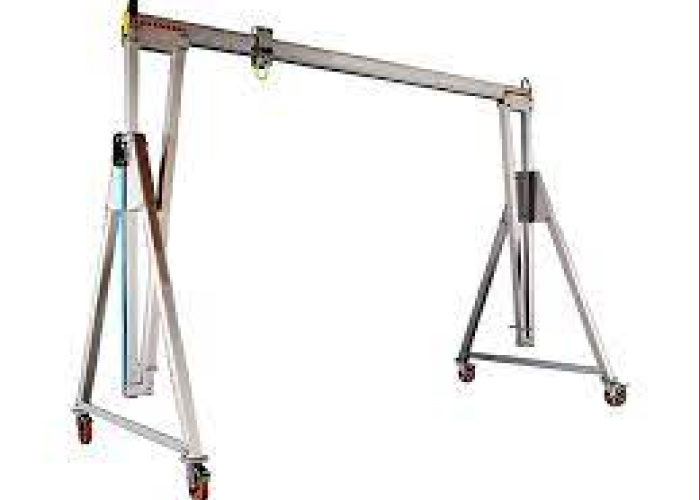
 If you are new to the factory or construction world, then finding out how to choose the best lifting gantry is key to being able to safely and effectively complete your daily factory tasks.
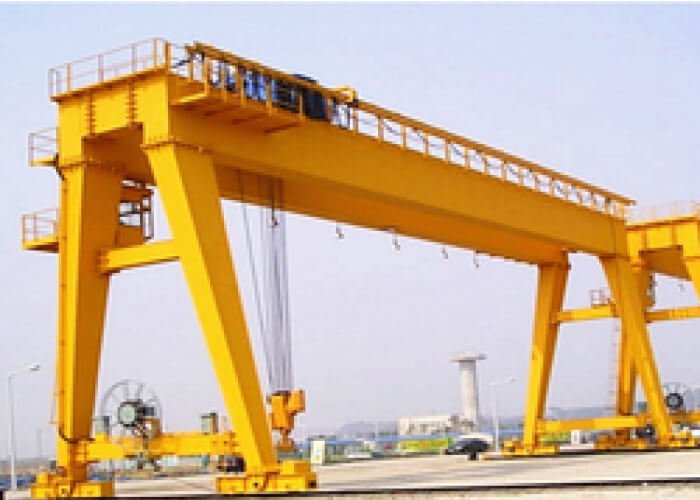 Another option you can consider using for your factory is a bigger gantry crane. Although these are typically used in a shipyard and outdoor spaces, if you have a big factory you can use the oversized gantry cranes to lift heavy and unwieldy objects, like big shipping containers and multi-ton objects.