












Guide on Choosing the Right EQMS Solution

Published on: 20 December 2018 Last Updated on: 29 January 2022
EQMS Solution

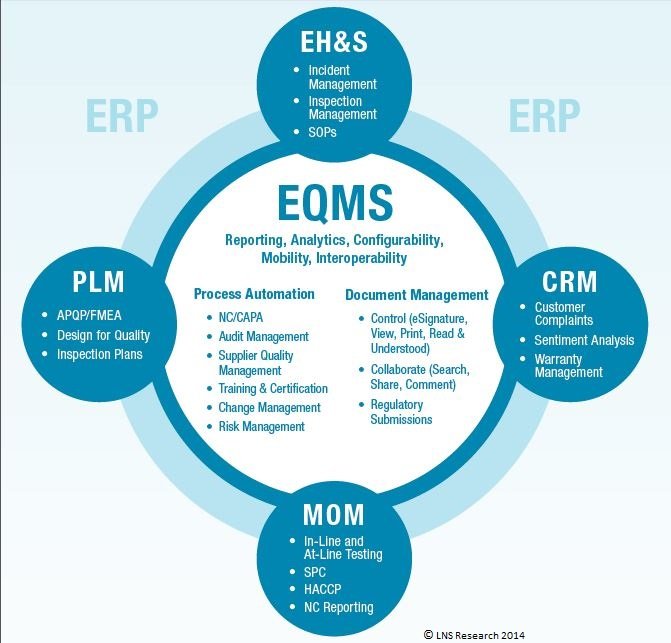
EQMS solution is an emerging enterprise software category that manages business processes and content for compliance and quality across the value chain system. You can view it as a high-quality management podium with an integrated data model and IT design that facilitates collaboration and cross-functional communication. While the general management systems and practices behind the management of quality have remained to be consistent for several decades, the methods and solutions used to ensure the production and delivery of high-quality products and processes across the value chain have changed considerably. With modern technological developments, there is a shift towards organizations implementing point quality solutions most of them quality-specific and home-grown modules in ERP systems to manage quality. With the market need, there has been the emergence of a new software category, EQMS (Enterprise Quality Management Software).

How To Choose The Right EQMS Solution?

Below are things to consider when choosing the right EQMS:

Understand The Type Of EQMS Solution Providers You Need For Quality Management:

Due to the increasingly globalizing and competitive economy, there’s the need for more integrated and better compliance, quality, and risk processes on the value chain system. The EQMS market has continued to mature together with these needs, and companies now have a variety of alternatives for achieving them. Thus one needs to know what is right for their organizations. If you highly focus on manufacturing or engineering, PLM-based or MOM-based EQMS may be the best option you have. If you are leveraging the use of contract manufacturers and suppliers, and wish to get visibility into upstream operations, ERP-based or PLM-based EQMS may still be the best way forward. If it’s engineering or manufacturing, it may make a lot of sense to choose a MOM-based or PLM-based EQMS. If it is a corporate quality control system, ERP-based or stand-alone EQMS may be the best option at your disposal.

Find Out Where Your Focus Is, Either Compliance And Risk Or Driving Business Value And Product Quality:

In case your organization is highly regulated, or you run asset-intensive industries you should aim at taking a positive approach to compliance and risk with EQMS functionalities. If business value and product quality are your motives for quality implementation, products like ETQ Reliance QMS software offer an extensive catalog of options to ease this practice.

Identify Your Current Maturity Look Like And IT Footprint And Understand The Projects You Are Already Investing In:

It is common for a company to make IT-related investments that promote its principal competency. If your company is in the middle of an ERP exploitation, ERP-based EQMS should get special consideration. If your company generates most of its value through its production effort and design, then you are likely to have a significant MOM or PLM footprint already in place. In this case, extending EQMS through these platforms will be the most cost-effective. If you are not pouring a high level of resources into the current system, then the value that stand-alone EQMS provides may be easily justifiable.

The Budget And Speed Needed For Implementation:

Knowing how much money you need and the specific time to solution value will play a significant role in your solution approach as the valuation time has a tight connection to the current IT investments. Most stand-alone EQMS providers have a leg up in this area, but there are some ERP, MOM, or PLM vendors today who are looking towards expanding quality capabilities and willing to remain flexible with new clients in the industry.

Your Quality Vision:

As you determine the best solution approach for your business, it is critical to think about your long-run quality vision. That is, don’t continue on this path and make an investment to fill a need. Instead, do your due carefulness and invest in a scalable IT solution that continues to deliver cross-functional value with time.

Conclusion:

Determining your solution approach is critical only if you find the correct vendors that could fill your needs bearing in mind the above considerations.

Read Also:

Featured Image: lnsresearch.com

Content Rally wrapped around an online publication where you can publish your own intellectuals. It is a publishing platform designed to make great stories by content creators. This is your era, your place to be online. So come forward share your views, thoughts and ideas via Content Rally.

View all posts

Leave a Reply

Your email address will not be published. Required fields are marked *

Related

Laptop

Factory Refurbished Laptops: Why Would You Buy New?

Technology evolves at mind-boggling speeds. And that makes us all scramble for the latest, newest, shiniest, ‘swaggiest’ gadgets. As a result, we end up sneering at any suggestion to buy second-hand or factory refurbished laptops. But think about it. All the advantages of refurbished, pre-owned, for-sale-again, or reconditioned equipment. They cost less In good condition, refurbished dell laptops work just as well as new The peripherals are almost always brand new A good vendor can offer customizing options On the other hand, buying new always costs top dollar. Plus, any psychological edge or swag wears off as soon as you purchase. There will always be something better, trending, or on the verge of being released. This is true for PCs, laptops, smartphones, smartwatches, and almost any other tech gadgets for personal or business use. Buy “Like-New” Have you ever bought your laptop and was excited to get it home and test it out. Then when you unwrap it you find something’s not right? Either it doesn’t turn on, or the screen resolution ain't right, or a corner of the casing is cracked? Of course with a return policy, you send it back and the vendor promptly sends you a replacement. Ever wondered where these rejects go? Well, it only makes business sense to sort out the issue and sell it again, right? But now, it can’t be sold as new. Yet it only required a keypad replacement, or a screen replacement, or maybe just a battery issue. When you return your purchase, the retailer sends it back to the factory where it’s tested and if possible, repaired. It goes through the quality assurance stages once more, just like new, and put back on the shelves with an enticing discount and probably a renewed warranty. Would picking a brand new one offer any advantages over this sweet deal? Get An Open-Box Deal There are laptops that are returned even without hardly ever being removed from their packaging. Others are handled minimally before being returned. Consider these scenarios: someone may return an unwanted gift. A retailer may ship 2 pieces for a single order. A customer may cancel an order. A laptop may lack one of its accessories or documentation in the packaging. There are many different scenarios where a laptop gets returned and can’t be sold as new. For the second buyer, these factory refurbished laptops and refurbished desktop computers create an awesome opportunity for making huge savings without compromising on quality or making big warranty sacrifices. Previously-Owned Bargains As previously mentioned, w all love having the latest gadgets. This means lots of people trade in their gadgets for newer models. Some resell their almost new laptops for a competing brand. Whatever the case, factories find they have to reset and refurbish many almost-new pre-owned gadgets. You can snag up a bargain on almost-new HP refurbished laptops that aren’t technologically too left behind. What most of these laptops require is hard disk formatting and resetting the operating system since the hardware and peripherals are still new. What to Watch Out For Don’t just go for refurbished laptops for sale. Go for a laptop that’s been refurbished by the original manufacturer or an established and reliable factory. Factory-refurbished laptops tend to have a higher QA standard rating than a laptop coming from a retailer. Nonetheless, to avoid common pitfalls or being ripped off, there are some basic stuff you need to watch out for. Limited warranty: Used laptops under 100 may come with shorter duration warranties compared to new units. The warranty may also cover less parts. Most factories and manufacturers will offer 90 days instead of the standard 1 year. Some manufacturers offer extended warranties at an additional nominal price. Old Tech: While not always true, most refurbs tend to be at least one generation behind the current technology. Battery Life: The previous owner may have mishandled the battery or charger. Battery life problems are usually not apparent when testing, and only become obvious upon multiple use. Returns Policy: Go for a refurbished laptop that comes with a flexible return policy Software: Make sure your refurbished laptop comes with original software, especially the operating system. Factory Refurbished Laptops Vs Brand New: My Verdict If you’re going for style over substance, then sure, get that new gadget and get your swag on. If you can’t stand the thought of using what once belonged to some stranger, then a factory refurbished laptop isn’t for you. But if you want to get a practical machine that works as well as a new one and comes with a factory warranty/guarantee, then refurbished may be the way to go. If you want to get a tried and tested brand and model without bursting your bank account, you might want to consider factory-refurbished laptops. If you want savings to help you upgrade your laptop’s components, then factory refurbished will give you that freedom. Read also: New Technologies And Consumer Protection Virtual Reality And Gaming Technology Innovation In 2017

READ MOREDetails
Heat Pump

10 Benefits & Drawbacks Of Purchasing A Heat Pump

A heat pump Nz is a system that can give your home both warm and cold air. It is usually set up outside and runs on either heat from the ground or heat from the air around it.  Depending on where you live and how cold it gets, heat pumps can be a great alternative to furnaces. We have made a long list of the pros and cons of installing a heat pump system in your home to help you choose a new heating system.  What Are The Benefits Of Using A Heat Pump? The five benefits of a heat pump are:  1. Efficiency Heat pumps are more efficient than other ways to heat and cool your home. They use less energy and fuel to heat and cool your home, and some water pumps are up to 600 percent more efficient. They can also live for as long as 50 years.  2. Vents Let Warm And Cold Air In And Out. Getting a heat pump is a good idea because it can move both hot and cold air around your house. This could save you money because you won't have to pay to install two separate systems. 3. Great System Also, it takes up less room because there is only one system with two functions instead of two.  4. Advantages For Health Most heat pumps make less noise than a dishwasher when they are running. They also help improve the quality of the air around you by filtering the air and removing moisture. Good indoor air quality is important because it can help keep people from getting sick or having other health problems.  5. Reducing Harmful Emissions Is A Suggestion One of the best things about a heat pump is that it is good for the environment. Since the heat pump doesn't use fossil fuels, it doesn't release any harmful gases into the air.  Less carbon in the air is good for the environment. This also helps people who use their own homes save about $459 a year. What Are The Drawbacks Of Using The Heat Pump? Even though heat pumps have a lot of good points, they also have some bad ones. Here are 5 bad things about heat pumps:  1. Family With Little Upkeep Heat pumps only need a little work to keep them working. They need to have the system checked once a year, but the homeowner doesn't have to pay a professional to do it.  A heat pump's low maintenance needs are good for homeowners who want to save money on expensive home repairs. In the long run, this helps save money. But it actually does not work for homeowners who are living in extensive cold and harsh winter weather.  2. Higher Bills For Utilities Air-source heat pumps work with electricity. This means that even though you use less fuel overall, your electricity bill could still be high because of your heat pump and everything else you use electricity for.  This is especially important if you live in a place where the cost of electricity is very high. You can calculate the fuel charges, but you actually can't count the electricity bills or the utility bills.  3. Money: High Cost Up Front Heat pumps are some of the most expensive to buy at first. This could make people less likely to buy them. The cost of hardware equipment and other instruments costs are pretty High. Due to this cost, heat pump installation and maintenance are pretty costly. The price is so high because of the quality of the equipment, the complexity of the installation, the type of system, the labor, and more. 4. High Costing If you look at the pros and cons of buying a heat pump, you will see that the average cost of this type of system ranges from $12,000 to $20,000. On the other hand, it usually costs $5,000 or more to install a furnace. The average cost of installing the heating pump is high. Your heating pump may not require repeated maintenance. But if the equipment costs are pretty high, the overall cost will increase. 5. Excess Uses Of Electric Power Even though it's better for the environment if you heat your home with electricity instead of fossil fuels, electricity comes with its own risks. You won't be able to use your heat pump when the power goes out. If you live in an area where the power goes out often, you might want to avoid getting a heat pump. If you are staying in a place where frequent power cutting is experienced. You have to face immense trouble due to these issues. Wrapping Up: If you are purchasing a heat pump, these are the advantages and disadvantages of using the heat pump. But heating pumps also have limitations. These limitations are associated with the cost and the environment. Heating pumps are not suitable for harsh cold climates. I hope you get ideas about the pros and cons of purchasing the heating pump. Are you planning to purchase it or not? Additional: 5 Uses of Natural Gas Signs Your Air Conditioner Might Be Dying The Many Uses of Industrial Vacuum Ovens Tips on Keeping Your Furnace Room Up-to-date

READ MOREDetails
Cloud FinOps

5 Core Pillars Of Cloud FinOps

The current dynamic business environment requires companies to take a structured, proactive approach to manage, monitoring and predicting their cloud service costs. Doing so will help them to meet their financial goals. Cloud FinOps is a cultural shift and operational framework that brings finance, business, and technology together to accelerate business value realization and drive financial accountability through the cloud. At its heart, cloud FinOps enables businesses to understand the challenges and complexities of cloud information technology (IT) financial management. The core purpose of cloud FinOps is to optimize the business value generated from cloud services. It involves various techniques, like free credits, least-priced services, negotiating costs, and more. 5 Core Pillars of Cloud FinOps You need to know the core principles of the cloud FinOps design to successfully implement it. These design principles help build a cost-conscious, self-governing culture while fostering business agility and financial accountability in the cloud. The following are some key pillars of Cloud FinOps:  1. Enablement and Accountability This principle focuses on creating lean or centralized cross-functional teams. These teams may include application owners, architecture, operations, finance, and engineering. Establishing these teams enhances governance and sets guidelines for managing cloud expenditure. 2. Cost Optimization This principle requires stakeholders to identify the main cost-optimization drivers in the cloud environment. It is a continuous, iterative process that offers a consistent solution to managing cloud usage most cost-effectively. The following are the three common optimization areas: Architecture Pricing Resource 3. Realization and Measurement This principle involves creating core key performance indicators (KPIs), and business-value metrics will be utilized to evaluate the success of the transformation. In most cases, customers begin with a series of cost-optimization metrics. Afterward, business value or unit economics measurements, like cost per customer served or transaction. 4. Forecasting and Planning Proper cloud estimates and planning require the company to fully understand its cost drivers, assign cloud expenditure, and benchmark efficiency. Doing so ensures minimal deviations between the actual and forecasted costs. 5. Accelerators and Tools As you would expect, cloud FinOps requires you to employ proper accelerators and relevant tools. Doing so ensures effective monitoring and management of cloud spending. These tools may include: Automation scripts that set budget alerts and account guardrails Reporting dashboard for tracking value and managing cloud spend Cost management tools for analyzing real-time cost and billing data. How Do Cloud FinOps Work? This operational framework involves a three-step lifecycle to ensure teams remain focused on and organized to deliver business value and attain financial accountability. These steps include: Informing Optimizing Operation 1. Informing This stage involves informing the company about all cloud-related costs. It happens by providing 100% visibility and assigning cloud costs to relevant business units. Here, the goal is to let every team understand their cloud spending. Also, it involves benchmarking against the company’s internal objectives, like budgets and forecasts. Companies can visualize areas they’re attaining business value and where they do not, helping them determine their progress. 2. Optimizing Once members know the organization’s goals, costs, and achieved business value, they proceed to optimize costs. This step involves providing recommendations and actionable insights to the different teams. Here, companies cut off unnecessary services that increase their cloud spending. Also, they automate rightsizing of different resources and maximize the utilization of the available resources. As a result, it significantly reduces cloud expenditure. 3. Operation Once all costs are optimized, it’s time to architect the cloud environment to achieve and maintain minimal cloud spending. The company creates governance policies that help attain technological, business, and financial goals. The primary objective here is to achieve measurable goals and continual improvement. 4 Benefits Of Cloud FinOps: Adopting cloud FinOps best processes and practices helps enterprises achieve various high-level benefits, such as: 1. Cost Efficiency Cloud FinOps enable you to attain cost efficiency thanks to advanced tools and accelerators. These tools help you identify areas of optimization, track and optimize cloud spending, and hold every team responsible, reducing unnecessary cloud costs. 2. Positive Cultural Shift By holding every cloud consumer responsible and making their data on cloud usage and spending available, cloud FinOps helps optimize cloud consumption. As a result, it helps create a beneficial culture for all cloud-consuming parties. 3. Reduces Uninformed Decisions Uninformed decisions can be extremely costly. Without proper tracking of cloud spending and resources, your company may be spending significant resources on the cloud. Fortunately, cloud FinOps products provide real-time granular reports and insights, helping leaders to: Get service-level cloud utilization Track underutilized or idle resources Compare the business cloud resource usage by time Figure out business areas that need more resources. With such data, leaders are aware of which areas need what resources. Also, they are informed about their decisions’ financial implications. 4. Unifies the Company’s Ecosystem Every company often has a frustrating, complex, and invisible culture split between finance, IT, and DevOps teams. Requests, approvals, and processes vary from department to department, though they aim to achieve a common goal. Also, technical terms and jargon may not be understood by other teams. What’s more, the finance team often loses control of cloud infrastructure procurement when the cloud engineering team steps into the process. How does Cloud FinOps help in this case? Well, cloud FinOps help every team stay updated about their cloud costs depending upon their responsibilities. For instance, while the finance team views the cost reports and data, the engineering team can access the processor usage information. As a result, it leads to streamlined, effective, and unified operations. Challenges Of FinOps Although cloud FinOps is a great approach, it has its shortcomings. Many teams end up experiencing barriers to attaining business value. Some key challenges include: Difficulty understanding cloud costs One cannot trade off creativity and innovation for low cloud costs The DevOps teams may not exhaustively understand the financial processes Final Thoughts The cloud FinOps framework can significantly transform your company in all aspects. This operational framework enables you to optimize your company’s financial wellness while driving business value. However, to achieve the best results, you need to adopt the best practices and understand the principles and dynamics of this approach. Read Also: Top cloud security controls you should be using Hosted Mail Service That Runs on the Cloud Oracle & The Cloud: A Dream Team

READ MOREDetails