












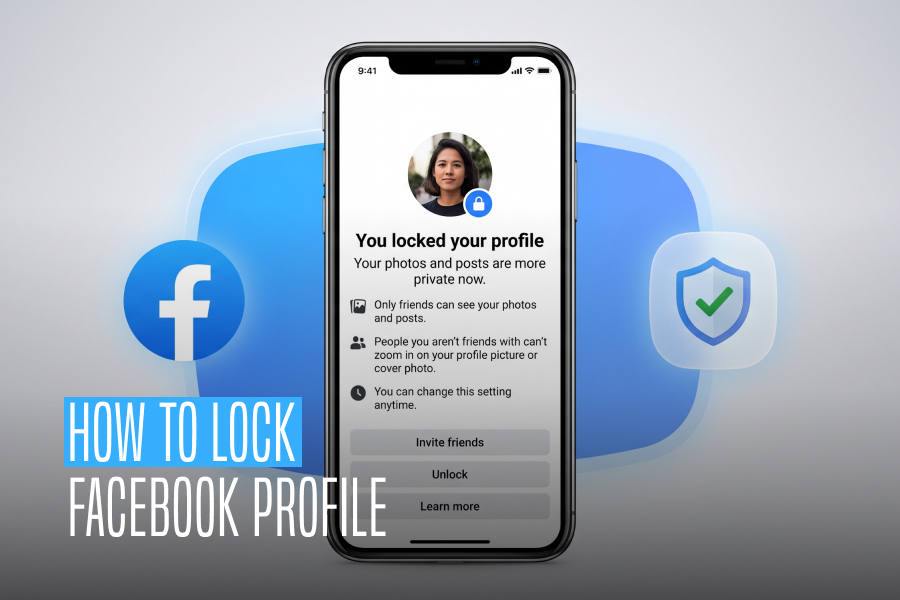
How To Lock Facebook Profile: The Complete Step-By-Step Guide

Published on: 02 January 2024 Last Updated on: 15 September 2026
how to lock facebook profile

Wondering how to lock Facebook profile to boost your online privacy? 

Well, you are not alone. With data security becoming a top priority for social media users, locking your Facebook profile is the ultimate way to block stalkers and prevent identity theft. 

Additionally, you can also hide your personal information from strangers.

When you activate this security feature, anyone not on your friends list is instantly blocked from interacting further with your profile. 

That means expanding, downloading, or viewing your profile picture, stories and timeline posts are out of the question. 

Best of all, your previously public posts automatically transition to a secure "Friends Only" view. 

While this native feature is still restricted to specific geographic regions, it is no longer an Android exclusive. 

You can easily secure your account natively across Android, iOS, and desktop web browsers. 

Read on to discover the exact, updated steps to lock your Facebook profile today. Besides this, learn the ultimate manual privacy workarounds if the feature is not available in your country.

What Is Facebook Profile Lock?

Important Note: If you have Facebook Professional Mode turned on to earn revenue or track analytics, the Profile Lock feature will be completely hidden.You must turn off Professional Mode in your settings before you can use the profile lock.

When you lock your Facebook profile, a visible blue icon badge appears on your page, signaling to the public that your account is fully secured.

This feature acts as an instant privacy shield. 

Profile FeatureWhat Your Friends SeeWhat Strangers (The Public) See
Timeline & PostsFull access to all past and new photos, videos, and posts.Completely hidden; nothing is visible on the timeline.
Profile & Cover PhotosCan view, tap, expand, and interact normally.Visible only as thumbnails; cannot tap, expand, download, or share.
Facebook StoriesFully visible.Completely hidden.
Past "Public" PostsFully visible.Automatically hidden (converted to "Friends Only").
Tagging & ReviewsStandard tagging (subject to your review if enabled).Blocked from tagging you or forcing posts onto your timeline.
"About" InformationFull details based on your sharing settings.Extremely restricted; only a tiny portion of basic info is visible.

Now that you know exactly how the feature protects your data, let us look at the way you can activate it across different devices.

How To Lock Facebook Profile

Locking your profile offers powerful protection against modern digital risks like identity theft, cyberstalking, and profile-cloning scammers.

However, it does come with a minor drawback: if you are trying to grow a public following or network for business, locking your account will limit your visibility.

Potential connections who aren't your friends yet won't be able to see your content or easily verify who you are.

If maximizing your personal privacy is your main goal, use these official, updated methods to lock your profile across desktop, Android, and iOS devices.

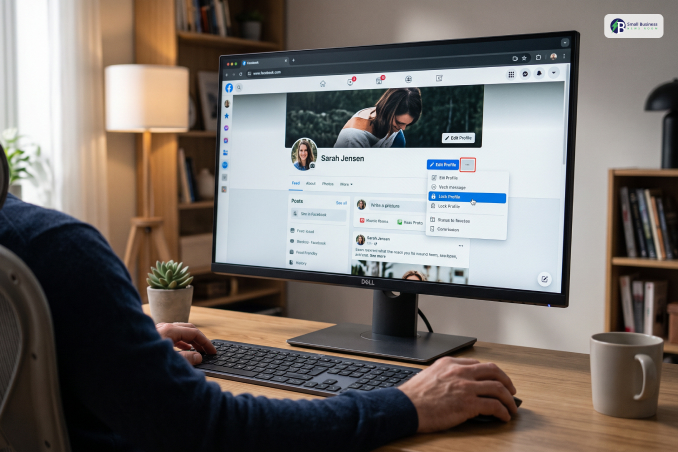
How To Lock Facebook Profile On Desktop
How To Lock Facebook Profile On Desktop

You do not need to use a mobile browser emulator or URL hack to secure your account on a computer. Additionally, Facebook natively supports this feature right from your standard desktop dashboard.

A Step-By-Step Guide

  1. Go to www.facebook.com and log in to your account.
  2. Click on your profile picture or name in the upper left  or upper right corner to go to your timeline.
  3. Click the three-dot menu (...) on the right side of the screen. This is next to “Edit Profile.”
  4. Select Lock Profile from the dropdown options.
  5. Review the privacy summary on the pop-up window and click Lock Your Profile at the bottom.

How To Lock Facebook Profile On Android And iPhone (iOS)
How To Lock Facebook Profile On Android And iPhone (iOS)

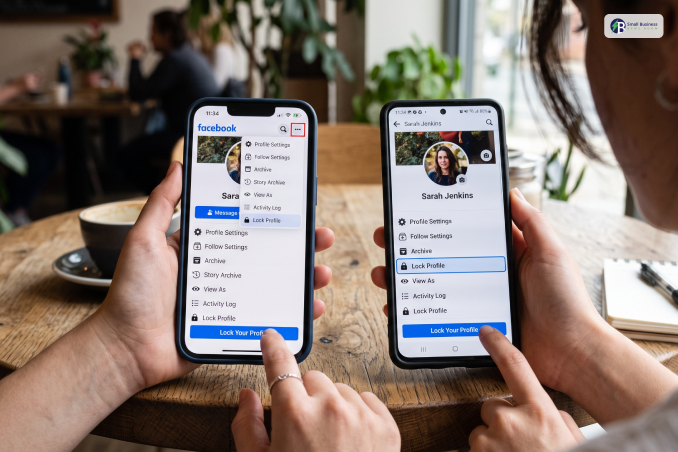
The process is now identical and native on both mobile operating systems. iPhone users do not need to borrow an Android device or use a computer.

  1. Open the Facebook App on your Android or iOS device.
  2. Go to your timeline by tapping your profile icon.
  3. Tap the three-dot menu (...) directly next to the "Edit Profile" button.
  4. Select Lock Profile from the list of settings.
  5. Tap the blue Lock Your Profile button at the bottom of the confirmation screen.
  6. A pop-up will state, "You locked your profile." Tap OK to finish

How To Unlock Your Facebook Profile 

On the other hand, if you ever need to make your profile public again, you can follow these steps. This allows in reversing the lock, where the process is completely identical across all devices.

  1. Navigate back to your profile page and tap or click the three-dot menu (...).
  2. Select Unlock Profile.
  3. Tap Unlock (the padlock icon) on the center of the screen.
  4. Confirm by selecting Unlock Your Profile at the bottom of the page.

Why Is It Important To Lock Your Profile 

Facebook claims that hackers from Vietnam and Bangladesh compromised the company's entire privacy system in December 2020. Furthermore, they have taken Facebook users' personal information.

These groups won't be able to misuse Facebook and harvest data from users' accounts all over the world thanks to this lock profile feature.

What Is The Vanish Mode On Facebook
What Is The Vanish Mode On Facebook

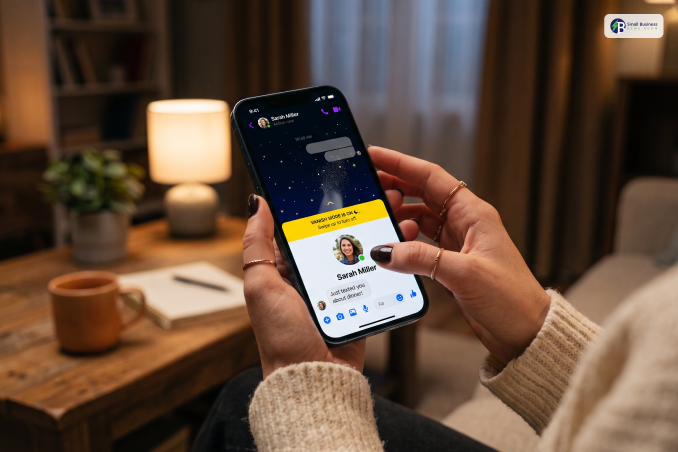
To support Facebook's privacy system, users should refrain from accepting friend requests from unreliable sources and clicking on dubious links. Facebook also introduced Vanish mode to address privacy concerns.

This model's unique feature is that once activated, it erases all chats and media files after a predetermined amount of time. It also has one more important safety feature.

Facebook will instantly notify you if someone takes a screenshot of your profile. The steps to activate vanish mode are as follows.

  • Visit the Play Store or App Store to download the most recent version of Facebook.
  • Launch the particular chat.
  • From the chat's bottom, swipe up.
  • Vanish mode will be activated as a result. This causes the chat's background color to change to black, denoting that the mode is now active.

Claim Your Digital Solitude 

Facebook remains one of the best ways to stay connected globally.

However, sharing your life online should never mean sacrificing your digital safety. That is why, locking your Facebook profile becomes an option.

It is an effortless, highly effective way to build a wall between your personal moments and the public eye.

Once activated, our service immediately shields your data from cyberstalkers, data scrapers, and identity thieves.

Just remember the trade-off. You will no longer be able to share posts globally with a "Public" audience. Moreover, any content you post moving forward will automatically restrict to your friends list.

Take control of your footprint today. That is because true digital peace of mind starts with a locked profile.

Read Also:
Sohini is a MarTech and business writer with over two years of experience creating and editing content in the digital marketing space. She has a strong interest in emerging digital trends, marketing strategies, and the evolving relationship between technology and business growth. Alongside writing, she also works on guest posting strategies, carefully aligning sponsored content with niche relevance to help maintain strong organic visibility and audience engagement. Outside of work, Sohini enjoys reading, exploring internet subcultures, and endlessly scrolling through Reddit, Pinterest, and Substack looking for new ideas and trends.

View all posts

Leave a Reply

Your email address will not be published. Required fields are marked *

Related

The Ultimate Blueprint On How To Get Rid Of Ads On Facebook

Beyond The Algorithm: The Ultimate Blueprint On How To Get Rid Of Ads On Facebook

We all know that Meta owns Facebook. Additionally, Meta heavily relies on its algorithmic advertising engines to fuel its massive data infrastructure. For everyday users who scroll their timelines, the constant influx of sponsored posts, behavioral tracking scripts, and hyper-targeted feed disruptions remains an ongoing frustration.  As a result, the tech giant inherently resists providing a native, free button to completely eliminate advertisements. However, the core rules of user control have evolved.  Consequently, if you want to learn how to get rid of ads on Facebook, navigating the platform requires a deep understanding of Meta’s newest privacy architectures.  Besides this, you also need to evaluate the localized compliance updates.  Fortunately, from automated backend machine-learning shifts to advanced browser network filtering, you can decisively reclaim your digital screen space. The Meta Accounts Center Framework First of all, Meta operates a highly centralized data ecosystem.  For instance, the platform automatically tracks user actions, off-site browsing histories, and demographic profile points to construct precise consumer targets.  Because of this tracking, figuring out how to get rid of ads on facebook starts directly inside this centralized control hub. Reconfiguring Internal Ad Settings You can fundamentally alter what the algorithm can see and use.  To prune your tracking profile, open your Facebook application or log in through a web browser.  Click on your profile image or the menu corner to open the dropdown navigation interface.  Choose Settings & Privacy, then click Settings to reveal the master account panel. At the very top of this interface, click on the unified Meta Accounts Center dashboard.  Scroll down to the Account Settings header and select Ad Preferences. This designated privacy area is divided into targeted zones engineered to alter your commercial visibility metrics. Customizing Advertisers And Core Topics Inside the Ad Preferences interface, click on the Customize Ads tab to view active market forces. In particular, look at the specific section labeled Advertisers you saw ads from.  This section displays a dynamic list of companies that have served sponsored content to your feed over the past few days.  Therefore, you can click the Hide Ads button next to any business entity to permanently banish their campaigns from your view. Next, navigate to Ad Topics and select the See All link.  Following this, click on individual topics and select See Less.  As a consequence, this manual action explicitly instructs the machine-learning delivery system to deprecate these specific commercial themes when calculating your algorithmic feed layout. Hardening Information Permissions To maximize data security, select the Manage Info tab within the same portal. Click on Profile Information to view your personal registration details.  Advertisers frequently target users based on identity flags.  Toggle off the individual switches for your relationship status, current employer, job title, and education history. Finally, open the Ads with your social actions menu. Set this permission strictly to Only Me.  Consequently, this prevents Meta from using your page likes, post reactions, or comments as automated endorsements displayed directly to your friends. The Definitive Playbook For Ad-Free Browsing Strategic ApproachCore MechanismPractical LimitationsTarget PlatformsMeta Subscription ModelRegional paid opt-out halting behavioral profilingAvailable only in specific compliant jurisdictionsWeb and Mobile AppsOpen-Source ExtensionsNetwork request interception and cosmetic DOM filteringIneffective inside native smartphone applicationsDesktop BrowsersPrivacy-Focused BrowsersIntegrated native ad-shielding and tracker blockingRequires abandoning stock browser appsAndroid, iOS, and DesktopAd-Hoc Feed CurationManual report loops and real-time algorithmic signalsRequires continuous manual maintenanceAll Interfaces Tactical Exploits Beyond Native Settings Because Meta’s internal preferences only reduce personalization rather than reducing total ad volume, true visual removal requires external third-party tools. Deploying Open-Source Desktop Extensions If you primarily access the platform on desktop environments via Chrome, Firefox, or Safari, browser extensions offer excellent visual mitigation.  Moreover, standard ad blockers often struggle against Meta's dynamically changing CSS code layouts.  However, community-maintained tools like uBlock Origin remain highly effective. These extensions work by analyzing and blocking network connection requests directed toward known tracking domains.  They also run cosmetic filtering scripts that strip out the underlying HTML structure of sponsored feed elements, completely cleaning up the desktop interface. Shifting To Shielded Web Browsers For mobile and standalone environments, running your account through an isolated, privacy-centric application bypasses the constraints of native app store versions.  The Brave Browser features built-in ad-shielding protocols that block tracking scripts and sponsored posts automatically.  Shifting your scrolling habits away from the native app to a secure web environment cuts off the background data collection loops that fuel targeted marketing. Manual Live Feed Defenses When a sponsored post breaks through your perimeter while scrolling your feed, you can issue a direct structural correction.  Click the three horizontal dots located in the upper-right corner of the ad unit. Select Hide Ad to clear it from your sight instantly. If the post displays deceptive claims, counterfeit products, or suspicious links, select Report Ad instead.  This sends a direct negative data signal to Meta’s content moderation engine, lowering the relevance score of similar commercial campaigns across your account. The Legality And Economics of User Interception Using network filters, cosmetic stylesheet adjusters, and ad-blocking software is completely legal.  Court rulings have consistently established that users have a right to control what data enters their hardware devices and how that information is rendered on their private screens.  Modifying your local browser display does not break copyright law or violate platform agreements. The Rise Of The Paid Zero-Ad Alternative In response to changing global privacy frameworks, Meta offers a formal, paid ad-free subscription model for users in specific regions, such as the European Union and the United Kingdom.  By paying a monthly fee through the Meta Accounts Center, users can completely turn off behavioral profiling and sponsored tracking.  This subscription instructs the platform's servers to stop serving ads entirely across all linked Facebook and Instagram profiles, serving as a reliable path for complete ad removal. Reclaiming Your Digital Boundaries The ongoing friction between platform monetization and data privacy shows no signs of slowing down.  While Meta continues to iterate its machine-learning systems to prioritize broad targeting and automated creative delivery, you are not powerless.  By systematically hardening your Meta Accounts Center permissions, deploying open-source desktop extensions, and leveraging privacy-centric mobile browsers, you can completely redefine your social media environment. Managing your data footprints and interface layout lets you transform a commercialized digital storefront back into a personal space focused on genuine connection. Learn More Also: Why And How To Access Facebook’s Full Site In 2024 Incognito Mode: How To Post Anonymously On Facebook? What Is Facebook Touch? Everything You Need To Know About It

READ MOREDetails
Disconnect facebook from instagram

How To Disconnect Facebook From Instagram: The Ultimate 2026 Guide

Have you had enough of sharing your content on Facebook and Instagram in tandem? Would you prefer to maintain distinct profiles for your personal networks and professional endeavors?  If you are looking for clear solutions on how to disconnect Facebook from Instagram, you are not alone. While linking social media platforms initially seems convenient, maintaining a unified presence across both networks often dilutes your brand voice, creates cross-posting redundancy, and raises significant data privacy concerns. Fortunately, you can easily delink your Instagram and Facebook accounts on desktop web browsers and mobile platforms.  However, because Meta frequently updates its infrastructure, the classic settings menus have completely shifted.  This comprehensive tutorial walks you through the modern process of separating your accounts, managing your data permissions, and regaining complete control over your digital footprint. The Core Connection: How Meta Links Your Accounts When you link your Facebook and Instagram profiles, they are stored under a unified ecosystem managed by the Meta Accounts Center.  This synchronization enables automatic cross-posting.  When activated, any grid post, Reel, or Story you publish on Instagram can automatically cross-post to your Facebook timeline or connected business page.  While this structure benefits creators who want to broadcast media simultaneously without duplicating their workload, it operates by granting deep permissions between platforms.  By keeping them linked, you give Meta permission to share cross-app data, including: Account names, verified badges, and profile pictures. Account credentials and shared single sign-on (SSO) login steps. Advertising preferences, tracking data, and personalized behavioral metrics.  If you no longer want to share these data touchpoints, severing the link between the two profiles stops this automatic communication immediately.  Why Should You Disconnect Facebook From Instagram? Decoupling your accounts offers clear strategic advantages for both everyday users and digital marketers.  Review the primary reasons to separate your platforms below: Strategic DriverStrategic BenefitKey OutcomeAudience SegmentationPrevents overlapping content for different demographics.Tailored messaging per platform.Brand ProtectionKeeps personal Facebook interactions separate from professional Instagram grids.Clean corporate identity.Data PrivacyMinimizes centralized tracking and blocks cross-app data pooling.Higher digital security.Algorithmic HealthEliminates redundant cross-posting that followers flag as spammy.Higher organic engagement rates. How To Disconnect Facebook From Instagram On Mobile: For Both iOS And Android The most direct way to sever the connection between your profiles is through the official mobile applications.  The steps are identical across both iOS and Android platforms because Meta relies on a unified internal system.  Step-by-Step Mobile Unlinking Flow Launch the Instagram app on your smartphone. Tap your Profile Icon in the lower right-hand corner to open your main profile page. Tap the Menu Icon (three horizontal lines) in the upper right-hand corner to trigger the control drawer. Select Settings and Privacy at the top of the menu tray. Locate the Meta section and tap on the Accounts Center button. Scroll down to the bottom of the Accounts Center menu and select Accounts under the Account Settings heading. Find the specific Facebook Profile or page you want to remove and tap the Remove button next to it. Tap Remove Account when the warning prompt appears. Review Meta’s disclosure page regarding shared experiences, tap Continue, and select Yes, Remove [Account Name] to finalize the split.  Note: If your accounts shared a single login password, the interface will guide you to quickly set up a standalone password for the disconnected profile to ensure you aren't locked out.  How To Disconnect Facebook From Instagram On Desktop If you prefer using a desktop or laptop web browser, you can easily finalize the disconnection via the web interface of either platform. Step-By-Step Desktop Unlinking Flow Open your browser and navigate to the official Instagram Website. Log into your dashboard, click the More icon (represented by three horizontal lines) in the lower-left sidebar menu, and select Settings. Look at the left-hand navigation panel, find the Meta logo, and click Accounts Center. In the central settings column, click on Accounts under the primary settings list. Identify your connected Facebook profile and click the Remove button next to the listing. Confirm your choice by proceeding through the security prompts, clicking Remove Account, and selecting Continue to save your changes.  Alternative Options: Stopping Cross-Posting Without Unlinking Sometimes, completely deleting an account from the Meta Accounts Center is too extreme. If you still want to log in with your unified credentials but want to stop your photos from appearing in the other app, you can disable automatic sharing instead. Managing Connected Content Experiences Instead of removing the account entirely, navigate to Accounts Center > Connected Experiences > Sharing Across Profiles.  From this screen, select your Instagram profile and toggle off the options for Your Instagram Story, Your Instagram Posts, and Your Instagram Reels. As a result, this stops cross-platform duplication while keeping your login preferences active. Similarly, if you are managing a business asset, you can adjust settings directly through the Meta Business Help Page.  On the other hand, you can also use the Professional Dashboard on your Facebook page. This allows you to unlink an associated Instagram business profile without disturbing your personal accounts.  Troubleshooting Common Unlinking Obstacles If you encounter errors when attempting to sever the connection between your profiles, review these common system checks: Outdated App Architecture If you do not see the unified Accounts Center option, navigate to the App Store or Google Play Store.  Also, ensure both your Facebook and Instagram applications are updated to the latest build version. Business Page Ownership Limitations If you are trying to disconnect an Instagram creator account from a public Facebook Page, verify that your personal Meta account has full Administrator Privileges on the Facebook Page.  Lower-level editors or moderators lack the clearance to adjust linked account permissions. Active Advertisement Hold Meta will occasionally block you from changing account associations if the profile is tied to an active, running ad campaign.  Pause all active ad groups inside Meta Ads Manager before attempting to remove the profile from the center. Reclaiming Long-Term Platform Autonomy Successfully managing your settings via the Meta Accounts Center represents a crucial shift from passive platform usage to conscious data stewardship. Disconnecting Facebook from Instagram does not delete your historic photos. Neither does it archive your existing Reels nor remove comments left by your community on either app.  Instead, it safely resets the boundary line between your networks. By moving away from automated cross-posting, you gain the freedom to optimize your marketing copy. This is specifically for the layout and audience of each app.  The modern digital ecosystem rewards authenticity over automated repetition. Taking a few minutes to clean up your account structures ensures your content strategy remains sharp, intentional, and highly secure. Learn More About: 5 Content Ideas to Use with Instagram Influencers 6 Best Practices When Buying Instagram Followers Incognito Mode: How To Post Anonymously On Facebook?

READ MOREDetails
facebook support chat

How to Get Help Through Facebook Chat Support?

Did you know that there are 2.93 billion monthly active users on Facebook? That is a sizable number of possible friends, acquaintances, and clients. If something goes wrong, you may want to contact Facebook. Facebook Support Chat helps you do exactly that. However, it is intimidating and depressing for a Facebook user to consider competing with billions of users for social media support. Reaching out to any support team, particularly Facebook's, for assistance with removing offensive content, recovering a hacked account, or simply asking a question, can be a very confusing and time-consuming process. How Facebook Support Works In 2026 Facebook does not offer one universal customer-service chat for every user. The support option you see depends on your issue, account type, country, advertising activity, and eligibility for products such as Meta Verified. Use the route that matches your problem: ProblemBest first optionWhat to expectYou need help using a featureFacebook Help Center or Meta’s support assistantGuided answers and account-specific helpA button or feature is brokenReport a problemA technical report sent to FacebookYour account or Page has a restrictionAccount Status and Support InboxNotices, decisions, and appeal optionsAn ad, payment, or business asset has an issueMeta Business Help CenterSupport options may appear for eligible businessesYour account may be hackedFacebook’s hacked-account recovery flowSecurity checks and account recovery stepsYou received a platform warningSupport InboxA place to verify whether the notice is genuine The phrase “Facebook support chat” usually refers to one of these support routes. A live conversation with a human agent is not guaranteed for ordinary personal accounts. Meta’s official Points of support and contact page directs users to the Help Center, reporting tools, and account-specific support. Is Facebook Live Chat Available To Everyone? No. Facebook live chat is normally limited to selected business, advertising, or verified accounts. Even businesses that use Meta products may not see a Chat button every time they open the support area. To check: Open the Meta Business Help Center. Sign in to the business account connected to your Page or ad account. Choose the product or asset affected. Select Get support or a similar contact option. If your account qualifies, Facebook may show chat, email, or another contact method. Meta Verified for businesses can also provide access to personalised support, subject to eligibility and the plan available in your country. Check Meta’s current Meta Verified for Businesses information before paying for any subscription. Do not assume that a live chat option must appear. Its absence does not mean that your account is permanently blocked or that Facebook has ignored your problem. It often means that the available support route is limited to self-service articles, a report form, or the Support Inbox. Types Of Facebook Support Facebook provides a range of support options to assist users in resolving their problems. Here are a few methods to get in touch with Facebook Support if you're unsure how to do so: For users trying to solve common problems, the Facebook Help Center is a great resource. Clicking the "Help Center" option from the Facebook drop-down menu will take you to the Help Center. Answers to frequently asked questions and articles about Facebook usage can be found here. By choosing "Report a problem" from the drop-down menu under "Help," you can also report a problem you're having directly to Facebook. What Is Facebook Community? Users can find resources about creating a community on Facebook in the Facebook Community. For those seeking assistance with Facebook Groups, online events, community chats, and other topics, this forum is excellent. Other Ways To Seek Facebook Support Facebook, Meta for Business, Meta for Media, Facebook and Privacy, Developer Community Forum, Engineering at Meta, and Design at Meta are among the subjects covered by the official Facebook websites. You can find articles, tutorials, and other useful resources on these pages to assist you in troubleshooting platform issues. Additionally, you can email Facebook Support. You can send an email to the appropriate addresses, but most users lament how infrequently they receive a response. Use support@fb.com for general support inquiries. Please send any questions you may have to press@fb.com. For issues relating to law enforcement, use records@fb.com. Appeal content that has been blocked by using appeals@fb.com. Use abuse@fb.com to report content that goes against Facebook's policies. Send an email to datarequests@fb.com to find out what information Facebook has about you. To address questions about intellectual property, use ip@fb.com. Use phish@fb.com to report phishing content. How To Contact Facebook Support Through Official Channels Start from Facebook itself rather than searching for a phone number or clicking a support link sent by another person. Use The Help Center Sign in to Facebook. Click or tap your profile picture. Open Help & support. Select Help Center. Search for the exact problem, such as “account disabled,” “Page access,” “ad payment,” or “hacked account.” Facebook may also offer an automated support assistant in the Help & support area. Its availability and functions can vary by account. Report A Technical Problem If a feature is not working: Open Help & support. Select Report a problem. Choose the area affected. Describe what happened. Add a screenshot that does not reveal passwords, payment details, or security codes. Send the report. Meta explains that reports help its teams investigate broken features, although a personal reply is not guaranteed. You can review the latest instructions in its report-a-problem guidance. What To Write In A Facebook Support Request A clear report gives Facebook enough information to understand the problem without several rounds of questions. Keep the message factual and easy to scan. Include: the Page, profile, ad account, or business asset affected; the date and approximate time the problem began; the exact error message or warning; the device, browser, or app version you used; the steps that caused the problem; screenshots or a short screen recording, with private information hidden; any case number from an earlier report. Explain what you expected to happen and what happened instead. For example: “I have full control of the Page, but the Access and control menu does not show the deletion option.” Never include your Facebook password, one-time login code, full payment-card number, or recovery code in a support message. Facebook support does not need those details to investigate a normal technical issue. Where To Find Facebook Support Replies Facebook sends many account notices and report updates to the Support Inbox. It is the first place to check after submitting a problem. On the Facebook app: Tap Menu or your profile picture. Select Help & support. Tap Support Inbox. On desktop, open your profile menu, choose Help & support, and select Support Inbox. The inbox may contain account alerts, reports about content, Page decisions, and replies connected to previous requests. Meta’s Support Inbox instructions confirm that it is used for alerts and messages from Facebook. If you cannot find a reply, check that you are signed in to the same personal profile that submitted the report. A Page manager may need to switch into the relevant Page or business account before related notices appear. Avoid Fake Facebook Support Numbers And Messages Facebook does not provide a universal customer-support phone line for ordinary account problems. Numbers published on blogs, forums, or social-media posts may be outdated, automated, or unrelated to Meta. Be cautious if someone claiming to be Facebook support: sends you a private message asking for your password; asks for a login code or recovery code; requests payment to restore a profile; sends a shortened link to “verify” your Page; promises an immediate appeal through WhatsApp, Telegram, or another chat app. Do not give the person access to your account. Open Facebook directly and check your Support Inbox instead. Meta also advises users to take action if they believe they have been phished on Facebook. A genuine support request should begin inside Facebook, the Meta Business Help Center, or another official Meta website. If you received a warning by email or message, compare it with the notice shown in your Support Inbox before taking action. Support Chat Is More Accessible Now! Although we sincerely hope you never need to contact Facebook support, you might occasionally require assistance on the social media network. We've listed the standard methods for getting in touch with Facebook support when you're having problems. Facebook support chat is available to assist with any problems as well as provide guidance on new features and strategies for expanding your company's presence on the network. Additional Reading: Here Is How To Delete A Facebook Page Easily? How To Stop Scammers On Facebook Marketplace? Facebook Settlement: What Went Down And What Was The Final Result?

READ MOREDetails