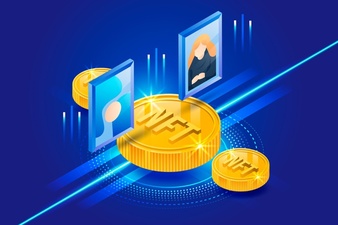
How The NFT Market Is Developing In 2021

Published on: 17 May 2021 Last Updated on: 02 January 2025
NFT Market Is Developing

Investors and developers believe in the prospects of NFT.

Venture capital and crypto funds became interested in the sector in early 2018. So, the company Dapper Labs (developer of CryptoKitties) in 2017 first raised $12 million in funding, in 2018 another $15 million, and in 2019 another $11.2 million.

Game studios Rare Bits and Lucid Sight raised $6 million each, and Immutable (developer of Gods Unchained) received $15 million in funding in September 2019, Mythical Games — $19 million, and the OpenSea marketplace — $2 million.

It is difficult to calculate the exact volume of the NFT market. Non-exchangeable tokens are not traded on conventional crypto exchanges — instead, they are bought or sold mainly for ETH on specialized platforms, fan sites, or inside computer games. The largest NFT platforms: Opensea, Nifty Gateway, Knownorigin, Makersplace, Super rare.

According to the NonFungible website, the total sales of the ten most popular NFT projects amounted to more than $109.5 million, of which more than $1.8 million was received only in the last 7 days. As you can see, the NTF market is still quite small. But more importantly, its volume is steadily growing. NFT games are brilliantly ruling over the gaming world. You can find some of the best NFT games on this site including lightnite, illuvium, my defi pet, and lost relics

According to the calculations of the publication Decrypt, the volume of trading in the NFT market for the summer of 2020 increased by 57%, which led to an increase in the value of the industry to about $100 million.

According to Dune Analytics, monthly sales in the NFT sector exceeded $ 1-3 million in the summer alone, reaching a peak of $6 million in September of this year. However, according to the art platform SuperRare, only in October they sold digital works worth more than $4.34 million.

Lot’s of numbers here. To learn about NFTs, follow the FAQ NFTs: Everything You Need to Know About NFTs.

NFT can Create a billion-dollar Market and Popularize Blockchain:
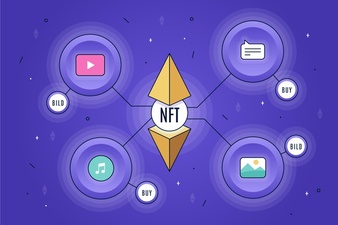
NFT can Create a billion-dollar Market and Popularize Blockchain:

NFT is a promising sector for the development of the crypto market with hundreds of millions of potential users: sports, pop culture, computer games, and art lovers who are willing to pay for their hobbies.

Therefore, startups that bet on this direction have something to compete for. Most likely, it is for these markets that we will soon see sharp competition.

But it is not worth waiting for the triumphant boom of the market of non-interchangeable tokens. Such tokens have long been known to the players of the crypto market, but have not yet received a truly mass application. So far, the belief in NFTs among their developers and investors is stronger than the need for them among crypto users.

So, for example, to become popular among hundreds of millions of gamers, gaming cryptopredmetry in the NFT format must be integrated into the most popular video games. But it is not profitable for their developers, because they can lose a significant part of their income.

Sports and music fans, art aficionados and collectors are also only looking at NFT for now. Those, although they belong to only one owner, do not allow you to interact with the underlying asset physically — and without this, the same digital picture is not much different from the reproduction.

Another difficulty is technical. Tokens on Ethereum are too dependent on their network, which is not yet suitable for mass use. That is why the same CryptoKitties game switched to the new Flow blockchain in May 2020. However, after the beginning of the upgrade of Ethereum to the 2.0 state, the scaling problem should gradually disappear.

Will the NFT be used outside of digital art? Hard to answer. 2mcuchfoffee also researched the topic and come up with the paper.

In any case, it is great that NFT startups understand all the difficulties and do not give up trying to create a new market, explore ways to use the technology, and monetize it. If the enthusiastic expectations about this market come true, his works will hit the jackpot.

But to do this, it is necessary to conduct “explanatory work” and clearly prove to a wide audience the advantages of NFT.

Read Also:

  • Everything You Must Know About Bitcoin Circuit: Legal or Scam
  • Exciting Facts About Cryptocurrency And Crypto Wallets
  • Best Crypto Trading Bots of 2020: You are Unaware

Content Rally wrapped around an online publication where you can publish your own intellectuals. It is a publishing platform designed to make great stories by content creators. This is your era, your place to be online. So come forward share your views, thoughts and ideas via Content Rally.

View all posts

Leave a Reply

Your email address will not be published. Required fields are marked *

Related

Why Exchanges Need To Improve User Experience For More Adoption

Why Exchanges Need To Improve User Experience For More Adoption

You might have thought, what is the reason behind Cryptocurrency adoption taking so long? It has already been a decade since the first-ever Cryptocurrency Bitcoin was launched. Still, people are hesitant when it comes to Cryptocurrency Adoption. Now the question is why? As the reason is, many investors have pointed out the not-so-cool user-friendliness of exchanges. On the other hand, some excellent bitcoin revolution login platforms are considered one of the best Crypto trading platforms. If you are a Crypto Trader, you should answer the following questions. While making a trade, what problem do you usually face? Do you have a proper understanding of the price fluctuation of the market? For overviewing of the market, are there any tools that help you with that? The answers to all these questions are related to the user experience offered by the Crypto Trading platforms. For accelerating Crypto trading, there have to be more Crypto exchanges like Bitcoin Revolutions, which will offer quality guidance. Why Exchanges Need To Improve User Experience For More Adoption Whenever you talk about any of the digital devices in this digital world, the first thing to be considered and checked is the user experience. With the advancement of technology, things are becoming simpler in a complicated way. In order to get access to those simpler things, you first need to learn the complicated way in which they are being operated. For example, online money transfer has made our life easier and saves a lot of time. But in order to transfer money online, you will need to know how to operate the platform, using which you will transfer your money. The same goes for more Cryptocurrency. This is why user experience has to improve for better adoption. 1. Functionality A good user interface has to be always created by keeping the user in mind. The users can be anyone, from a beginner of the Crypto world to an experienced old investor when it comes to the Cryptocurrency world. The user interface of the exchange has to be clean and user-friendly. Only then a beginner trader will be able to understand everything properly. Some features, such as filtering and sorting, are not at all common for most software or tools. It restricts the user from getting to know the market properly. 2. Ease Of Use The best way of understanding the whole user experience thing is how comfortably you are interacting with the help of any device or website. Along with this, you also have to keep track of the feasibility, speed of the platform, easily understand the application, and smooth navigation. We are living in a world where everything has become digital or shifted to the online world. Many businesses are providing their customers with services or products online. It means you have to be really efficient and also fast in grabbing whatever opportunity you are getting. 3. Credibility Whenever we meet a new person, it usually takes around 0.1 seconds to leave a good impression on that individual. But when it comes to a website, the time reduces to half, i.e., 0.05 seconds. So, the website’s user interface must be easy to understand. Whenever you find a website that has created a good impression on you, you will start navigating the website to see what other things it has to offer you. Just the same way a website works, the Cryptocurrency trading platforms or exchanges also work the same way. User Experience Is All While developing a Cryptocurrency exchange, a developer has to keep all these things in mind. The professional has to consider the requirements of a beginner and also of an experienced trader and combine them in the right way to present a reliable and efficient solution for all types of users. So, by improving the user experience, the adoption rate of Cryptocurrency can be accelerated. Read Also:  Is 2021 The Most Critical Year For Bitcoin And Other Cryptocurrencies? Most Common Bitcoin Trading Blunders - You Must Avoid What to Expect When You Become a Forex Trader

READ MOREDetails
Listed Investment Companies

A Beginners Guide to Listed Investment Companies

Investing can be a daunting task for anyone, especially for those who are new to the game. With a plethora of options available, it can be challenging to know where to start and what investment vehicles to choose. One option that has gained popularity in recent years is listed investment companies (LICs). In this beginner's guide, we'll take a closer look at what LICs are and how they can be a valuable addition to your investment portfolio. What are LICs? LICs are publicly traded companies that invest in a diversified portfolio of assets, such as stocks, bonds, and real estate. They are similar to mutual funds, but instead of investing in the fund directly, you buy shares of the company that owns the assets. This allows you to gain exposure to a variety of investments through a single stock, making it an easy and convenient option for those who want a simple and diversified investment portfolio. Benefits of Investing in LICs Diversification: As mentioned earlier, LICs offer a diversified portfolio of assets, which helps to spread risk and minimize the impact of any single investment. Professional Management: LICs are managed by professional fund managers who have the expertise and experience to select and manage investments on your behalf. Liquidity: LICs are listed on stock exchanges, making it easy to buy and sell shares, and providing you with the flexibility to make changes to your portfolio as needed. Potential for Higher Returns: By investing in a diversified portfolio of assets, LICs have the potential to deliver higher returns than investing in individual stocks. Lower Costs: Compared to other investment vehicles, LICs often have lower fees and expenses, which can result in higher returns for investors. Risks of Investing in LICs Market Risk: As with any investment, LICs are subject to market risk, which means that the value of your investment can go up or down depending on market conditions. Credit Risk: LICs may invest in bonds, which are subject to credit risk. This means that if the issuer of the bond defaults on their debt, the value of your investment may decrease. Management Risk: The success of a LIC depends on the ability of the fund manager to make good investment decisions. If the fund manager fails to perform, the value of your investment may be negatively impacted. How to Invest in LICs Research: Before investing in a LIC, it's important to research the company and its portfolio of assets to ensure that it aligns with your investment goals and risk tolerance. Consider the Fund Manager's Track Record: Look at the fund manager's track record to see how they have performed in the past and whether they have a history of delivering good returns. Diversify Your Portfolio: As with any investment, it's important to diversify your portfolio to minimize risk. Consider investing in multiple LICs to achieve a well-rounded and diversified investment portfolio. Monitor Your Investments: Regularly monitor your investments and make changes as needed to ensure that your portfolio remains aligned with your investment goals. In conclusion, LICs can be a valuable addition to your investment portfolio, offering the benefits of diversification, professional management, liquidity, and the potential for higher returns. However, it's important to understand the risks involved and to do your research before investing. By following these tips, you can ensure that you make informed investment decisions and achieve your financial goals. Additional: 5 Reasons Why Bitcoins Are Considered Reliable Investments Top 5 Investment Decisions You Need To Make In Your Thirties 4 Key Concepts on Making Signage an Effective Strategic Investment What Investors Should Know about Investment in Gold and Silver Assets

READ MOREDetails
Balancing Risk And Reward In Investment Portfolios

Balancing Risk And Reward In Investment Portfolios

Investing is an art and a science, requiring a soft balance between reward and risk. Although high-risk investments can lead to greater returns, they also have the potential for significant losses. Conversely, low-risk speculation typically offers more modest returns but provides a sense of security.  The key to successful investing lies in understanding and managing this balance. This article delves into the intricacies of balancing risk and reward in investment portfolios, offering insights and strategies to help investors make informed decisions. The journey of balancing risk and reward is not a solo endeavor. Guidance from experienced professionals like Monty Cerf can provide valuable insights into navigating the complex world of investments. With a deep understanding of market dynamics and investment strategies, such guidance is instrumental in shaping a well-balanced portfolio. Understanding Risk And Reward The Nature Of Risk Risk in investment refers to the possibility of an asset losing its value or not performing as expected. This risk comes in various forms - market, credit, liquidity, and more. The level of risk is often tied to the potential reward; generally, higher risks are associated with higher potential returns. Reward Expectations Reward, on the other hand, is the return on investment. This could be in the form of capital gains, dividends, or interest. An investment's potential reward attracts investors, but it's crucial to weigh this against the associated risk. Balancing The Scales Diversification: The First Rule Of Balance One of the fundamental strategies for balancing risk as well as reward is diversification. By dissipating investments across multiple asset classes (stocks, bonds, real estate, etc.), geographical regions, and sectors, investors are likely to reduce the effect of poor performance in any area. Diversification doesn’t guarantee against loss, but it can significantly mitigate risk. Risk Tolerance: A Personal Benchmark Every investor has a different level of comfort with risk, known as risk tolerance. Several factors influence this, including age, investment goals, financial situation, and personal temperament. Understanding your risk tolerance is crucial in creating a portfolio that aligns with your comfort level and financial objectives. Strategic Asset Allocation Asset allocation involves dividing an investment portfolio among different asset categories. This allocation should reflect an investor's goals, risk tolerance, and investment horizon. For instance, younger investors might lean more towards stocks for long-term growth, while older investors might prefer bonds for stability and consistent income. Advanced Tactics For Seasoned Investors Rebalancing: Keeping Your Portfolio In Check Over time, market movements can cause your initial asset allocation to change. Rebalancing involves buying or selling assets in your portfolio with the aim od maintaining your original asset allocation. This keeps your risk level in check and disciplines you to buy low and sell high. The rebalancing process is crucial, especially in volatile markets, as it helps maintain the alignment of your investments with your risk tolerance and financial goals. For instance, if your portfolio has become too heavily weighted in stocks due to a market rally, you might sell some of your stock holdings to purchase more bonds or lower-risk assets, thus returning to your original asset allocation. Such a disciplined approach can help mitigate the emotional decision-making often associated with market highs and lows. It’s recommended to review your portfolio regularly, possibly annually or after significant market shifts, to determine if rebalancing is necessary. Utilizing Hedging Techniques Hedging is akin to insurance for your investments. It involves using financial instruments or strategies to offset potential losses. Options, futures contracts, and asset correlations are some ways to hedge against market volatility. However, hedging can be complex and is typically suited for more experienced investors. For example, options can be used to protect against downside risk in a stock portfolio. If you hold a significant position in a stock, buying a put option can help limit your losses if the stock price falls. Similarly, futures contracts can be used to hedge against commodity price changes or foreign exchange risks. Another strategy involves investing in negatively correlated assets, so when one asset class performs poorly, the other tends to perform well, thus balancing the overall portfolio risk. While effective, these strategies require a deep understanding of financial instruments and market dynamics and often involve additional costs. Considering Alternative Investments Alternative investments like private equity, hedge funds, and commodities can offer unique benefits and risks. They often have a low correlation with traditional asset classes, providing diversification benefits and potentially higher returns. However, they can also be less liquid and more opaque, requiring careful consideration. Private equity, for instance, involves investing in private companies and can offer the potential for significant returns; however, these investments often need to be more balanced and have a long investment horizon. Hedge funds employ a range of strategies to achieve returns, including leverage, short selling, and derivatives, which can be profitable but also carry a high level of risk. Conclusion Balancing both risk and reward in investment portfolios is a continuous process that requires diligence, research, and, sometimes, professional advice. By understanding the types of risks, determining your risk tolerance, diversifying your investments, and employing strategies like asset allocation and rebalancing, you can create a portfolio. Furthermore, ensure that it suits your investment goals while managing the level of risk you’re comfortable with. Read Also: Investing In Machinery For A More Productive Business What You Must Know About ELSS Before You Invest

READ MOREDetails