Published on: 16 December 2020
Last Updated on: 09 September 2024
The interior of the home reflects the aura of our personality of the person living within. A well-proclaimed quote states that a pleasant mind lies in a neat and clean home. Any guest who walks into our home notices the interior look, the furniture, the walls, and the space we live in.The choice of interiors showcases our thinking and taste. Paintings, ultimately, enhance the decor and interiors. As the culture of artistically designed walls evolves, design options have also expanded in recent times. Interior Wall Painting Designs offer more than just a painting option—they're a delight for the artistic-minded.
Beginning - Interior Painting Varieties
Interior painting Each room is unique and depends on the desired requirements. Some prefer a plain, subtle look, some flamboyant, and others fashionable and vibrant. The painting world gladly offers multiple options for these varied choices. Smooth and matte finish emulsions, as well as Enamel, provide versatile options. Emulsions and Enamel work well for wall painting designs in the living room, while matte and textured are ideal for wall painting designs in bedrooms. Expert paint professionals carefully blend the textures of wall paints, brainstorming the outcome desired for each room. Some areas of the home demand wellness, relaxation, calmness, and smoothness for a healthy mood, while others invite pleasure, and kids' rooms need a look that cheers up, motivates, and appeases them. So, colors in a kid’s room are often fun and playful, featuring more of the cartoon characters they love. Therefore, the paint textures and the painters' work are carefully tailored to each space.
Different Types of Wall Paintings Ideas (Trends of 2024)
As 2024 rolls in, wall painting ideas are making a major turnaround, presenting innovative ways to revamp our homes.Whether you plan on renovating one room or your entire house, there are plenty of new and upcoming fashions to keep you busy this year.Here’s a closer look at some of the interior wall designs that will be on everyone's lips this year.
Textured Walls: Adding Some Personality
Textured walls will be huge in 2024!They add character and warmth to a room. In fact, instead of just having smooth walls, we now have walls you can touch and feel.It is not just about the tactile experience, but the look!Rough stone or soft, velvety texture are the top two textured wall ideas.If you are too basic, you can also go for the exposed brick wall design.These walls look amazing but also give a room more life. If you’re someone who likes adding personality to your home, textured walls might be for you. 2. Asymmetric Geometric Patterns: Fun and ModernI’ve always loved the clean lines and sharp edges of geometric patterns, and this year, they’re more popular than ever. But instead of the usual straight lines and perfect shapes, 2024 is all about bold colors and playful, uneven designs.Think of big hexagons, triangles that don’t quite match up, and shapes that seem to dance across your walls.These patterns aren’t just about filling space—they bring energy into a room and can totally change the vibe.If you want to inject a bit of fun into your home, this trend might be perfect for you.
Nature-Inspired Murals: Bringing the Outside In
Nature is always in style, but this year, it’s about more than just a few houseplants.2024’s nature-inspired murals are big, bold, and beautiful. People are literally turning a wall into a window overlooking a lush forest or a calm beach.Plus, it is great to calm down anxiety & bring a sense of serenity. These murals are perfect if you love the idea of bringing the peace and beauty of the outdoors into your living room or bedroom.If you’ve ever dreamed of escaping to a quiet, natural place, why not paint one on your wall?
Color Blocking: Simple Yet Striking
Color blocking is an easy trend to love. Basically, you just use big blocks of color to create a simple (and somewhat striking) look.You don’t have to be an artist to do it either.Just paint one of your walls a bold bright and leave the other ones neutral! It’s perfect for people who want their home to make an impression – without being overwhelmed.
Custom Design Your Walls
When it comes to designing, the magnificence of natural depictions now replaces boring colors and plain looks on interior walls.
From oceanic waves to green forests, the world of crafts, or official décor, all these extraordinary themes now enhance our atmosphere.
The Royale play satin finish, and the highlights of a well-drawn wall give a completely new feel.
Geometrical curves, painted stripes, and lines also contribute to stunning wall painting designs.
The myriad shades and combinations forming a holistic art have now become a new professional career path. Consider random rectangles—cool, modern, and eye-catching.
Nordic blues, with their blue-grey shades, create typically cool, modern, and minimalist interiors.
Creative painting techniques and wall patterns instantly add life and movement to room designs. The sheer variety of designs available can be mind-boggling.
Professional Painting Service
Trained professionals in this trade are well-placed in renowned Paint Production and Service companies. Consumers now prefer pioneered home painting services for an all-around service experience that includes:
Consultancy at-home
Site estimation & testing
Usage of automatic tools
Site supervision
Dust-free, and better painting job.
Wall Painting designs have now sparked a new evolution in painting. Stylish, contemporary, subtle, and elegant—the look of your home depends on the wall painting designs and ideas you choose.Wall designing, therefore, offers the right opportunity to add an explosion of color to your home and life.Read Also:
Content Rally wrapped around an online publication where you can publish your own intellectuals. It is a publishing platform designed to make great stories by content creators. This is your era, your place to be online. So come forward share your views, thoughts and ideas via Content Rally.
Noise traveling to and from rooms can be distracting when trying to work, read, or enjoy some peace and quiet.
It can be hard to focus on what you are trying to do when you can hear music blaring, a loud television, or children screaming through the walls, not to mention a million other potential distractions.
Fortunately, there are ways to reduce sound transmitted through the walls, which can be invaluable when preventing sound transfer inside or outside a room. Felt Right has a unique way to achieve this. Depending on the materials you use for this procedure, you can obstruct more or less sound, even blocking the transmission of sound waves entirely, if you choose.
What is Sound Dampening?
Sound dampening is installing materials within a home, vehicle, or other location to absorb, reflect, or diffuse sound. This reduces the amount of noise that passes through and can also improve a room’s acoustics, which is why sound dampening is also known as “acoustic treatment.” It is a significant reason that recording studios make use of this technique.
Sound dampening can eliminate approximately 80% of the sound transfer, meaning that you can prepare a room for studying, work, hobbies, or mental health.
However, there is just enough sound to hear if there is an emergency in another room or someone yells for you. This is especially ideal if you have children in the house or others who may need your attention so that you can focus on what you are doing while still being accessible to others if required.
If you need even greater solitude, one option is to soundproof a room similar to sound dampening but endeavors to block any sound infiltration whatsoever completely. However, this process is far more intensive and to prove entirely successful generally requires planning in architectural design before room construction to ensure complete soundproofing.
What Materials Work Best for Sound Dampening?
When you sound dampen locations, you must decide which materials you wish to use. Different materials can prove effective to different degrees; some are external solutions, while others require installation within the walls or other surfaces.
Keep in mind if air can pass into an area, so can sound. For best results, address windows, spaces between and under doors, and other airflow conduits. No matter how effective your sound-dampening materials are, if air passes freely through such openings, you will have more noise.
Felt Tiles
One of the easiest methods for sound dampening is through the use of felt tiles. These panels have an adhesive back designed not to damage walls or paint, creating a plug-and-play solution. Felt tiles are versatile, coming in various shapes, sizes, and colors, so they are excellent choices if you wish to snazzy up the interior design of your room and enjoy the benefits of the felt’s sound-dampening qualities.
Choosing felt tile designs to match your taste or set a professional tone can be invaluable when creating a relaxing atmosphere or environment conducive to work. A soothing, welcome decor has proven effective in improving mental health by reducing stress and anxiety. Having an attractive backdrop during work video calls provides an air of credibility to a home office space. In either situation, the reduced noise permeation is invaluable.
Polyurethane Foams
These polymer foams come in rolls or sheets and can serve as a suitable sound-dampening barrier, particularly when reducing high-frequency noises. However, low-frequency sounds are more likely to penetrate if the foam is not sufficiently thick, so keep this in mind if you want more effective noise reduction.
Also, be aware that polyurethane foams are flammable, so only place them in areas where they will not be susceptible to open flames or other fire risks. As a result of this quality, this type of sound dampening should be for home use in fire-safe locations rather than used in an industry setting, where there is a greater risk of inflammation.
Polyester Fibers
These dense materials are excellent for sound dampening in industrial settings or other noisy areas. They work best on high-frequency sounds and are often lauded for their strength and durability, making them incredibly resistant to general wear and tear and fire. Plus, it is a lightweight material, which makes it easier to transport and install.
Cork
This porous material is surprisingly effective as it can trap a significant quantity of air, which means it can catch sounds and convert them to vibrations, effectively deadening noise. Cork is effective even in thin sheets, and the material is incredibly lightweight. Furthermore, it is an accessible material to install and can be purchased in tile forms for easy customization.
Mass-loaded Vinyl
A popular choice because it is one of the least expensive sound-dampening options, mass-loaded vinyl is explicitly intended for sound dampening. It is easy to find and acquire this material, but remember that the denser the material, the more effective it will be. Mass-loaded vinyl does not have much elasticity, so it forms a solid barrier that sounds waves have trouble passing through.
Green Glue, Gaps, and Spaces
Remember that sound can pass through any space air can, so for better sound dampening, you need to find spaces where air can pass through, such as cracks or gaps within the walls. Green glue is an excellent choice for filling holes, blocking airflow, and reducing the noise that can enter (or exit) the room.
For areas you will not want to seal, such as windows, you can find sound-reducing curtains that can serve as sound dampening, combatting unwanted outdoor sounds such as those from traffic, industries, and neighbors.
For doors, sound dampening can be as simple as placing a blanket against the gap beneath. Alternatively, you can install a door stop, soundproofing rubber, or acoustic panels to block sound from entering.
The Bottom Line
When you want to keep from traveling in or out of a room, one of the most effective ways to reduce sound is to find appropriate materials that function as sound-dampening agents, placed along walls and wherever there are gaps or cracks in which sound can pass. Proper sound dampening can create an atmosphere conducive to work or relaxation or prevent televisions, music, musical instruments, and other loud forms of recreation from disturbing others.
Read Also:
How To Get 60 Day Trial For Luxury Beddings
Five Bedroom Rug Ideas – Area Rugs and Decorating Ideas
Living Ideas In Small Bedroom House Plans With Efficient House Designs
Believe it or not, the amount of people that don’t know how to iron clothes is amazing. There’s no shame on it since most of us were thrown into society without really practicing skills that would definitely help us fight back as we become independent.
These skills include things like cooking a proper meal before going to work, knowing what groceries to buy without spending all our money on unnecessary things, being able to pay bills accordingly without becoming a mess, cleaning the house every now and then, and of course, knowing how to use steam irons and what to do to properly iron our clothes to not look like folded toilet paper.
Don’t worry though! In this guide, I’m going to teach you the essentials of how to iron, and how to deal with different types of fabric.
To be honest, ironing is not something as complicated as many think. It’s all about knowing what to do, which is what most people lack. The process may require a little preparation and patience, though, so be prepared to practice with different pieces of clothing to get the main idea.
One thing is sure, though. You have to be careful when using an iron because they can be harmful if dealt with without precautions!
How to Prepare for It
The first thing you’ll need is a flat surface where you can prepare your clothes to be ironed. Try to have everything neatly organized to avoid possible accidents, and if you can, try to do it on an ironing board.
Some clothing is too delicate for the heat produced by the heated metal of the device, so have a piece of fabric to protect these.
Read more: A Complete Guide on Using IRON on Transfer Paper
Connect the Iron
Irons can take some time before they are ready to be used. They usually show a sign that they are ready, so be sure to be attentive about them while you take care of the next step. Never try to do it before its ready, since it’ll lead to a slower and far less efficient process.
Know the Differences Between Materials, and Sort Them Beforehand
Depending on the type of fabric you are dealing with, you might want to change your approach while ironing. You can’t deal with a silk piece the same way you would deal with a cotton one, for example. Some pieces of clothing will require you to use the lowest setting of heat possible, while others may require even more heat.
Separate silk, wool, rayon, and acetate to be dealt with the lowest settings. Wool clothes may require the protection of another piece of fabric that was previously dampened, so take that in mind! For polyester, go with the medium heat setting, and for cotton, you can go either medium and high heat setting. Both of them should be dampened to be protected from the heat.
Before the iron is ready to go, you should have them sorted out.
How to Iron Clothes
When you deal with shirts with a collar, you should start with it. You can start with a pattern that follows the inside part of the collar, starting from the center of it, until you reach the edges. Then, fall back to the center, and keep moving between both sides.
Once you’ve finished with it, you can work the outside. Lay down the shirt in a way that you can flatten it with the iron with simple movements. After that, you have to work your way down, slowly moving the shirt. Then, work the sleeves then the cuffs.
Pants are much easier than shirts with a collar. You just have yo lay them down in a way that you can work both legs at the same time. Start with the waist, gently work with the pockets, and go your way down. Repeat the process until you are satisfied with the results, but make sure to be gentle and careful with the heat and the ironing.
Considering that there are way too many types of clothing to teach all of the proper methods and techniques to iron them accordingly, you should check this guide on how to do it without fail.
Safety Recommendations
Ironing can be a pretty dangerous process if you are not attentive while you do it. If you don’t take safety measures, you might harm yourself or others, so make sure to pay attention to this part of the guide.
The very first thing you should always make sure is that the iron is unreachable for children. Children can be curious and do things without knowing, so you will be the one to blame if you allow them to get closer while they are heated up.
This is important even after you’ve finished ironing. These devices tend to remain heated up even after disconnecting them, so you should still be attentive to any possible situation. I recommend you to wait at least 10 minutes before taking your guard off. Remember to check just in case. While it rests, don’t leave it face down. You might burn something or damage the iron if you do.
If an accident happens and you burn yourself or someone else gets burned, treat the burn with cool water for as much time as you can. 20 minutes should be more than enough. Don’t use things like butter or oil, since it might infect the injury. if the burn is too big, you should check yourself with a doctor.
Read Also:
How To Choose A Washing Machine?
How to Pack Clothing Properly for Shipping
Choose The Latest Collection Of Women Clothing For a Stylish Look
6 Benefits Of Buying Clothes Online – Why People trust online shopping
Considering drapes or curtains but stuck on which style and design to choose? Well, this article is for you. We shall delve into all the details that you ought to know when looking for curtains for your home.
Sheer curtains
The sheers are made from a translucent fabric that softly filters light. These curtains do not darken the room, but they allow plenty of natural light to fill it. The sheer curtains also ensure that passers-by cannot get a glimpse of your house hence protecting your privacy.
It is for this reason that sheers make great living room curtains. Pair your sheers without blackout curtains for an unmatched level of privacy. The custom curtain combination gives you complete control over light levels and helps in regulating room temperature due to the insulating blackout fabric.
Curtain fabric
The fabric is the first to consider when purchasing curtains. The choice of fabric will determine their functionality in your home. You should choose various fabrics for different rooms. The patio curtains offer the best fabric.
Blockout curtains
These curtains are also referred to as blackout curtains and are primarily predominant in Australian homes. These curtains prevent light from entering through the windows hence resulting in a darker room. They also help in insulating your home.
During the winter months, the thick-lined fabric gets your home warm, while during the hotter ones, the fabric prevents hot air from passing via the windows.
Linen curtains
It is regarded as one of the best fabrics you can select for your home despite being overlooked. These fabrics have several practical advantages. For starters, linen is a durable and robust fabric making it a worth trying investment.
It has an anti-bacterial fabric with hypoallergenic features and is exceptionally absorbent. For this reason, it is the best for anyone in the family who is prone to allergies.
Curtain length
One of the essential steps in getting suitable curtains is ensuring you have the correct measurements. Poorly installed or ill-fitting curtains will make even the most stylish of rooms look unattractive and disorganized. Walk with an expert to determine the length of your curtain.
You will have a sit down with him to know what you want to achieve in your home. Provide a sense of height to a room by hanging a fabric higher than the window. For a classic look, go with curtains that skim the floor.
Curtain color
Take all the time when choosing a color for your curtain since it is an investment for your home. There are a variety of drapes and curtains with different beautiful colors that can you can select.
The living room area should have bright colors since it the eyes of everybody. White and grey curtains are the most popular choices.
Summary
Curtains literally “add life” to your home. Get a professional who will guide you in determining all the above-shared information, and you will bring happiness to your home.
Read Also:
Remodeling Tips for New Homeowners
How to Keep Your Bathroom Clean All the Time
How Do You Match Sofas With Accent Chairs?














 Interior painting Each room is unique and depends on the desired requirements. Some prefer a plain, subtle look, some flamboyant, and others fashionable and vibrant.
The painting world gladly offers multiple options for these varied choices. Smooth and matte finish emulsions, as well as Enamel, provide versatile options.
Emulsions and Enamel work well for wall painting designs in the living room, while matte and textured are ideal for wall painting designs in bedrooms.
Expert paint professionals carefully blend the textures of wall paints, brainstorming the outcome desired for each room.
Some areas of the home demand wellness, relaxation, calmness, and smoothness for a healthy mood, while others invite pleasure, and kids' rooms need a look that cheers up, motivates, and appeases them.
So, colors in a kid’s room are often fun and playful, featuring more of the cartoon characters they love.
Therefore, the paint textures and the painters' work are carefully tailored to each space.
Interior painting Each room is unique and depends on the desired requirements. Some prefer a plain, subtle look, some flamboyant, and others fashionable and vibrant.
The painting world gladly offers multiple options for these varied choices. Smooth and matte finish emulsions, as well as Enamel, provide versatile options.
Emulsions and Enamel work well for wall painting designs in the living room, while matte and textured are ideal for wall painting designs in bedrooms.
Expert paint professionals carefully blend the textures of wall paints, brainstorming the outcome desired for each room.
Some areas of the home demand wellness, relaxation, calmness, and smoothness for a healthy mood, while others invite pleasure, and kids' rooms need a look that cheers up, motivates, and appeases them.
So, colors in a kid’s room are often fun and playful, featuring more of the cartoon characters they love.
Therefore, the paint textures and the painters' work are carefully tailored to each space.
 When it comes to designing, the magnificence of natural depictions now replaces boring colors and plain looks on interior walls.
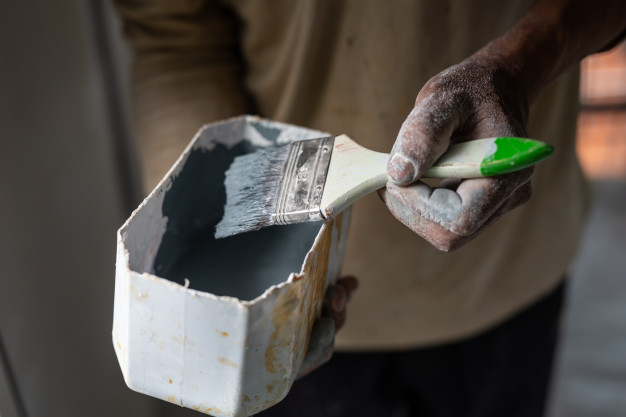 Trained professionals in this trade are well-placed in renowned Paint Production and Service companies.
Consumers now prefer pioneered home painting services for an all-around service experience that includes:
Trained professionals in this trade are well-placed in renowned Paint Production and Service companies.
Consumers now prefer pioneered home painting services for an all-around service experience that includes: