












9 Tools To Test If Your Website Is Mobile Friendly

by

17 October 2023

Technology

Mobile Friendly

Nowadays mobile traffic has extended as more and more people are using mobile devices to access the internet. And their choice of searching required information on Google ranking websites has also increased because of their mobile-friendliness. Hence to maintain such wide users is essential to develop and provide a fully functioning mobile-friendly website regardless of the screen size or device they are using.

Before moving ahead it is important to understand what exactly we mean when we say a website is mobile-friendly and what Mobile Friendly Test is?

Website mobile-friendliness is the overall performance of a website on mobile devices that provides a quality experience to mobile users. Thus enhancing website performance on any mobile is crucial because mobile device usage is growing day by day. 

Checking mobile friendliness without any assistance is difficult. That is why Google has introduced search calculation guidelines. With the help of this, it becomes easier to find out how user-friendly your website is and whether it is easily accessible or not.

Mobile-Friendly Test is a special tool that helps to see how friendly your website is operating on different devices. It allows you to easily carry out a mobile site test and tells a website’s score in terms of its performance on all mobile devices. The test score will enable you to have an idea of whether your website is providing a good mobile user experience or not. It also says that the website falls into the mobile-friendly category and shows good results in the mobile-friendly test.

With the help of this test, you will also get specific instructions on what on your site needs to be updated, fixed, or modified to make it work better on all mobiles.

Making the site fast and good only on desktop but slow and not so good on mobile will not only lead to poor ranking but also to reduced traffic which ultimately causes less revenue. By making a website mobile-friendly, you will not only please your users, but you can also remarkably improve your search engine ranking by appearing higher in search engine positions.

Google search calculation parameter has been confirmed as a part of the overall ranking criteria. This is a set of factors provided by Google that help in determining how convenient your site’s mobile version is to users.

Previously Google has put a fine on sites that offer a poor experience to mobile users and gives much importance to the websites that take relatively less time to load and look good on all mobile devices. The more quickly you make your site mobile-friendly and ensure that  Google recognizes it, the faster it can be ranked applicable by Google.

However, testing your site on mobile devices can be time-consuming and expensive due to the availability of a large number of different mobile devices. But there is a way out of that. There are Mobile-friendly testing tools available online that measure how adaptive a website appears on mobile. 

Most of these tools can suggest ways to make your websites look better and faster on mobile. They also suggest needed adjustments in particular areas. The testing score will also give you an idea of your website’s appearance on mobile and its performance for mobile users.

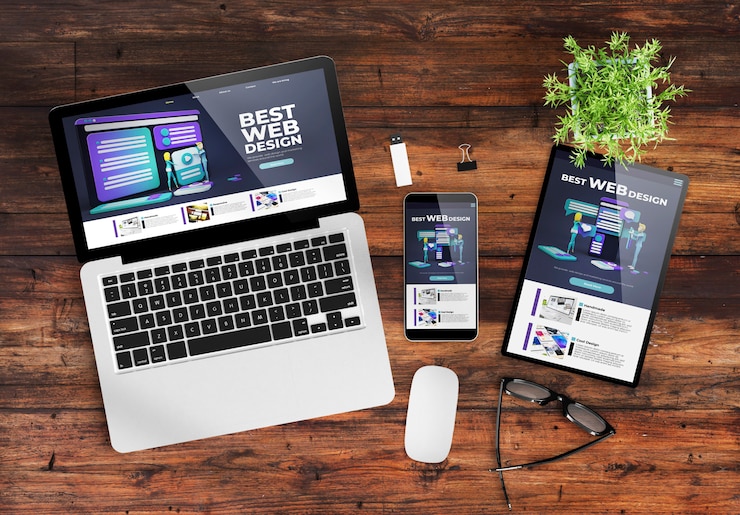
Nine Best 9 Tools To Test If Your Website is Mobile Friendly
Tools To Test If Your Website is Mobile Friendly

Here we will discuss 9 such tools that can give you a brief about your website’s mobile-friendliness.

1. Google Mobile-Friendly Test

This is the most popular and easy-to-use mobile-friendly tester. This tool is developed and managed by Google. You just need to put your website URL and this tool will analyze your site on mobile. It helps you find out issues that prevent your site from appearing in the google searches on mobile.

If your site is mobile-friendly and meets google standards it gives you a green signal. And in case it does not pass the test and fails it announces it as not mobile-friendly.

This tool tells you if Google sees your page as mobile-friendly or not. If it says “no” then the page will be set down in the mobile search results and approve similar pages from other sites that are mobile-friendly.

2. MobiReady

MobiReady is a very innovative and useful website testing tool that shows how a particular page appears on different mobiles. You can see how your site performs on multiple sizes of mobile devices at once. It compares your sites against popular websites and gives specific recommendations of areas you need to do well and need improvement to climb up.

This tool also provides a detailed report of scores between 0 and 5 with 5 being the highest. The higher the score the more the web page is capable of performing and giving a great user experience on any mobile device. A low score indicates that the webpage is slow to load having components that can break the quality user experience.

3. W3C Mobile OK Checker

The World Wide Web Consortium (W3C) works to develop web standards. They have a handy mobile checker that provides specific recommendations on how to make your site more mobile-friendly and lets you know what changes need to be done. 

You don’t require any special skills to use this tool. You just simply need to enter your URL address and a series of tests will be run on your website to determine how mobile-friendly it is. After completion of the test, you will get detailed information and analysis of your site whether it is low, medium, or severely critical. This helps in making necessary changes to improve the mobile-friendliness of your site.

4. Page speed insight

Use Google’s page speed insight tools to test the speed of your website for both mobile and desktop. It helps in providing specific recommendations to increase your website speed on different devices. It shows screenshots of how your website looks on mobile and desktop as well as gives you speed scores for both mobile and desktop as well. analyzing your website in PageSpeed Insights will give you a detailed analysis of what needs to be fixed and things that have already been done correctly.

5. Google AMP testing tool 

AMP means Accelerated Mobile Pages. This tool is developed by Google with the goal to make fast-loading pages that look good on mobile devices and deliver the best possible mobile experience to its users. In today’s time having mobile-friendly websites is very important for your online presence. 

Using the AMP testing tool you can check the validity of an AMP page. This test will also enable you to create mobile-optimized content to load instantly on all devices no matter what type of mobile devices you are using.  It also finds out issues related to AMP that are preventing your site’s appearance in search results.

6. Google TestMySite

Speed matters in ranking no matter how fast your site is on the desktop. If the site speed is slow on mobile it may affect your ranking position. TestMySite is a mobile testing tool from Google that analyzes how fast a website is on mobile and it also provides ways to make the site faster and enhance users’ mobile site experience. With the help of this tool, you can see the load time of your site on mobile. 

It also generates a personalized report to each audience with all major and minor details and also tells the next step to be followed.

7. Varvy Mobile SEO

Varvy Mobile SEO ( Search Engine Optimization) is one of the most simple and useful mobile-friendly mobile SEO testing tools.

It will test your site and help to know whether it is mobile-friendly and is complying with Google guidelines and SEO practices or not.

This tool is simple to use, you just need to enter your URL and Varvy will provide you with helpful insights like page load quickly, the right security and accessibility, paid links, a page displaying well on mobile, and many more. Additionally, it gives recommendations of what is exactly wrong and what adjustments are needed to be done 

8. RankWatch

RankWatch is a simple tool to check the mobile-friendliness of your website. It provides descriptive information on whether the site is mobile-friendly or not, it also provides you with precise rankings of your website in popular search engines like Google, Bing, etc. 

Testing with RankWatch will give you the page score of your website. You can easily get the result containing information about the mobile viewport, its content, the size of text and links, and whether the buttons on the website are mobile-friendly or not.

9. LambdaTest’s mobile-friendly checker

LambdaTest is one the most widely used tools to test a website’s mobile-friendliness.  It offers you an extremely handy mobile site test that allows you to check the friendliness of your mobile device. It helps you to assess your website’s friendliness on a cloud of more than 3000 real devices, browsers, and operating systems on a wide range of different resolutions.

Using the LambdaTest platform you can test and debug your mobile website on multiple mobile handsets of different screen sizes connected to a live mobile network in different locations. Once you run your website mobile test you will be able to see how your website is performing on a mobile device. 

After completion, it generates a website performance report that helps in identifying underlying issues affecting your website’s performance. Hence helping you in making the required changes. Additionally, it provides you with the feature of recording the entire test session in a single video and capturing screenshots so the other team members can get access to the entire test session easily.

Moreover, LambdaTest’s LT Browser helps you to view your mobile testing of websites on different preinstalled mobile device viewports. LT Browser is a developer-friendly browser that is more powerful than the default Android and iOS browsers and helps you debug and test any mobile website flawlessly.

Read Also:

Ankita Tripathy loves to write about food and the Hallyu Wave in particular. During her free time, she enjoys looking at the sky or reading books while sipping a cup of hot coffee. Her favourite niches are food, music, lifestyle, travel, and Korean Pop music and drama.

View all posts

Leave a Reply

Your email address will not be published. Required fields are marked *

Related

Hospitality Industry

5 Ways Technology Will Change the Hospitality Industry Post Covid-19 Pandemic

With the Covid-19 pandemic in the equation, the hotel industry is no longer the same. However, it’s here to stay, just as much as the pandemic might persist in the long haul. People will continue to travel, seek business accommodation from Northampton, dine, and hold business conferences, even as the pandemic rages. With travel restrictions, lockdowns, and social distancing measures, the hotel industry has been hit hard by the effects of the pandemic. However, it’s only a case of being down but not out. Now is the time to prepare accordingly to equalize the damage caused by the pandemic and to prevent any possible future damage caused by the same or a different emergency. By managing insurance policies and even conserving cash in the hospitality sector, the industry can acquire a comprehensive level of preparedness that can protect it, its team, and its customers in the long run. How technology will transform the hotel industry post Covid-19 While focused on maintaining a business, the main priority of the hotel industry in this era is to protect guests and staff against the COVID-19 pandemic. With this on the table, the industry is keen on adopting cutting-edge technologies that can offer solutions without interfering with the underlying business prospects. Across every industry, the pandemic has given birth to new norms. Mask wearing, hand-sanitizing, and social distancing have become universally accepted in all sectors including the hospitality industry. In addition to these, what more does the industry need to restore consumer confidence and revive its economy? Across the globe, hotels have adopted scannable QR codes and contactless hotel-booking and check-in procedures instead of traditional tangible menus and catalogs. The hospitality industry can also take advantage of Google review QR code, so customers can easily rate their services online. Touchless payments, mobile room keys, in-app appointment booking, and orders have become the new norms. With various types of technology in the offing to keep the economy rolling, the following are better placed and more relevant to the hospitality sector. Compliance monitoring Compliance protocols are gaining more priority as people try to remain relevant to the condition. For instance, the introduction of AI facial recognition engines with extra features to match the COVID-19 situation. Such technologies have integrated mask-detection features that allow it to identify individuals even while wearing masks. This helps alert the management in real-time when someone accesses the premises without a mask or improperly wears one. Another important component of compliance is thermal-camera integration. With social distancing procedures, temperature taking from a distance will become the norm going forward. Location detection Covid-19 pandemic has created a situation where people need to share real-time information. Some countries have already come up with location-detection apps, which passengers entering the country have to download immediately when they land at the airport. Going forward, investing in location-sensitive apps and geofencing technology is becoming the new norm for travel brands. This will facilitate the acquisition and sharing of real-time information that can restore consumer confidence in the industry’s overall safety. This practice will work especially for people who opt for road-trips to reinforce social distancing. For instance, hotels could install geofences that deliver push notifications to visitors within a certain radius. Importantly, the notifications could come with special offers or promotions, giving them an edge over their local competitors. Location data could also help activate contactless check-in upon arrival at the hotels and during checkouts. Using the same technology, accommodation facilities can communicate on-site capacity limits and other conditions to their visitors in real-time. This could help avoid congestion in the facilities. Similarly, rail and bus operators can use the same technology to alert their passengers on arrival times. This can help avoid overcrowding at stations and platforms. Touchless communications To enforce a new way of guest engagement during and after the pandemic, the hotel industry needs to go contactless. This would help lower the spread of the virus from surface-to-surface contact. Reliable providers are already helping boarding facilities integrate contactless technology in their Property Management System. This technology facilitates real-time, secure communication between hotel staff and guests. The staff responds immediately to the guest’s needs even without asking for their name or room number. Another contactless option is to activate AI technology like chatbots that can communicate in multiple languages. With contactless technology, guests would even be able to access hotel services through their mobile devices. Alternatively, they can pair their mobile devices with hotel electronics like in-room TVs. This can help them accomplish much more by just scanning a QR code. Super sterilization and robotic technology In addition to these technologies, the hotel industry should consider investing in super sterilization technology as well as robotic technology. Reliable tech companies are already coming up with FDA-approved solutions that would ensure surfaces remain super sanitized to prevent any chances of spread. Similarly, robotic hotel staff will reduce person-to-person contact, aimed at minimizing the effects of the Coronavirus pandemic. Some tech companies have already invented hotel robots that can deliver water bottles, fresh towels, and other hotel amenities to hotel guests. Apart from that, social robotics may also lead the industry to a better position with caretaking approaches. These can understand users better with unbiased approaches. Their consistent performance can be the key to the future development of the hospitality industry. Final thoughts Even as the hospitality industry reopens for business, we should be ready to adopt the ‘new normal.’ Besides, consumer expectation is going to be higher post-pandemic, which is why only facilities that will cater to consumer needs will be able to win brand loyalty. The COVID-19 pandemic has undoubtedly prompted the inclusion of new technologies into hotel operations. Tech features that could have been otherwise used as novelties or extra conveniences have become a solid part of the system. Integrating them fully into the hospitality system could see the industry thrive during and after the pandemic. Read Also: High Technology Devices for Better Life 5 Hotel Housekeeping Tricks You Need To Clean Your Bathroom 7 Ways Technology Can Help in Customer Management and Sales

READ MOREDetails
how to turn off chromecast

Fix: How To Turn Off Chromecast? – Latest Update 2021

Are you the regular users of the Chromecast devices? Then you already notice sometimes the Chromecast turning off is becoming very troubling. Turning off the Chromecast helps you to hide the connected device’s presence when people start searching in your network. In that respect, the most important question which comes to your mind is how to turn off Chromecast? As Chromecast sometimes gives you more sweat than the usually hot summer weather can. As every one of the users is aware of these facts, the Chromecast does not come up with an on and off switch.  Many users are preferring the Chromecast device showing in their home network while it is not being used. But many of the regular users do not prefer the Chromecast device showing in the home network. How To Turn Off Chromecast In Television? The easiest method of turning it off is just to unplug the device. Or the easiest answer is just to disconnect the wifi connections of the Chromecast. But both of these ways are not the fully authentic and technical way to stop working. Before asking how to turn off Chromecast, you have to learn about the Chromecast turning off technical functions. How to turn off Chromecast on tv is a very common question when you are accessing multiple television connections with the Chromecast. For your better understanding and knowledge, here is the step-by-step guide on how to turn off the Chromecast device from your home network, android phone, and Television. Turning Off The Chromecast By Switching Off The Plug As we told you, switching the power off is the easiest method to turn off the Chromecast devices. Chromecast is coming with a separate power port, which was connected with the main switch. You have to plug in the wall charger to get the connection. If you can unplug the charger from the port, the device is automatically getting disconnected from the network. If the Chromecast device is connected with your television, you can switch off the television. But that move does not turn off the Chromecast device. If you face a problem turning off the main power switch, you can use the aromatic switch to get the operation done automatically. But still, then the Chromecast device is connected with your home wifi networks. And the Chromecast device is still showing in the available connected devices like the android phones. How To Turn Off Chromecast On Android? In many Chromecast devices are getting used in the single house, then most of the time the android phone users are facing more trouble turning off the devices. If you are using the Chromecast devices, then turning off the Chromecast on android is the common question arising in your mind when you are facing the interruption in the middle of your streaming videos.  Most of the users want to turn off the Chromecast to preserve the phone’s safety-related concerning issues. And most of the users are facing problems during the streaming of the video because, in the middle of your streaming video, some content can pop up. You can simply stop the casting by simply enabling the Chromecast device from your android phones. And this is the simple process of how to turn off Chromecast. Step 1: Just click on the image of the Chromecast device from your android phone. Step 2: Open the file of the Chromecast devices. Step 3: Click on the settings of the Chromecast devices options and open the setting options. Step 4: After entering the setting of the disable Chromecast option, let others control your cast media. Step 5: And you can turn off the Chromecast from the android devices. How To Stop Casting To Chromecast? If you want to stop the casting of the Chromecast, as you already know, there are many apps that are getting compatible with the Chromecast. Still, if you are using these apps to operate the Chromecast, then you lose control over the Chromecast. And if the remote control over the Chromecast is disabled, then your manual controls are also limited. How to turn off Chromecast is a common feature of turning off the multiple connectivities of the television. But if you lose control over the Chromecast, the volume bar to pause button everything is in a non-functional state. For these purposes, you can use google chrome. Here is the step-by-step process to stop the casting of the Chromecast. To stop the interference from popping up, casting closer is an essential task. Step 1: Go to the google chrome browser settings. Step 2: Then go to the cast options after opening the browser setting options. Step 3: If you see the Chromecast options in the blue color mode, which means the Chromecast is now in the functional state. Step 4: You have to make it white by disabling the options. Step 5: After disabling the options, then cross the chrome and restart your device. Step 6: After restarting your device, recheck the casting option after opening the browser. Step 7: You can also shut down the Chromecast casting from your google homepage. Bottom Line If you are using the Chromecast in multiple ways and the different devices, switching off the devices and turning off Chromecast is necessary. How to turn off Chromecast is a common question that has multiple ways of solving.  If you ask us why you need to turn off the Chromecast devices, here are the answers. If you want to preserve your device security and are eager to close the outside’s external interference, then turning off the Chromecast is the easiest solution.  When you are connected with the Chromecast devices, you automatically see how many other devices are connected with the network, and this causes interference and trouble in the network. More Resources: Headphones vs Earbuds: How to Choose for the Best Music Experience. Your Guide In Buying Kid-Friendly Gadgets. Alexa Voice Assistant: Why It Succeeds Where Others Fall

READ MOREDetails
MySQL

Top 10 MySQL GUI MacOS

Databases are the primary data storage location for all software applications. For instance, when someone conducts a web search, logs into an account, or completes a transaction, a database system maintains the information so users can retrieve it whenever they choose. A relational database, on the other hand, organizes data into tables, rows, and columns. Furthermore, it combines tables and creates a link between the data, making it simple to acquire insights into the relationship between multiple data points. Among the different relational databases, MySQL is the most popular. It supports different OS like Linux, Windows, and even macOS (Apple). In addition, it powers several popular web applications, including Twitter, Netflix, Uber, and Facebook. There are several MySQL GUI for macOS. However, this blog article will discuss the top 10 MySQL GUI Clients for MacOS. 10 Most Popular MySQL IDE for MacOS 1. dbForge Studio for MySQL dbForge Studio for MySQL is a MySQL GUI for macOS. It is used to create, maintain, and design databases. dbForge Studio for MySQL allows you to build and execute queries, develop and debug stored procedures, and manage database objects. Furthermore, it has a user-friendly UI and consists of intelligent coding features like code completion, enabling you to write SQL queries easily and effectively. PROS Code completion Automatic run-time query Visual Query Builder, which helps you create queries using drag-n-drop Simple to debug Simple backup and restoration CONS The free edition has limited functions It is compatible with only MySQL and MariaDB dbForge Studio for MySQL cannot be used offline. Price: 30-day free trial, $179.95 for a perpetual license of the premium edition. 2. TablePlus TablePlus is a native MySQL GUI application with an easy-to-use interface. Its native architecture enables speedier processing of SQL queries. As a result, you can quickly build, query, edit, and save databases. Furthermore, TablePlus has an appealing user interface that enables you to manage numerous relational databases at the same time, such as MySQL, PostgreSQL, SQLite, Microsoft SQL Server, Redshift, MariaDB, and others. PROS It executes queries in split seconds It consists of a simple UI It only consumes a little space - about 180MB to install no code query features you can connect to multiple databases simultaneously code formatting features CONS The free version limits you to 2 opened tabs and 2 opened windows No rollback button Price: $79, $99, and $49 for basic, standard, and custom license, respectively. 3. DBeaver DBeaver is a graphical database administration tool for database developers and administrators. It is a free and open-source tool that supports popular DBMSs like MySQL, PostgreSQL, MariaDB, SQLite, and Oracle. Aside from MacOS, it also works on Windows, Solaris, and Linux. DBeaver is highly functional and user-friendly. It consists of the typical features one should expect from a GUI database management tool. Features like code completion, code formatting, data editing, database analysis, SQL editor, and so on PROS Can connect and work on different databases simultaneously It has easy navigation through the Schema object tree It saves coding time through code completion CONS The free edition has limited functions It consumes a lot of RAM space You cannot install it without Java Price: The community edition is free, and the Enterprise edition is $10/month. 4. Sequel Ace Sequel Ace is a popular Mac database management tool for MySQL and MariaDB databases. It serves as a replacement for the longtime MacOS tool - Sequel Pro. Sequel Ace allows easy writing of custom queries, easy accessibility to all your databases, and a filtering system to find what you need quickly. PROS It rarely crashes It is fast and easy to install It has flexible connectivity CONS It does not support multiple result tabs for multiple queries The query editor window is slow 5. SQLPro Studio SQLPro Studio is a high-end database management software for Postgres, MySQL, Oracle databases, and Microsoft Management Studio. It is well-known for its smart features, such as syntax highlighting, the ability to execute several queries simultaneously, autocomplete, keyword inclusion, and exporting files as CSV, among others. PROS The table filters are easy to use It can install plugins You can easily connect it to local Docker containers CONS It is a little bit slow It does not have NoSQL DB management It crashes randomly. Price: $99.99 per year. 6. DataGrip DataGrip is a multi-engine database management tool. It is compatible with MySQL, PostgreSQL, Microsoft SQL Server, Oracle, Sybase, SQLite, and so on. DataGrip is characterized by many amazing features, such as code auto-completion, bug detection, and version control integration, among others. In addition, it provides a query console for performing and profiling queries. PROS The interface is user-friendly and very easy to understand. The support is substantial, and the tool deployment is highly authentic You can manage multiple databases simultaneously. CONS It consumes too many computer resources, which slows down its performance. If you plan using of MySQL DB only, its functionality is poorly Price: $199 per year 7. Beekeeper Studio Beekeeper Studio is an open-source SQL editor and database management tool for MacOS, Linux, and Windows. It has a friendly user interface and is very easy to understand. Also, Beekeeper studio is GPL licensed, which makes it free to use. The tool is characterized by various smart features, such as a tabbed interface for multitasking, keyboard shortcuts, query history, code auto-completion, and syntax highlighting, among other features. PROS It has keyboard shortcuts It enables users to multi-task You can use the tool without the internet You can save your queries to visit them later CONS It takes a while to load multiple tables in a database The UI could be better Price: $99 8. Adminer Adminer is a PHP-based database data editing tool that is both simple and user-friendly. It is appropriate for general users because it allows for high-level data manipulation. Adminer was previously known as phpMyAdmin. It does, however, have a simpler and more user-friendly layout. PROS The security features are top-notch It is fast in executing queries It restricts the number of connection attempts to prevent cyberattacks CONS The user interface could be more user-friendly It is not easy to move database schemas across the workspace Price: it is free 9. Navicat Navicat is a graphical front-end database administration tool that allows you to connect to several databases simultaneously, including MySQL, MariaDB, SQL Server, Oracle, PostgreSQL, and SQLite. Navicat allows you to create and manage database objects, move data between databases, synchronize, and deploy updates. Furthermore, its efficient functionality allows you to quickly complete complex jobs, such as importing a large number of file data into a database table without interruption. PROS It is beginner friendly It runs SQL queries very fast You can easily move data across different tables and databases. CONS The subscription is very costly It has a short free trial period (14-day free trial) Price: $69.99 monthly subscription, $1399 for a permanent license. 10. Querious Querious is a new MySQL database management software for MacOS. It is precise and simple to use, giving you complete control of your work. Furthermore, Querious is beginner-friendly and comes with smart features that enable users to view, edit, search and structure their data how they deem fit. PROS A simple user interface It executes queries quickly Complete control over user privileges It rarely crashes CONS Autosuggestion can only suggest table names It only supports MySQL It is available only on MacOS Price: $25. Read Also: Quality Of E-Commerce Data Entry Services- Whether You Should Invest In Them? Is Computer Software Prepackaged Software A Good Career Path? Best Practices For Replicating Data

READ MOREDetails