












From Sea To Skillet: A Deep Dive Into The World Of Fish Fillets

Published on: 31 January 2024 Last Updated on: 11 February 2026
World Of Fish Fillets

Fish fillets are a versatile and convenient seafood option, offering a healthy and delicious base for countless dishes. Their popularity stems from their ease of preparation, having already been cleaned, deboned, and portioned, ready for the pan or oven. But beyond their culinary appeal, fish fillets offer a fascinating journey from the ocean's depths to our plates.

Understanding the world of fish fillets involves delving into various aspects, from the different types and their origins to the various factors that influence fish fillets prices. This article will serve as your guide, uncovering the secrets of this delicious and nutritious food source.

A Variety Of Flavors And Textures
A Variety Of Flavors And Textures

Fish fillets come in a dazzling array of varieties, each boasting unique flavors, textures, and nutritional profiles. Some of the most popular choices include:

  • Salmon: Renowned for its rich, oily texture and vibrant pink hue, salmon fillets are a versatile option for grilling, baking, or pan-frying. They are also an excellent source of omega-3 fatty acids, crucial for heart health.
  • Cod: This mild-flavored white fish offers a firm texture and versatility in cooking methods. Cod fillets are perfect for fish and chips, baking with herbs and lemon, or incorporating creamy sauces.
  • Tilapia: A light and flaky fish, tilapia is a budget-friendly option with a delicate flavor. It absorbs marinade well, making it ideal for experimentation with various spices and herbs.
  • Dory: This white fish boasts a firm texture and a slightly sweet flavor. Dory fillets are often used in fish tacos, baked en papillote, or served with a simple lemon butter sauce.
  • Snapper: This firm-fleshed fish features a sweet and delicate flavor. Snapper fillets shine on the grill or baked with fresh herbs and vegetables.

Exploring Different Origins

The origin of a fish fillet can significantly impact its flavor, texture, and even price. Here's a brief overview of some prominent fishing regions:

  • Atlantic Ocean: This vast body of water provides popular species like cod, salmon, and haddock.
  • Pacific Ocean: A haven for tuna, mahi-mahi, and numerous other flavorful fish.
  • Mediterranean Sea: Renowned for its abundance of sea bass, dorada, and branzino.
  • South China Sea: Offers a diverse range of fish, including tilapia, grouper, and bream.

Unveiling The Factors Affecting Fish Fillet Prices
Unveiling The Factors Affecting Fish Fillets Prices

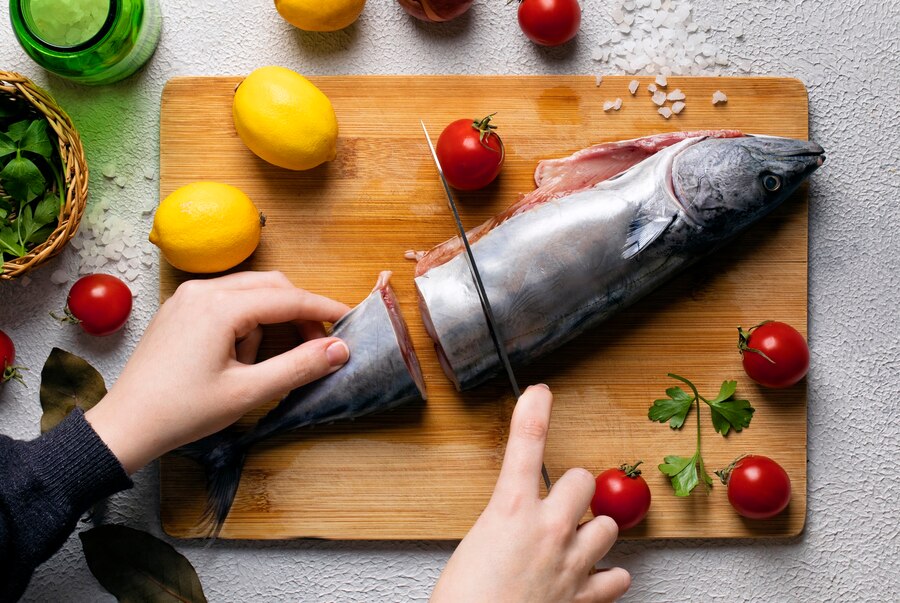
Understanding the various factors influencing fish fillet prices allows for informed decision-making. Here are some key considerations:

  • Species: Certain types like salmon and tuna generally command higher prices due to their popularity and demand.
  • Fishing method: Sustainable practices like line-caught or wild-caught fish often carry a premium compared to farmed fish.
  • Freshness: The fresher the fish, the greater the price, as it ensures optimal flavour and quality.
  • Processing: Filleting and packaging processes can add to the cost of the final product.
  • Seasonality: Some fish are available year-round, while others have specific peak seasons, impacting prices.

What To Look Out For When Procuring Fish?

When you are procuring fish fillets from the market, be it for regular use of special domestic occasions, you have to be mindful of some of the important points. It helps you understand your requirements. The following guide can help you get the best fish fillet from the store.

Firstly, you must get the fresh fishy smell when you walk into the store. It is one of the main indications for getting the best fish from the store.

Secondly, look that the fish is on the ice and the ice is clean. You must take a look at the elements that have a direct relationship with the hygiene and taste of the fish. The fillets must look firm and not rugged.

Rugged marks on the fish indicate that they are mishandled. Also, try to learn when the fish is frozen. This way, you could understand your needs and requirements. It is one of the ways to get fresh fillets.

You can also get an idea of the freshness of the fish by giving a good look at the different body parts.  Fishes with a shiny surface and also slime on the surface is one indication that it is fresh fish. The fins of the fish must be clearly defined. It is one of the hallmarks of getting fresh fish. Moreover, getting the best quality is undoubtedly one of the hallmarks of great taste. Hence, you have to understand it here to better understand it.

Maintaining The Quality Fish Back Home

Maintaining The Quality Fish Back Home

It might be that you procured fresh fish from the store. But that does not imply, you are consuming it that very day. So you must preserve it well in your home when buying the best fish. Here, we discuss some ways you can maintain the high quality of the fish by storing them back in your home.

Once you have made your purchase, you must ensure that you give the fish the ice it requires. You can take containers with ice. After buying them from the freezer, you can offer them freshness. Whenever the fish is brought out from the ice, it starts degrading.

Store your fish in the coldest parts of your freeze. It is one of the ways to keep your fish fresh for a longer time. You can also use the salt to preserve the freshness of the freezer for a couple of days before eating. However, you must try to use your fish fillets as soon as you buy them from the store. It is the best way to consume them. It's simple… eat the fish when it is fresh.

Sustainability And Ethical Considerations

As with any food choice, it's crucial to consider the environmental and ethical implications of our seafood consumption. Opting for sustainably sourced fish fillets, certified by organizations like the Marine Stewardship Council, ensures a healthy ocean for future generations.

Conclusion

Fish fillets are a delicious and convenient way to incorporate seafood into our diet. By understanding the diverse varieties, their origins, and the factors influencing their prices, we can make informed choices while enjoying the bounty of the sea. Remember to prioritize sustainability and ethical practices to ensure a healthy and vibrant ocean for years.

Read Also:

Ankita Tripathy loves to write about food and the Hallyu Wave in particular. During her free time, she enjoys looking at the sky or reading books while sipping a cup of hot coffee. Her favourite niches are food, music, lifestyle, travel, and Korean Pop music and drama.

View all posts

Leave a Reply

Your email address will not be published. Required fields are marked *

Related

Hummingbird Food Recipe

Hummingbird Food Recipe: How To Make Hummingbird Nectar?

It always feels good to see a hummingbird in your garden. To see more of them in your garden, you can keep hummingbird nectar/food in a jar in your garden. In fact, with a simple hummingbird food recipe, you can make their lives easier. All you need is a few simple ingredients. In this article, you will learn how to make hummingbird food with simple ingredients. Apart from that, this article also discusses hummingbird nutrition and the steps you can take to set up your bird feeder. Finally, you will learn how to attract more hummingbirds to your garden. Hence, to learn more, read on to the end of the article. Understanding Hummingbird Nutrition There are a variety of food options a hummingbird needs to meet its nutrition. Although they are one of the smallest birds in the world, they burn a lot of their calories by fluttering their tiny wings. Generally, a hummingbird flutters its wings 90 beats per second to maintain its momentum. Hence, you can see that hummingbirds need to eat a lot. In fact, to satisfy their daily calorie requirements, these birds even consume half of their body weight. Basically, they feed on bugs and nectar every 10-15 minutes. Also, they visit 1000-2000 flowers per day. The following are the things that hummingbirds feed on: 1. Nectar: This is the primary food source of hummingbirds. Basically, it consists of 20% sugar and 80% water. Generally, hummingbirds get their nectar from cardinal flowers, bee balm, salvia, and petunias. 2. Insects: For their protein needs, hummingbirds feed on insects. This is also a source of fat and salt for hummingbirds. In fact, nectar does not provide those nutrients. Basically, hummingbirds hunt insects by finding them from flowers, leaves, or tree bark. Sometimes, they also attack insects midair or pluck them from sticky saps. 3. Spiders: Generally, hummingbirds also feed on spiders for protein. However, they are generally small spiders. 4. Tree Sap: When the amount of nectar is low, hummingbirds drink tree sap from tree bark. Generally, woodpeckers drill wells on tree barks to get tree saps. Hummingbird Food Recipe Basically, by offering hummingbird nectar, you can help them with their post-workout meal. Hence, follow the below hummingbird food recipe to make nectar: Ingredients The following are the ingredients you need to make hummingbird nectar: Filtered Water: 4 Cups Regular White Sugar: 1 Cup (If possible, use organic sugar for the recipe) Procedure Here are the steps you must follow to make hummingbird nectar: 1. Get four cups of water in a saucepan and bring it to a boil. 2. Once the water reaches the boiling point, take the water off the heat. Add sugar to the boiling water. 3. Stir the mixture until the sugar completely dissolves in the water. 4. The nectar is ready. Now, you must let the nectar cool completely. 5. Get a hummingbird feeder and place the mixture inside the feeder. Make sure to hang the hummingbird feeder outside (in your garden) to attract hummingbirds. Essential Factors To Consider The following are some of the major factors you must consider before you start making nectar with the hummingbird food recipe: Make sure to change the nectar every four days with a new nectar. This will ensure that the nectar is fresh. Also, remember not to use food coloring in the nectar. Let it be as natural as you can. Regularly check the bird feeder every time you change the nectar inside it. Look whether there is a gray mold inside the feeder base or not. Also, check whether any ant has crawled inside the feeder to consume sugar water. If you check any dirt or ants inside the hummingbird feeder, throw the bird food away. Basically, it is not good for the birds to drink dirty nectar. In fact, there is a high chance that the birds will not feed on the nectar anyway. To clean the feeder, rinse it with warm water. Then, put some bleach into the water inside. This will allow you to clean the feeder with a brush easily. Once you clean the feeder, rinse it thoroughly with fresh water. Moreover, allow the water to dry. After that, please fill up the feeder with food and place it outside. Enhancing The Hummingbird Experience Enhancing the hummingbird experience, you can attract more hummingbirds to your garden/balcony/porch. The following are some of the steps you must follow if you want to enhance the hummingbird experience: 1. Change The Food Regularly Make sure to change the food every 3-4 days. This is because nectar spoils quite fast, especially when the weather is hot. In fact, if the weather is above 30 degrees Celsius, make sure to change the nectar regularly. Also, make sure to keep the feeder in the shade. This will prevent the sugar from fermenting. 2. Use The Right Amount Of Ingredient You can make hummingbird nectar with just water and sugar. However, you must ensure the water-to-sugar ratio is 4:1. Then, boil the water and add the sugar. After that, mix them until the mixture is perfect. After that, you must let the mixture cool before you add it to the feeder. 3. Avoid Honey Generally, honey can ferment fast and becomes a great place for mold to grow quickly. Moreover, they can be sticky and get on the feathers of hummingbirds. Hence, it is better to avoid honey. 4. Add Another Feeder Although hummingbirds are small and cute, they can be incredibly aggressive and territorial when confronting other hummingbirds. Hence, to avoid conflict among hummingbirds, it is better to add a second feeder if you want to ensure every hummingbird gets the opportunity to have the nectar. 5. Clean The Feeders Make sure to clean the feeders every week. Moreover, if you have hot weather around, clean the feeders twice every week. While you clean, ensure the vinegar-to-water ratio is 1:4. Also, rinse the feeders well before you refill. Furthermore, while rinsing, do not use dish soap. This is because they can leave harmful residue on the feeders. Setting Up Your Hummingbird Feeder The following are the steps you must take to set up your hummingbird feeder: Make the nectar by checking the hummingbird food recipe in the previous section. Hang the feeder in your garden at the start of spring. Generally, hummingbirds migrate through your area in the spring. Also, leave the feeder up after the hummingbirds migrate in the fall. Hang the feeder in a place where it is visible for hummingbirds to see. Also, make sure to place the feeder in an area where you can have a good look. Clean the nectar every 3-4 days and clean the feeder thoroughly each time you change the nectar. This way, you can prevent dust and mold from getting into the feeder. Sugar water is safe and helpful for hummingbirds. Basically, it is quite similar to the natural nectar that hummingbirds find in flowers. If you want to make your own feeder, use an old spice container, bottle, mason jar, or wine bottle. Attracting More Hummingbirds Here are some of the major ways you can attract hummingbirds to your garden: 1. Offer Hummingbird Food/Nectar: If you make sugar water and keep it in a feeder in your garden, you can attract many hummingbirds in your area. To make this item, you can see the hummingbird food recipe above. 2. Keep Water: Generally, hummingbirds also like to bathe. Hence, you can keep some water in a pot/jar to allow hummingbirds to access water for bathing and drinking. 3. Perch Area: You can leave small branches and sticks on your trees and plants. This will allow hummingbirds to perch on. 4. Plant Flowers: There is no alternative to pure nectar that flowers have. Hence, this attracts hummingbirds a lot. For instance, you can use hummingbird sage, honeysuckle, bee balm, and more. Also, you can add other types of flowers to your garden. 5. Keep Other Animals Out: If you have a pet cat/dog in your home, keep them inside. This is because they can bother hummingbirds or even end up killing them. 6. Avoid Pesticides: Pesticides are repellants for hummingbirds as well as insects. Hence, make sure not to use them or use them minimally. Make Your Hummingbird Food Now Now, you can make hummingbird nectar with the help of the hummingbird food recipe in the article. However, make sure to change the food every 3-4 days. Also, ensure to clean the jar every time you change the food. This way, you can ensure clean food for hummingbirds. Do you have more suggestions on how to make hummingbird food? Please share your ideas and opinions in the comments section below. Additional Resources: Is Indian Food Healthy? – Major Nutritional Benefits of Indian Cuisine 15 Healthy Mexican Food Items With Immense Health Benefits The Importance Of Proper Cutting When Preparing Meals

READ MOREDetails
Confectionery Shop

History and How to Increase Sales in Your Confectionery Shop

The skill of molding confections is known as Confectionery. What are confections? These are food products that are made of carbohydrates and sugar abundantly. A store that engages in producing and selling these delicacies is called a Confectionery shop. The main target market of these goods is children. Young ones have a big love for candy as they consume them in a substantial number. A confectionery store has different names depending on the geographical area. In Australia, it is known as a lolly shop, a sweet shop in the United Kingdom, and North Americans call it a candy shop. Despite the different names, all of them produce and sell the same goods. Well, there are a lot of ways to increase your sales, but you could try these out and find out just how effective they are. History Initially, confections were made out of honey as sugar was not readily available in the foregone western world. The Romans, Chinese, Egyptians, Indians, and the Greeks used honey to cover flowers and fruits to conserve them and produce sweetmeats in ancient times. Between the 4th and 6th centuries BC, Persians and the Greeks engaged Indians to produce "reeds that produce honey without bees," which is sugarcane. The cane is primeval in Southeast Asia and the tropical Indian subcontinent. Sugarcane agriculture was advanced and spread afterward. With the introduction of sugar, confectioners gradually started renouncing honey in the production of confections. The Indians came up with a mechanism to create sugar crystals. In the local dialect, the crystals were known as khanda, where the name candy originated. Kransekake is one of the ancient confections from Scandinavia. According to Guinness World Records, the most ancient candy shop in the world that is still functioning to date is located in Pateley Bridge village. Pateley Bridge is now a small market town in England. What is in a Confectionery Shop As explained above, a confectionery store engages in producing and selling confections mostly to the kids. The produced confections in a Confectionery store can be fractionated into two, bakers and sugar confections. Baker's Confectionery It is one of the confectioneries and is also known as flour confections. These are sugary foodstuffs that use flour as their major component. After they are made, these confections are baked hence the name baker's Confectionery. They include sweet pastries, scones, cookies, doughnuts, and cakes. However, baker's confections are baked, bread is not considered as a baker's confectionery. You may go through:  The Need for Speed-to-Lead in Sales Sugar Confectionery Unlike baker's, sugar confectionery is mainly made of sugar. The most crucial substances used in this category are glucose syrups, sucrose, and invert sugars. A concoction of fructose and glucose, which is turned out by hydrolysis of sucrose, is called invert sugar. Confectioner's glucose is also known as glucose syrups which are intensive, cleansed, aqueous solutions of nutritious saccharides from starch. This confectionery can be divided into two, fondant and boiled sweets. Click here to see how you can start this business. a) Fodant Fondant is tiny sugar crystals in concentrated sugar syrup. It is used in embellishing cakes and as a creamy filling in biscuits and chocolates. Fondant is manufactured in two ways. It is an inverting agent and refrigerating speedily while riveting or mixing sugar solution with glucose syrup then boiling them. The sugar in fondants is in a crystalline state. These foodstuffs include coconut paste, chocolate centers, marzipan, fudge, and chews. The articulation of fondant is made up of 22% w/w water, 16% w/w confectioner's glucose, and 62% w/w sucrose. Sucrose is the primary component in this formulation. b) Boiled Sweets Boiled sweets are made by boiling water and sugar at extremely high temperatures ranging between 150 and 166 degrees Celsius. When boiling, the water evaporates, and a translucent mass is formed on cooling. In boiled sweets, their sugar is in a glassy state as it is hard-boiled. This confectionery includes barley sugars, caramel, fruit drops, toffee, butterscotch, and hard gums. The articulation of boiled sweets comprises 20% w/w water, 32% w/w glucose syrup, and 48% w/w sucrose. Three Essential Tips on How to Increase the Volume Sales in Your Confectionery Shop The core obligation of any business enterprise is making profits. A huge amount of gain is obtained through more sales for your confection. So how do you increase the volume of your sales? 1. Location The most fundamental factor in this business is where you set up your shop. Children are primary consumers of confections as they take them in huge numbers. To escalate the number of your sales, your shop should be set up in a location where there are more children than adults. An outlet erected in an area where kids are innumerable will make more sales than the other in a setting with scarce younger ones. A store that is put up in an area where there are more adults than the kids will hardly make sales as the main market target of confections is youngsters. 2. Delivery Services The world is evolving so are the buying behaviors from customers. Many people do not like making long queues to be served. Instead, they prefer home delivery services. With the pandemic, many people refrained from going to stores physically to contract the virus in your maneuvers. Many people are adopting online shopping where you order goods online, and the buyer delivers at your doorstep. If you can incorporate delivery services, you will attract the attention of potential customers who do not like going out to the stores. This increases the volume of sales, which means more profit. 3. Social Media The most convenient way to market your products in the 21st century is through social media. There are a million users of social media all over the world. Advertisements of your shop can be run on Facebook, Twitter, Instagram, Tiktok, LinkedIn, to mention a few. Through social media, you can reach many potential customers for your product in the comfort of your store. See this link to learn how you can market your business using social media https://www.marketingdonut.co.uk/social-media/social-media-strategy/use-social-media-to-market-your-business. Conclusion Confectionery shops produce and sell confection. Before purchasing from any store, research to establish if they produce the best products in town. The duration a store has operated means they have experience in production that keeps them moving. Online product reviews can help you on settling the perfect store for your needs. Read Also: 5 Actionable Mobile Marketing Tips That Drive Sales

READ MOREDetails
Best Bulking Food

Best Bulking Foods That You Need For Fast Muscle Gains

When you are into bodybuilding, your primary goal is to build muscles through weightlifting and proper nutrition. Bulking is a part of the bodybuilding process. However, bulking requires proper nutrition along with weightlifting. You need to consume the best bulking foods to ensure the right nutrition. In this article, you will learn about the best bulking foods. Here, this article will explain the key nutrients bulking nutrients and the best protein sources. Apart from that, you will also learn about the best fat and carbohydrate sources useful for bulking. Finally, you will also get some tips for effective bulking. Hence, to learn more, read on to the end of the article. Why Is Bulking Integral To Bodybuilding? Generally, bodybuilding involves two phases: bulking and cutting. In the former, the goal is to gain weight and build muscles, while the latter consists in reducing body fat. Basically, bulking is a dietary process where you consume excess calories for muscle growth and weight gain. In fact, it is a common approach that athletes and bodybuilders use to increase their strength and muscle mass. Hence, bulking refers to an increase in calories that your body consumes when it is in the process of intense weight training. It is the stage where you gain muscles in your body. Here, you have to consume more calories than your body needs. However, you do it for a set period of time (4-6 months). The extra calories that you consume works as a necessary fuel for muscle growth. Moreover, it provides strength to your body through weight training. Best Bulking Foods: A General Overview In bulking, your focus should be to give your body more energy than it consumes, thus creating a calorie surplus. Meanwhile, this surplus creates extra energy, with the help of which your body creates muscle mass. Moreover, this energy helps you repair damaged tissues and fuel intense workouts. Actually, bulking is one of the most important aspects of muscle growth. This is because if you build muscles, you must provide your body with enough energy. This way, it can build and repair damaged muscle tissues after your workout. However, just because you are bulking, it does not mean that you have to consume as much food as possible. In fact, you must choose the best bulking foods and count your macronutrients. This way, you can support your muscle growth and minimize fat gain. Key Nutrients For Bulking If you want to achieve a clean bulk, you have to make smart food choices. In fact, if your choice of food is poor, it will lead to “dirty bulking.” As a result, you will end up with a lot of accumulated fat and minimal muscle gain. In fact, in healthy bulking, you must consume quality foods and minimize your fat gains. This is because your goal is to maximize your muscle gain and ensure proper metabolism. When bulking, you must focus on protein, carbohydrates, and healthy fats. Here is a breakdown of each nutrient you need for muscle gain: Proteins The importance of protein in muscle growth and repair is the highest. This is because proteins are the building blocks of muscles. Hence, in your bulking phase, aim to have a higher protein intake. Consume 1g of protein for each pound of your body weight. For example, if your body weight is 180 lbs, consume 180 grams of protein each day when you are bulking. Some good sources of lean protein include lean meats, eggs, poultry, fish, dairy products, lentils, beans, etc. Carbohydrates Carbohydrates help you in providing energy for intense workouts. Also, it helps create a bulk in the muscles. Basically, carbs replenish the glycogen inside your muscles.   However, when you are bulking, take 1.5 grams of carbs for 1 lb of your weight. For example, if your body weight is 180 lbs, consume 250-270 grams of carbs daily when you are bulking. When choosing carbs for bulking, focus on consuming complex carbohydrates. These include brown rice, whole grains, fruits, sweet potatoes, and vegetables. Fats Healthy fats are necessary for overall health and hormone production. Apart from that, it also helps in nutrient absorption. Hence, to consume healthy fats, you can include sources like nuts, seeds, avocados, olive oil, fatty fish, etc. Best Protein Sources For Bulking The following are some of the best protein sources when you are in your bulking phase: Lean Meats: Some good sources of protein are chicken or turkey. This is because they have less saturated fat than red meat. For instance, you will get 18-25 grams of protein from 100 grams of chicken breast. Dairy Products: Generally, Greek yogurt, cottage cheese, and milk have high protein and high calories. Hence, they help you to build muscles faster. Apart from that, cottage cheese helps you in muscle recovery and growth due to its slow and steady dissolution. Fish and Seafood: Fishes like salmon, tuna, and shrimp are high in protein and healthy fat. Hence, you can consider consuming them from time to time. Eggs: Eggs are a good and fast-acting source of lean protein. Also, it contains healthy cholesterol. However, do not consume the egg yolk (yellow part) more than 2 in a day as it will increase cholesterol in your body. Meanwhile, you can consume multiple egg whites of boiled eggs in a single day. In fact, this is a good source of lean protein. Plant-Based Proteins: Plant-based proteins are lean and healthy at the same time. Some good sources of such protein are beans, lentils, tofu, and tempeh. Protein Supplements: If you eat too much, you will feel bloated at the end of the day. Hence, you need protein supplements that will help you supplement the shortage of protein that you consume in a day. Some examples of protein supplements are whey protein, casein protein, and plant-based protein powders. Best Carbohydrate Sources For Bulking Here are some of the best bulking foods for carbohydrates that will help you during the bulking phase: Sweet Potatoes: a great post-workout snack that contains nutrients and fibers. Also, it will help you restore glycogen levels in your body. Fruits: Different types of fruits come with various nutrients and carbohydrates. Apart from that, fruits also add antioxidants to your body. For instance, a good fruit option to consume after a workout is a banana. Whole Grains: You can find whole-grain bread and pasta helping you consume complex carbs. Generally, they contain more vitamins, fiber, and minerals. Apart from that, you can also choose brown rice to get good-quality carbs. Legumes and Quinoa: Quinoa, beans, and lentils are excellent sources of carbohydrates. Best Fat Sources For Bulking Here are some of the best bulking foods for healthy fats that you can use during your bulking phase: Nuts and Seeds: Some essential and healthy sources of fats are almonds, chia seeds, walnuts, and flaxseeds. Oils: For instance, coconut oil, olive oil, and avocado oil are great additions when considering fat for your diet. Hence, try to use coconut oil and olive oil in your cooking. This way, you can increase healthy fats and additional calories. Avocados: Avocadoes are rich in healthy fats and nutrients. Basically, they contain monounsaturated fatty acids that add healthy calories and fat to your diet. Also, it is a source of antioxidants and vitamin E. Fatty Fish: Salmon, mackerel, and sardines are fatty fishes that help you remain healthy and achieve clean bulk. Also, a large dose of omega-3 fatty acids, can improve your joints and cardiovascular health. Dairy: Full-fat yogurt and cheese help your muscle restore glycogen stores. This helps more in the muscle-building process. Tips For Effective Bulking  The following are some of the major tips for effective bulking: Meal Frequency: Eating multiple times a day is important to ensure a good flow of nutrients and faster metabolism. Hence, make sure to eat small multiple times throughout the day. Caloric Surplus: Always count your calories and your nutrients. For instance, if you see a caloric surplus to support muscle growth, you will have more energy for intense workouts and repairing damaged tissues. Hydration: Since you are working out and eating a lot, you must stay hydrated. This will support overall health and performance. Consistency: When you are in your bulking phase, be consistent with your diet and workout. Moreover, make sure to adjust your Intake. For instance, you can tweak calorie and nutrient intake based on progress and goals. Common Mistakes To Avoid  To ensure efficient bulking, here are some common mistakes you must avoid: Do not eat too much quickly, as it will get difficult to cut later on. Make sure there is not a big gap between the two meals. Getting ample rest will not be helpful for your muscles. Basically, your muscles need to get rest for growth. Hence, it would help if you got enough sleep when you are working out regularly. Do cardio at least once a week. This helps you increase your appetite and helps you break down your calories faster. Summing Up Now you know the best bulking foods to help you grow your muscles and gain muscle weight. However, your nutrient intake and workout must go hand in hand. Only then will you get your desired results. Do you have more suggestions on the best bulking foods to consume? Please share your ideas and opinions in the comments section below. Read Also: From Gym To Workplace: A Complete Guide To Lead A Healthy Lifestyle What Are the 5 Components of Fitness? – Let’s Find Out 8 Home Gym Systems You’ll Want To Try Out

READ MOREDetails