












The modern AI development pipeline is completely fractured by micro-transactions and software boundaries.
If an engineering team or a high-volume content studio wants to launch an automated multi-model pipeline, they are immediately forced into an expensive corporate trap.
They have to sign up for OpenAI to handle the text logic, and lease a subscription from Runway or Kling to process video layers.
Besides that, they also have to pay separate API fees to miscellaneous tools for background removal or subtitle parsing.
This infrastructure nightmare triggers intense subscription fatigue and locks you into rigid monthly spending. To solve this, a completely different operational approach has quietly taken over the tech space.
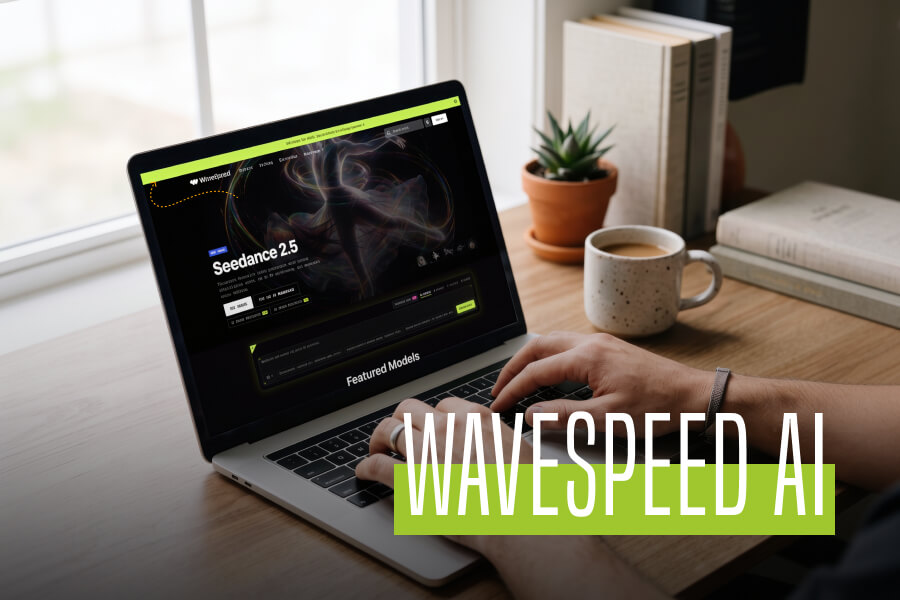
Instead of building another shiny retail app with a high-markup subscription, the team at WaveSpeed AI built a raw, high-performance infrastructure hub.
It acts as a single, centralized REST API gateway that aggregates over 1,000 top-tier AI models under a unified billing ledger.
This blueprint guide breaks down the developer-first architecture of the platform. Moreover, it evaluates its multi-model distribution matrix and the exact pay-as-you-go financial dynamics that allow studios to build without monthly overhead.
The Unified API Gateway: One Balance, Minimal Friction

The defining technical breakthrough of WaveSpeed AI is its radical reduction of API connection fatigue.
In a traditional development environment, connecting your app to multiple machine learning providers requires managing dozens of separate client SDKs.
Also, it requires rotation of distinct authentication tokens and dealing with inconsistent rate limits.
The WaveSpeed Official GitHub Repository bypasses this friction entirely.
Developers integrate a single, unified REST API key that hooks seamlessly into an OpenAI-compatible Chat Completions interface.
When you want your app to switch its background logic from a heavy language model to a photorealistic video outpainter, you do not change your code libraries.
Instead, you simply change a single string parameter in your HTTP POST request.
The platform handles the cloud routing and instantly calculates the cost against your unified token balance.
Technical Performance And Tooling Architecture
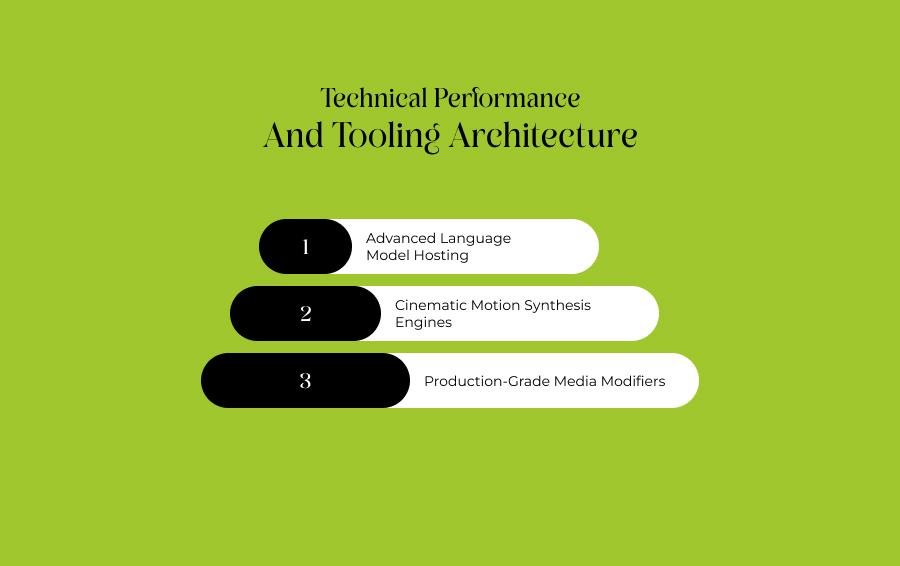
The operational layout divides its cloud infrastructure into specialized production pipelines tailored for rapid media generation. Besides that, they are also made for structural data modifications.
Advanced Language Model Hosting
For text processing and complex reasoning applications, the system hosts a multi-provider sheet. This framework includes premium engines like OpenAI GPT-5.5, Google Gemini 3, and Anthropic Claude.
Input and output tokens are tracked and priced completely separately.
Consequently, software architectures can implement features like JSON mode, custom tool calls, and massive context windows up to 1 million tokens without performance chokeholds.
Cinematic Motion Synthesis Engines
The platform offers instant and serverless inference access to the most stable text-to-video and image-to-video architectures of the industry.
This includes state-of-the-art models such as ByteDance’s Seedance 2.5 Turbo, Sora 2, and Wan 2.2.
These engines support highly targeted param controls. These includes 4 to 15-second duration limits, variable aspect ratio adjustments, and seed-reproducible outputs.
Thus, it makes them perfect for programmatic video generation loops.
Production-Grade Media Modifiers
Beyond raw generation, developers can tap into highly specialized utility modules to handle tedious post-production tasks.
- Video Watermark Remover: An API engineered to automatically scrub away logos, captions, and hardcoded text from 10-minute files while completely preserving the underlying pixel quality.
- AI Face Swap: A localized portrait transfer module that allows real-time video or image face mapping with zero cold-start latency.
- Video Outpainter & Layer Decomposition: Utilities that expand the canvas boundaries of short clips or break apart video files into distinct editable structural layers.
Token Economics: True Pay-As-You-Go Demystified
The platform completely rejects mandatory monthly subscription plans. Instead, it runs on a transparent and pure pay-per-use model where your balance never expires.
Users top up their accounts and costs are calculated strictly on a per-run or per-token basis.
Structural Cost Comparison Matrix
| AI Model Category | Sample Model Instance | Amortized Unit Price (USD) | Core Production Advantage |
|---|---|---|---|
| Language Processing | Google Gemini 3.1 Pro | $2.00 per Million Tokens | Handles massive 1M context windows for deep code review. |
| Image Synthesis | Flux Dev Ultra Fast | $0.005 per image | Lightning-fast generation yielding ~200 clean images per dollar. |
| Premium Video Motion | OpenAI Sora 2 | $0.10 per Video Second | Impeccable cinematic physics with no minimum monthly commitments. |
| High-Speed Animation | Wan 2.2 Ultra Fast | $0.01 per Video Second | Highly optimized for mass variations, generating ~20 seconds per dollar. |
| Asset Modification | Video Watermark Remover | $0.05 per Successful Run | Instantly strips logos and hard captions from complex video formats. |
Production Strengths Vs. Operational Trade-Offs
Deploying an open and multi-model hub requires balancing massive workflow agility against the distinct realities of running serverless cloud architecture.
Why Developers Deploy WaveSpeed AI
The single greatest operational benefit is the absolute destruction of cold starts.
On typical cloud GPU deployments, calling an infrequently used model requires waiting several minutes for the server container to warm up and load the weights.
The Technical Considerations
The WaveSpeed AI Models Directory bypasses this completely by keeping its 1000+ model pool continuously warm and ready for streaming inference. Moreover, this drops generation delays down to under two minutes for video files and under two seconds for complex images.
Furthermore, new profiles receive an instant $1 test credit upon registration. Consequently, this allows teams to fully run model benchmarks without upfront financial friction.
The Technical Considerations
However, technical project managers must understand that this platform is a raw API gateway and playground. Conversely, it is not a polished beginner design tool.
The user interface is lean, functional, and leans heavily toward configuration parameters instead of one-click consumer templates.
Because the system aggregates raw outputs from over 30 external model providers, output quality can occasionally vary. That depends on how well you structure your prompt variables.
Additionally, generated files are stored in the cloud for only a limited time window. This means your codebase must instantly download and save output files to your own secure buckets immediately following a completed run.
Taking Control Of Your Infrastructure Costs
Ultimately, utilizing the WaveSpeed AI Pricing Framework is an architectural pivot away from fragmented SaaS tool software blocks toward a streamlined, developer-first media utility.
It succeeds because it changes how we pay for machine learning assets.
By treating elite models from ByteDance, Google, and OpenAI as pure utilities on a shared meter, it strips away the corporate subscription walls that kill innovation for independent developers and scaling ad studios alike.
If your workflow demands high-volume, automated visual variation, and you want to pay only for the exact tokens you actually burn, this unified endpoint serves as the ultimate infrastructure asset for the modern digital workspace.









