Published on: 11 May 2021
Last Updated on: 02 January 2025
We all have a mobile phone, and it almost runs smoothly until and unless there some glitches or issues happen. And com.android.phone has stopped is one of them. Are you also facing these issues? Are you looking for ways to fix it?Here, in this article, I will guide you with some easy and simple steps that you can try at home really quickly for fixing this issue. Generally, at the time of receiving a call, this com.android.phone has stopped issue occurs and shows an error message “unfortunately the process com.android.phone has stopped.”
Fix Com.Android.Phone Has Stopped Error In Your Phone
Here, I will tell you the easy steps to fix the com.android.phone has stopped the issue. You can try all these techniques on any android phone, including Samsung, Xiaomi, and many more. So, let’s get started with the fixes.
1. Reboot Your Phone
When you are sending a text message or making calls, or opening any app, this com.android.phone has stopped eros happens. In case you are facing this issue for the first time, you can try restarting your device.After you have done rebooting your phone, check whether the eros is still there or not. In case the error still persists, do not worry; I have some more options to fix this error. So, let’s look into other available options.
2. Clear App Data And Cache
Clearing your cache and data for the phone app can help you in fixing the com.android.phone has stopped error. Follow the steps to perform this solution.
To open the apps list, click on the Menu option.
Select the Settings icon from the list.
Go to the Devices section.
Search and tap on Apps, or App Manager, or Application Manager.
Now select the app for which you want to clear data from the App window.
Once the Storage section opens, tap on the option names Clear Data.
Tap on the Clear Cache button under the Cache section.
Reboot your phone.
Check if the issue is solved or not. If the issue is still there, go on to the next option.
3. Clear Data And Cache Of The SIM Toolkit
If you are facing com.android.phone has stopped error, you can try to fix the issue by clearing the cache and data of the SIM toolkit. Follow the below-mentioned steps to do this.
Now check if the issue is fixed or not. In case you are still facing the issues, try the next option.
4. Stop Automatic Updates
Some users also state that stopping the automatic date option has solved the com.android.phone has stopped error. In order to do that, follow the below-mentioned steps.
Once your phone turns on, check whether the issue is still there or not. If the error continues to show, try the following option to fix it.
5. Wipe The Cache Partition
Wiping the cache partition also has helped many users to fix com.android.phone has stopped error. Sometimes, if caches get corrupted, but the system keeps using them continuously, some issues like this happen. As you can not delete the cache one by one, you need to delete the entire directory in order to solve this issue. And for doing that, you need to follow the steps that I have mentioned here.
Power off your phone.
Now, press and hold the Home and Volume Up keys.
Now press and hold the Power key.
Now release the Power key but keep holding the Home and Volume Up keys.
Now release both the buttons and wait for around 30 seconds to 60 seconds until the Android logo shows.
Using the Volume Down key select the option Wipe cache partition.
Now press the power key for selecting the option.
Now using the Volume Down key go to the Yes option and again press the power button to select it.
Now, wait till the time wiping your cache partition finishes.
After it completes, no go to the Reboot system now, and for selecting it, press the power button.
It will take longer to reboot your phone.
Once your phone reboots, check if the problem is fixed or not. If the issue is still there, here is another option for you to try.
6. A Factory Reset
If you have tried all the fixing options that I have mentioned till now and still you are facing com.android.phone has stopped error, there is one last option for you. You can factory reset your phone to fix this error. In case you do not know the process of factory reset your phone, follow the steps below.
First, you need to power off your android phone.
Now press and hold the Home key, Volume Down button, and Power button at the same time. Your phone will boot into recovery mode.
Now use the Volume Up and Volume Down button to scroll through the entire menu.
For confirming the reset, go to the option Yes and select it.
Once the reset process is complete, and the same recovery mode menu screen will open.
Select the Reboot system now option.
I believe this will fix the com.android.phone has stopped error.
Final Tips
If you are facing com.android.phone has stopped error in your phone, try all the fixing options that I have mentioned here in this article. Any one of these 6 options will surely fix the issue you are facing, and your phone will be back again into proper functioning. Make sure you are backing up all the necessary data before starting with all these steps.
FAQ( Frequently Asked Questions)
How do you can cast from Firefox to Chrome cast?
If you want to enable the casting you can connect to the Wifi on the Chromecast. You can connect to the cast Icon of the video. Choose the device to cast too.
How do you can cast Firefox on your TV?
All you need to do is to send the Cast to play button on the device Icon to play the playback controls on the URL.
Where is the Cast button on Firefox?
There are certain steps you have to follow for playing the video to view the control buttons.
First, you need to start the videos and you need to view the cast or the control button.
Click on the top of the screen tap on the cast button.
Content Rally wrapped around an online publication where you can publish your own intellectuals. It is a publishing platform designed to make great stories by content creators. This is your era, your place to be online. So come forward share your views, thoughts and ideas via Content Rally.
If you’re here after encountering a data loss scenario and looking for the best Mac data recovery software to get back your precious files, continue reading the article.
In this post, we’ve curated a list of the best five software to help you recover deleted files on Mac. The software you choose should be reliable and compatible with the version of the Mac you’re using.
Stellar Data Recovery Professional For Mac
If you wish to recover deleted or lost Word, PDF, or Excel files from your Mac, Stellar Data Recovery is the best software for you.
With the help of Stellar Data Recovery Professional for Mac, you can recover data from the lost volume and crashed and non-booting Mac.
Not just this, with this software, you can also monitor the health of your hard drive
This software also allows to perform disk imaging and disk cloning.
You can free download the trial version of this mac data recovery software. Scan and preview the recoverable data using the free trial. If you’re satisfied with the results, you can upgrade to the professional version that promises an added bouquet of features!
Tenorshare 4DDiG (Mac)
It is a powerful Mac data recovery software that allows users to recover unlimited photos, videos, documents, audio, etc., from Mac and external storage devices that are lost, deleted, or formatted.
Tenorshare 4DDiG (Mac) also allows raw recovery, lost file recovery, and partition recovery. You can even recover data from crashed or dead Mac using the software.
Wondershare Recoverit For Mac
Using this software to recover your lost or deleted files on Mac is quite safe. You can recover lost office files, outlook & archive files, graphics, audio, videos, and more from internal and external HDD, SD cards, memory cards, USB flash drives, etc. Furthermore, you can even create a bootable media with the standard software version that helps recover data from a crashed Mac.
This software allows data recovery from a wide range of data loss scenarios such as virus attacks, accidental emptying of Trash, hard disk drive crash, factory reset with no backup, partition error, raw state, and re-installation of the operating system. The software supports different file systems, including APFS, ExFAT, FAT16, FAT32, HFS+, NTFS, Ext2, Ext3, Ext4, and more.
Softtote Data Recovery Mac
It is an all-in-one software for Mac data recovery that helps in retrieving lost or deleted files, missing partition and formatted drives. Not just this, the software is even capable of recovering data from corrupt HDD, camera, MP4 and MP3 player, USB Flash drive, etc.
The data recovery software also offers Photo Recovery, Lost Partition Recovery, and file recovery.
Data Rescue For Mac
The function of this software goes beyond just hard drive recovery as it can also recover from different devices, like CF cards, SSDs, SD cards, USB drives, and many more. Using Data Rescue for Mac, you can easily locate, preview, and retrieve lost data, deleted files, and reformatted drives.
This software uses two scanning modes to scan your storage drive- Quick and Deep. It is possible to recover the files and view the previous scan results. You can recover photos, videos, audio, and various file formats.
How To Choose The Best Data Recovery Software?
When deciding which software to pick for Mac data recovery, consider the data loss scenario at hand. Think what type of software will be able to bring back your files efficiently and in no time.
There is a plethora of data recovery options available today. However, choosing the specific software that caters to your individual needs is a must for successfully recovering deleted files from Mac.
Other factors while choosing the software can be the OS, file systems, data loss situations, and storage devices that the software supports. Another vital parameter to consider is the software’s ease of use; DIY software will be preferred much more than the ones requiring technical proficiency.
Make sure to first download the trial version to preview the recoverable files. If you’re happy with the results, only then purchase the software. Look for the features in the software and figure out how they will benefit you. For instance- software with features like disk imaging, drive monitoring, and cloning can do wonders!
Read Also :
Review On Free Data Recovery Wizard Based On Photo Recovery
How To Free Up Space On Your Mac
What You Are Paying For With A Virtual Data Room
Translation is not merely about converting words from one language to another. It is a delicate art that requires finesse and creativity to convey the intended message accurately.
While traditional translation focuses on maintaining the literal meaning of the source text, creative translation takes things a step further by infusing creativity and adaptability into the process.
Ten essential facts to know while translating in creative translation
In this section, we discuss the ten critical facts to know while translating in creative translation.
1. Context is Key
When it comes to Creative Translation Services Singapore, context plays a pivotal role in ensuring the accuracy and effectiveness of the translation.
Understanding the cultural background, target audience, and intended message of the source text allows the translator to adapt the translation in a way that resonates with the target readers.
For example, consider a marketing campaign for a new car targeting Singaporean customers. While translating slogans or taglines, a creative translator must be aware of the local culture, preferences, and values.
Adapting the message to Singaporean colloquialisms or incorporating cultural references can make the translated text more engaging and relatable.
2. The Power of Adaptation
Creative translation goes beyond the literal translation of words. It involves adapting the content to suit the cultural and linguistic context of the target audience.
The goal is to maintain the essence and impact of the source text while ensuring it resonates with the target readers.
For instance, let's say you are translating a novel set in London for a Singaporean audience. The original text may reference British landmarks and cultural references that may not be familiar to local readers.
A creative translator would adapt the text by replacing these references with Singaporean equivalents, maintaining the same impact and immersing the readers into the story.
3. Multilingualism in Singapore
Singapore is known for its cultural diversity and multilingualism. The country has four official languages: English, Mandarin Chinese, Malay, and Tamil.
This linguistic diversity presents both opportunities and challenges when it comes to creative translation.
A creative translator in Singapore must be sensitive to the nuances of multiple languages and their speakers.
They must navigate through the intricacies of code-switching, language choice, and cultural variations to create translations that are not only accurate but also resonate with the different language communities in Singapore.
4. Cultural Nuances and Idioms
Every language has its own set of cultural nuances and idioms that are deeply ingrained in its speakers' everyday communication.
Creative translation requires a comprehensive understanding of these cultural nuances to effectively convey the intended meaning of the source text.
Consider the English idiomatic expression "It's raining cats and dogs." A creative translator would not translate this phrase literally when targeting a non-English-speaking audience.
Instead, they would adapt it to an equivalent idiomatic expression in the target language, ensuring the translated text captures the same essence and impact.
5. Varying Degrees of Creativity
Creative translation is a spectrum, with varying degrees of creativity depending on the project at hand. While some projects may require a more liberal approach to translation, others may demand a more conservative and accurate rendition of the source text.
For example, translating a work of fiction allows for greater creative freedom, as the focus lies on evoking emotions and capturing the essence of the story.
On the other hand, translating legal or technical documents requires a more precise and accurate translation to ensure legal compliance and clarity.
6. The Role of Technology
In today's digital era, technology has become an integral part of the translation process.
Machine translation tools and computer-assisted translation (CAT) software have improved the overall efficiency and accuracy of translations.
However, when it comes to creative translation, the human touch remains essential.
While machines can assist with linguistic accuracy, they often lack the creativity, cultural understanding, and adaptability that human translators bring to the table.
Creative translation demands the subtle nuances and expertise of a skilled translator to truly capture the essence of the source text and engage the target audience effectively.
7. Personal Experiences
As a translator myself, I have had the privilege of working on numerous creative translation projects. One particularly memorable experience was translating a series of children's books from English to Malay for the Singaporean market.
The challenge lay in preserving the humor and playfulness of the original text while adapting it to the local cultural context.
Through creative translation, I was able to introduce local folktales and idiomatic expressions that Singaporean children could relate to, making the books more engaging and enjoyable.
Witnessing the positive response and seeing the children connect with the stories on a deeper level was truly gratifying.
8. Balancing Authenticity and Adaptation
One of the key challenges in creative translation is finding the right balance between authenticity and adaptation.
While it is crucial to maintain the core message and style of the source text, it is equally important to ensure the translation resonates with the target audience and reads naturally in the target language.
For instance, translating a famous literary work requires preserving the author's unique voice and writing style.
However, a creative translator must also consider the preferences and reading habits of the target audience to create a translation that captures the essence of the original while remaining accessible and relatable.
9. Translators must Be The Negative Speakers
The ultimate need for translation in business is to look out for deeper penetration. You need to connect with the audience and the potential customers to get a better example. The bilingual individual responsible for the translation consciously takes the pathway of biasedness.
It means they must be negative individuals. Their translations must have to be local enough. But at the same time, they also have to ensure that they do not turn out to be negative speakers minus any kind of bias. Creative translation does not imply that you alter facts straight away with the help of biasedness.
10. The Machine Will Never Replace The Translators
With the rise of technology, the employees related to this very sector think that one day they will be obsolete due to the rise of machines. Machine translation has evolved a lot in recent years.
But when the discussion comes to creative translations, machines will never be able to replace humans. Firstly, the machine needs to have the power to accumulate a set of ideas and completely reproduce them into an artistic rendition.
The machines have their limitations. They have information but zero creativity. Let us be assured of it. This is a capability that only stays with the human being.
Conclusion
Creative translation is an art that allows for the seamless transference of ideas, emotions, and cultural nuances across languages and cultures.
By harnessing the power of context, adaptation, and cultural understanding, translators can create translations that not only convey the meaning accurately but also engage and resonate with the target audience.
As the world becomes increasingly interconnected, the need for effective and creative translation continues to grow.
So, if you find yourself needing to translate marketing materials, literary works, or any content that seeks to captivate your target audience, consider the expertise of IPPWORLD.
With their deep understanding of the creative translation process, IPPWORLD can help you unlock the full potential of your content and connect with audiences across various languages and cultures.
Read Also:
What Should my Content Cover to Rank on Google?
How To Use Google Ads To Your Advantage
The Basics on Google Local Algorithm
Nowadays, type-c cable can be seen in the newest phones, laptops, and tablets. The cable was first published in 2014, but the technology became handy only in 2017-18, and it replaced the older standards of USB very quickly.
According to some reports, type c cable also offers new audio standards as a potential replacement for a 3.5 mm audio plug. The type C cable looks almost the same as a micro USB connector from a distance, but it is slightly thicker and more oval in shape. The thicker design brings its best feature which is unflappability.
Until now, the standard cable for us was the type of cable. We have even moved from USB 1 to USB 2 then USB 3 devices, but the USB connectors stayed the same. Fortunately, with the help of technology, we get type C cable that is much more powerful and easier to use than the old cables.
Difference between type C cable and the old USB cable:
The primary difference between the old USB port and the type C cable is the reversible connector feature. Both ends have a connector of the same size so that you can plug it in any way you want.
The one end of the Old ones are bigger and rectangular shape connectors that we use two plugs in two game consoles, desktops, and giant-screened laptops, and the other end was used to connect to small devices like phones. These two ends of the same cable are called type A and type B.
Advantages of type C cable:
It is compatible with USB 3.1 specifications, which makes it much more efficient in data encoding, and hence, it can transfer data at a speed of 10Gbps.
Type C cables are commonly used for charging portable devices. And with this type of cable, charging is much faster than the old ways.
In many ways, type C is much better than micro USB. For instance, type C can be used for both input and output power, where micro USB can only input power. Generally, type C uses 18 watts to charge phones and a maximum of 100 watts to charge laptops.
The type C cable can indeed perform faster than the others, and along with that, it is also the strongest one. This is why, for most people, type C cable is much more reliable.
Why should you use a type C cable?
Type C cable sets a new standard for USB connectors. It can carry a significantly high level of power and can be used to charge almost every device, and devices can be charged much faster.
Along with that, type C cable also offers you a high transfer speed that can transfer 4K videos. The most amazing part about the type C cable is its size. The cable is almost half in width and one-third in the height of a standard USB cable, making it even more user-friendly.
Read Also:
Headphones vs Earbuds: How to Choose for the Best Music Experience
Google Getting into Phones – And It’s Changing The Mobile Internet
Everything You Need To Know About Mobile Solar Generators
Reduce Your Exposure to Radiation When Using Your Mobile Phone
Practical Guide to Install Cabling in Your New House














 Here, I will tell you the easy steps to fix the com.android.phone has stopped the issue. You can try all these techniques on any android phone, including Samsung, Xiaomi, and many more. So, let’s get started with the fixes.
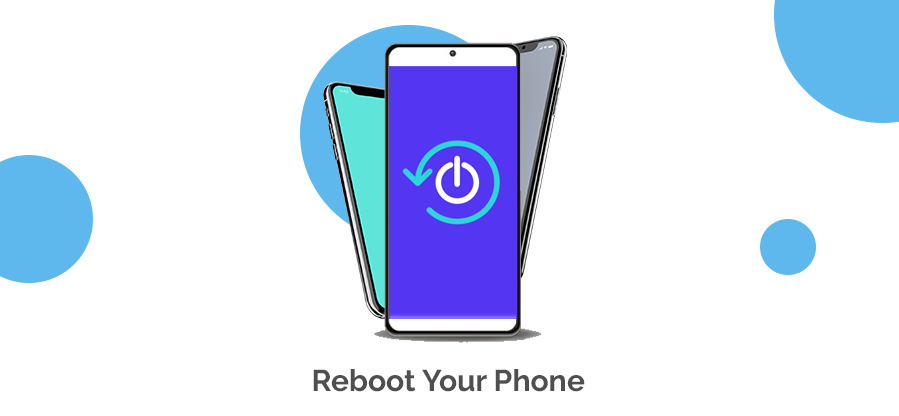 When you are sending a text message or making calls, or opening any app, this com.android.phone has stopped eros happens. In case you are facing this issue for the first time, you can try restarting your device.
After you have done rebooting your phone, check whether the eros is still there or not. In case the error still persists, do not worry; I have some more options to fix this error. So, let’s look into other available options.
When you are sending a text message or making calls, or opening any app, this com.android.phone has stopped eros happens. In case you are facing this issue for the first time, you can try restarting your device.
After you have done rebooting your phone, check whether the eros is still there or not. In case the error still persists, do not worry; I have some more options to fix this error. So, let’s look into other available options.
 Some users also state that stopping the automatic date option has solved the com.android.phone has stopped error. In order to do that, follow the below-mentioned steps.
 If you have tried all the fixing options that I have mentioned till now and still you are facing com.android.phone has stopped error, there is one last option for you. You can factory reset your phone to fix this error.
In case you do not know the process of factory reset your phone, follow the steps below.
If you have tried all the fixing options that I have mentioned till now and still you are facing com.android.phone has stopped error, there is one last option for you. You can factory reset your phone to fix this error.
In case you do not know the process of factory reset your phone, follow the steps below.