How To Start A Food Truck Business And Earn Money From It In 2026

Published on: 05 March 2021 Last Updated on: 11 February 2026
how to start a food truck

Are you bored of your normal life? Why not spice things up a little? If you are someone who is intimately interested in the culinary world or is a budding food professional, 2026 might be the year for you! 

With the advent of uprising food businesses, there is increasing popularity for food trucks. Learning how to start a food truck business might be a very prosperous option for you this year. The food business is one of the largest growing sectors in the world. 

People try to establish several kinds of outlets of food and beverage here and there in expectation of earning huge revenue. However, there are many who will not be able to afford beginning with a properly laid out and structured establishment. This is mainly due to the strain on the budget and obviously finding such a place. 

What Is A Food Truck?
What Is A Food Truck?

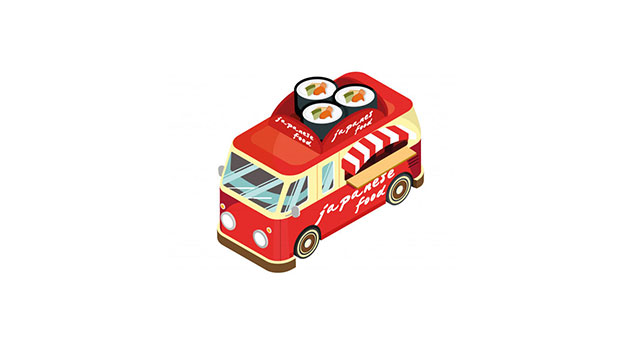
I am sure since you have a keen love for food, you must have seen food trucks in your city. It is basically a big truck-like vehicle equipped with a kitchen to prepare and serve food. Being a Western concept, these food trucks are often found stationed outside malls and offices. 

This mobile eatery also functions by driving around through the city and parking in different areas to serve a crowd of hungry customers. In today’s world, people are always in a hurry and prefer convenient food. Thus learning how to start a food truck with an innovative plan and some balanced capital will put you way ahead in the curve. 

Important Factors Required For Knowing How To Start A Food Truck Business

Although how much ever-interesting a food truck business might sound, setting up one isn’t very easy. You need to take your time and gather up severe knowledge about the industry. A man cannot succeed without facing obstacles in life and it is no different for you. 

You will have to face a lot of issues, go through struggles to finally establish your empire. But when you stand strong, facing all difficulties, and working hard, you will definitely find your way to enlightenment. 

1. Business Plan

Business Plan

Before you decide to earn some fortune in this sector, it is very important to prepare a strategic plan to take your business to the peak. You must dedicate most of your time researching and learning about each and every aspect of the industry. 

All of this knowledge must be injected into your business plan. You must always think about new and innovative concepts to get more and more customers and eventually maximize profit. 

2. Capital Investment

Capital Investment

This is a very important factor one must keep in mind for knowing how to start a food truck business. You must set a budgetary plan in your mind and then spend accordingly. 

At the initial stage, you will have to make some basic capital investment on buying the vehicle, setting up the kitchen, and buying equipment. Other investments include costs of truck setup, advertising, printing menus, and other daily operational expenses.

3. Purchasing Vehicle
Purchasing Vehicle

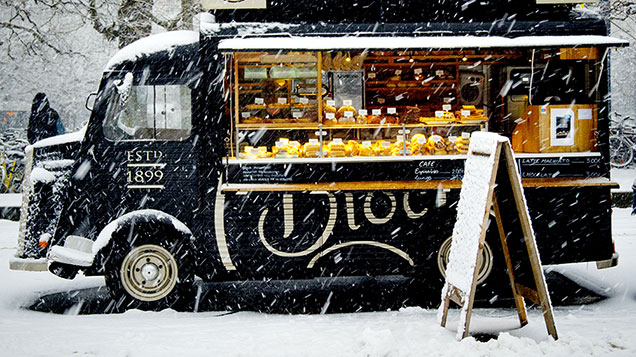
Buying a new truck can prove to be costly. As regulated by health departments, food trucks must be fitted with special equipment for carrying out their operations. Thus, if you want to keep a balanced budget, you can try looking for second-hand vehicles that might save a lot on your pocket. 

For those who can afford, these days, pre-constructed food trucks are also found in the market. It can save you all the time and energy required for setting up a kitchen inside the truck. You can choose a larger or smaller truck depending upon what your plan is and how you want to implement it. 

4. Menu Planning

Menu Planning

In the process of knowing how to start a food truck business, menu planning plays the most important role. If you have no idea about food, there is no point setting your foot in this business. Starting a food truck business indulging yourself in it is much more effective than putting all the responsibility on hired staff. Even some renowned chefs of the world take part in such activities. 

Having in-depth knowledge about food, you need to plan an interesting menu that can gain the customer’s attention. From tacos, burgers, and wraps to noodles, pizzas, and exotic dishes from around the world, anything can be served by your food truck. 

5. Acquiring License And Insurance

Acquiring License And Insurance

Comparably, this is the most difficult part of the process. Even if you are all set with getting your truck on the road, it would not be possible for you to run such a business without acquiring licenses. You must consider all the rules and regulations that must be in accordance with the operations of your food truck business. Truck permits, health department certificates, alcohol licenses, and parking restrictions are some of the very basic necessities. 

When taking part in such a business, a very important thing that you must do is contacting an insurance agent. With the help of a good insurance firm, you can get everything covered, beginning from your vehicle insurance to all other factors that might be a possible risk. 

6. Analyze The Market

Analyze The Market

Once you learn the basics of how to start a food truck business, you must make sure to get knowledge about the market. The market scene is one of the most important factors that will determine your results. 

When you set up your truck in a particular area, you must find out information about your competitors, learn about the type of customers present in that area, their preferences, and even the trends of the market. Having a sound knowledge about these factors will give you an edge over your competitors and will help you run the business smoothly.

How To Create A Food Truck Business Plan?

Every food truck owner should make and maintain a business plan. This should be the first concrete step you must take when starting a food truck business. Below, I will discuss how to create a food truck business plan.

1) An Executive Summary

After all, an executive summary is a remarkable introduction to your enterprise. This should give you a brief overview of every business plan. This executive summary should also be as concise as the details. This will be discussed in several other sections of the entire plan.

2) Market Analysis

Market Analysis is another remarkable part of creating a food truck business plan. In this way, you can know the target customers' requirements. Even more, you can earn significant things such as attracting your customers. In addition, this part should also explain how your business will affect the current market value. This is also significant in highlighting direct and indirect competition.

3) Organization and Management

Another thing that you must have required is to create a food truck business to organize every document of a trade. These are legal documents, business finance documents, insurance, etc. Here, you must create a long list of such owners and their percentage of ownership.   

4) Company Description

A company description is an essential part of starting a food truck business. It would help if you described who you are and what will define you as an enterprise owner. Furthermore, it would help if you told us the niche you are filling and why your customers will choose to go over the competition.   

5) Marketing and Sales

If you want to expand on your marketing strategies, marketing, and sales are other significant factors. You must explain how you plan to spread the word about your trade here. Furthermore, you must identify every marketing platform, such as social media, a website, or a paid advertisement. You can also plan for this and how to gain an edge over the competition.   

6) Funding Request

After all, funding requests are a required section, especially for food truck entrepreneurs. This applies especially to those seeking investment funds or several other types of outside funding. You must specify how much money you are asking for and how you would describe it.   

The Advantages Of The Food Truck Business:

There are several advantages of the food truck business. Do you know what they are? Below, I will discuss the benefits of the food truck business.   

Business Ownership

There are numerous tax advantages of business ownership. Running any business takes time to own or even run. But at least there is some relief on the tax front.   

Freedom

While choosing menu items, the vendors you like to leverage, your workers, and the events are just some of the freedoms. This happens if you are enjoying the food truck business as an owner. You could also control your social media and marketing platforms, schedule, and ruling.   

Virtual Kitchen

It is sometimes hard to bring revenue from a physical business. That is why people have recently become concerned about running a physical store after researching that virtual kitchens need more proximity based on the large numbers of customers and how a virtual kitchen is still more significant in generating revenue and profits than a physical business.  

Final Thoughts

The food market has witnessed an unimaginable transition in the recent few years. In such an era, knowing how to start a food truck business will prove to be an asset for you in the foreseeable future. Being behind the range will also improve your culinary skills. You can then serve the most delicious food in the entire city. 

Once your wheels are on the go, start considering expanding your business to the next level. Merchandising and advertising on social media can be some good ideas that you can acquire. There you go; you have it all now. Well, I can see you as one of the upcoming most prominent business tycoons of the world!

I hope you find this article. In case you have doubts then please comment below!

More Resources:

Mashum Mollah is the feature writer of Search Engine Magazine and an SEO Analyst at Real Wealth Business. Over the last 3 years, He has successfully developed and implemented online marketing, SEO, and conversion campaigns for 50+ businesses of all sizes. He is the co-founder of Social Media Magazine.

View all posts

Leave a Reply

Your email address will not be published. Required fields are marked *

Related

Evolution Of Butter Packaging: A Dive Into Modern Machinery

The Evolution Of Butter Packaging: A Dive Into Modern Machinery

Have you ever paused to consider the journey of a simple butter stick from the dairy farm to your breakfast table? The unsung hero of this journey is the packaging - a critical phase that ensures freshness and quality. In this post, we will slice through the history of butter packaging, spread out the advancements in modern machinery, and churn out insights on how these changes have made buttered toast possible for you every morning. From Hand-Wrapping To Automation: A Brief History Early Beginnings Butter packaging began humbly with tiny, cloth-wrapped pats or rolls, generally handcrafted by local farmers’ wives, transitioning over time to barrels and bulk tubs manufactured in factory creameries. These packaging methods allowed butter to be shipped over increasingly huge distances before reverting back to the separately wrapped sticks we are purchasing today. Packing And Molding  By 1870 in California, butter used to travel to market in half-barrels, two-pound rolls, and barrels packaged in boxes. These rolls were molded into a specific size for packaging and shipping. The Transition To Mechanical Packaging The transition to mechanical packaging started around the turn of the 20th century. The invention of machines like the shell carton machine in 1900 by the E. G. Staude Manufacturing Company significantly impacted the packaging of butter, among other products. By 1909, advancements had been made to cut and crease stock from a web at a rate of two hundred box blanks per minute, facilitating the mass production of cartooned butter. Sealing Freshness: Modern Packaging Techniques Vacuum Packaging One of the modern packaging techniques includes vacuum packaging, which has significantly enhanced the shelf life of butter. For instance, the shelf life of a certain type of butter was increased by 30% when packaged using modified techniques. Material Innovations The choice of packaging material has evolved to meet consumer preferences and requirements. Modern packaging utilizes materials that prevent butter from contamination, weight loss, and flavor deterioration, ensuring the product reaches the consumer in perfect condition. Machinery Mastery: The Rise Of High-Speed Packaging High-Speed Packaging Machines Modern butter packaging machines have significantly improved the efficiency and speed of butter packaging. For example, the steps involved in butter packaging, such as container preparation, butter loading, dosing, sealing, and cartoning, are now executed with a high degree of precision and synchronicity through automated machines. Brand Differentiation With the advent of modern machinery, brand owners have leveraged innovative packaging to differentiate their products on retail shelves. Packaging has become an integral part of product marketing and communication, allowing brands to catch the eye of customers at first glance. In each of these transformations, what stands out is the interplay between consumer demands, technological innovations, and the butter industry's response to these elements. The evolution of butter packaging is a testament to the industry's adaptability and the continuous quest for efficiency and consumer satisfaction. Your morning butter toast isn't just a tasty breakfast item; it's a product of years of innovation in packaging technology, brought to you courtesy of modern machinery. Customization Craze: Meeting Consumer Demands Diverse Packaging Styles Modern machinery facilitates a range of packaging styles to cater to diverse market demands. For instance, the packaging of butter in a dish or tub has become a practical choice for consumers, offering easy storage and daily use options. This packaging trend is particularly popular for reduced-fat, spreadable, and healthy (Omega 3) butter options. Consumer Feedback Packaging innovations often emerge by consumer feedback. Brands are increasingly attentive to consumers' preferences regarding packaging, which in turn drives the demand for modern machinery capable of producing diverse packaging styles. Innovative packaging not only serves a functional purpose but also acts as a tool for brand differentiation and marketing communication. Sustainability Shift: Eco-Friendly Packaging Solutions Sustainable Packaging With the growing global emphasis on sustainability, the dairy industry is making strides toward eco-friendly packaging solutions. Modern machinery is being adapted to produce packaging that's not only protective and attractive but also environmentally friendly. Material Innovations The industry is exploring new materials and designs to reduce the environmental impact of butter packaging. This includes the use of recyclable materials, reduced packaging materials, and innovative designs that minimize waste. The Future Buttered Up: What Lies Ahead? Robotics And AI Emerging technologies like robotics and artificial intelligence (AI) might have a brighter future when it comes to revolutionizing butter packaging. These technologies promise to enhance automation, improve efficiency, and meet the growing demands for sustainable and innovative packaging solutions. Consumer-Driven Innovations The evolving consumer preferences will continue to shape packaging trends. With a focus on sustainability, convenience, and brand differentiation, the future holds a realm of possibilities for butter packaging. Conclusion The art of butter packaging has come a long way from simplistic hand-wrapping to the high-speed, eco-friendly packaging solutions we witness today. This evolution not only narrates a tale of technological innovation but reflects the changing tastes and preferences of consumers. With a future geared towards sustainability and efficiency, who knows what delightful packaging innovations await us? Your morning butter toast is not just a tale of culinary delight but a slice of history and a testament to human ingenuity. Now, as you spread that golden goodness on your toast, you carry forward a tradition enriched by modern machinery and a promise of a better, buttered tomorrow. Read Also: Top Ways Video Marketing Will Help Your Business Grow What Is The Future Of Digital Marketing In Regards To Shaping Up Small And Large Businesses? Benefits of Pay Per Click Services to Your Business

READ MOREDetails
Social Entrepreneurship

Social Entrepreneurship – Entrepreneurship Strategies And Many More!

We are living in a world where becoming an entrepreneur is pretty common, and launching your own venture is perhaps more ordinary than we usually assume it to be! So naturally, when concepts of entrepreneurship, investment portfolios, and bootstrapped startups are ruling the business world, it acts as a catalyst for relatively more intrinsic concepts to come up. One such concept is that of social entrepreneurship, something we all must have heard somewhere - from Ted Talks to office meetings, you must have come across this term. Yes, you know what entrepreneurship means or, for that matter, what socials mean. But when the two terms are put together, what does it imply? Keep reading to find out more. What Is Social Entrepreneurship? Let’s Find Out! So what is social entrepreneurship, and who’s a social entrepreneur? Social entrepreneurs are people who pursue novel applications which has the potential for solving problems that are community-based. These individuals are people who want to take the risk and put in the effort for creating the right changes in society through positive initiatives. Social entrepreneurship is based on the idea of finding the road to connecting with the purpose of your life, helping other people find their purpose in life, and ultimately making the right difference in this world. In addition, these entrepreneurs implement several ethical purposes like conscious consumerism, social responsibility in corporates, and impact harvesting. Key Understanding: Social entrepreneurs aim to start businesses for a greater good and not to earn profits. Social entrepreneurs invest in ventures that are often environmental-friendly or philanthropic or even deal with underprivileged communities. Social entrepreneurship is a trend that’s constantly growing, accompanied by SRI (Socially Responsible Investing) and ESG (Environmental Social & Governance Investing). Understanding Social Entrepreneurs:  The social entrepreneurship definition points out how social entrepreneurs are not inspired by the whole profit-earning motive of running a business. In fact, these individuals are different from ordinary entrepreneurs who are motivated by profit-earning abilities and have no mandatory intention of leaving a positive impact on the society around them. Notable economist Adam Smith, in his well-known book, The Wealth of Nations, commented, in this context, “It is not from the benevolence of the butcher, the brewer, or the baker that we expect our dinner, but from their regard to their own self-interest.” What Smith wanted to point out was that when people go after their best interests, there is an automatic inclination toward making decisions that usually benefit others. For instance, a florist wants to earn a livelihood for supporting her family. In order to accomplish the same, the florist will produce products that help thousands of people. Read More: How To Become An Entrepreneur? Social Entrepreneurs And Their Goals: Social entrepreneurship seeks to address imbalances such as determining all root causes of major social issues, the social stigmas associated with being part of any community, and the like. The primary goal of social entrepreneurs is to not earn profits. Rather, these entrepreneurs aim towards implementing vast improvements in the society around them. Naturally, social entrepreneurs must be financially savvy for succeeding in their causes. This is where both the ESG and SRI forms of investing make an appearance to save the day. Strategies And Entrepreneurial Ventures: How To Become A Successful Social Entrepreneur? In case you wanted us to define social entrepreneurship, then we are guessing you have understood that part. But what’s the point of finding out the definition if you want to become a social entrepreneur. Moreover, it’s only natural if you are still here, it means that you are curious about the strategies relevant to social entrepreneurship. So without wasting any further time, let’s check out a few effective strategies relevant to social entrepreneurship. Think About The Future Instead Of Being Stuck In The Past The past can be tempting. You can spend days dwelling in the past, reminiscing about social entrepreneurship ideas that made so much sense back. Instead, prioritize the future - become future-oriented in setting your goals. If you are not forward-thinking with your vision, then how will you evolve as an entrepreneur. Secondly, the world we live in is constantly evolving, and if you don’t keep up, how will you make a difference that matters? Be curious and attentive. Observe everything that goes around. Social and creative entrepreneurs are intuitive about future trends and needs. Commit To Making A Difference: The world we live in is always suffering from exploitation and inequality in terms of the availability of opportunities and resources. If you are not committed to making a difference, then are you even doing anything? The whole purpose of social entrepreneurs is to make a difference. These entrepreneurs are always creative in their approach and staunch dedication to creating a positive impact with their work. You May Like To Read This: Small Business Entrepreneurship – Small Business, Strategies And Many More! Did you know that the movement of social entrepreneurship has evolved to include methods and tools for creating an impact and making a difference. If you are interested, then you must check it out. Pursue Opportunities Not Products Or People Peter Drucker is an Austrian-American economist, often known as ‘the father of modern management’ who had pointed out in the past how the catalyst for innovative developments has nothing to do with finding new people or products. Rather, it lies in need to transform the environment. You can either choose to pursue opportunities that matter or run after employees who will bring you profits or, even worse, new products. All the difference lies in your ability to make the right choice. Social entrepreneurship companies around the world followed what Mahatma Gandhi said ages ago, ‘Be the change you want to see in the world.’ You will be able to see and even opt for the opportunities precisely at the right place, only if you want to do so. Frequently Asked Questions (FAQs): 1. What Are The Strategies Of Social Enterprises? The strategies of social enterprises are as follows.1. Focus on the future2. Try to make a difference3. Purse opportunities 2. What Are The 4 Types Of Social Entrepreneurs? The four types of social entrepreneurs are as follows.1. Community Entrepreneur2. Non-Profit Entrepreneur3. Transformational Entrepreneur4. Global Entrepreneur 3. What Are The 5 Strategies Of Entrepreneurs? The 5 strategies of entrepreneurs are as follows.1. Set initial goals2. Create a vision3. Network around4. Keep learning5. Don’t quit 4. What Are The 5 Characteristics Of Social Entrepreneurship? The five characteristics of social entrepreneurship are as follows.1. Deep empathy2. Innovation3. Systemic planning4. Sustainable approach5. Changemakers Logging Out… The world is now filled with social entrepreneurship examples, and if it interests you, then what are you doing, lurking behind blogs, when you can start your venture! Time’s ticking - why wait when you can invest time, money, and efforts in making a difference for a change? Don’t forget to let us know your thoughts on social entrepreneurship in the comments below. Read More: Top 9 Reasons Your Sales Training Isn’t WorkingHow Many Types Of Entrepreneurs Are There In 2022?10 Must Have Marketing Tools To Add In Small Business Growth Strategies!

READ MOREDetails
Food Delivery App Development

The Complete Guide To An On-Demand Food Delivery App Development For Your Business

As the interest for online food delivery develops, market openings likewise grow offering more aggressive costs joined with individual accommodation. About 55% of individuals demanding food or takeout will in general keep away from individual-to-individual cooperation changing to advanced services. As indicated by measurement research, the number of buyers who demand food online will increment from 1.66 billion out of 2016 to 2.14 billion out of 2021. Complete income in the on-demand dinner delivery business has as of now produced $122.739 million out of 2020 and will reach more than $164.002 million by 2024. Presently huge organizations like Uber Eats, Grubhub, Postmates possess driving situations in the industry, however, it turns out to be difficult to anticipate whether these platforms will stand firm on their situations or not, as promising new companies show up consistently in inciting contests. The offshore development team can actually work pretty well on any food delivery app development. Types of On-Demand Food Delivery Apps 1. Restaurant To-Consumer Delivery Generally speaking, the model is utilized by marked mobile food delivery applications which offer a digital rendition of isolated restaurant or restaurant networks. The restaurant-to-shopper model surmises customers get their food from a specific restaurant through its delivery service trying not to connect with rethink coordination-centered platforms. Models differ contingent upon industry area and area: for example, Jimmy John's Franchise is well known for its 'sandwich food' around the US, while Domino's Pizza remains among the best pizza conveying services around the world. 2. Platform To-Consumer Delivery (Aggregator) platform-to-purchaser model has as of now acquired a solid situation on the food delivery market offering more fluctuated services at a less expensive cost. At first, aggregators joined a few eateries nearby on one platform, so clients could notice menus from better places. Be that as it may, coordination itself was not given by aggregator service, and the restaurant needed to supply it. Present-day aggregator-type platforms give coordination support highlights also, so eateries should think often just about getting ready food, while platform's drivers will guarantee it being followed through on schedule. Most well-known social food delivery aggregators incorporate UberEats, DoorDash, Grubhub, Deliveroo, Postmates, and so on. Center KPIs Regarding Food Delivery App Development Significant issues to focus on are as follows and you can always hire dedicated developers as well. Appropriate industry understanding is essential while on-demand food delivery application development, so before fostering a new company proprietor ought to consider principle KPIs of the food delivery market: 1. Pick Proper Strategy And Track Trends Distinguishing legitimate procedures is an absolute necessity before creating an on-demand food delivery application. Business sprinter ought to pick one of the food delivery models (either platform to shopper or restaurant to customer), settle on interest groups and industry areas (inexpensive food, veggie lover cooking, elite food, and so forth) to make the platform serious in future. Check hot patterns like virtual help, smartwatch backing, or online media reconciliation to hit the specialty with your assistance. 2. Follow UI/UX Guidelines An appropriate plan has a significant impact on connecting with and holding clients. Present-day UI/UX rules guarantee that a great mobile food delivery application should wager on moderation, plain tones, and an exceptionally intuitive interface saved of extreme subtleties. Putting appealing food pics on the landing page emphatically influences the client's choice to go for the platform's services also. 3. Set Proper Logistics System Useful coordination service is a fundamental part of on-demand dinner delivery applications. It profoundly relies upon arranging and hiring staff. The more expounded and tuned your coordinates are, the happier with food followed through on time customers are. Having settled messenger staff is likewise significant (particularly for restaurant-to-client applications), as there is no compelling reason to invest energy and cash on constant rookie preparation. 4. Pick Right Development Partner Hiring a legitimate development group makes incredible solutions for your future achievement. When picking accomplices while driving on-interest food delivery applications, focus on the organization's portfolio and innovations it predominantly utilizes in projects. Ensure that your necessities are viable with services offered and wagered on organizations giving full-stack development support: from business investigation to after-discharge platform upkeep. You should do your homework right and hire dedicated developers who are well versed in the particular technology. And when we’re talking about the right development partner then Moon Technolabs is one such name that provides the most affordable and effective on-demand food delivery services along with other industry variants. 5. Construct Strong User Base Building up a solid client base comprises two interrelated parts: client commitment and client maintenance. The food delivery business for the most part draws in new clients through different development platforms and services like PR, social media showcasing, reference programs. Connecting with individuals is just most of the way to progress, so business sprinters should plan legitimate devotion, framework, input, and backing to hold customers. Core Features Of A Food Delivery App 1. Demand History demand history typically stores all orders the client performed. On account of demand history, an individual can without much of a stretch track dietary patterns looking at the food varieties he/she had. Additionally, with demand history clients can undoubtedly reorder most loved ones without looking for them once more. 2. Payment Gateway Different in-constructed Payment administrations help in connecting more clients. In-constructed alternatives normally show up more solid and secure, as there are fewer administrations engaged with individual information handling. Famous Payment frameworks incorporate Mastercard, PayPal, Stripe, Apple Pay, and so forth Notwithstanding, remember to leave cash choice accessible to cover more extensive interest group portions. 3. Setting Location and Order Tracking Setting delivery addresses is necessary for the client to get his/her demand, however, the system might be rearranged using putting away continuous choices (home, work) in profile information and ascribing them with autofill. Following component permits client notice delivery progress progressively. Generally speaking, food delivery administrations split the entire methodology into a few areas from preparing on entry to the delivery itself, so buyers can without much of a stretch check whether their food varieties are still in the "kitchen" stage or currently on their way. Messenger's defeat can likewise be followed by the client through the cell phone's GPS and Google maps incorporation. An offshore development team knows this and can work on your requirements accordingly. 4. Assessed Delivery Time Assessing delivery time addresses a pleasant apparatus to deal with a client's assumptions. Rather than giving normal numbers for all clients, present-day mobile food delivery applications ascertain assessed time independently with calculations considering cooking solutions, delivery course, gridlock, and so forth. 5. Pop-up Messages Using pop-up messages food delivery business sprinters generally illuminate customers about current orders, delivery subtleties, or instances of crisis. Plus, warnings address a pleasant chance to send buyers extra information like limits, extraordinary offers, new terms of delivery, however one ought not to abuse this element, as it might aggravate. 6. Social Media Integration Restricting in-application client records to his/her profile in social media networks is a mutually beneficial answer for connecting new crowds. Clients imparting pics of their demands to companions and supporters for the most part advance the cell phone application as a stage where anyone can get something similar or far superior. 7. Rating and Reviewing Significant rating and auditing framework address key instruments impacting client's official choice with regards to food delivery suppliers. Using audits, clients share their positive or negative encounters assisting rookies with understanding which cafés are dependable to arrange food there, just as showing suppliers their feeble places so they can improve and reinforce their situation on the food delivery market in the future. Set Your Idea to Action Today! Albeit the on-demand food delivery market is soaked with fluctuated world-well-known administrations, there consistently remains a spot for new exceptional startup thought. Try not to fear the extreme rivalry you will meet! Сonsider your qualities, pick the right technique, and hit the business with your development. Try not to sit around idly and get in touch with us to make together a business solution that will take off and win client love at present. Read Also: What are the Different Types of Courier Deliveries? Tips to Follow When Ordering Alcohol Online Choosing a Quality Prep Center For Your FBA Business 5 Benefits Of Grain Free Dog Food 8 Social Media Tips for Your Business

READ MOREDetails