











Published on: 27 December 2023
Last Updated on: 29 December 2025
One instance of an immigrant facing concerns with her U.S. citizenship even after doing everything by the book brings out the hypocrisy of the U.S. federal government. Maria Reimers is one such immigrant who has secured a green card to work and marry an American citizen.
These steps show that even as an immigrant, she has followed all legal policies employed by the U.S. It is in the town of Ephrata in Washington state that she and her husband operate a small storefront selling legalized cannabis. It was in 2017 that Reimers tried to get U.S. citizenship!
She was rejected because she lacked “good moral character” because of her business. Unfortunately, the store that they operate is part of the government as they are a state-regulated cannabis.
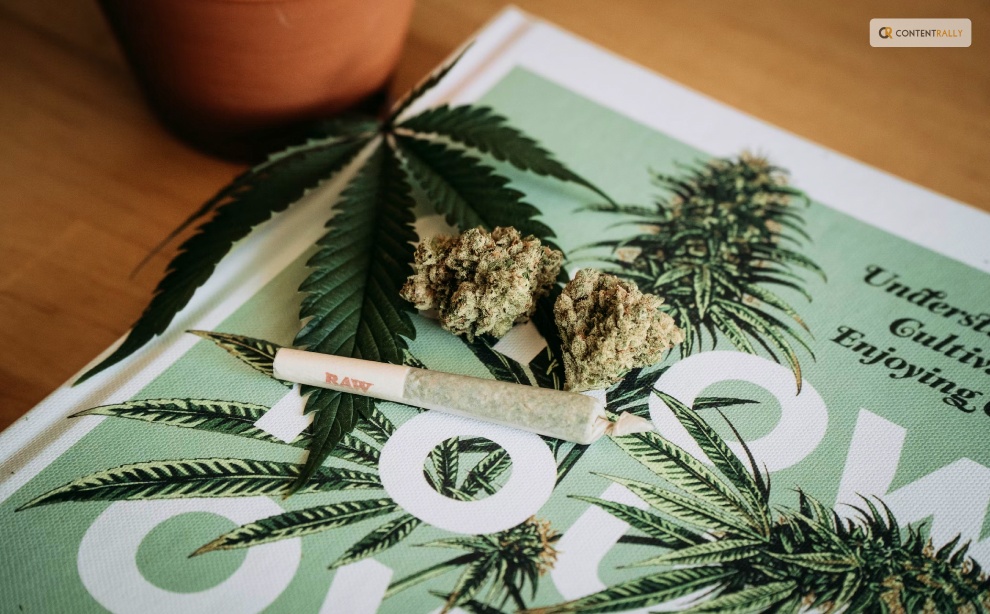
Cannabis has been made legal in Washington state, yet the Federal government of the U.S. still considers cannabis as illegal! This has led to a significant citizenship issue for immigrants. The U.S. federal government's policy can jeopardize the citizenship of immigrants!
The advocate of the immigrant, Reimers, has informed that there is a possibility that she might be detained at the borders if she goes to El Salvador to visit her family. Even with her green card, serious consequences are available, especially because the federal law can impact immigrants.
It has been 20 years since the immigrant stayed in the U.S., yet she has to prove herself for U.S. citizenship, clearly impacting her lifestyle and development. After the legalization, people are looking for answers to the question of how to make cannabis gummies! And yet, people are suffering due to the policies.
The lawful permanent residency is suffering from lifetime bans along with denial of citizenship, leading to deportation! There are significant consequences to the policy of making cannabis legal, thus impacting immigrants!
Content Rally wrapped around an online publication where you can publish your own intellectuals. It is a publishing platform designed to make great stories by content creators. This is your era, your place to be online. So come forward share your views, thoughts and ideas via Content Rally.
The term “Fake News” has existed since the 1800s but has resurged in the last decade.
Often, one political side uses it as a defense mechanism against negative articles. The result is societal confusion over what’s true and what’s not.
When health news becomes unreliable, the consequences are more severe. This trend, fueled by political partisanship, has become increasingly dangerous.
Generally, mainstream media like television and print journalism maintain enough integrity to avoid spreading fake health news. However, in the social media landscape, fake stories spread rapidly with a simple click.
The Causes
The primary cause of fake health news is profit. More shares and likes equal more advertising opportunities. The healthcare industry, especially pharma, spends heavily on advertising.
With every click generating potential revenue, it’s no surprise that some lesser “news” services embellish or even lie to grow their following.
For example, a fake article on “Natural News” claimed the cancer industry was a scam for profit. It received 5.4 million hits, and the site’s Facebook page gained over 3 million followers.
Popularity pays!
In social media monetization, influencers can earn about $10 per 1,000 followers for sponsored content.
Once they hit 1 million followers, they can make up to $1,000 per post solely through advertising.
The Consequences
As social media continues to expand, the potential for spreading fake news also grows. The issue needs attention because the consequences can be real and even fatal.
Some stories don’t cause direct harm, such as one claiming ginger is a better cancer treatment than chemotherapy. Still, they mislead people away from proper care.
For patients with terminal illnesses, hope is everything. False stories, like one about a diabetes cure in Mexico, can give false hope to those desperate for solutions. The most harmful fake news encourages the use of FDA-unapproved products.
Although these stories often remain on social media, even the U.S. president once promoted a chemical as a COVID-19 cure.
Clinical trials showed that the chemical increased heart attack risks and was not safe for such use.
The Cure
Given social media’s global reach, the best way to combat fake news is through education.
Teaching about its dangers can prevent this from becoming a generational issue, unlike other falsehoods rooted in fear.
Currently, many prominent social media platforms flag posts containing false or misleading information.
People believe in fake news because it aligns with their existing beliefs. This makes government regulation challenging, especially as new social media platforms arise, vowing not to flag any content. Again, this approach is money-driven.
How to Check Whether a Health News Over Social Media is Fake
With the deluge of health news filling up your Facebook feed, it’s important to know how to spot real from fake.
Sure, fake news can be damn convincing these days — but there are a few good tricks of the trade to protect yourself.
Check the Source
First and foremost, always check the source. Is the article coming from a reputable organization or a well-known health authority?
Credible sources include government health agencies, recognized research institutions and trusted news outlets.
If the source is obscure or lacks a professional presence, be cautious. A questionable source can be a red flag even if the information seems convincing.
Reference Studies
Legitimate health news should reference studies, expert opinions, or credible data. If the article cites scientific research, look for links to peer-reviewed journals or established medical websites.
Beware of articles that make sensational claims without backing them up with evidence. Even when there’s a study mentioned, ensure it’s recent, relevant, and conducted by recognized experts in the field.
Watch for Emotional Triggers
Fake health news often relies on emotional triggers to generate clicks.
If a post uses language like “miracle cure” or “secret the government doesn’t want you to know,” it appeals to your emotions rather than your intellect.
Real health information is rational, calm, and devoid of sensationalism.
Compare against other Reliable Sources
If you’re not sure if a piece of information is accurate, see if other reliable sources report similar news.
In fact, if the news article is true, it will likely be reported by more legitimate organizations or outlets as well.
If you only find that news on questionable sites or personal blogs, it’s better to ignore them.
Check the Writer’s Background
Who wrote the article? Is it a doctor, a journalist with a strong history of health reporting, or an expert in the field?
If you can’t tell, don’t know what the writer has for credentials, or don’t tie closely to health, their information may be iffy.
Watch out for Biased (and sponsored) Content
Sometimes, content is created to sell something, whether it’s a product or an idea. Sponsored articles, particularly those highlighting supplements or treatments, are usually biased.
Check for disclaimers and consider whether the article is more about making money than offering accurate health information.
Publication Date
Health guidelines and research are constantly evolving. An article that’s a few years old may not be accurate or relevant anymore.
Be sure to check when it was published to get the most current information.
Use Fact-Checking Websites
Lastly, consult fact-checking websites like Snopes, FactCheck.org, or Health Feedback to fact-check a suspicious claim.
These platforms research and investigate viral stories and can usually verify whether something is true or not.
Read Also:
How to Keep up on the Latest News
How Cutting Edge Technology is Helping Dubai Improve its Healthcare Services
Health Tips For Managing High Cholesterol
Taylor Swift is back at the top of the charts with her album "1989 (Taylor's Version)," which has skyrocketed to No. 1 on the Billboard 200 albums chart, dated November 11. This accomplishment marks Swift's 13th No. 1 on the chart.
The album made an impressive debut with 1.653 million equivalent album units earned in the United States during the week ending November 2, according to Luminate. This remarkable feat represents the largest week for any album, in terms of units earned, since Adele's "25" launched with 3.482 million units in the week ending November 25, 2015.
A significant portion of "1989 (Taylor's Version)"'s first-week units, approximately 1.359 million, came from traditional album sales. This is Swift's highest sales week for any of her albums, surpassing her previous record set when the original "1989" album debuted with 1.287 million copies sold in the week ending November 2, 2014.
In fact, the first-week sales of "1989 (Taylor's Version)" are the largest for any album since Adele's "25" was released. In total, since Luminate began tracking music sales electronically in 1991, the debut of "1989 (Taylor's Version)" stands as the sixth-largest sales week for any album. The top six biggest weeks belong to Adele's "25," *NSYNC's "No Strings Attached," *NSYNC's "Celebrity," Eminem's "The Marshall Mathers LP," Backstreet Boys' "Black & Blue," and now "1989 (Taylor's Version)."
The success of "1989 (Taylor's Version)" was amplified by its availability in various collectible physical formats, including color vinyl variants, CD editions, and digital download options.
In addition, Billboard mentioned that “All 13 of Swift’s full-length studio albums and re-recorded projects from 2008’s Fearless, her second studio album, through 2023’s 1989 (Taylor’s Version) have debuted at No. 1.” This has solidified her record for the most No. 1s among women in the chart's history. She now ties with Drake for the third most No. 1 albums among all artists, with The Beatles holding the top spot with 19 No. 1s.
Swift announced "1989 (Taylor's Version)" during her performance at SoFi Stadium in Inglewood, California, as part of her "The Eras Tour" in August. Pre-order sales for the album began shortly thereafter via Swift's official webstore.
In summary, Taylor Swift's triumphant return to the No. 1 spot on the Billboard 200 albums chart with "1989 (Taylor's Version)" is a testament to her enduring popularity and the anticipation for her re-recorded albums.Additionally, SEVENTEEN makes a strong debut at No. 2 on the chart with "SEVENTEENTH Heaven: 11th Mini Album," marking their fourth top 10-charting effort. The rest of the top 10 includes familiar names like Drake, Bad Bunny, Morgan Wallen, Rod Wave, and another of Swift's albums, "Midnights."
Read Also:
HBO Max Decides To Take Away 4K From Ad-Free Subscription Plans
Elon Musk To Introduce New Products That Will Challenge YouTube And LinkedIn
YouTube Premium Introduces International Price Hikes After Cracking Down Ad Blockers
The front entrance to Route 58 retail store now has signs announcing "STORE CLOSING", "NOTHING HELD BACK", and "ENTIRE STORE UP TO 20%". There were even two designated storekeepers standing on the sidewalk of Route 58 holding the store closing sign this morning.
Their company spokesperson was not immediately available for comment. Representatives of the real estate agency in Queens that advertised the other two smaller rents in Staples Plaza (where Big Lots is situated) also weren't reachable for comment.
The Big Lots was originally occupied by a permanent home store. The plaza was opened in the 1980s. Later on the space got occupied by Ultimate Fitness East. They moved out in the summer of 2013. In that fall, a store of Big Lots launched there.
Big Lots is a publicly traded organization operating 1,422 stores in 48 states all across the U.S. The company's investor relations website reveals.
The big box retailer is expected to showcase its third-quarter results to all its investors on Thursday. It has struggled in recent years, with its stock value plummeting more than $39 per share in the last five years to a sinking $4.14 per share yesterday.
Big Lots Inc. has seen a huge downturn in both its revenues as well as net income year after year in the fiscal year of 2023 so far. In January, the company announced that it would close some stores in its larger urban markets in California and Colorado.
Read Also:
Is Walmart Open On Thanksgiving? Here Is A List Of What’s Open
Pinterest Launched A New Education And Information Hub For Creators
Taylor Swift Sings ‘Say Don’t Go’ ‘It’s Time To Go’ Live At The Final Eras Tour Show