











5 Power Tools For New Homeowners

Published on: 29 March 2023 Last Updated on: 31 July 2024
Power Tools

Buying a new home is exciting, especially when you’re doing it for the first time.

It’s easy to get caught up in the chaos and lose track of all the things you need to buy to maintain it, but at some point, it’s helpful to make a list so that you can streamline your housework and yard work on the weekend. Buying things like landscaping equipment and power tools can add up, so how do you know which ones to buy?

Checkout Five Best Power Tools For New Homeowners

Here are some power tools that might make your life as a new homeowner easier.

1. Lawn Mower
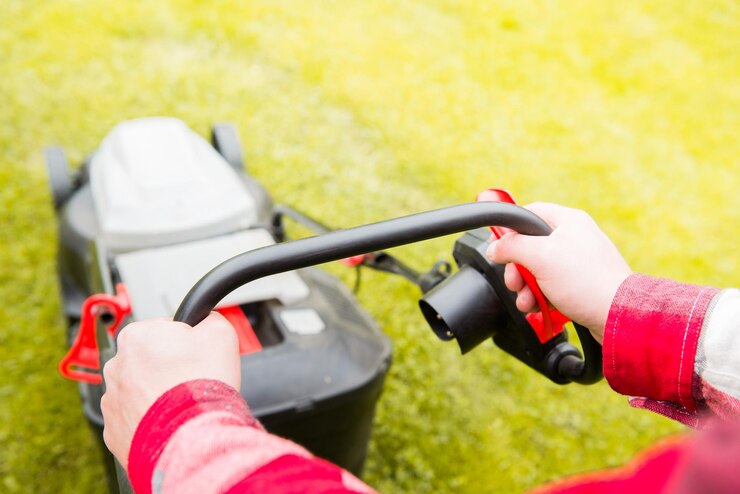
Lawn Mower

The lawn mower is a basic landscaping tool every homeowner should start out with. Regularly trimming your grass not only keeps your yard looking healthier but also keeps your neighbors and housing association happy. When grass gets out of hand, your yard becomes a haven for pests like ticks that can be a hazard to both pets and people.

Regularly mowing your lawn keeps weeds in check, and the fallen bits of grass compost quickly and feed the soil. If you don’t want to push a lawn mower, riding lawn mowers make the job fun and fast. If you really hate being in the sun, set a robotic lawn mower to work and forget about it. Greenworks power tools have plenty to choose from in all three types of battery-operated mowers.

2. Leaf Blower

Clearing debris from your yard is a job for a leaf blower. Sure, you could easily do it yourself, but that could take hours. Rakes can damage the grass you’ve worked so hard to grow, and they can be tricky to maneuver into more difficult spaces. A leaf blower cuts the time for this task down substantially while being easier to maneuver and less difficult on the body. Easily reach the gutters, clean off your lawn mower, or dry your car after washing it.

3. Chainsaw

Chainsaws may be intimidating at first if you’re not used to handling power tools, but they can actually be a great purchase for new homeowners. Chainsaws are very easy to start and understand how to use so long as you remember your protective equipment.

They cut through material quickly and don’t require as much physical effort compared to cutting with a saw by hand. They’re also great in an emergency, like if a tree has fallen in your yard and you need to deal with it quickly.

4. Pressure Washer
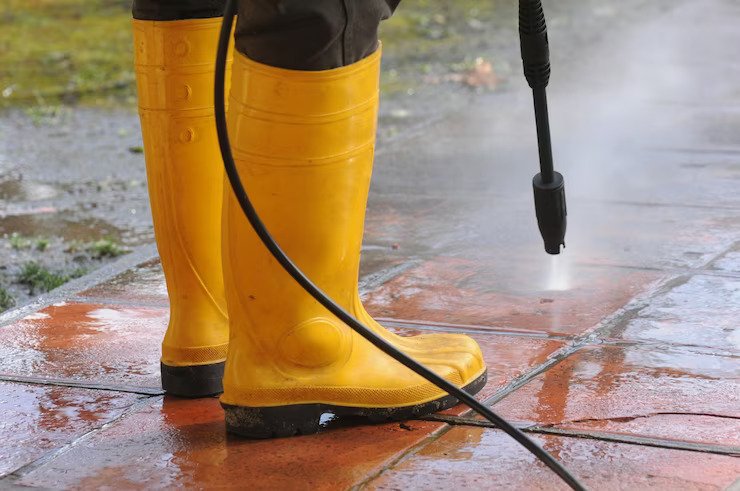
Pressure Washer

You’d be amazed at all the surfaces of your property that need a good scrub regularly to remain in good shape. Things like grime, moss, and fungus can seriously damage paint, siding, wood, and more. By taking your pressure washer out regularly, you keep those surfaces in better shape for longer, saving you tons of money in the long run.

Plus, pressure washing can be fun and extremely satisfying, not to mention pressure washers are easy to use for just about everyone! Not only will you preserve the curb appeal of your home, but also the health of your family. Pressure washing can help get rid of bacteria and debris that attract vermin.

5. Snow Blower

Like other power tools, a snow blower cuts down on time and effort, and this is extremely important in a weather emergency. Not many people enjoy heading out to shovel on a snow day, but a winter storm can be downright dangerous.

Having a snow blower might be the only reason you’re able to keep up with clearing a path, and you’ll be a favorite of your neighbors if you’re willing to lend a hand. What better way to make friends?

Trying to figure out how to care for your home as a new homeowner can get overwhelming quickly, but the variety of power tools available can make the job easier than ever. With a little research, you can buy the right combination of tools that suits your individual lifestyle needs.

Read Also:

Arnab is a professional blogger, having an enormous interest in writing blogs and other jones of calligraphies. In terms of his professional commitments, He carries out sharing sentient blogs.

View all posts

Leave a Reply

Your email address will not be published. Required fields are marked *

Related

Storage Efficiency

Future of Storage Efficiency: Advanced Optimization Techniques

In the rapidly evolving landscape of technology, the need for effective storage solutions has never been more critical. As data grows unprecedentedly, organizations are exploring advanced optimization techniques like Snowflake Optimizer to ensure they can store, manage, and retrieve data efficiently. This article delves into the future of storage efficiency and the cutting-edge optimization methods reshaping the storage industry. What Are The Challenges To Storge Efficiency? Energy storage is indeed a challenge to the organization, and they are working to ensure that they meet the challenge. However, in this section, we understand the challenge associated with storage efficiency. Infrastructure The data requires a resting place. It is the same way the objects shelves their containers. Again, the data must cover the space. If you plan to store a large amount of data, then you require the infrastructure to do it. However, the high-tech servers occupy a significant space in your office infrastructure.  Cloud hosting can easily manage the space crunch. Cost  Operating one’s own data center is quite an expensive operation. You need to spend the money on the maintenance and the initial setup. You also have to arrange for the maintenance expenditure. This might be a bit hard on the pocket, but in the long run, it will be cost-effective, to say the least. Security  One of the major issues in managing the data is security. If you store your data somewhere, then it becomes possible for a third party to obtain it. Moreover, there are added security layers that help you stop the access that is not authorized. It includes encryption as well as teh reliance on third-party services. Moreover, you have to run a tight operation and select the best partners. Corruption Practically speaking, every data storage form is susceptible to corruption. The stray particles can interfere with all the forms of storage. It means anything banking on the magnetic strips or the storage can be corrupted. Data can degrade naturally over time if there is an external source direction. Using multiple backups is the best way to protect the data corruption.  User Accessibility  Your data will be a little goo to you if it's hard to access. Data storage, after all,  is just a make-shift measure. Therefore, you can analyze the data and then put it to good use. The Data Explosion Dilemma The digital era has ushered in an era of data explosion, with massive amounts of information being generated every second. Traditional storage systems are struggling to keep pace with this exponential growth, leading to challenges such as increased costs, slower performance, and greater complexity in managing vast datasets. To address these issues, the focus has shifted towards advanced optimization techniques. 1. Compression and Deduplication One of the key strategies for enhancing storage efficiency involves using compression and deduplication technologies. Compression reduces data size by eliminating redundancies and encoding information more efficiently. On the other hand, deduplication identifies and eliminates duplicate copies of data, significantly reducing storage requirements. By implementing these techniques, organizations can achieve substantial savings in storage space without compromising data integrity. 2. Tiered Storage Architectures Tiered storage architectures are gaining prominence as a way to optimize storage based on the value and frequency of data access. This approach involves categorizing data into different tiers, each with varying levels of performance and cost. Accessing the critical data resides in higher performance. There are more expensive storage tiers.  Thereafter, the less critical and infrequently accessed data are stored on lower-cost, slower tiers. This dynamic approach makes sure that resources are allocated efficiently, balancing performance and cost-effectiveness. 3. Software-Defined Storage (SDS) The emergence of software-defined storage is revolutionizing the way organizations manage their storage infrastructure. SDS separates the storage control plane from the underlying hardware, providing greater flexibility and scalability. This decoupling allows for more efficient resource utilization, easier management, and seamlessly adapting to changing storage requirements. SDS is poised to play a pivotal role in the future of storage efficiency by offering a more agile and responsive storage infrastructure. 4. Artificial Intelligence (AI) and Machine Learning (ML) Integrating artificial intelligence and machine learning into storage systems opens up new frontiers in optimization. These technologies enable storage systems to learn from patterns and user behavior, predicting access patterns and optimizing data placement accordingly. Smart algorithms can dynamically adjust storage parameters in real time, ensuring that frequently accessed data is readily available while minimizing the storage footprint of less critical information. The self-optimizing capabilities of AI and ML promise to usher in an era of autonomous and highly efficient storage management. 5. Quantum Storage Technologies Looking even further into the future, quantum storage technologies are on the horizon. Quantum storage leverages the principles of quantum mechanics to store and retrieve information in ways that defy classical limitations. Quantum bits, or qubits, can exist in multiple states simultaneously, allowing for unprecedented storage density and processing power. While still in the experimental stage, quantum storage has the potential to revolutionize the storage landscape, offering unparalleled efficiency and scalability. Conclusion The future of storage efficiency is undeniably intertwined with advanced optimization techniques. As organizations grapple with the challenges posed by the data explosion, innovative approaches like Snowflake Optimizer promise to deliver the efficiency and scalability needed to navigate the evolving digital landscape. While some technologies are already in play, others, such as quantum storage, represent the next frontier in storage optimization, pointing towards a future where storage systems are efficient but also intelligent and adaptive. Read Also: Fuel Storage Tanks: Ensuring Safe And Reliable Fuel Management Save Time And Money With Backup And Storage Of Data Optimizing Storage In A Warehouse

READ MOREDetails
Outdoor Kitchen

Five Essential Components For Your Outdoor Kitchen

Outdoor dining continues to gain popularity, with more people seeking kitchen convenience beyond the walls of their homes. Planning a patio kitchen requires mindful consideration of how the space will be used and its desired features tailored to individual needs. From grills to countertops and shelves, plenty of options are available so that your outdoor cooking experience is just as comprehensive as indoors. Checkout Five Essential Components For Your Outdoor Kitchen Here are a few essential outdoor kitchen components that your home must have. 1. Grill The centerpiece of any outdoor kitchen is the grill. Without a grill, an outdoor kitchen isn't an outdoor kitchen. It's just a space with some appliances in it. When deciding on a grill for your outdoor kitchen, think about the size, power output, and fuel type that best suit your needs. Do you want something small enough to fit on a countertop or large enough to cook meals for large groups? Would you prefer gas or charcoal? You can visit orchardovens.co.uk to help narrow your choices, so you find the perfect grill for your home. 2. Cabinets Cabinets are an absolute must when planning an outdoor kitchen. Not only do they provide extra space to store essential cooking items, but they also add a chic touch to your outdoor cooking area. When shopping for cabinets, make sure you opt for ones that can withstand extreme temperatures and other weather conditions. Also, installing additional drawers in the cabinets will give you more organized storage options and enable easy access to any needed items. 3. Sink When designing your perfect outdoor kitchen setup, it's important not to overlook the sink. A corrosion-resistant material like stainless steel is a great choice to ensure the unit retains its durability despite being exposed to the elements. Be sure to consider how much counter space you have so you can choose a sink size that is both functional and fits well within your layout. 4. Kitchen island A kitchen island is another great addition to any outdoor kitchen setup. Not only does it provide extra counter space, but it adds visual interest to the area as well. Look for island designs that feature built-in cabinets or drawers to store utensils and other cooking essentials within easy reach while cooking outdoors. If seating is important, look for islands with barstools attached so family members and guests can sit down during meal preparation or serving time. 5. Task lighting Task lighting is an essential part of any outdoor kitchen set up for entertaining amidst dimmer natural light or preparing food during nighttime. When selecting lighting options to suit your needs, select ones that project both adequate brightness and a soft hue. Lights that are too bright might prove irritating or uncomfortable when using the area at night, while lights that are too faint might compromise vision when moving around the kitchen area. Pick fixtures fit to fulfill both illuminating and decorative purposes. Conclusion These five components are essential when designing an outdoor kitchen space, but don't forget smaller details like seating areas or tables. With careful consideration of each design element, you can create a functional yet stylish backyard getaway that provides hours of entertainment with family and friends. Read Also: Know About The Type Of Kitchens According To Different Size How To Choose the Right Brass Range Hood for Your Kitchen 5 Types Of Kitchen Cabinets

READ MOREDetails
Prevent Insects

Simple Ways To Prevent Insects From Taking Over Your Kitchen

No one wants to come home to a kitchen crawling with critters. Imagine coming home and seeing ants, weevils, cockroaches, and other insects moving amongst your foodstuff and utensils. If that doesn’t make the hairs on your neck stand, we don’t know what will. Not only do these insects carry germs and other harmful substances, but they also have a distinctive odor that lingers even after they leave. Pests can chew through boxes and plastic containers; some can even chew through metal. They can also contaminate food and surfaces, and they leave droppings on drawers and pantries. These pests are a nuisance that most homemakers don't want to encounter because they know how wasteful and problematic they can become. You don’t want to throw away (but you have to) cereals, pasta, and other foodstuffs that have been crawled and nibbled upon by rodents, cockroaches, and other pests, don't you? In this case, you need to look for a reputable pest control company like Top Line Pest Control to ensure there won’t be any pests in your home fast. Here Are Four Prime Steps To Prevent Insects From Taking Over Your Kitchen If you want to keep your home pest-free, here are some things you need to consider. 1. Immediate clean-up Crumbs, leftovers, and spills always attract pests inside the house. It would be best to conduct an immediate clean-up after every meal. Remove leftovers and place them in your recycling bin or trash compactor, place your dishes and utensils in the dishwasher, and wipe down eating surfaces immediately after eating. Doing this will prevent pests from making their way to your kitchen. You can also prevent pests by wiping surfaces and problematic areas with 50% vinegar, dish soap, and water. You can also use a salt and water solution to directly wipe the surface and spray on bugs.  2. Buy and stock food in cans and glass jars When you shop for your groceries, select products that come in cans. Most pests can chew through paper, cardboard boxes, and even thin plastic containers. If you stock the pantry, it will be better to stock cans or glass jars of food because pests rarely chew through these materials.  3. Check on the kitchen pipes  Another way to prevent insects from coming into your home is to check the kitchen pipes. If the holes are bigger than the pipes, you have to cover them properly with sealant to prevent mice and other pests from using them as the entryway to your home. You can do it yourself by using caulking agents, glue, or expanding foam to cover such spaces, however, you can ask a pest control company to eliminate insects and pests professionally and safely in the long term. 4. Take out the trash If you don’t have waste disposal in your sink, you must take out the trash regularly. You also have to use top-grade trash bags to keep pests away.  Endnotes Keeping pests away from your kitchen can be challenging. However, with a few simple methods, you can ensure your kitchen is as clean as possible. Read Also: How To Choose the Right Brass Range Hood for Your Kitchen Know About The Type Of Kitchens According To Different Size Different Styles of Kitchen Cabinets

READ MOREDetails