Published on: 07 June 2021
Last Updated on: 03 January 2025
For a long time, people are confused between various investment options that can help them get better returns. You may also have the same confusion in your mind: the best investment option that can help you achieve your goals. There are two primary kinds of investments; one is stock, and the other is real estate.
A matter of fact is which is the better form of investment stocks or real estate, from where you can get better returns from your investments. The best thing that you can do from your end is to compare the two to understand the better possibilities of returns.
Stocks Vs Real Estate From Where You Can Gain More-
There are several forms of investments but selecting the best among them is the challenge. Stocks or Real Estate which one can prove to be better for you. Let’s explore the two investment options to get a better idea about them.
1. Creation Of Wealth:
When you are investing your money in stocks, the chances of getting higher returns are there. The reason behind this fact is you are holding the share of a company. As the company grows, the return on your investment grows simultaneously.
Now, when you are investing your money in real estate, then chances are there that you can get a stable return from your investment but not higher returns. The process of wealth creation is slow compared to investments in stocks.
2. Paper Work & Stress:
You have to do lots of paperwork if you want to purchase a real estate property. You have to handle midnight phone calls and have to use your references enough to sell or buy a property; the entire process is stressful and cumbersome.
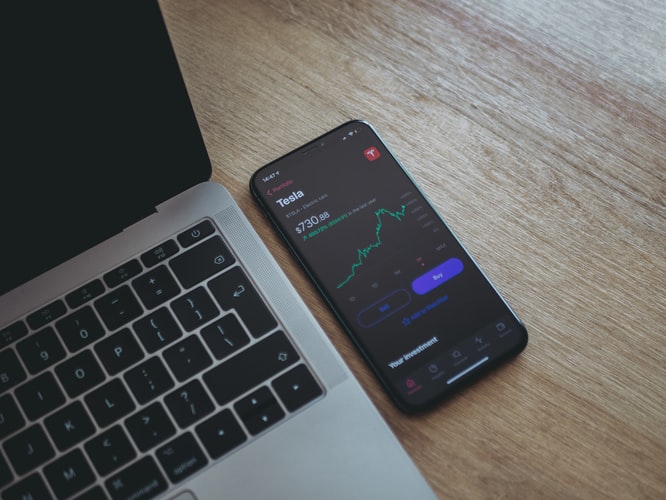
Whenever you wish to invest your money in stocks, you can do it easily through various stock trading apps, and you can contact a broker or a financial planner who can guide you to make your investments in the right way. Ensure that you give plans for the best stocks to buy.
3. Stability In Return:
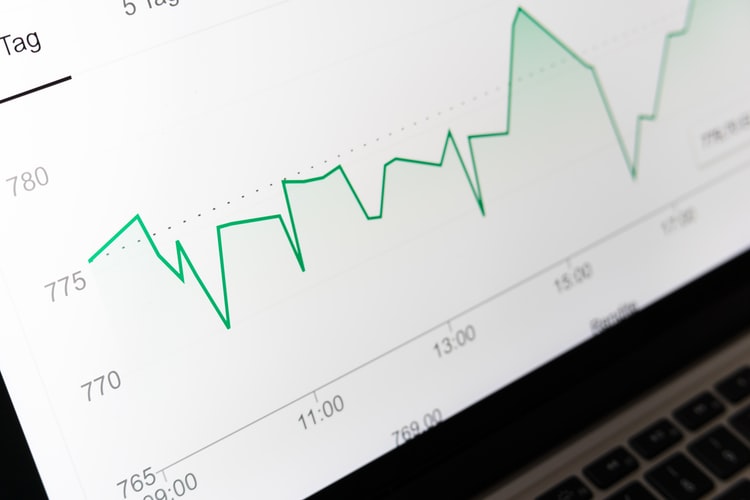
When you invest your money in stocks, you must be aware of the market risk and volatility. The stock prices of the company can fall or rise as per their current profitability rate. You have to analyze the market well before you make your investments in the stocks.
No such requirement of heavy market analysis is not there in the case of the investment in real estate. You just need to compare the prices of various real estate properties, and you can earn a stable return on your entire life without any stress or tension as the market volatility rate does not impact it.
4. Impact On Debt:
If you have debt in the market and invest your money in the stocks, you are putting yourself in a high-risk zone where it is challenging to get over it. You have to plan things in the correct order to get better returns to pay off your debts. The market volatility rate of the stocks is high, so you may not get anything if the company suffers losses.
In the case of real estate, you can enjoy a stable return from your investments. It can help you to get better returns to pay off the debts on time. Stable returns ensure better returns from your investments.
5. Cash Flow:
Rent from real estate properties can help you get a steady return from your investments, and the cash flow of money remains smooth every month. You have to consider these facts while planning your investments.
The returns from the market may become unstable if you face the loss from the company where you have invested your money as stocks. Keep these things in mind while you plan to make your investments.
Key Take-Aways:
Hence, these are some of the crucial factors that you need to consider while trying to compare stocks and real estate. Remember that both can provide you the better returns from your investments, but the difference lies in the rate at which you get the returns from your investments. You have to think analytically while you are making your investment decisions.
Read Also:
Content Rally wrapped around an online publication where you can publish your own intellectuals. It is a publishing platform designed to make great stories by content creators. This is your era, your place to be online. So come forward share your views, thoughts and ideas via Content Rally.
In this day and age, there are way more options for financing your business than just traditional bank loans. As a matter of fact, many business owners prefer alternative business financing for a number of reasons. One reason is that it can be way faster and easier.
Business financing is a struggle for most new business owners. Most industries are often very competitive, and succeeding in the market is definitely not a piece of cake. It can take expensive marketing as well as expansions of physical shops and lots of other actions.
In other words, starting a business is not for the faint of heart - and it is especially not cheap. Therefore, many business owners decide to look into alternative business financing. In this way, it becomes possible to grow the business without involving the bank.
Small Loans, Line Of Credit And Business Credit Cards
Alternative business financing is actually not just one thing but many. The alternative solutions are very popular, which explains why a lot of different options are available. You can find a number of these options, as well as valuable information about business financing, online. To give a few examples, alternative business financing can be fast & short term business loans, business lines of credit, invoice financing, merchant cash advances, business credit cards and equipment financing.
As you can understand, the options are many. So how do you choose? Every option comes with different advantages and requirements. For example, a good credit history can be a requirement for some solutions, while it is not even a factor for others. Therefore, the first step is to get to know all your options and discover which ones suit you and your business the best.
A Faster And Easier Solution
Even though a bank can offer a certain sense of security, it can also be a long and troublesome way to go. Sometimes, your bank will require loads of documentation as well as a good explanation as to why you want to take a loan. Alternative business financing seems to attract a lot of business owners because the requirements are few, and the application process is way easier.
As a matter of fact, for the most part, the fastest and easiest loans are the most popular. Alternative business financing often only requires a 1-page application and limited documentation. The whole application process takes place online, where you do not have to explain anything to anyone. Furthermore, it can be over and done within a few minutes, and you can have the money available within a couple of hours or maybe a day.
All these traits make alternative lending options interesting to new business owners. However, you can also take a loan too quickly and too easily. It is always essential that you think it through and consider other options such as saving money or getting financial help from family and friends. There is no right solution for everyone.
Read Also:
Are Commercial Banks A Good Career Path In 2022?
Quality Of E-Commerce Data Entry Services- Whether You Should Invest In Them?
Starting Your Rare Coin Collections: A Beginners Guide to the 1794 Flowing Hair Half Dime
As the official bullion coin of the U.S., the gold American eagle coin is sought-after by investors and numismatics. These consumers are intrigued by the coin's all-American precious metals, the reputation of the coin, and the intricate, detailed design. The interest in collectors for this coin is also due to being one of the top-selling billions in the country.
Serious investors also want to know that they are putting their money into an investment they can count on. Security of investment is a given with American gold eagle coins, as they are the only coins officially backed by the U.S. government. The guarantee eradicates concerns over the coin's validity in value, which tells investors they are truly getting what they pay for.
With guaranteed quality control, investors and numismatics never need to worry about their investment's content, purity, weight, or quality of metal. With these facts secured, the investment is set to be used as legal tender or secured as an asset. While the legitimacy of the coin is the most crucial fact about the American Eagle gold coin, here are five additional fun facts to note.
1. The American eagle gold coin is more scratch-resistant than gold buffalos.
The polished surfaces and keen attention to detail are showcased on American eagle gold bullions; their beauty adds to the investor and numismatic interest. Since the American Eagle gold bullion contain 10% copper and silver alloys, it is notably more scratch-resistant than its counterparts, 24-karat Gold Buffalos. Additionally, the U.S. Mint tailors coin production to meet the aesthetic appeal of collectors.
2. There are more opportunities for creative collection display.
Collectors interested in placing their coins into a portfolio may wish to display their collectors' coins in a unique and creative way. For instance, some collectors may arrange coins based on historical significance, others by type or style. With the American eagle gold coin, you can also organize your portfolio by coin similarity.
For example, the Gold Eagle is similar in design to the Double eagle gold coin. On both coins, Lady Liberty and an American eagle are displayed. Additionally, both indicate the currency value and mintage dates.
3. The gold is sourced by the U.S.
All Gold Eagle coins are produced with gold sourced only from the U.S. The coins may not include metal from unknown or foreign sources during the minting process. As a legal requirement, these specifications are not to be altered for any reason. For collectors looking to invoke patriotism and American pride into their collection, the American Eagle gold coin is a wise investment choice. American-derived gold is of significant historical influence as well for collectors or investors interested in obtaining a piece of American history.
4. The coin value will always remain what it is.
No matter if the price of gold decreases, the American Eagle gold coin retains the value that is minted onto them. Each coin has a face value from five to fifty dollars of legal currency. Regardless of changes in currency, the coin value is maintained, making Gold Eagles a wise investment for those looking to add tangible assets to their portfolios.
Likewise, collectors looking to compile assets to pass on can achieve peace of mind knowing that the American Eagle gold coin will not depreciate in value, no matter how much time goes by or how American currency changes over time.
5. These coins offer the historical significance of legal tender.
Some collectors and investors want to purchase coins that offer historical significance. Interest or appreciation for rich American history can be acknowledged by purchasing a Gold Eagle coin. The first Gold Eagle was introduced in 1986 in response to the Gold Bullion Coin Act Of 1985. The act recognized the value of gold coins with legal currency and precious metals. The American eagle gold coin is the established, official U.S. gold bullion.
Invest in coins with permanent value and lasting significance.
The American eagle gold coin offers numismatics and investors the opportunity to establish a balanced investment portfolio or collectors' portfolio. As a protected coin, devaluing currencies are not influential, allowing collectors to preserve their coins and maintain their value for future investment opportunities and generations to come.
Read Also:
Can I Convert My 401k To A Gold IRA?
Starting Your Rare Coin Collections: A Beginners Guide to the 1794 Flowing Hair Half Dime
Bitcoin’s 10th Birthday: Does Satoshi Nakamoto’s White Paper Still Hold Relevance?
One of the best and most common ways to buy and sell cryptocurrencies or exchange one crypto to another is by using cryptocurrency exchanges.
Numerous exchanges have already carved a reputation for impeccable service and terms while others are pretty much starting up. Because of this, crypto investors often wonder which instant cryptocurrency exchange is the best.
The prices of cryptocurrencies are far from stable. This provides an opportunity for investors to benefit from price rises and finding an instant cryptocurrency exchange offers the ideal opportunity to sell at the right time. The best platform not only allows you to buy or sell crypto but also exchange it for a different cryptocurrency.
There are a lot of other factors you should look into when looking for an instant cryptocurrency exchange. The sign-up process, trading charts complexity, trading volume, and the various digital currencies you can buy or sell at the exchange are some of the things you should look into. So, what is the best instant cryptocurrency exchange? Here are some of the best.
Nakitcoins:
When searching for a platform where you can buy instant cryptocurrency, Nakitcoins easily tops the charts. The fact that you can walk into any of their physical offices with cash and buy Bitcoin or any cryptocurrency differentiates them from other crypto exchanges.
Apart from their low fees and high transaction limits, Nakitcoins offers instant cryptocurrency exchange services for cash or other cryptos.
Additionally, if you decide to create an account, signing up with Nakitcoins is extremely easy, as just your email address is required. If you are also looking for an exchange where you can transact safely and securely without limits, Nakitcoins should be your top option.
With Nakitcoins, you can also exchange one crypto for another without an account, perform instant cash deposits or withdrawals, buy crypto with credit or debit cards and even buy bitcoin with cash vouchers such as Neosurf.
CoinSwitch:
CoinSwitch is another popular option when you are looking for instant exchange crypto.
With CoinSwitch, you can buy and trade bitcoin instantly, and not just that; CoinSwitch supports 300 cryptocurrencies you can buy or sell and over 45,000 pairings you can choose from if you want to exchange one crypto for another.
One of the reasons why you should consider CoinSwitch is that you can use your credit card to buy crypto. This allows you to perform crypto to crypto exchanges instantly. You can do crypto to crypto exchange without having an account with them.
ChangeNOW:
With ChangeNOW, you can buy or sell over 170 cryptocurrencies. This makes it one of the few instant crypto exchanges with such a huge and diverse opportunity to invest in digital currencies. In addition, you can conduct an instant BTC exchange, either for cash or to other cryptos without even signing up with ChangeNOW.
In addition, ChangeNOW does not have a limit for the number of transactions you can do in a day. Its user-friendly interface makes ChangeNOW one of the simplest instant crypto exchanges for crypto investors. You also will get crypto exchanges at ChangeNOW with the best exchange rates.
Conclusion:
There are several crypto exchanges in the market, each having its terms and exchange rates varying slightly. If you are a crypto investor and looking to make profits from crypto trading, instant crypto exchanges such as Nakitcoins should be your first choice. We believe you now have your answer if you have constantly been wondering, "What is the best instant cryptocurrency exchange?"
Read Also:
How to Buy, Sell, and Trade EOS Coin
Exciting Facts About Cryptocurrency And Crypto Wallets
How To Become A Successful Cryptocurrency Trader In 5 Easy Steps
Investing In Bitcoins: 5 Things You Need To Know













 You have to do lots of paperwork if you want to purchase a real estate property. You have to handle midnight phone calls and have to use your references enough to sell or buy a property; the entire process is stressful and cumbersome.
Whenever you wish to invest your money in stocks, you can do it easily through various stock trading apps, and you can contact a broker or a financial planner who can guide you to make your investments in the right way. Ensure that you give plans for the best stocks to buy.
You have to do lots of paperwork if you want to purchase a real estate property. You have to handle midnight phone calls and have to use your references enough to sell or buy a property; the entire process is stressful and cumbersome.
Whenever you wish to invest your money in stocks, you can do it easily through various stock trading apps, and you can contact a broker or a financial planner who can guide you to make your investments in the right way. Ensure that you give plans for the best stocks to buy.
 If you have debt in the market and invest your money in the stocks, you are putting yourself in a high-risk zone where it is challenging to get over it. You have to plan things in the correct order to get better returns to pay off your debts. The market volatility rate of the stocks is high, so you may not get anything if the company suffers losses.
In the case of real estate, you can enjoy a stable return from your investments. It can help you to get better returns to pay off the debts on time. Stable returns ensure better returns from your investments.
If you have debt in the market and invest your money in the stocks, you are putting yourself in a high-risk zone where it is challenging to get over it. You have to plan things in the correct order to get better returns to pay off your debts. The market volatility rate of the stocks is high, so you may not get anything if the company suffers losses.
In the case of real estate, you can enjoy a stable return from your investments. It can help you to get better returns to pay off the debts on time. Stable returns ensure better returns from your investments.
 Rent from real estate properties can help you get a steady return from your investments, and the cash flow of money remains smooth every month. You have to consider these facts while planning your investments.
The returns from the market may become unstable if you face the loss from the company where you have invested your money as stocks. Keep these things in mind while you plan to make your investments.
Rent from real estate properties can help you get a steady return from your investments, and the cash flow of money remains smooth every month. You have to consider these facts while planning your investments.
The returns from the market may become unstable if you face the loss from the company where you have invested your money as stocks. Keep these things in mind while you plan to make your investments.