












The Timeless Appeal of Leather: Why Firefighters Trust Leather Radio Straps?

Published on: 06 January 2024 Last Updated on: 06 February 2026
The Timeless Appeal of Leather: Why Firefighters Trust Leather Radio Straps

Leather, a material with an ageless allure, has been used across centuries and sectors. Its robustness, flexibility, and adaptability make it a preferred choice in numerous applications.

This is particularly true in firefighting, where dependability and resilience are critical. Among the vital gear for firefighters, the leather radio strap stands out, exemplifying the timeless charm and practicality of leather.

Unmatched Durability in Extreme Conditions

Firefighters are often thrown into some of the most challenging environments. Their gear must withstand high temperatures, abrasive substances, and rugged use. It's in these circumstances that the leather radio strap proves its worth.

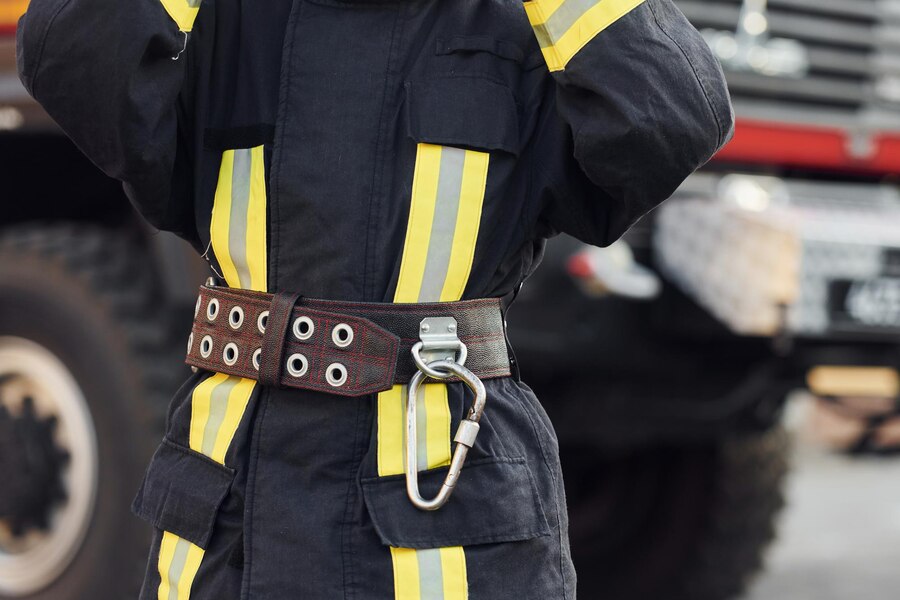
Crafted from top-quality leather, these straps are designed to endure the demands of firefighting, offering a safe and readily accessible spot for a radio - an indispensable device for communication during crises. Unlike other materials, leather does not easily crack or fade, even when subjected to harsh elements. This durability implies that a leather strap can serve for several years, if not decades, with minimal upkeep.

User-Friendly and Comfortable

Leather radio straps also score high on their ease of use. They are engineered to glide effortlessly over turnout gear, ensuring radios and other accessories are always within arm's reach. Furthermore, they secure the radio microphone, preventing it from swinging or becoming an obstruction during pivotal moments.

Comfort is another aspect where the leather radio strap excels. A well-constructed radio strap positions the mic comfortably on the chest, particularly for firefighters laden with backpack-style bags and other hefty equipment.

Shielding from Thermal Hazards: The Leather Radio Strap Advantage

A leather radio strap isn't just a handy tool for communication; it's also a line of defense against the thermal hazards firefighters face. When worn beneath the turnout coat, it offers several protective benefits:

  • Strategic Positioning: The radio is located below the coat line, significantly less exposed to extreme heat and flames. This positioning not only maintains the functionality of the radio but also extends its lifespan.
  • Upright Orientation: This strategic placement ensures the radio remains upright even when a firefighter crawls. It eliminates the need to fumble around for the device, making it easier to use and access in various situations.
  • Thermal Resistance: Leather itself is a material known for its thermal resistance. It can withstand high temperatures without melting or deforming, protecting the radio from overheating or suffering heat damage.
  • Insulation Properties: Beyond its heat-resistant qualities, leather also provides some insulation. It can help keep the radio stable, preventing rapid temperature changes that could affect its performance.

In essence, a leather radio strap is more than just a carrier for radio; it's a shield against the intense thermal hazards that firefighters regularly encounter. This added level of protection further underscores why leather straps are such an essential part of a firefighter's gear.

Rugged Aesthetic Appeal: The Distinctive Charm Of Leather Radio Straps

Beyond their functional attributes, leather radio straps also carry a significant aesthetic appeal. Here's why these straps are more than just practical gear:

  • Timeless Elegance: Leather is a material that never goes out of style. Its classic appeal transcends trends, making it a timeless choice for professionals who value functionality and aesthetics.
  • Rugged Charm: Leather straps have a rugged charm that embodies firefighting's tough and resilient nature. This rustic look perfectly aligns with the image of bravery and strength that firefighters represent.
  • Unique Patina: Leather develops a distinctive patina - a natural aging process that enhances its look. Each scratch, mark, or blemish adds to the strap's character, making each unique and personal.
  • Telling a Story: Leather straps carry the stories of their wearers. They bear the marks of fires battled, lives saved, and experiences shared. Over time, they become a testament to the wearer's journey and achievements.

In short, the aesthetic appeal of a leather strap is a blend of timeless elegance, rugged charm, and personal storytelling. It is a piece of gear that serves a crucial role in a firefighter's life and contributes to their unique identity and style.

Trusting The Timeless: Why Leather Radio Straps Are A Firefighter's Best Ally

In conclusion, the timeless charm of leather and its durability and versatility make it the go-to material for firefighter radio straps. It's not just about fashion; it's about placing trust in a material that can endure the test of time and harsh conditions.

The leather radio strap is more than just an accessory; it symbolizes the resilience and bravery of those who don it. When it comes to reliable firefighting gear, there's no doubt that leather stands unrivaled by time.

Learn More About:

  1. Care And Maintenance Of Men’s Vintage Rolex Watches
  2. How To See Someone’s Imessages Without Their Phone?
  3. WhatsApp Not Working: Why It Happens And How To Fix It

Content Rally wrapped around an online publication where you can publish your own intellectuals. It is a publishing platform designed to make great stories by content creators. This is your era, your place to be online. So come forward share your views, thoughts and ideas via Content Rally.

View all posts

Leave a Reply

Your email address will not be published. Required fields are marked *

Related

Antique Cotton Harvester

5 Cool Antique Cotton Harvester

Cotton plants have been an integral part of the United States and American history since the first days of colonization. Along with tobacco and the gold and silver mines of South America, cotton was one of the most valuable exports which created an immediate demand in Europe, resulting in many investors funding some of the first communities to profit from cotton production. Cotton is a labor-intensive difficult crop to grow and harvest, unfortunately, slave labor was sued for much of the hardest aspects of the job. With that said, people are inclined to always “build a better mousetrap” and also have tried more efficient means of harvesting cotton. Although modern technology has made for much more efficient cotton machinery with an expected use for industrial farming, the simplicity and beauty of antique equipment can make for a fun hobby to restore and use on a smaller scale than what is required of commercial farms. Some have been designed as an attachment to be used with a regular tractor, essentially running the tractor in reverse with the large wheels to the front instead of the rear, others were made as independent designs specific for the single use of picking cotton and transporting it back to the barn to be cleaned by a cotton gin and baled as a separate process. Over the years, there have been some exceptionally cool ideas about how to pick cotton without the extensive labor required when people have to harvest by hand. 1820's: Trained Monkeys Nobody can argue how cool an idea it was when a Louisiana farmer had the idea in 1820 to purchase a group of money and train them to pick cotton. This almost sounds like a joke from a comedy movie, but the guy actually thought it might work. Spoiler alert, it didn't. He was able to teach them to pick cotton while in captivity, but when he released them into the fields to actually conduct the harvest, they quickly became distracted and ran off into the surrounding woods. Okay, the proof is in the pudding and maybe that wasn't a “great” idea, but such idiocy certainly brings a few giggles to nearly everyone when they hear the story. Patent Number 7,631, Subclass 48 Invented in 1850 by Samuel S. Rembert and Jedediah Prescott of Memphis, TN., the first cotton picking machine used cylinders and disks to pick cotton. The interesting aspect of the invention was it's being designed to add more units capable of harvesting more than one row at a time, a concept still used by modern harvesters. It didn't work well in terms of reliability because it required the operator to constantly stop and clean off the cotton oils as they jammed up the operating mechanisms, but it did prove such a machine was possible but needed some further development and improvement. 1930's: John Daniel Rust Rust invented one of the first usable cotton pickers in 1933, which didn't become commercially popular until 1938. It attached to the rear of a tractor and picked cotton without stripping it. Pictures show the tractor driver often holding the steering wheel to maintain a straight line while looking over their shoulder to evaluate how the harvest was proceeding. This was the machine that made mechanical cotton pickers an integral aspect of cotton farms, as they could produce as much cotton in an hour as had previously been expected after a day's worth of labor. The patent was sold in the 1940s and used by different companies before becoming an outdated machine, even though some of the most basic concepts it used are still part of modern cotton pickers, with a few upgrades and improvements to details of the harvest process. 1940's International Harvester Model 114A The I.H. Model 114A was one of the first cotton picking specific machines, and set a new standard for cotton farmers when it came out in 1943. The problem with previous mechanical harvesting was it didn't always clean the cotton efficiently enough to go straight to the cotton gin for separation. The 114A resolved that problem and reliably picked cotton while removing unopened bolls and other debris which would clog a gin. By doing so, the amount of labor required during a cotton harvest was immensely lowered while increasing production rates. With a growing demand for cotton worldwide both as a fabric and for other uses such as in cooking oil or rubber products, such an invention had become an absolute necessity toward a farm's continued success in the cotton industry. 1950 I.H. M120 Cotton Picker The I.H. M120 basically added a cotton picker to a tractor in a means which would turn the tractor into a specialized piece of machinery used only to pick cotton. It essentially turned the tractor around to drive with the large wheels in the front behind the spindles which harvested cotton one row at a time. The steering wheel and seat were moved to face what is generally considered the rear of the tractor, and the basket was mounted over the engine hood. Although modern cotton pickers operate much the same way with rear-wheel steering, they do more than just picking the cotton but also strip and bale the crop. It's interesting to see how that design began and how it has evolved over time. Certi-Pik USA Parts and Equipment If you're fortunate enough to find an antique cotton picker, it's likely going to be in a condition that requires restoration, and that's going to require parts. At Certi-Pik, we provide certified aftermarket OEM parts for modern and older cotton machinery according to your needs; we're specifically certified by John Deere and Case/IH. Although we also sell parts for many other makes of cotton picker and tractor equipment. Our staff is trained and understands both the mechanical needs of your equipment and the importance of getting it fixed as quickly as possible to avoid downtime in the field. We can provide advice if you have questions about which part will best fix any problem your equipment may be having. Contact us for all your aftermarket parts needs so we can help you achieve your goals of producing a successful and profitable cotton crop each year. Read Also: How Does Modern Technology Propel The Success of Your Business? Ten Ways Technology is Impacting Modern Education How Cutting Edge Technology is Helping Dubai Improve its Healthcare Services

READ MOREDetails
Hyperconverged Infrastructure

6 Benefits Of Hyperconverged Infrastructure

As digital services are becoming more critical to how every business runs, and systems continue to grow in sprawl and complexity, more companies are looking for new technological solutions to reclaim control of their infrastructure. Hyperconverged infrastructure (HCI) is now one of the most in-demand solutions. Many organizations have chosen converged architecture to simplify their systems, while hyper-converged solutions carry this notion of operating numerous parts of a single, centralized system to its logical conclusion. In addition, HCI offers a cost-effective and more efficient means of managing extensive IT infrastructure, but it might only be appropriate in some circumstances. As a result, you should know a few things about the benefits and drawbacks of HCI systems when deciding on one. What Exactly Is "Hyperconverged Infrastructure"? HCI is a software-defined infrastructure solution that virtualizes all components of a conventional hardware-based system. Networking, computing, and storage are all integrated into a single system. Many of the difficulties involved with data center operations may be removed by bringing everything under one roof, making for a more streamlined, adaptable solution. Moreover, HCI differs from those other converged infrastructure technologies in that it focuses on services rather than servers. Any changes may be instantaneously mirrored throughout the whole system, and workloads controlled from a single place when apps and the hardware they reside on are handled from one system. 6 Hyperconverged Infrastructure Benefits: The goal of HCI is to make managing rapidly increasing networks as simple as feasible. And firms may expect to reap various benefits as a consequence of this. 1. Greater Reliability Using software-defined infrastructure enables automated tools to handle activities like workload monitoring and balancing to optimize resource utilization and keep a real-time watch on a system's health, making modifications as needed to sustain performance. Furthermore, if a node fails due to a problem, others may provide service continuity, increasing resilience and enabling administrators to replace or add nodes without disrupting operations. 2. Easier Management Once systems are installed, maintaining them efficiently becomes considerably simpler. Compared to older options, optimizing and monitoring HCI installations is straightforward, with automated software removing most of the day-to-day management from the hands of IT professionals. Additionally, administrators may operate from a single management platform in a distant location when modifications are necessary, with fundamental tasks such as backups handled through simple point-and-click operations. 3. Better Scalability Another major benefit of HCI is the ability to develop and expand in any business. A system is more easily scalable when combining storage, computing, and network solutions. Expanding your infrastructure's capabilities in a legacy system is significantly more complicated. You may need to purchase new gear, such as a new hypervisor and servers, and spend some time configuring it. Scalability is critical for expanding businesses. It is also essential for any firm whose IT requirements may alter abruptly. New resources and capabilities may be easily added to a framework using an HCI system. Everything is defined by software. The system's hyper converged infrastructure software may adjust automatically to accommodate changes. 4. Simplified Deployments HCI systems simplify service implementation. With a single, virtualized network, IT admins won't waste time thinking about product compatibility since they'll deal with a single supplier for all the essential tools. Because the components are pre-configured, the energy and time required to acquire, integrate, and install conventional infrastructure is saved. 5. Reduced Costs Most businesses employ hyperconverged infrastructure because it lowers workload operating costs throughout their life cycles. It can consolidate equipment resources and enhance their use. Besides that, it will significantly decrease the demand for additional servers and power and cooling needs. Because hyperconverged infrastructure may be built using commodity hardware, enterprises can save the costs associated with installing specialist servers, network components, or storage. Direct-attached storage is used in hyper-converged infrastructure. It assists businesses in avoiding the significant costs associated with establishing and administering a SAN. They may acquire HCI software and develop their HCI systems with the assistance of a reference architecture. 6. Improves Performance HCIs may assist increase the overall efficiency of your workloads since they function as a single system. An HCI system, for instance, may use both SDDs and HSDs for storage, guaranteeing that the varying needs of various applications are addressed most cost-effectively. Interestingly, since processing and storage operations are maintained near together, cabling and latency are reduced. 3 Drawbacks Of HCI Before choosing to use HCI, businesses must first grasp the possible challenges. As a relatively new solution for controlling data center operations, there will be a few obstacles to overcome, particularly if businesses are shifting from old technology for the first time. 1. Hardware Interconnectivity Many HCI services are constructed on the concept that everything goes as a bundle from the same supplier, which may lead to concerns like vendor lock-in to ensure performance if you're not cautious. While extending an HCI system using low-cost minimum resources usually is feasible, this will likely result in performance concerns since it will perform less well as a fully-converged platform designed particularly for that environment. Organizations are often forced to choose between performance and cost when scaling up their systems. 2. Compatibility Issues It is critical to distinguish the virtualization capabilities of HCI technologies from actual cloud computing solutions and assume they coexist harmoniously. Some HCI settings may struggle to properly share resources across numerous systems and offload particular activities to cloud services. This is particularly true when a company employs equipment from leading suppliers. 3. Greater Power Requirements HCI designs pack a lot of workloads into a small area, which typically means they use more power than data centers are built for. While this may be addressed by transferring certain tasks to the cloud when practicable, administrators may need to consider reorienting their sites to guarantee enough power and cooling options to satisfy demand, which can incur additional expenditures. Conclusion Creating the proper IT framework is critical to the success of any firm. You'll be well-positioned for success if you reach peak productivity and cover your future demands. Hyperconverged infrastructure might be the answer you've been looking for. The benefits listed above should have made it apparent why you should consider this arrangement. Read Also: Is Computer Software Prepackaged Software A Good Career Path? Volte: What Is It, And How Is It Different From VOIP? Questions to Ask Before a Data Center Relocation

READ MOREDetails
who owns chat gpt

The Brains Behind ChatGPT: Who’s Pulling the Strings?

It appears to be all over the internet suddenly. ChatGPT aces are legal and medical exams. ChatGPT simplifies homework completion and learning. While completely rebuilding industries, ChatGPT is revolutionizing production processes. Although ChatGPT is capable of writing songs, poems, and movie scripts, it learns its tricks from humans. Given what it can do, ChatGPT has undoubtedly been making waves over the past few weeks. Even though this artificial intelligence (AI) tool is not new, its capabilities still represent a revolutionary leap in technology. Furthermore, it's not a passing fad either; Microsoft, the world's largest tech company, invested $10 billion (R173 billion) in OpenAI, the startup that created ChatGPT and is integrating the technology into a number of its products, including Microsoft Teams and the search engine Bing. So, who owns Chat GPT? Overview: Who Invented ChatGPT Image Source: media.bizj.us Though ChatGPT is currently gaining a lot of attention, we shouldn't overlook the unsung genius that created it. Meet the brains behind the machine, Ilya Sutskever. He is a pioneer in the area of artificial intelligence and has significantly influenced the state of the field today. He also keeps pushing the limits of machine learning. Sutskever is the Chief Scientist and Co-Founder of OpenAI. It is a research group committed to the safe and responsible advancement of artificial intelligence. The company has advanced the field of artificial intelligence and developed state-of-the-art technologies under his direction. This article will examine his development from an early researcher to a prominent figure in the artificial intelligence community. Whether you are a researcher, an enthusiast, or just interested in learning more, this article will undoubtedly provide you with useful knowledge and insights. Who Owns Chat GPT? On November 30, 22, Sutskever assisted in the launch of ChatGPT, a popular messaging app that attracted one million users in just five days. One of ChatGPT's primary functions is its ability to comprehend the context of a conversation and generate pertinent responses. The bot retains the thread of your conversation and uses the questions and answers from earlier exchanges to inform its next responses. As opposed to other chatbots, which can generate pre-programmed responses, ChatGPT has the ability to offer responses instantly. It enables it to engage in more engaging and diverse dialogues. Elon Musk, who was one of the founders of OpenAI, said, “ChatGPT is scary good. We are not far from dangerously strong AI.” Ilya Sutskever's revolutionary research in artificial intelligence has altered the direction of the field, driven by his passion for the field. His contributions to machine learning and deep learning have advanced the field's state of the art and shaped its future course. Who Owns Chat GPT: What Is Next? Image Source: substack-post-media.s3.amazonaws.com Sutskever has made the decision to follow his passion and concentrate on his research in spite of many generous financial opportunities; his commitment to his work is an inspiration to all researchers. We have already started to see Sutskever's influence in our world. But it seems like this is only the beginning. Early Life The 37-year-old Russian computer scientist spent the majority of his childhood in Israel before his family moved to Canada when he was a teenager. The five-year-old son of an engineer, Ilya, claims he was "utterly enchanted" when he saw a computer at an expo he and his father attended. When he was a teenager, he dreamt of creating computers that could perform tasks that were exclusive to humans. “I felt very strongly that learning was this mysterious thing: humans clearly learn, computers clearly don’t.” After earning three degrees from the University of Toronto, he co-founded AlexNet, an advanced artificial intelligence system that can recognize and classify images. Ilya then joined Google and brought a significant update to Google Translate. Then, he was approached to join the OpenAI team. What Can ChatGPT Do? It can write lyrics for songs, stanzas for poems, dialogue for screenplays, articles for medical journals, and love letters for Valentine's Day, among other things. You only need to give ChatGPT instructions to solve math problems and get complex question answers. Although it's not the original tool of its kind, it's the most user-friendly for typical consumers. You don't need a degree in computer science to use the online artificial intelligence tool developed by OpenAI. It opened to internet users in December of last year via the website chat.openai.com. It will respond to your inquiry in comprehensible terms. In contrast to a search engine that produces pages and pages of links, ChatGPT will respond in the form of a conversation. Additionally, it provides simple explanations of concepts; if a concept is too complex, you can instruct it to do so. Although it can't guarantee accuracy, ChatGPT is cautious in its responses. For instance, if you ask it to write a paragraph titled "Donald J. Trump, the greatest president in the history of the USA," it will say, "I apologize, but making subjective statements is not appropriate." While many welcome the way technology reduces resentment and boosts output, there will soon be a large number of job losses as a result of it. ChatGPT Aftermath AI is replacing white-collar workers. Pengcheng Shi, associate dean of computing and information sciences at Rochester Institute of Technology, says, "I don't think anyone can stop that." There are also moral dilemmas. When students in the US use ChatGPT to write essays, for instance, they are found to be cheating. The AI's developers have released software that allows teachers to recognize work produced by ChatGPT. But schools in New York have banned the tool. Bronwyn Hemsley is the head of speech pathology at the University of Technology in Sydney, Australia. He thinks it can benefit people with physical limitations. “What about people with a disability who are disadvantaged in getting a job interview – disadvantaged with having a level playing field because of their writing, spelling or grammar? What if this could be the polishing they need done?”    Wrapping Up There are already companies that are intelligent beyond human comprehension. For example, the combined power and capabilities of Google exceed those of any individual human. Therefore, there is no reason why a large network of computers would not also be much smarter than humans years or even decades later when supercomputers become smarter than computers; a network of these computers would be extremely intelligent in every sense of the word. If you have thoughts to share or questions to ask about who owns Chat GPT, please leave a comment below. We would love to hear from you! Learn More Also: How Artificial Intelligence Is Helping Banking And Financial Institutions? Can You Trust Online IQ Testing Platforms For Evaluating Your Intelligence Level? What Is Business Intelligence And How Modern It Gadgets may Improve Them Effectively?

READ MOREDetails