









SunEdison Case Study: The Corporate Implosion Of A Renewable Energy Giant

SunEdison Bankruptcy Case Study

The clean energy sector requires immense capital expenditure.

Also, we must agree that another important factor is highly disciplined project management.

Additionally, you must pay attention to predictable, long-term cash flow matching.

Therefore, this is something to consider when firms are expanding global infrastructure footprints.

In fact, they must prioritize concrete balance sheet liquidity over ambitious growth projections.

A primary historical baseline for structural corporate failure in this space is SunEdison, Inc.

Originally a silicon wafer manufacturer spun out of Monsanto (MEMC Electronic Materials), SunEdison transformed itself through aggressive acquisitions into the world’s largest renewable energy development company.

However, its rapid ascent culminated in one of the most spectacular failures in corporate history.

On April 21, 2016, SunEdison filed for Chapter 11 bankruptcy protection.

There, it listed a staggering $20.7 billion in assets alongside $16.1 billion in liabilities.

This exhaustive case study dissects strategic miscalculations and flawed financial engineering architectures.

Also, this blog will point out the governance of blind spots and structural lessons of the collapse.

SunEdison Corporate Operational Profile

Evaluation CategoryPeak Growth Architecture (2013–2015)Bankruptcy Reality And Failure Triggers (2016)
Market IdentityEvaluated as a premier global clean-energy champion and Wall Street darling.Consolidated as a permanent cautionary tale of extreme financial engineering and insolvency.
Growth StrategyInorganic expansion funded entirely via aggressive corporate debt and acquisitions.Severe liquidity crisis driven by an inability to service rapid debt margins.
Capital VehicleDeployed two twin YieldCo vehicles: Terraform Power and Terraform Global to pool assets.YieldCo structures faced intense public market scrutiny and deep investor panic.
Regulatory StandingFueled by extensive federal subsidies, state grants, and low-interest capital injection.Subject to sweeping investigations by the U.S. Department of Justice (DOJ) and the SEC.
Valuation PeakEnterprise value soared past $10 billion; stock appreciated over 2,200% at its zenith.Erased 99% of total equity valuation within a tight nine-month market window.

What Are The Core Failure Factors Behind SunEdison Collapse?

What Are The Core Failure Factors Behind SunEdison Collapse

Behind this huge financial collapse are several core factors. Let’s look at them closely:

1. Inorganic Overreach And The Acquisition Loop

Under CEO Ahmad Chatila, SunEdison pivoted away from organic solar asset development toward relentless, debt-fueled international acquisitions.

Furthermore, the company spent billions purchasing wind and solar developers globally.

Of course, this includes a major $2.4 billion acquisition of wind-power developer First Wind in early 2015.

By scaling too quickly across disparate international jurisdictions, the company inflated integration overhead.

Additionally, it stretched its operational focus. So, this left it structurally fragile when macro market conditions shifted.

2. Structural Vulnerabilities Of The Yieldco Framework

To sustain its capital-intensive buying spree, SunEdison pioneered a complex financing model utilizing YieldCos.

They created subsidiary corporate spin-offs designed to own and operate completed, cash-generating renewable energy assets.

SunEdison launched two public YieldCos:

  • TerraForm Power (NASDAQ: TERP): Tasked with holding mature domestic solar and wind assets.
  • TerraForm Global (NASDAQ: GLBL): Built to manage emerging-market clean energy contracts.

The strategic purpose of these vehicles was to buy completed utility projects from the parent company (SunEdison).

Therefore, this provided a steady stream of dividend payouts to public investors.

In addition, it freed up liquidity for SunEdison to build more projects.

However, a lethal structural conflict of interest quickly emerged.

As SunEdison's development costs spiraled out of control, it began treating the legally distinct YieldCos as private credit lines.

The parent company pressured the subsidiaries to buy unfinished or underperforming projects.

This simply injected quick cash back onto SunEdison's balance sheet. But it severely eroded public investor confidence.

3. The Catalyst: The Vivint Solar Acquisition Panic

The structural vulnerabilities collapsed entirely in July 2015, when SunEdison announced a definitive agreement to acquire residential solar installer Vivint Solar for approximately $2.2 billion.

Public markets immediately rebelled against the transaction.

Institutional investors and hedge funds realized that entering the highly fragmented, high-churn residential solar segment would require immense capital that SunEdison simply did not possess.

The announcement triggered an aggressive sell-off of SunEdison and TerraForm stock.

As the parent company's share price plummeted from over $30 to under $3 in a matter of months, it lost its primary financial mechanism: the ability to raise cheap equity capital by issuing new stock.

Deprived of public funding and saddled with massive near-term debt covenants, SunEdison's liquidity evaporated.

4. Intoxicating Corporate Governance And Reporting Overrides

As the cash deficit widened through late 2015, internal executives and financial officers raised alarms regarding imminent liquidity cliffs.

Rather than pivoting strategy or curtailing acquisitions, corporate leadership marginalized internal critics.

The company delayed its mandatory SEC financial disclosures, leading to structural downgrades from credit rating agencies.

Ultimately, the lack of corporate transparency triggered formal SEC investigations.

Additionally, it prompted the U.S. Department of Justice (DOJ) as well.

Both wanted to determine whether executives intentionally misled the market about actual cash reserves before the collapse.

The Ultimate Asset Post-Mortem: What Happened To The Yieldcos

While SunEdison's parent equity was completely wiped out in bankruptcy court.

This leaves the original shareholders with absolutely nothing, but its underlying clean energy assets retained high fundamental value.

In 2017, Canadian asset management giant Brookfield Asset Management stepped in.

Brookfield bought TerraForm Global outright for $787 million and acquired a controlling stake in TerraForm Power.

Therefore, this eventually merged it fully into Brookfield Renewable Partners.

Managed under strict capital discipline rather than reckless financial engineering, TerraForm survived, pivoted its growth strategy, and expanded its portfolio.

This proves that SunEdison’s core failure was entirely an operational and structural financing disaster, not an issue with the baseline utility of solar or wind technology.

Forensic Accounting Breakdown: Project Caching Vs. Cash Depletion

Project Caching Vs. Cash Depletion

The hidden mechanic behind SunEdison’s immediate bankruptcy was an extreme disconnect between reported non-cash assets and actual liquid cash reserves.

The parent firm relied on an accounting trick where it recognized massive immediate paper profits the moment it offloaded an uncompleted construction project to its YieldCos.

However, because the projects were unfinished, they generated zero real operational cash flow.

SunEdison was simultaneously burning through over $1 billion a quarter in hardware manufacturing overhead and construction costs.

By the time internal auditors raised flags, the company’s internal ledger had misappropriated over $231 million from its own subsidiaries.

So, this uses long-term project capital to plug immediate, short-term debt margins.

This creates an explicit accounting lesson: Paper profits and aggressive asset valuations mean nothing if a corporation lacks the net liquid cash flow to meet its weekly debt-servicing requirements.

Core Strategic Lessons For Modern Tech And Cleantech Industries

Strategic ImperativeThe SunEdison MistakeSustainable Operational Correction
Growth VelocityPrioritized inorganic scale and market share at the absolute expense of cash-flow health.Scale should match real, baseline operational margins and positive cash generation.
Capital AllocationLeveraged complex, multi-tiered financial structures to mask immediate structural losses.Maintain corporate transparency with clear, independent balance sheets for subsidiaries.
Vetting ProtocolsExecuted cross-border acquisitions rapidly with minimal localized due diligence.Implement strict risk assessments; optimize existing assets before taking on new debt.
Risk ManagementFired or ignored senior executives who raised alarms about liquidity positions.Establish an independent board audit committee to protect whistleblower channels.

Timeline Of The Corporate Fall

  • 2014: SunEdison launches its first YieldCo, TerraForm Power, achieving massive initial valuation success on Wall Street.
  • Early 2015: Acquires First Wind for $2.4 billion, shifting aggressively into multi-asset global utility development.
  • July 2015: Announces the ill-fated $2.2 billion Vivint Solar acquisition, triggering immediate investor panic and stock deterioration.
  • Late 2015: Appoints an independent committee to investigate internal financial reporting discrepancies amid whistleblower complaints.
  • March 2016: The Vivint Solar deal collapses entirely; TerraForm Global publicly warns that SunEdison faces an imminent risk of bankruptcy.
  • April 2016: SunEdison officially files for Chapter 11 bankruptcy protection, rendering public equity shares worthless.

Sohini is a MarTech and business writer with over two years of experience creating and editing content in the digital marketing space. She has a strong interest in emerging digital trends, marketing strategies, and the evolving relationship between technology and business growth. Alongside writing, she also works on guest posting strategies, carefully aligning sponsored content with niche relevance to help maintain strong organic visibility and audience engagement. Outside of work, Sohini enjoys reading, exploring internet subcultures, and endlessly scrolling through Reddit, Pinterest, and Substack looking for new ideas and trends.

View all posts

Leave a Reply

Your email address will not be published. Required fields are marked *

Related

Didi global

The Delisting Of Didi Global From The New York Stock Exchange: A Case Study

On 10 June 2022, Didi Global Inc., the undisputed market leader of the Chinese ride-hailing industry, officially de-listed its American Depositary Shares (ADS) from the New York Stock Exchange (NYSE). Just eleven months prior, the tech giant completed a massive $4.4 Billion Initial Public Offering (IPO). There, it priced its enterprise market valuation at an elite $68 Billion. However, the company's aggressive timeline created an immediate, catastrophic regulatory collision with state data security authorities. This case study analyzes how a severe data sovereignty conflict unraveled a dominant tech infrastructure asset. Not just that, this incident is also a failure to prioritize national security compliance. The structural breakdown began within 48 hours of the high-profile US market debut. The regulators launched a comprehensive cybersecurity review. Additionally, they ordered all major Chinese app store platforms to remove Didi's digital applications. Moreover, this operational lockdown exposed the intense vulnerabilities faced by cross-border tech enterprises. The crisis concluded with a mandatory delisting and a massive $1.2 Billion regulatory penalty fine. In addition, there was a complete restructuring of how international markets evaluate Chinese technology stocks. Didi Global Traces The Friction Between Global Capital And Data Sovereignty The collapse of Didi Global’s American market presence was not caused by a drop in user demand or a failure in its ride-hailing unit economics. Instead, it was a structural structural failure driven by a direct collision between global fundraising timelines and state enforcement of digital borders. Furthermore, the core mechanism of the crisis rested on the strategic value of high-density geographic data. As a massive logistics and transport infrastructure app processing billions of rides annually, Didi’s data servers hold immense amounts of sensitive national information. This includes detailed real-time mapping files, user movement metrics across major government hubs, and biometric driver identification databases. Right before the listing execution, the Cyberspace Administration of China urged Didi to delay its US market debut to ensure compliance with strict new data protection frameworks. Fearing that a delay would sour international investor sentiment and hurt its valuation, Didi management rushed the IPO forward anyway. This choice triggered immediate state action. Regulators viewed the rush as a direct threat to data sovereignty, concerned that foreign disclosure rules could expose sensitive domestic transport mapping networks to outside intelligence auditing. Timeline Of The Regulatory Meltdown The operational unwind scaled with unprecedented speed, stripping a multi-billion-dollar tech powerhouse of its international public market status in less than a year: Strategic Phase TimelineFinancial EventUnderlying Systemic Impact30 June 2021Didi executes its $4.4B IPO on the NYSE, marking the largest US listing by a Chinese company since Alibaba.Investor sentiment peaks, pushing early trading market caps past $70 Billion.2 July 2021The CAC launches an official cybersecurity review into Didi to protect national security and public data assets.Rushes a wave of stock liquidations as international markets react to regulatory risk.4 July 2021Regulators order local app store networks to completely remove Didi's applications from public download platforms.Blocks new user registration loops, cutting off the company's vital growth engine.December 2021Under intense regulatory pressure, Didi’s corporate board announces immediate plans to delist from the US.Begins a long compliance transition to move its secondary listing to the Hong Kong Stock Exchange.June 2022Didi officially terminates its active trading on the NYSE and pays a record $1.2 Billion state penalty fine.Marks the definitive conclusion of the uncoordinated cross-border listing experiment. Analyzing The Root Causes Of The Didi Global Failure An institutional post-mortem of Didi Global highlights three distinct, compounding risk management flaws. These had left the platform completely defenseless against a data compliance check: · Misjudgment Of Geopolitical Risk Didi’s leadership treated their corporate expansion pipeline as a traditional tech sprint, assuming that immense consumer scale and strong financial metrics would insulate them from state data rules. They failed to realize that in the modern tech ecosystem, national data security completely overrides short-term shareholder convenience. · Severe Cross-Border Regulatory Mismatch The enterprise ran directly into conflicting legal rules. While the US Holding Foreign Companies Accountable Act (HFCAA) required foreign listings to open their internal accounting books to American regulators, China’s data laws explicitly barred local tech firms from transferring sensitive local user data across international borders, creating an impossible regulatory trap. · The New User Acquisition Vault When regulators ordered the removal of Didi’s apps from local stores, the company lost its ability to onboard fresh consumers during a high-growth market cycle. This structural restriction allowed nimbler local competitors to aggressively chip away at Didi's market share, proving that a digital platform cannot survive long-term app store blocks. Lessons For Corporate Governance And Risk Management Post this fiasco, the companies wanted to learn from this and analyzing the structural failure of Didi Global. Therefore, they looked at how this case highlights several essential risk management rules for modern chief financial officers. Also, these are the ways it equally affects multinational tech developers: · Align Business Timelines With Regulatory Clearances Never execute a high-profile public listing or corporate merger while active government reviews are still pending. Rushing a financial exit ahead of final regulatory sign-offs exposes your brand to severe asset freezes and sudden operational stops. · Implement Strict Data Separation Architecture If your tech business processes high-density user or location data across multiple national lines, build completely isolated, localized cloud server infrastructure. Storing domestic user histories safely within their native country limits prevents cross-border data leakage and satisfies national compliance rules. · Build Agile Diversification Networks Never rely on a single public stock exchange or consumer download platform to secure your company's value. Maintain multi-layered listing strategies across regional hubs and build alternative web-access corridors to shield your active consumer traffic from sudden app store bans. The Dynamics Behind The Didi Global Scam Explained The failure of Silicon Valley Bank was an operational asset-liability mismatch, and the collapse of FTX was institutional fraud. But the story of Didi Global is a case study on the overriding power of national data sovereignty in the modern digital age. Didi did not fall due to weak user engagement or bad ride-hailing margins, but because its leadership underestimated state regulatory determination to protect domestic data assets. Following its delisting and subsequent compliance re-alignment, the restructured company serves as a vital reminder that tech scale can never outrun national security mandates. For modern corporate leaders, the ultimate lesson is clear: eliminate compliance shortcuts, ground your global expansions in strict data transparency, and execute your long-term business strategy with absolute data-driven certainty.

READ MOREDetails
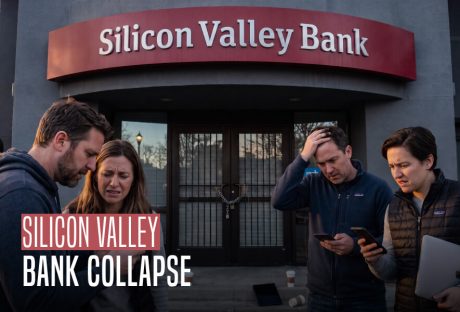
Silicon Valley Bank collapse

Why Did The Silicon Valley Bank Collapse: Examining The Asset-Liability Breakdown

Silicon Valley Bank (SVB) is the 16th largest commercial banking institution in the United States. On 10 March 2023, it was officially closed by regulators following an unprecedented liquidity crisis. For over four decades, SVB functioned as the primary financial anchor for the global technology, venture capital, and life sciences startup ecosystems. However, its specialized business model left its balance sheet highly vulnerable to sudden market shifts. This case study analyzes how a severe asset-liability mismatch, combined with aggressive macroeconomic interest rate hikes, created a massive hole in the bank's finances. When management attempted a forced, uncoordinated sale of assets to raise cash, it sparked immediate panic across highly connected venture capital networks. The resulting panic triggered the first light-speed, mobile-app-driven bank run in human history, with depositors attempting to withdraw $42 billion in a single 10-hour window. This institutional breakdown forced emergency regulatory interventions from the Federal Reserve to safeguard global market stability. The Silicon Valley Bank Collapse Speaks Of An Asset-Liability Trap The collapse of Silicon Valley Bank was not caused by high volumes of bad loans or toxic credit defaults. Instead, it was a structural failure. Additionally, it was driven by a classic Asset-Liability Mismatch (ALM) that left the bank completely exposed to rapid shifts in interest rates. During the tech boom of 2020 and 2021, venture-backed startups flooded SVB with massive amounts of liquid cash. Therefore, this caused total deposits to balloon from $61 billion to over $189 billion in less than 24 months. In addition, short-term corporate lending demand could not keep pace with this sudden wall of capital. Therefore, SVB’s treasury department made a fateful investment choice. Then, it parked $91 billion of this excess cash in long-term, fixed-rate Held-to-Maturity (HTM) mortgage-backed securities and US Treasuries. This allocation strategy assumed that macroeconomic interest rates would remain low indefinitely. However, throughout 2022, the Federal Reserve launched an aggressive monetary tightening cycle to combat rising inflation. This rapidly raised benchmark interest rates. As interest rates soared, the open-market value of SVB’s older, low-yield fixed-rate bonds depreciated significantly. Because these assets were locked in the HTM accounting box, these massive multi-billion-dollar losses remained hidden on paper. It stayed this way until the tech funding market began to dry up. Therefore, this forced startups to draw down their accounts and forced SVB to find immediate cash. How Does The Timeline Look? The operational lifecycle of the crisis shows how a stable financial institution can spiral into complete insolvency in less than 48 hours: Milestone DateFinancial EventUnderlying Systemic ImpactMid-2021SVB invests over $90B in fixed-rate bonds at an average yield of 1.56%.Locks up vital cash reserves into long-term assets right before a major inflation cycle.Full-Year 2022Federal Reserve raises interest rates from 0% to over 4.25%.Triggers massive, unhedged paper losses across SVB's long-term bond portfolio.8 March 2023SVB liquidates $21B in available bonds at a crushing $1.8 billion net loss.Management announces an uncoordinated $2.25B emergency stock sale to plug the hole, triggering widespread market alarm.9 March 2023Prominent VC firms order their portfolio companies to withdraw their funds immediately.Sparks a massive digital run, with customers initiating $42 billion in electronic withdrawal orders in 10 hours.10 March 2023Regulatory agencies step in to freeze operations and protect assets.The DFPI revokes the bank's operating license and places SVB into official FDIC receivership. What Are The Root Causes Behind The Silicon Valley Bank Collapse? These three are the primary causes of this major shutdown. Let’s look at each of these closely. 1. Extreme Deposit Concentration Risk This case is completely different from traditional commercial banks that diversify their ledgers across: Retail Consumers Varied Manufacturing Lines Multiple Distinct Industries SVB's client base was almost entirely concentrated within the venture capital and tech startup ecosystem. Furthermore, an overwhelming 90% of SVB’s total deposits exceeded the standard $250,000 FDIC insurance limit. This lack of baseline security meant that when tech funding slowed down, clients began drawing down their accounts simultaneously. Also, this left the bank highly vulnerable to a sudden herd mentality. 2. Complete Lack Of Interest Rate Hedging As the Federal Reserve launched its historic interest rate hikes, SVB's asset managers failed to adjust their strategy. In fact, throughout 2022, the bank systematically reduced or completely canceled its interest rate swap derivatives. Therefore, the standard financial instruments institutions use to hedge against bond value drops. This left its multi-billion-dollar bond portfolio completely exposed, turning a macroeconomic rate adjustment into a fatal capital drop. 3. Severe Corporate Governance Silos The bank's internal safety checks failed due to leadership gaps. SVB operated without an official Chief Risk Officer (CRO) for nearly eight months during the exact window when the Federal Reserve was aggressively raising interest rates. This internal vacuum allowed the asset-liability mismatch to expand completely unchecked by internal risk auditors. The Digital Mechanism: The First Smartphone Bank Run A defining characteristic of the SVB collapse was the speed of the panic, accelerated by modern communications and digital banking channels. Traditional bank runs were physically constrained by real-world logistics—customers had to stand in lines outside brick-and-mortar branches, which naturally slowed the withdrawal rate. SVB, conversely, was the first entirely digital bank run. The second the bank announced its balance sheet losses, prominent venture capital funds flagged the risk on private WhatsApp groups, Slack channels, and public social networks. Fearing immediate capital freezes, fund managers advised their founders to withdraw capital immediately. Because tech founders are highly connected and online, they initiated multi-million dollar wire transfers simultaneously via mobile apps and online portals. This light-speed panic pulled $42 billion out in a single day—accounting for a quarter of the bank's total deposit base—and completely broke the bank's liquidity routing systems. Comprehensive Lessons For Modern Corporate Treasuries Analyzing the SVB collapse highlights several essential risk-management rules for modern financial officers and corporate team leaders: · Implement A Multi-Bank Diversification Strategy Never park your entire operating capital within a single financial institution, no matter how specialized they are in your sector. Secure your funds by spreading your cash reserves across multiple systemic banks using automated sweep accounts to maximize your FDIC insurance coverage. · Maintain Strict Liquidity Buffer Allocations Ensure your internal treasury guidelines require that at least 20–30% of your total corporate reserves be held in highly liquid, short-term cash equivalents. These can be overnight deposits or short-term Treasury bills. Both of which can be accessed instantly without triggering market-sale penalties. · Enforce Active Macro Hedging Mandates Board-level risk committees must enforce strict, ongoing evaluation cycles to track shifts in macroeconomic interest rates. Ensure your internal treasury policies are actively aligned with changing central bank rates, using interest rate swaps to insulate long-term asset values against sudden market shifts.

READ MOREDetails
FTX Collapse

The Structural Collapse Of The FTX Crypto Exchange And Its Impact: A Case Study

On 11 November 2022, FTX, the world’s third-largest cryptocurrency derivatives exchange, valued at $32 billion at its peak, officially filed for Chapter 11 bankruptcy protection. Founded by Sam Bankman-Fried, the platform positioned itself as a highly secure, institutional-grade trading platform. However, the exchange’s underlying operational framework was structurally compromised by a severe lack of internal accounting checks and massive regulatory non-compliance. This case study analyzes how a secret, multibillion-dollar asset-liability mismatch and illegal balance-sheet commingling systematically hollowed out the platform's liquidity. The crisis unfolded over a seven-day window following an explosive public balance sheet leak. When customers launched a highly synchronized, panic-driven digital withdrawal run, they exposed an $8 billion deficit in customer capital. This cash vacuum forced immediate bankruptcy filings and triggered global contagion across decentralized markets. Furthermore, it led to sweeping criminal indictments for its core executive leadership team. The Corporate Alchemy Of The Ftt-Alameda Loop The structural collapse of FTX was not a standard macro market casualty or an unpredictable investment drop. Instead, it was an intentional, systemic corporate fraud built around an artificial token-collateral loop and the illegal routing of user deposits. When users deposited fiat cash or major crypto tokens (like Bitcoin and Ethereum) on the FTX exchange, internal operating scripts routed those assets off the platform's ledger to Alameda Research, a private crypto hedge fund owned by Sam Bankman-Fried. Alameda used this stolen customer cash to execute high-risk venture bets, purchase luxury real estate, and finance political donations. To hide this massive hole in user accounts, Alameda left billions of dollars' worth of FTT. FTX’s in-house utility token, in the exchange's treasury vaults as replacement collateral. FTX’s developers wrote custom code that granted Alameda a secret $65 billion backdoor line of credit. Therefore, this ensured the hedge fund could continuously draw down customer cash. This setup created an extreme concentration of risk. The entire exchange was backed not by liquid cash reserves but by an illiquid token that FTX had printed out of thin air and artificially valued on the open market. Granular Timeline Of The Strategic Meltdown The operational collapse scaled with unprecedented velocity, stripping a global multi-billion-dollar enterprise of its entire liquid asset base in less than a week: Strategic Phase TimelineFinancial EventUnderlying Systemic Impact2 November 2022CoinDesk leaks Alameda’s balance sheet, exposing that the $14.6B fund was backed almost entirely by illiquid FTT tokens.Triggers immediate risk-mitigation evaluations among global institutional funds.6 November 2022Binance CEO Changpeng Zhao (CZ) announces on social feeds that Binance will liquidate its entire $580M holding of FTT tokens.Sparks a massive digital run, crashing the FTT token market value instantly.7–8 November 2022FTX faces a devastating $6 billion mobile app withdrawal run by panicked retail and corporate users.The exchange runs completely out of liquid cash reserves and halts all customer asset withdrawals.9 November 2022Binance signs a non-binding letter of intent to buy FTX, but backs away 24 hours later due to un-auditable corporate books.Destroys any hope of an institutional bailout, leaving the exchange completely insolvent.11 November 2022Sam Bankman-Fried resigns, and incoming CEO John J. Ray III takes control of the bankrupt corporate shell.Chapter 11 bankruptcy filings are executed across 130 affiliated corporate entities. Structural Vulnerability Matrix: Root Causes Of The Failure An institutional post-mortem of the FTX Group highlights three distinct, compounding risk management flaws that left the platform completely defenseless against a market shock: · Complete Absence Of Corporate Governance The exchange operated without an independent board of directors, lacking external oversight on executive choices. Corporate cash controls were managed via an unsecured group chat app. Furthermore, this is where executives approved multi-million-dollar asset allocations using emojis. Therefore, they left no professional audit trail. · Flawed Internal Financial Controls The company completely lacked a dedicated internal accounting department. John J. Ray III, who famously managed the liquidations of Enron, stated under oath that he had never seen such a complete failure of corporate records. Additionally, he noted that the company used automated consumer software to track corporate cash balances. · Extreme Institutional Conflict Of Interest The boundaries between exchange operator (FTX) and market speculator (Alameda) were completely erased. Alameda was granted a permanent exemption from the platform's automated liquidation engine. This meant that while standard retail users were instantly liquidated during market drops to protect the platform's capital. Alameda could hold massive, bleeding-negative balances indefinitely, shifting its trading losses directly onto the exchange's users. The Digital Mechanism: A Smart-Contract And Social-Media Driven Run A defining characteristic of the FTX collapse was the speed of the panic, accelerated by modern communications and digital banking channels. Traditional historical bank runs unfolded over weeks or months, slowed down by the physical logistics of brick-and-mortar branches. FTX, conversely, was a light-speed digital bank run. The second the Binance liquidations hit social feeds, user panic spread instantly across public social networks and private messaging channels. Fearing immediate account freezes, thousands of global users logged into their mobile trading apps simultaneously to initiate electronic withdrawals. Because the platform's liquid cash reserves had already been secretly drained to cover Alameda's high-risk trading debts, the exchange could not process the massive $6 billion withdrawal load. The sudden run exposed the underlying fraud in hours, freezing customer accounts and cutting off access to individual wealth worldwide. Systemic Contagion And Post-Crisis Regulatory Remediations The fallout from the FTX collapse sent shockwaves through the global decentralized finance sector. This forced international authorities to implement sweeping structural reforms: · Market Contagion Waves The collapse triggered a domino effect across the industry, driving immediate insolvencies among major digital asset lenders such as: BlockFi Genesis Global Voyager Digital Additionally, it wiped over $200 billion in valuation from the broader digital asset markets. · The Enforcement Crackdown International regulatory bodies shifted away from passive tracking to aggressive enforcement actions. Authorities launched sweeping investigations into offshore exchange structures. Therefore, this resulted in a 25-year federal prison sentence for Sam Bankman-Fried for historic wire fraud and money laundering. · Mandatory Corporate Audits Modern regulated digital asset platforms moved quickly to restore investor confidence by adopting strict Proof of Reserves (PoR) frameworks. These systems require third-party cryptographic audits to demonstrate that an exchange maintains 1:1 liquid-asset backing for all customer deposits at all times. Lessons For Corporate Treasury And Capital Allocation Analyzing the failure of the FTX group highlights several essential risk management rules for modern corporate treasuries and venture capital investors: · Enforce Strict Institutional Custody Diversification Never leave your operating capital or digital assets parked long-term on an exchange ledger. Utilize institutional-grade, multi-signature cold storage infrastructure where your team controls the cryptographic keys, ensuring absolute protection against platform freezes. · Execute Rigorous Due Diligence On Governance Frameworks: Venture capital firms poured over $2 billion into FTX without demanding an independent board seat or a formal accounting audit. Modern investment groups must treat a lack of transparent accounting controls or independent oversight as an immediate disqualification flag. · Eliminate Token-Collateral Exposures Never build your corporate treasury around illiquid, self-printed tokens or unhedged digital asset baskets. Ensure your liquid reserves are held in transparent, top-tier cash instruments—such as short-term sovereign bills—to insulate your balance sheet from sharp market downturns.

READ MOREDetails