Published on: 21 July 2023
Last Updated on: 12 September 2024
A cornerstone of nursing education, the head to toe assessment, often presents a steep learning curve for nursing students. It's not just about memorizing a checklist. To perform a thorough evaluation, they must integrate observation, patient communication, hands-on examination, and clinical reasoning.
Enter GoReact, the innovative video-based platform that enhances the learning experience by allowing real-time feedback, collaboration, and reflection. With GoReact, mastering the head-to-toe assessment is no longer an uphill battle but an engaging journey.
1. Making The Most Of Simulation
Simulation scenarios are invaluable in nursing education. They offer the safe space students need to develop clinical skills. By recording simulation sessions with GoReact, educators can provide feedback in real-time. They can pause the recording at critical moments to discuss what was done correctly, what needs improvement, and why.
But the benefits don't stop there. GoReact's video recording feature allows students to revisit these simulations as often as needed, fostering self-reflection and reinforcing learning.
2. Engaging Through Peer Review
The value of peer review in education is well-documented, and GoReact takes this practice to another level. Students can view and comment on each other's head-to-toe assessment videos, encouraging collaboration and constructive criticism. This not only solidifies their understanding of the process but also fosters a supportive learning community.
3. Refining Communication Skills
An effective head-to-toe assessment goes beyond just examining the patient—it involves effective communication. With GoReact, educators can focus feedback on students' communication skills, from their initial approach to the patient to the clarity of their explanations during the assessment. GoReact's time-stamped feedback means this advice is specific and targeted, giving students clear directions on how to improve.
4. Perfecting Techniques
With GoReact's capability for slow-motion playback and moment-specific comments, mastering the subtleties of examination techniques becomes easier. Whether it's the correct use of a stethoscope or the proper palpation technique, educators can provide detailed, specific guidance that students can refer back to, promoting repetition and, ultimately, mastery.
5. Encouraging Clinical Reasoning
GoReact videos can become more complex as students progress, integrating findings that require analysis and decision-making. Educators can pose questions directly in the video comments, asking students to interpret results or predict possible diagnoses. This encourages the development of clinical reasoning, an essential skill in nursing practice.
6. Fostering Professionalism
Finally, GoReact videos provide a platform for teaching and evaluating professionalism. Educators can provide feedback on students' demeanor, respect for patient privacy, and use of appropriate terminology. These aspects of professionalism are often considered the "soft skills" of nursing, but they are essential for a successful nurse-patient relationship.
Try GoReact Today
In conclusion, GoReact is more than just a video-based learning platform; it's a game-changer in nursing education. Its multi-dimensional features empower students to engage actively in their learning process, enhance their practical skills, and develop the professional qualities that will set them apart in their nursing careers. More importantly, by enabling a seamless blend of real-time feedback, self-reflection, and peer collaboration, GoReact is redefining how we approach nursing education. With GoReact, the daunting task of mastering the head-to-toe assessment is transformed into an enriching journey of skill development and continuous learning. So let's embrace this innovation and revolutionize our teaching strategies, helping our students not just learn but excel in their nursing practice.
Abdul Aziz Mondol is a professional blogger who is having a colossal interest in writing blogs and other jones of calligraphies. In terms of his professional commitments, he loves to share content related to business, finance, technology, and the gaming niche.
The saying "Smile, and the world smiles with you" may hold true, but for some, smiling is not as easy as it sounds. It is especially true for those with missing teeth or dental problems. Fortunately, dental implants have become a popular and effective way to restore a healthy and radiant smile. This post will discuss the different types of dental implants available. Whether you are considering dental implants for functional or cosmetic reasons, this guide will provide the information you need to make an informed decision.
What Is A Dental Implant?
Dental implants are artificial tooth roots of titanium surgically placed into the jawbone to support a replacement tooth or bridge. They are one of the most popular and effective options for replacing missing teeth. Its primary purpose is to provide a durable and stable replacement tooth or bridge base. Unlike dentures, which can slip or shift in the mouth, implants are securely anchored in the jawbone, providing a more natural and comfortable fit. Dental implants can also improve speech, prevent bone loss in the jaw, and restore facial structure that may have been lost due to missing teeth.
Dental Implant System
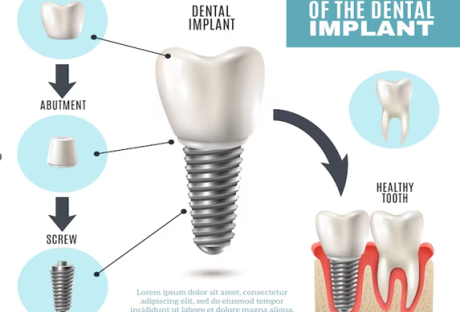
Dental implants are made of titanium and act as artificial tooth roots surgically placed into the jawbone where the natural tooth root used to be. Once implanted, they fuse with the jawbone through osseointegration, creating a durable and stable foundation for a replacement tooth or bridge.
Patients researching treatment options often consult resources such as a dental implants Ontario guide (or similar resources elsewhere) to better understand the procedure, benefits, and long-term care involved.
A dental implant comprises three main components: the implant body or fixture, the abutment, and the crown. The implant body or fixture is the portion of the implant that is surgically placed into the jawbone. It is typically cylindrical and has small threads or ridges on the surface to aid in fusion with the bone.
The abutment is the connector piece that attaches to the implant body and protrudes above the gumline. It supports the dental crown, the visible portion of the implant system that resembles a natural tooth. The dental crown is custom-made to match the surrounding teeth' size, shape, and colour for a natural-looking replacement for the missing tooth.
Dental Implant Types
When it comes to dental implants, there are two main types: endosteal dental implants and subperiosteal dental implants. Other types include zygomatic and mini.
Endosteal Dental Implants
Endosteal dental implants are surgically placed into the jawbone as an artificial tooth root. These implants are typically titanium and shaped like small screws or cylinders. They are suitable for patients with healthy jawbones and are the preferred option for many dentists due to their durability and longevity.
Read Also: Choosing The Best Dental Care In Gramercy
Subperiosteal Dental Implants
Subperiosteal dental implants can be for patients who do not have enough healthy bone in their jaws to support traditional implants. Instead of being placed into the jawbone, subperiosteal implants are placed on the bone and under the gumline.
Subperiosteal implants consist of a metal frame custom-fitted to the patient's jawbone. While subperiosteal implants may be a good solution for patients with bone loss, they may not be as durable or long-lasting.
Zygomatic Dental Implants
Zygomatic Dental Implants are longer and anchored into the cheekbone, the zygoma bone. These implants are typically used for patients with severe bone loss in their upper jaw. Zygomatic implants provide a stable foundation for a fixed denture or bridge and can last many years with proper care.
Mini Dental Implants
Mini Dental Implants, also known as narrow-diameter implants, are smaller than traditional implants. They are typically used to support lower arch dentures or to replace small teeth. Mini implants are often less invasive than traditional implants and require less healing time. However, they may only be suitable for some patients and not as durable as larger implants.
Dental implants can also be classified on the number of missing teeth:
Single Tooth Dental Implants
These are used when only one tooth is missing. The implant is placed into the jawbone, and a crown is attached once it fuses with the bone.
Multiple Tooth Dental Implants
When more than one tooth is missing, multiple-tooth dental implants are used. This process involves placing two or more implants in the jawbone and attaching a bridge or individual crowns to the implants. The result is a secure, long-lasting solution for multiple missing teeth.
All-On-4 Dental Implants
For those missing most or all of their teeth, the All-on-4 dental implant technique can be a game-changer. This process involves using four implants to support a full arch of replacement teeth. The implants are strategically placed in the jawbone to support the new teeth.
Implant-Assisted Dentures
Implant-assisted dentures are similar to traditional dentures but are supported by dental implants instead of resting directly on the gums. It provides greater stability and prevents slipping or shifting of the dentures.
Implant-Supported Bridges
An implant-supported bridge replaces multiple missing teeth. Like multiple-tooth dental implants, this process involves placing implants in the jawbone, but instead of attaching individual crowns, a bridge is attached to the implants.
Takeaway: Overall Benefits Of Dental Implants
Dental implants provide numerous benefits for those with missing or damaged teeth. They provide a more natural and comfortable fit than traditional dentures, preventing slippage or shifting in the mouth. Implants can also improve speech, prevent bone loss in the jaw, and restore facial structure lost due to missing teeth. With the various types of dental implants available, patients can choose an option that best suits their specific needs. Whether it's a single-tooth implant, multiple-tooth implant, All-on-4 technique, implant-assisted dentures, or implant-supported bridges, dental implants can be a long-lasting and effective solution for restoring a healthy and radiant smile.
Read Also:
Is Medical/Dental Instruments A Good Career Path
Essential Things to Consider Before Getting Dental Implants
Dental Health: 6 Essential Dental Care Tips You Need to Know
Anxiety disorders are among the most common mental health conditions worldwide, affecting millions of people. While traditional treatments like therapy and medications have been effective for many, some individuals continue to struggle with anxiety symptoms. Transcranial Magnetic Stimulation (TMS) has emerged as a promising alternative for those seeking relief. In this comprehensive guide, we will delve into the world of TMS therapy for anxiety, debunk myths surrounding its effectiveness, and present the facts that can help you make an informed decision about this innovative treatment.
What Is TMS For Anxiety?
So, does TMS work for anxiety? Let's start by demystifying TMS. Transcranial Magnetic Stimulation, or TMS, isn't some sci-fi concept; it's a real-life, non-invasive procedure that taps into the power of magnetic fields to gently nudge specific parts of your brain. Originally designed to help with depression, TMS has been under the research spotlight, and guess what? It's showing some impressive potential in the realm of anxiety treatment. So, let's keep the curiosity flowing as we explore the myths and facts surrounding this innovative therapy.
Myth Vs. Fact: TMS And Anxiety
Myth #1: TMS Is Only Effective For Depression
One common misconception about TMS is that it's exclusively effective for treating depression. While it was initially developed and approved for depression, research and clinical experience have demonstrated its potential benefits for anxiety disorders as well. TMS works by modulating neural activity in the brain, making it a versatile tool for various mental health conditions, including anxiety.
Fact: TMS Can Be Effective for Anxiety
Several studies and clinical trials have shown that TMS can significantly reduce symptoms in various anxiety disorders, such as Generalized Anxiety Disorder (GAD), Obsessive-Compulsive Disorder (OCD), and Social Anxiety Disorder (SAD). The key lies in targeting the right brain regions associated with anxiety, and TMS therapy can precisely accomplish this task.
Myth #2: TMS Is Painful And Unsafe
Another myth is that TMS is a painful or unsafe procedure. In reality, TMS is considered a well-tolerated and safe treatment option. During a TMS session, patients typically experience a tapping or clicking sensation on their scalp, but this discomfort is generally mild. TMS is non-invasive, meaning it doesn't require surgery or anaesthesia, and it doesn't induce seizures.
Fact: TMS Is Safe and Generally Painless
TMS for anxiety is performed in an outpatient setting, and most patients can resume their daily activities immediately after a session. It has a minimal risk of side effects, with the most common being mild scalp discomfort or headache, which usually subsides quickly. TMS therapy sessions are closely monitored by trained professionals to ensure safety and effectiveness.
Myth #3: TMS Is A Quick Fix
Some individuals may expect TMS to provide instant relief from anxiety symptoms. While TMS can be highly effective, it is not a one-size-fits-all solution, and results may vary from person to person. It is essential to have realistic expectations and commit to a recommended TMS anxiety treatment plan.
Fact: TMS Requires a Treatment Plan
TMS for anxiety typically involves a series of sessions over several weeks. The exact number of sessions and their frequency may vary based on individual needs and the severity of the anxiety disorder. Patience and consistency are essential for achieving the best results with TMS.
Myth #4: TMS Is Expensive And Not Covered By Insurance
Cost can be a significant concern for those considering TMS. However, many insurance plans now cover TMS therapy for various mental health conditions, including anxiety. It's crucial to check with your insurance provider to determine coverage and potential out-of-pocket expenses.
Fact: TMS May Be Covered by Insurance
Due to the increasing recognition of TMS as an effective treatment for mental health conditions, insurance coverage has expanded. Some patients may find that their insurance covers a substantial portion of TMS therapy for anxiety costs, making it more accessible.
Myth #5: TMS Is A Last Resort
Another misconception is that TMS should only be considered when all other treatment options have failed. While TMS is sometimes recommended after other treatments have been ineffective, it can also be a viable choice as a first-line treatment for anxiety disorders, especially when individuals prefer non-medication options or have concerns about potential side effects.
Fact: TMS Can Be Considered at Any Stage
The decision to pursue TMS for anxiety should be based on an individual's unique circumstances and preferences. It is not limited to being a last resort and can be discussed with a mental health professional at any stage of treatment planning.
Myth #6: TMS Results Are Temporary
Concerns about the temporary nature of TMS benefits can deter some from exploring this therapy. While individual responses may vary, many individuals experience long-lasting relief from anxiety symptoms after completing a full course of TMS treatment for anxiety.
Fact: TMS Can Provide Lasting Benefits
Research has shown that the positive effects of TMS on anxiety can persist for months to years after treatment. Some individuals may require maintenance sessions, but TMS has the potential to offer enduring relief from anxiety symptoms.
Summing Up
Transcranial Magnetic Stimulation (TMS) isn't just about tackling depression; it's got a promising role in helping folks wrestling with anxiety disorders too. By shedding light on the myths surrounding TMS and getting the facts straight about its safety, effectiveness, and potential insurance coverage, we're here to arm you with the knowledge you need to make smart choices about your mental health.
Now, let's be real – TMS isn't a magic wand that makes all your anxiety vanish in an instant. It's more like a steady hand guiding you toward relief. It's gentle, non-invasive, and generally well-tolerated. For many, it's a ray of hope, offering a path to managing anxiety that doesn't involve medications or complex procedures.
But here's the golden rule: always lean on the expertise of a qualified mental health professional when considering TMS therapy for anxiety. They're the compass guiding you through your unique mental health journey, helping you figure out if TMS is the right fit for your needs
Read Also:
10 healthy Habits to improve your health
How To Take Care Of Your Mental Health
Living Healthily | Six Crucial Lifestyle Tips for College Freshmen
How long does pre workout last? - Once you consume pre-workout, its effects last for 3 to 6 hours in your body. Basically, the job of a pre-workout is to improve your physical and mental performance during exercise. If you want to consume pre-workout, you have to consume it as energy shots or as a powder that you mix with water.
In this article, you will learn about how long a pre-workout lasts. Apart from that, you will also learn about the key factors that influence a pre-workout’s duration. Moreover, this article will also explain how to maximize the duration of pre-workouts. Hence, to learn more, read on to the end of the article.
How Long Does Pre-Workout Last?
Generally, a pre-workout has a noticeable effect for 1 to 2 hours when you are working out. However, the ingredients remain in your body for around 4 to 6 hours. In fact, the ingredients of a pre-workout supplement remain in your system. Basically, it depends on the amount of caffeine it contains.
Here are a few points you must consider about pre-workout duration:
Peak Effect: For a pre-workout, after you consume it, you will feel the most intense effects within the first 30-60 minutes.
Caffeine Half-Life: Caffeine is the primary contributor to the duration of a pre-workout. In fact, the duration of caffeine is around 5-6 hours. Hence, it takes longer for the body to eliminate half of what you consume that has caffeine in it.
Individual Variations: The amount of time up to which a pre-workout lasts also depends on your individual bodily factors. For example, how good your metabolism is or how sensitive your body is to caffeine matters a lot.
Key Factors That Influence the Duration of Pre-Workout
Depending on the amount of pre-workout you consume, you will experience a rise in physical and mental energy for 30 minutes to 2.5 hours. Moreover, the pre-workout stays in your body for a much longer time due to caffeine content.
The following are some of the major factors that influence the amount of time a pre-workout will last:
1. Dosage
The pre-workout dosage affects the amount of time up to which you will experience its benefits. In fact, the more pre-workout you consume, the longer it will have an effect on you.
Moreover, if you take higher doses, your energy levels will remain high between these periods. Also, there shall be lower feelings of exertion. Generally, this is the effect of individual ingredients.
However, always remember to take a dosage that your nutritionist recommends.
2. Ingredients in Pre-Workout
The common ingredients of pre-workouts include caffeine, beta-alanine, creatine, etc. Basically, these ingredients determine the amount of time the pre-workout affects you. In fact, each ingredient offers you something different. Hence, a pre-workout with more than one thing will affect you in different ways.
a. Caffeine
Caffeine is present in multiple beverages, energy drinks, and tea. Generally, you will experience the effects of caffeine for 2.5 to 4.5 hours. However, depending on your personality and your body type, this will vary a bit.
b. Nitrates
Most pre-workout supplements contain nitrates and amino acids. This helps in producing nitrate oxide, which helps to produce a higher amount of oxygen than the body needs during exercise. However, once you consume it, nitrate will remain for 1-3 hours.
c. Beta-alanine
This is a type of amino acid that comes with multiple benefits. However, you must consume it before you start exercising. Such a pre-workout will offer you higher aerobic and anaerobic endurance.
Apart from that, you will benefit from higher muscle mass, better capacity to exercise, and a reduction in lactic acid buildup.
3. Personal Tolerance
If you use pre-workout consistently or for a long period of time, your body will start tolerating it and its effects. Hence, most experts recommend that you use pre-workout in a cycle. For example, you take a pre-workout for six weeks and then take a break of six weeks from using this supplement.
Hence, after you retake a pre-workout later, it will have an effect on your body. This is a useful way to make the most of pre-workouts.
4. Workout Intensity and Duration
The workout length and effort level influence how long the pre-workout lasts. For instance, your body might use up individual ingredients faster when you are in a high-intensity workout.
However, if you resort to lower-intensity training, you will not fully utilize your pre-workout to the fullest. Hence, you will not experience all the benefits it offers. Actually, pre-workout is useful for high-intensity exercises. Apart from that, some studies suggest that if you consume pre-workout before cardio, it will be beneficial for you.
How Long Do Specific Ingredients Last?
Generally, it depends on the individual when it comes to the duration of specific ingredients like beta-alanine and caffeine can vary a bit. However, in most cases, you can notice the effect of caffeine within 30 minutes to an hour. Also, the effect of caffeine can last for 2-3 hours. This is because caffeine has a half-life of 3-5 hours.
On the other hand, the half-life of beta-alanine is about 25 minutes. Hence, you will experience the effects of beta-alanine for a shorter period of time.
1. Caffeine
Caffeine is the primary stimulant in most pre-workouts. Generally, you will notice its effect for 1-2 hours. Moreover, its half-life can be extended by 3-5 hours. Also, its effect depends on your metabolism and workout intensity.
2. Beta-Alanine
Beta-alanine causes a tingling sensation in your body since your body absorbs it faster. Here, the effect of beta-alanine peaks within 30 minutes. Also, it will last for about 2-3 hours.
3. Creatine
Creatine is actually a muscle-building ingredient. In fact, you need to consistently use it for a few weeks if you want to fully saturate it to muscle stores. Also, its effects last much longer than immediate pre-workouts.
4. Nitric Oxide Boosters
Nitric oxide ingredient in pre-workouts has an effect on blood flow and pump duration. This actually helps you with better endurance levels. Nitric oxide provides more oxygen in your body when your body needs it. In fact, once you consume it, it will peak after 1-3 hours.
How to Maximize the Duration of Pre-Workout?
If you want to maximize the duration of your pre-workout, consider taking it around 30 minutes before you start working out. This way, you give your body enough time to absorb all the ingredients inside your pre-workout. Also, you must avoid taking it too early since the effects might diminish before you start your workout.
However, make sure you stick to a dose that is recommended for your case. Apart from that, it is important to hydrate your body. Drink plenty of water during and after the workout. This will maximize the absorption of supplements. Moreover, make sure to choose a pre-workout that has a long-lasting effect (for example, creatine).
On the other hand, try to be mindful of caffeine. Too much caffeine is not good for anyone. Additionally, if you are sensitive to it, adjust your dosage accordingly. However, if you want more energy to sustain in your body, consider consuming a pre-workout with creatine in it.
Potential Side Effects and How They Relate to Duration
The following are some of the potential side effects of pre-workouts:
headaches
stomach upset
nausea
anxiety
jitters
dehydration
an increase in heart rate
sleep disturbances
Generally, these side effects vary in terms of intensity depending on the time and duration of use. If you use pre-workouts for the short term, you can see only mild side effects like mild stomach upset, jitters, a little increase in heart rate, etc. These problems go away once the effect of the pre-workout is gone.
On the other hand, if you use pre-workout consistently, there is a greater risk of severe side effects. For instance, you might face caffeine dependence, dehydration, higher blood pressure, heart issues, sleep disruption, etc.
Apart from that, it also depends on the sensitivity of the individual to the ingredients. Moreover, make sure not to take pre-workouts close to your sleep time as it can impact your sleep quality.
What Happens After Pre-Workout Effects Wear Off?
Here are a few things that might happen after your pre-workout wears off:
You will feel a drop in your energy levels. This may result in a reduction in performance.
Slight irritability and agitation are common.
Moreover, your individual caffeine sensitivity also determines your loss of energy and performance.
Summing Up
How long does pre workout last? - Now you know the answer to this question. Generally, the effect of pre-workout lasts for 30 minutes to 1 hour. However, it still stays in your body for 3-5 hours. However, these numbers might vary depending on your individual physicality, sensitivity, and metabolism.
Do you have more information to provide regarding the timing and duration of pre-workouts? Please share them in the comments section below.
Read Also:
Morayfield Fitness Unleashed: A Journey Into A Unique Fitness Experience
4 Tips For Getting Starting With Your Fitness Journey Today














 With GoReact's capability for slow-motion playback and moment-specific comments, mastering the subtleties of examination techniques becomes easier. Whether it's the correct use of a stethoscope or the proper palpation technique, educators can provide detailed, specific guidance that students can refer back to, promoting repetition and, ultimately, mastery.