











Fax Over the Internet

Published on: 11 August 2020 Last Updated on: 30 November 2023
Fax Over the Internet

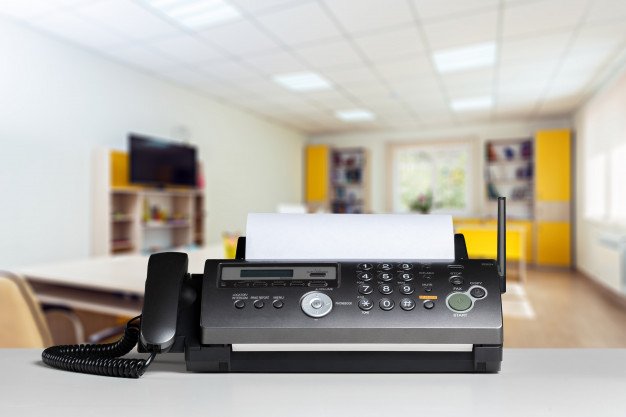
Being able to send a document with a push of a button was groundbreaking in modern technology. Faxing became one of the quickest and easiest ways to send a document from one place to another. With snail mail being too slow and email not being secure, so that leaves us with the decade-old but always reliable fax.

But who uses fax machines nowadays? You’d be surprised that even startups are still using a fax machine. But without a fax machine how am I going to send or receive a fax? Luckily for you, the internet provides a wide array of fax online setup and faxing over the internet like Hottelecom.biz. It’s easy, fast, and reliable, without that much effort.

So how do you Fax over the internet?

The process is simple. You send fax, using the internet connection at hand. It does not require you to have a physical fax machine. Unlike your typical fax machines which require a fax machine and a phone line connected to it, all you need is a network and a device to process and send the fax over the internet and an online faxing set-up and you’re good to go.

So how do you get started?

Step 1: The all-important internet:

Of course, to be able to send a fax over the internet you would need the most key component, which is an internet connection.

Step 2: A online faxing service:

You can easily sign in to one of the numerous online fax service providers on the internet, A simple Google search will throw up multiple results. Go to the platform, check the credibility, and complete the signup process by entering your details. It is as simple as that.

Step 3: Attaching your document(s) to your email or to a new fax message:

This process is relatively simple and involves you adding the email to the fax. This is why you do not require a physical fax machine. A simple works just fine.

E.g: 1xxxxxxxxxx@onlinefaxservice.com

The issue here is the time taken by the software to convert the message or email into a fax. It depends on how big the message is. However, once it is sent, you will be notified in the same email id you had given at the time of signing up on the form.

Advantages of Faxing online:

So you know the what and the how, all you need is the why.

  1. Send fax anywhere and anytime – All you need is an internet connection, a computer or mobile phone, and your document and you can fax anywhere and anytime.
  2. Saves you money – Without the need for a fax machine, you could save a small amount of fortune for what you would have been paying for such as the equipment, the maintenance, the phone charges, and so on.
  3. It’s easy- Setting up and using it relieves you of the hassle. All you need is a mobile phone or a computer with an internet connection and you can be faxing online in no time. There is available software to aid you in this process too so there is no need to worry.
  4. It enables you to send a fax through only a mobile phone –  Didn’t bring your laptop or no computer in sight? Use your mobile phone for your faxing needs. Many online faxing services provide mobile apps so you can fax them on the go. Making your phone camera as a scanner you would be able to scan documents and send them through your mobile phone.
  5. It keeps your files organized and on the go – Unlike the traditional way of faxing where you receive a ton of files printed on paper, how are you going to keep track of all these files if you’re having 10 faxes a month? With online faxing, it keeps all your documents in one app using cloud storage and on the go. Well, you can go for print and apply label systems to ensure better printing on your own. It can be a handy solution to uplift your document management process.
  6. You can do search results directly – Say goodbye to manually searching through all your documents in folders, cabinets, even in storage. You could find faxes in a matter of seconds with the help of the search bar on your computer or the mobile application.

Online Faxing is easy, simple, and efficient. Use online faxing today and have efficiency in your own hands.  Having online faxing would be an advantage to your business as it will help you check your faxes online and would help you keep things organized as well as having fewer paper trails. It will minimize expense and manpower to do so thus it is highly encouraged in our business now. We need to adapt to technology thus it will give so much advantage in our part.

Read Also:

Mashum Mollah is the feature writer of Search Engine Magazine and an SEO Analyst at Real Wealth Business. Over the last 3 years, He has successfully developed and implemented online marketing, SEO, and conversion campaigns for 50+ businesses of all sizes. He is the co-founder of Social Media Magazine.

View all posts

Leave a Reply

Your email address will not be published. Required fields are marked *

Related

Creative Translation

10 Essential Facts To Know While Translating In Creative Translation

Translation is not merely about converting words from one language to another. It is a delicate art that requires finesse and creativity to convey the intended message accurately. While traditional translation focuses on maintaining the literal meaning of the source text, creative translation takes things a step further by infusing creativity and adaptability into the process. Ten essential facts to know while translating in creative translation In this section, we discuss the ten critical facts to know while translating in creative translation.  1. Context is Key When it comes to Creative Translation Services Singapore, context plays a pivotal role in ensuring the accuracy and effectiveness of the translation. Understanding the cultural background, target audience, and intended message of the source text allows the translator to adapt the translation in a way that resonates with the target readers. For example, consider a marketing campaign for a new car targeting Singaporean customers. While translating slogans or taglines, a creative translator must be aware of the local culture, preferences, and values. Adapting the message to Singaporean colloquialisms or incorporating cultural references can make the translated text more engaging and relatable. 2. The Power of Adaptation Creative translation goes beyond the literal translation of words. It involves adapting the content to suit the cultural and linguistic context of the target audience. The goal is to maintain the essence and impact of the source text while ensuring it resonates with the target readers. For instance, let's say you are translating a novel set in London for a Singaporean audience. The original text may reference British landmarks and cultural references that may not be familiar to local readers. A creative translator would adapt the text by replacing these references with Singaporean equivalents, maintaining the same impact and immersing the readers into the story. 3. Multilingualism in Singapore Singapore is known for its cultural diversity and multilingualism. The country has four official languages: English, Mandarin Chinese, Malay, and Tamil. This linguistic diversity presents both opportunities and challenges when it comes to creative translation. A creative translator in Singapore must be sensitive to the nuances of multiple languages and their speakers. They must navigate through the intricacies of code-switching, language choice, and cultural variations to create translations that are not only accurate but also resonate with the different language communities in Singapore. 4. Cultural Nuances and Idioms Every language has its own set of cultural nuances and idioms that are deeply ingrained in its speakers' everyday communication. Creative translation requires a comprehensive understanding of these cultural nuances to effectively convey the intended meaning of the source text. Consider the English idiomatic expression "It's raining cats and dogs." A creative translator would not translate this phrase literally when targeting a non-English-speaking audience. Instead, they would adapt it to an equivalent idiomatic expression in the target language, ensuring the translated text captures the same essence and impact. 5. Varying Degrees of Creativity Creative translation is a spectrum, with varying degrees of creativity depending on the project at hand. While some projects may require a more liberal approach to translation, others may demand a more conservative and accurate rendition of the source text. For example, translating a work of fiction allows for greater creative freedom, as the focus lies on evoking emotions and capturing the essence of the story. On the other hand, translating legal or technical documents requires a more precise and accurate translation to ensure legal compliance and clarity. 6. The Role of Technology In today's digital era, technology has become an integral part of the translation process. Machine translation tools and computer-assisted translation (CAT) software have improved the overall efficiency and accuracy of translations. However, when it comes to creative translation, the human touch remains essential. While machines can assist with linguistic accuracy, they often lack the creativity, cultural understanding, and adaptability that human translators bring to the table. Creative translation demands the subtle nuances and expertise of a skilled translator to truly capture the essence of the source text and engage the target audience effectively. 7. Personal Experiences As a translator myself, I have had the privilege of working on numerous creative translation projects. One particularly memorable experience was translating a series of children's books from English to Malay for the Singaporean market. The challenge lay in preserving the humor and playfulness of the original text while adapting it to the local cultural context. Through creative translation, I was able to introduce local folktales and idiomatic expressions that Singaporean children could relate to, making the books more engaging and enjoyable. Witnessing the positive response and seeing the children connect with the stories on a deeper level was truly gratifying. 8. Balancing Authenticity and Adaptation One of the key challenges in creative translation is finding the right balance between authenticity and adaptation. While it is crucial to maintain the core message and style of the source text, it is equally important to ensure the translation resonates with the target audience and reads naturally in the target language. For instance, translating a famous literary work requires preserving the author's unique voice and writing style. However, a creative translator must also consider the preferences and reading habits of the target audience to create a translation that captures the essence of the original while remaining accessible and relatable. 9. Translators must Be The Negative Speakers The ultimate need for translation in business is to look out for deeper penetration. You need to connect with the audience and the potential customers to get a better example. The bilingual individual responsible for the translation consciously takes the pathway of biasedness. It means they must be negative individuals. Their translations must have to be local enough. But at the same time, they also have to ensure that they do not turn out to be negative speakers minus any kind of bias. Creative translation does not imply that you alter facts straight away with the help of biasedness.  10. The Machine Will Never Replace The Translators With the rise of technology, the employees related to this very sector think that one day they will be obsolete due to the rise of machines. Machine translation has evolved a lot in recent years.  But when the discussion comes to creative translations, machines will never be able to replace humans. Firstly, the machine needs to have the power to accumulate a set of ideas and completely reproduce them into an artistic rendition.  The machines have their limitations. They have information but zero creativity. Let us be assured of it. This is a capability that only stays with the human being.  Conclusion Creative translation is an art that allows for the seamless transference of ideas, emotions, and cultural nuances across languages and cultures. By harnessing the power of context, adaptation, and cultural understanding, translators can create translations that not only convey the meaning accurately but also engage and resonate with the target audience. As the world becomes increasingly interconnected, the need for effective and creative translation continues to grow. So, if you find yourself needing to translate marketing materials, literary works, or any content that seeks to captivate your target audience, consider the expertise of IPPWORLD. With their deep understanding of the creative translation process, IPPWORLD can help you unlock the full potential of your content and connect with audiences across various languages and cultures. Read Also: What Should my Content Cover to Rank on Google? How To Use Google Ads To Your Advantage The Basics on Google Local Algorithm

READ MOREDetails
Flying Crane

Flying Crane: Purpose, Benefits, And Usage

The AF 200 flying crane's primary aim is to ensure that we can completely revolutionize the wind energy industry and bring forward the most promising piece of technology you can expect from us. We believe that when it comes to technology and high precision, it never has to be in a way that you must compromise on the working of the environment or sustainability factors. This is why we have brought forward the most comprehensive flying crane, and we can say with conviction that this is the best one you can invest in. At AirFlight, our aim is always quality, which is what we have also focused on here. What Are Flying Cranes Typically Used?  Flying crane helicopters have significant uses. When it comes to lifting heavy equipment from one place to a remote place, a flying crane is the only reliable to take help. Here we listed the primary purposes where a flying crane is needed.  1. Lifting And Transporting Heavy Materials As we said that lifting heavy materials in a short time from one to another place,  Flying cranes are a fantastic option. Lifting heavy construction materials, including concrete, bricks, wood, heavy bake loads, and steel.  It allows you to shift the materials for emergency purposes. That is why many construction companies use flying cranes as per their requirement.  2. Replace And Remove Rooftop Units What you can do when you need to lift heavy unit materials from the rooftop of the tower building. You may understand that it is not possible to use any other crane to shift the material from the 80-floor building.  Here, aerial crane companies' workers and employees are the most skillful staff who know how to handle these things and how they can shift the materials without making any mistakes.  Helicopter cranes are able to spin 360 degrees and they are most efficient in mountainous terrain and congested cities.  3. Forestry Operations Well, for forestry operations, an aerial crane is a suitable tool. To conduct everything in the forest, helicopters can assist in placing tools and picking up the wood to restore them in the nearest factory.  However, “heli-logging” is a method of logging that uses an aerial crane to lift cut trees and remove them from the operation area.  4. Utility Construction Project Flying crane technology is able to haul huge pipelines in half time. It is a valuable tool when it comes to lattice structures, placing monopoles, and transporting materials and machinery On the other hand, the flying car is also used to set pipe sections for cell towers in different geo-location. They are the practical choice to install towers in hill stations or hard-to-reach areas. What Is The Unique Feature Of The Af200 Flying Crane? It is common to wonder what is so remarkable about this particular flying crane and why it differs from the other market options. The first and most important reason that makes it one of the best is because of the efficient take-off as well as the landing. Another significant factor about the flying crane is that it is equipped with automated take-off. This ensures that you do not have to put in manual effort for the same. Not only that, another very unique thing about the flying crane is that it is equipped with pre-programmable flying paths. There are no two ways about the fact that one of the most beautiful things about this particular flying crane is that we have tried to decrease manual labor as much as we can. Our primary focus has always been to boost automation and ensure that ultimate efficiency is promised to our clients. AirFlight is one of the better-known brands for the most fantastic flying crane. The Benefits Of Flying Crane  Helicopters flying cranes are capable of reaching anywhere and everywhere. They can lift anything from swimming pools, cars, riversides, or construction palaces, etc. A flying crane is the most convenient tool to lift materials from high-rise buildings. After a disaster, for rescue purposes, they can be used to lift materials like rubbish or goods and shift them to remote areas.  It is capable of conducting the work in half of the time. With the help of flying cranes, many real estate companies and utility construction companies are able to install or build towers or hotels at hard-to-reach places.  Final Words So, these are all about flying cranes. Engineers are made flying crane drawings and designs to ensure the tool can provide the best service.  If you think that you want the best flying crane and that too on a budget, you only need to get in touch with us, and we will help you. We can vouch that the AF200 flying crane is the best you will come across! However, if you have any queries, feel free to raise your question in the comments section.  Additional: 3 New Age Engineering & Construction Technology How New POS Technology is Advancing Merchant Processing How Cutting Edge Technology is Helping Dubai Improve its Healthcare Services 5 Ways Technology Will Change the Hospitality Industry Post Covid-19 Pandemic

READ MOREDetails
EMS Scheduling Software

A Look At The Many Benefits Of EMS Scheduling Software

With a high volume of calls and constantly changing schedules, it's easy for the work done by emergency medical services to get chaotic. As such, EMS providers are constantly searching for ways to improve their operations and provide better patient care. One area where technology has proven to be particularly useful is in scheduling and dispatching EMS personnel. EMS scheduling software is specifically designed to help EMS providers manage their schedules more effectively, reducing the chances of missed shifts, double bookings, and other scheduling mistakes. But that's not all, as this software offers a multitude of other benefits that we shall discuss below. That said, let’s take a closer look at EMS scheduling software and explore the many ways Paramediq can help EMS providers streamline their operations, improve response times, and ultimately save lives. Dispatch Calls Efficiently & Quickly In the past, EMS providers relied on phone calls and pagers to receive dispatches. This process was often slow and unreliable, and it could take several minutes to reach a provider. But with EMS scheduling software, dispatchers can send out alerts to EMS providers in seconds, allowing them to respond to emergencies much faster than before. This saves valuable time and can mean the difference between life and death for a patient. Additionally, EMS scheduling software can be integrated with GPS technology, which allows dispatchers to track the location of EMS providers in real time. This helps dispatchers to make more informed decisions about which provider to dispatch based on their proximity to the emergency. Thus, patients can receive care as quickly as possible, without having to wait for a provider who is further away. Get Real-time Updates and Notifications EMS scheduling software also offers real-time updates and notifications about the status of an emergency in real-time. For example, they can receive notifications about the patient's condition, any changes in the situation, and any updates from other team members. This helps to keep everyone on the same page and ensures that EMS providers have the information they need to provide the best possible care. Moreover, real-time notifications can also help EMS providers manage their schedules and stay organized. This can help to prevent double bookings or scheduling conflicts, which can be stressful for EMS providers and impact patient care negatively. Smooth Billing Process EMS agencies must manage a range of billing and invoicing tasks, which can be time-consuming and stressful. Fortunately, EMS scheduling software offers a range of features that can help to simplify the billing process. For example, agencies can use the software to track the time spent on each call, ensuring that they bill accurately for their services. Furthermore, EMS scheduling software can help automate the billing or claims process, which can save time and reduce errors. This can ultimately lead to faster payments and improved cash flow for EMS agencies. Compliance With Labor Laws and Regulations EMS agencies must comply with a range of labor laws and regulations regarding certain facets of patient care such as working hours, how sensitive patient information is handled, and insurance data, which can be challenging without EMS scheduling software. However, EMS agencies can use the software to track employee hours and ensure that they are not working beyond their allotted hours. This can help to prevent burnout and ensure that EMS providers are well-rested and ready to respond to emergencies. Similarly, software with tight security features and protocols can ensure patient information is securely stored and accessed by the right people. Real-time Analytics Finally, EMS scheduling software offers real-time analytics. This means that EMS agencies can track their performance and identify areas for improvement in real-time. For example, they can use the software to track response times and identify any delays in their operations. This can help agencies to make more informed decisions about how to improve their operations and ultimately provide better patient care. Moreover, the software can help EMS agencies to identify trends and patterns in their operations. They can use the software to track the types of emergencies they respond to, which can help to inform training and resource allocation decisions. The Bottom Line As you can see, EMS scheduling software offers a range of benefits for improved efficiency, better accuracy, and enhanced communication between team members. However, to get the most out of these benefits you must be proactive by involving your team in the process to ensure that everyone is on board and that the software meets the needs of your team. You must also provide adequate training as some features can be complex.  By following these tips and leveraging the many benefits of EMS scheduling software, EMS agencies can improve their operations, enhance patient care, and ultimately save the lives of many people. Read Also: Delegating And Prioritizing: Tools For Managing Multiple Scheduling Demands How You Can Manage Your Business with Scheduling Software? Home Maintenance Tips To Keep Your Home In Good Condition

READ MOREDetails