

Track Code for Reporting Data from Which Systems in Google Analytics

Published on: 06 January 2023 Last Updated on: 11 September 2024
using tracking code, google analytics can report on data from which systems?

Question: Using tracking code, Google Analytics can report on data from which systems?

Options:

  • Mobile Applications
  • Systems not connected to the Internet
  • E-commerce platforms
  • Online point-of-sales systems

Answer: Mobile Applications, E-commerce platforms, and Online point-of-sales systems.

Google Analytics is one of the best analytics tools for web developers and businesses can use to track their websites. Using this tool, webmasters can see the performance f their websites, and identify and measure actions taken by visitors. However, to get data from various supporting systems, you need a tracking code for it. This is why you need to learn using tracking code, google analytics can report on data from which systems?

To make your marketing strategy a success and gain more traffic, you must read this post till the end. Here, I have explained what are Google Analytics tracking codes and hw tik implements them.

What Are Google Analytics Tracking Codes?
What Are Google Analytics Tracking Codes?

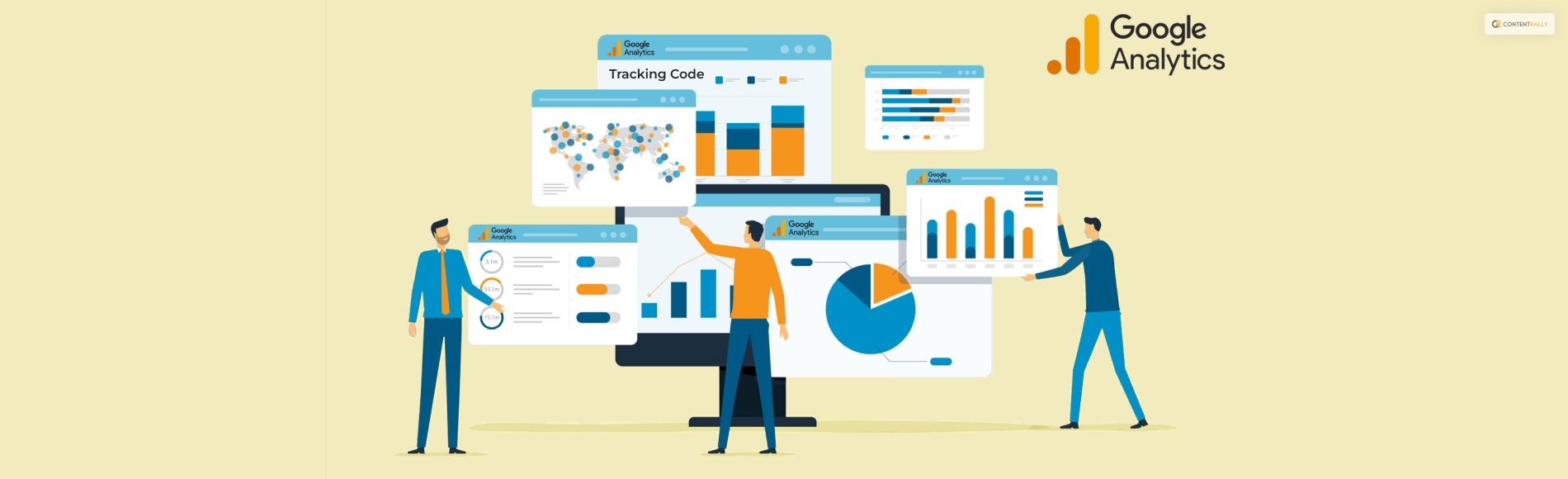
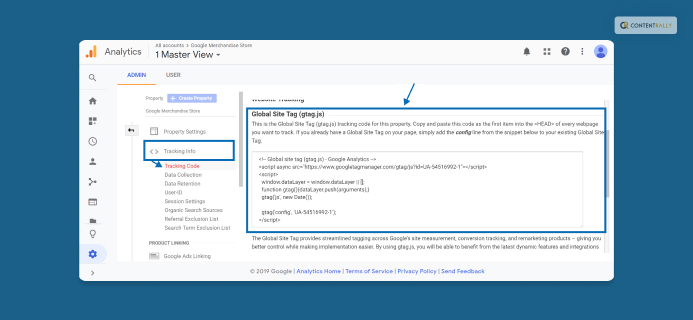
A piece of JavaScript known as a Google Analytics tracking code transmits traffic information about website visitor sessions to Google Analytics. A website’s tracking script can either be added to each page’s HTML code or alternatively if the website uses a tag manager, it can be inserted there. After creating a property in their Google Analytics account, the website owner may acquire the tracking code for their website.

How To Find The Google Analytics Tracking ID?
How To Find The Google Analytics Tracking ID?

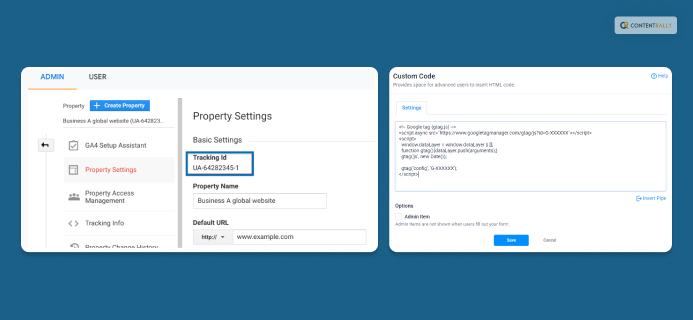
Follow these steps to check the tracking ID in Google Analytics (UA).

  1. First, sign in to your Google Analytics account. 
  2. Next, navigate to and click on the Admin option on the Navigation sidebar of the page.
  3. Here, you will find an option called Tracking Info down in the second column. Click on it.
  4. Now, after the drop-down menu appears here, simply click on Tracking Code here.

Right now, there exist two versions of Google Analytics that we can use. One is the original version, which is known as Universal Analytics. However, while you can still use that version, most modern analysts will prefer using Google Analytics 4 (GA4). 

Follow these steps to check the tracking ID in Google Analytics 4 (GA4).

  1. First, open your Google Account account.
  2. Next, navigate to and click on the Admin option on the Navigation sidebar of the page.
  3. Now, click on the option called Properties.
  4. Next, click on Data Streams.
  5. Finally, choose the Data Stream that you wish to track.

How To Setup Tracking Codes In Google Analytics?
How To Setup Tracking Codes In Google Analytics?

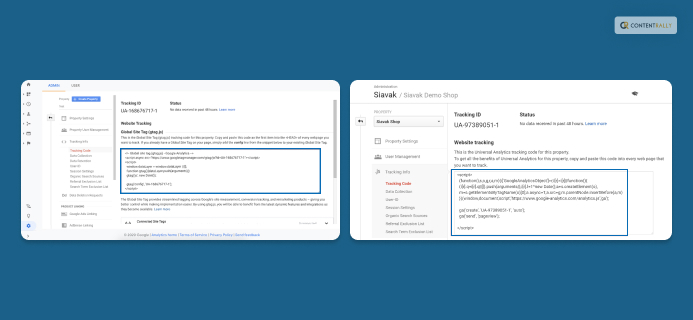
Since Google Analytics 4 or GA4 has become the most accepted version of GA, learning how to set up tracking codes is important. Therefore, instead of learning it for Universal Analytics, it’s best to learn how to do so for GA4. Here are various ways you can use Google Analytics tracking codes in WordPress, Shopify, and other CMS platforms.

1. In WordPress

To implement your tracking codes with your WordPress websites, you need to link Google Analytics with it first. To do so, follow the steps below.

  1. First, open WordPress.
  2. Next, install the Google Analytics plugin in WordPress.
  3. After installation is complete, you can follow the on-screen prompts to connect your Google Analytics account with your WordPress account. Here, ensure it’s your GA4 account, not your UA account.
  4. Next, open your GA4 account and follow the same instructions to activate your Tracking Codes as explained in the previous section.

Read More: What Feature Can Join Offline Business Systems Data With Online Data Collected By Google Analytics?

2. In Shopify

Many businesses now have Shopify eCommerce websites as well, made with Shopify’s web developing tool. Here, you also need to link your Google Analytics account with Shopify s well. To do so, follow the steps explained below. This is because you need to add your Global Site Tag to your Shopify website.

  1. Open your GA4 dashboard.
  2. Then, click on the Admin tab.
  3. Here, select Data Streams.
  4. Now, a list of various data properties will show up. Click on the one that you wish to set up.
  5. On the next screen, open the Install Manually tab.
  6. Here, navigate to the top right corner of the screen to find the Copy icon and click on it.
  7. Now, the window with all the codes will open up. Copy the code that says Global Site Tag.
  8. Next, open the Shopify Online Store.
  9. Here, click on Themes.
  10. Now, navigate to the Customize button (symbolized by three dots on the top of the screen). 
  11. After you click on the option above, open the Edit Code option.
  12. Now, your theme’s codes will appear on the screen. Look for the <head> section on the page and paste the copied tracking code.

3. On Other CMS Platforms

You can also link Google Analytics with other Content Management System (CMS) platforms as well. This includes the likes of CMS applications like Zoho Workspace.

To do so, you need to first check whether Google Analytics can be integrated with the CMS or not. You can contact their customer service to get a clear detail about this. However, the process will be similar to the one explained above. All you need to do is just copy the Google Analytics Tracking Code and paste it on the script of the CMS. I would recommend getting the help of a web developer to do so for you.

Frequently Asked Questions (FAQs):

People have asked many questions regarding the Google Analytics question, “using tracking code, google analytics can report on data from which systems?”

Q1. What Is Your Tracking Code?

Ans: In website analytics, a tracking code is a snippet of JavaScript code that tracks the activity of a website user by collecting data and sending it to the analytics module. The code is generated automatically, is different for each website, and has to be installed on each page you want to track.

Q2. What Is A Custom Tracking Code?

Ans: Generally speaking, a custom tracking code is a piece of tracking code that someone wrote or customized specifically for your shop.

Q3. Where Should Tracking Codes Be Placed?

Ans: As per Google Analytics’ instructions, your tracking code should always be placed just after the website’s opening <head> tag.

Conclusion

A JavaScript script that is inserted in the website pages contains the tracking score. The code refers to a Javascript file when viewers see a page. It monitors the use of Google Analytics.

On systems that are not online, Google Analytics is unable to collect statistics. This is so that it can execute any function, which necessitates an internet connection. However, it gathers all of the data by sending an HTTP request for the user, browser, and system data as well as first-party cookies. 

To enable the tracking code to report and record all activity, solutions including mobile applications, e-commerce platforms, and online point-of-sale systems have been developed.

Read Also:
Content Rally wrapped around an online publication where you can publish your own intellectuals. It is a publishing platform designed to make great stories by content creators. This is your era, your place to be online. So come forward share your views, thoughts and ideas via Content Rally.

View all posts

Leave a Reply

Your email address will not be published. Required fields are marked *

Related

How To Record Google Meet

How To Record Google Meet? Read This Blog To Know

With the increasing online communication and meetings, google meet is a common place to belong. If you are thinking about how to record google meet because you are missing out on important information, this article is for you. Everyone can access Google Meet; however, certain aspects must be kept in mind regarding it. Certain policies by Google Documentation are established, which must be followed only then the recording is allowed. You can't record google meet calls if you have a free Google account plan. Considering a free Gmail account does not have paid storage, it is not allowed to register from this account; hence, the first step to record a google meet is to have workplace access. Before you start recording, ensure everyone involved in the meeting is aware of it. Permission should be asked from everyone regarding the recording by sending participants a notification in the Google meeting. How To Record Google Meet? Read This Blog To Know   To record google meet, the first step as an administrator is to create a Google Workplace to access meeting recordings. Once a workplace is built on Google, an administrator can access the Google admin console. Then you can see Google Workplace in the apps present in the sidebar. When using Google for the workplace or school, users need an allowance from administrators; hence you need to email. The workplace admin usually allows and supports the access of recording. At times, users might not see the record button; the video is transcribed. You have to select the audio source of either an external microphone or a system microphone to record it. Users can use their voice to register, so using headphones is a better option to be used. You have to start and stop recording where it is automatically uploaded on the cloud account of the Vmaker platform. The meeting can be registered with necessary sections so that the subtitles and music can also be captured. The meet can be recorded with the help of Android phone settings and iOS settings reflecting an important aspect.  Can You Record A Google Meet Without Permission?    If you are thinking, about how to record google meet? Without permission, google meet can be accessed on Android and iOS by following certain steps. It is important to know that an Android phone has a screen recording tool integrated into it. That can be used to record google meet calls without using recording google meet. It is an effective solution if you do not have any permission. However, there must be enough storage in the phone. The screen recording tool is a replacement. If you are trying to record the google meet, you can open the one you want to record. Once it is done, you pull down the top of the Android phone's screen and select "screen recorder" in the menu. You have to click on the red button to stop the recording. For iOS phones, you can check whether screen recording google meet is allowed in the list. Once you can find "screen recording," click on "More Controls" and press the + sign to start recording the google meet.  Is A Transcript Available For The Recording?    If it is difficult to record the google meet record, you can create a transcript of the video. The application of Google Meet facilitates the live closed-captioning free. Hence, transcription can be acquired for all users. The first step is to Install the Tactiq extension, where you can create a free account and select google meet under the platforms. The attachment will be installed, and you can join the google meet meeting. You will start clicking on the Tactiq widget to find the captions. The captions can be downloaded and pasted into a Google doc that reflects the transcription, which is also timestamped. The speaker organizes the meeting so that all highlights can be summarized. There are tagged items as well in the summarization. Transcriptions can be summarized in Google Drive and accessed from the account holder. In the transcription, the speaker's name is highlighted, timestamped, and any saved screenshots.  How To Record A Google Meet?    4 steps can be followed to record a google meet recording that users need to follow to access. First, users must start "instant Google Meet," and then they can click on "Record meeting." If there is no record meet option, you need to enable the account to see the button. Once the recording is on, then you can start recording. Open the different options, and then click on the "stop." Once you are done and click to stop, you will receive an email with the record google meet. You will find the email in the "Meet Recording" folder in google drive. Accessibility is a significant issue in the google workspace. Apart from the steps, you must be aware of the Vmaker Mac application in the system; hence, at this point, you must select "screen" mode on the display screen. You have to select "current tab" mode, where the current meeting can be captured through system audio.  Google Policies For Recording    According to Google Documentation, certain types of accounts are allowed to record a video meeting. As a Google Workplace Administrator, it is important to enable meeting recording so everyone can access it. As a user, it is important to understand that meeting recordings can only be accessed if the account is of a certain type. The google meet can only be recorded with the following applicability. If you have a Google Workplace edition such as the following, you can record the video: Essentials Business Plus Enterprise standard Education plus Workplace individual subscriber Teaching Learning Upgrade Enterprise Plus Conclusion    Please read this article to learn about how to record google meet based on the features and steps on both iOS and Android devices. The article has information about different workplace editions based on the transcription available at the meeting. Comment below regarding your experience of google meet and how the recording of the Meet can be performed effectively. More Resources: Tips for Your Next Business Conference Why You Should Always Use Special Effects for Video Productions Google Meet Code 101: Learn All About The Platform’s Meeting Code

READ MOREDetails
search google or type a url

Should I Search Google Or Type A Url? Know Your Answer

If you should search Google or type a URL, you have your answer right here! Search Google is one of the most widely used search tools if someone wants to find something online. Even so, there are other ways. There is no good or bad way of doing this! However, depending on certain factors, there might be a preference. There are other search engines such as Yahoo!!, DuckDuckGo or Bing, apart from Google. Different ways include typing a URL and selecting a website from social media platforms. Yet, the two most popular ways of visiting websites or looking for information are to type a URL (Uniform Resource Locator) or type in the Omnibox of Google. Keywords are another way in which information and websites can be searched. At times, the URL of a website might be complex to remember; hence, to focus on specific content, you must search using the keywords or the name of the website on the Omnibox of Google. Should I Search Google Or Type A Url? Know Your Answer!   Image Source: digitaltrends.com Omnibox is a search box that appears when you open a new page on the Google browser. It has the default words “search Google or type a URL,” guiding users to do either of the two to find a website. Once you search Google or type URL, you have to press Enter to see the direct outcome of the search. There is also an option of searching through images on the right-hand side of the tab when opening a page of the Google browser. Users can also log in to their Gmail on this page, on the upper right-hand side of the browser. A feature named Search Google or Type a URL is also present in the update of Chrome Canary. It is a leading-edge browser version and has been the most updated version of the domain. Navigating this site is similar to navigating Google. What Is A Search Engine?   A search engine is a program that allows typing search topics or words and identifies them to match particular criteria in the data. The items that match the search are then displayed on the browser. Yahoo, Bing, and Google are popular search engines used across the globe. Yahoo comes second in popularity to Google, while Bing is someplace in the middle concerning the relevance of Yahoo and the accuracy of Google. The relevance of Yahoo search is far better than Google; however, the accuracy of Google cannot be matched by either of these. Search engines like Google work based on the information that matches the database and the keywords or phrases typed on the search engine. Search google or enter an address works regarding the identification of the index. The algorithm has been created to display the websites that match relevance and are indexed. Pros And Cons Of Using Google Search   A Google Search is the easiest way to find information if you need to remember the URL address. Once all the relevant information and websites have been displayed, they can be sifted through by the users and accordingly accessed. It can be time-consuming because, at times, the relevance ratio is much less than other websites. It leads to you going through 2 to 3 pages of the search results before you find what you are looking for. Searching information or websites on Google using words or phrases is a common step for all of us; however, there are certain pros and cons to the practice based on the purpose of your search. ProsConsMay not be relevant to the search input information overloadWith the paid search placements, results can be biasedMay not be relevant to the search input information overload with the paid search placements, results can be biased What Is Typing An Url?   Uniform Resource Locator or URL is like the exact address to locate a website; hence, it is identified as one of the pillars of the Internet. Along with URL, HTTP and hypertext are other pillars. It is through these sources that the browsers can retrieve all published pieces of information. The link on the address bar of a website is the URL of the website and can be used to find the website directly. It is the ideal choice if you want the specific search result; however, remembering the URL can sometimes be difficult. You can also use phrases or words that are present in the URL, which might display more closely relevant options. If it is an important website that users regularly visit, they can access it in the history or copy and paste it into a Word document or notes. Pros And Cons Of Typing A Url To Search   Quick access is the key advantage of typing a URL. Certain specific keywords can be used for the website, such as the name of the website. It is also time-saving, considering typing a correct URL will directly take you to the website. A URL is a unique resource that represents a resource, and it is associated with the website, which must be managed effectively. Based on its uses, the pros and cons have been identified. ProsConsDirect access to the webpage or website with direct access, it can bypass the search resultsTime savingDirect access to the webpage or website with direct access, it can bypass the search results time saving So What Is Better? Searching Google Or Typing A Url?   The main difference between typing a URL or searching on Google is that keywords or phrases will access multiple resources while the search or type web address is specific. Typing a URL is only effective if you know the website's address. However, if the search result is not exact, it will not give any productive results. The choice depends on the users and their fluency when accessing a specific search option, whether through Google search or by typing a URL. It is also based on the purpose of the investigation. So, for example, if someone needs to find a specific website, typing a URL is better. Search Google is a better option if a person wants to find information related to a specific topic or situation. There are also Google Autocomplete Predictions that are significant in further helping in the search. Overall, the choice depends on the purpose and the user concerning what they are choosing. Conclusion    Please read the article to learn more about your choice's effectiveness in finding information or a website by searching Google or typing a URL. Additional information has also been provided regarding the pros and cons of the options. Comment below about what you prefer when searching for something online and why. More Resources: Google Feud Unblocked: All You Need To Know About In 2023 How Was Google In 1998? | Google 1998 Easter Eggs And More

READ MOREDetails
ads.google.home

Ads.Google.Home: Create Google Ads And How

Do you want to try to use Google Ads to your benefit, the first thing that you need to do is head over to ads.google.home. Don't know what it is and how it can help you? Well, I have you covered! In this article, I will focus on the benefits of using AdSense and the ways of successful Adsense login. I will be focusing on the ways in which you can create ads on the platform and create money to boost your business. And, if that is something you want to do, you will find this article to be of help. Keep reading this blog till the end to learn more… Ads.Google.Home: What Is It?   To keep it short and simple, ads.google.home is the URL of Google’s AdSense home page. Entering this on your address bar of the search engine, helps you to head over to the official site of Google Ads. From there, you can choose your plans and create ads that suit your strategy of boosting your business. With the help of Google Ads, get in front of customers when they use Google Search and Maps to look for businesses like yours. You will have to pay just for the results, such as website clicks or phone calls to your company. This is undoubtedly one of the major benefits of digital marketing in recent times. Now that you know what it is, it is time to find out how to make it work for you. So, keep reading till the end to learn about setting up Google Ads for your business… Ads.Google.Home: How To Set Up Google Ads?   If you are interested in setting up Google Ads, I have you covered! Here are the steps that you need to do to set up your account and find the best ways to earn money through the ads that you put in: 1. Understand The Terms That Are Used   The first thing that you need to do when creating or using the Google Ads platform, is to know the terms that are used here. Some of these are as follows: Keywords: These are the key phrases or words that users enter into Google Search to make your ad appear. You will choose a list of keywords for your ad campaign that you believe potential customers may use to find what you are selling. Bid: This is the most you will spend when someone clicks on your advertisement. Because with Google Ads, you only pay when someone clicks on your ad to phone you or visit your website. Quality Score: This indicator lets you know how closely your keywords relate to both your ad and your landing page, which is the website that users will be directed to after clicking your ad. Your bid prices can be reduced and your ad rank in the search results can be increased with a high Quality Score. Ad Rank: When your ad is triggered to display on Google, this measure aids in determining where it will appear in relation to other ads. Your bid, Quality Score, and other factors are used to establish your rank. CPC (cost-per-click): the exact sum you pay when a user clicks on your advertisement. You don't have to pay the whole amount of your bid price for each click; this only establishes a range of potential costs-per-click you might incur. Conversion: An action you've identified as vital is called a conversion when someone who has clicked on your ad then completes it, such as completing a purchase, subscribing to your email, or giving you a call. 2. Organize Your Ad Account   How can your account be made successful right away? Create categories for your products or services to use as the foundation for your account structure. (An excellent choice is to utilize a structure similar to the one your website already uses.) The ads.google.home or Google Ads account is divided into two organizational levels: campaigns (the higher level) and ad groups (the lower level; each campaign may contain several ad groups). Consider campaigns representing broad business categories and ad groups as reflecting more specialized, compact sets of goods or services. To ensure that someone searching for "glitter glue," for example, doesn't accidentally encounter your ad for "embroidery thread," you should create distinct campaigns, ad groups, ads, and keyword lists for each of your items. This will keep your ads relevant and prevent people from concluding that you don't have what they're looking for. Your ability to attract customers who are specifically interested in what you have to offer increases with the level of focus and specificity of your adverts. 3. Set The Budget For Your Campaign   You can manage your spending with Google Ads by adjusting two separate settings: your daily budget and your bids. Your daily spending goal for each campaign is your budget. Your bid is the sum you're prepared to spend on a keyword in the event that someone searches for it and clicks your ad. Spreading your overall budget, or the sum you want to pay for your entire account, evenly among your campaigns when you first start out can be a good idea until you determine which strategy works best for your company. However, generally speaking, you should base your campaign budgets and bid quantities on the objectives of your firm. For instance, if you want to increase sales of your "kids crafts" products one month, you should think about increasing the budget for that campaign and decreasing it for a different, less significant one. If something isn't working, you can change your budget and bids at any time to suit your needs. You should choose a bid that will help your ad get a good position while remaining within your budget when setting bids for your keywords. 4. Select The Keywords   The objective of choosing keywords is to select phrases that you anticipate users will type into search engines when looking for what you have to offer. Additionally, you want your keywords to be as pertinent as possible to the advertisement they activate and the landing page visitors will see after clicking that advertisement. The Keyword Planner, a free tool included with Google Ads to assist you in getting started, can produce a sample list of keywords for your campaigns. I would advise reading through the list of ideas and utilizing only those that make sense for you. You can use the Keyword Planner to determine how much to pay for a specific keyword in order for your ad to appear in search results. This might help you determine which keywords will fit within your spending limit and which are too pricey for you to bid on. A keyword will often cost more to bid on the more competitive it is. Avoid high-competition keywords when you're initially starting out to prevent blowing your entire budget on a few clicks. By sticking with low- to medium-cost keywords, you can still gain a lot of exposure and measure the effectiveness of your campaigns. 5. Set The Match   You can further customize when your ad will appear on Google by using the "keyword match type" parameter in the Google Ads dashboard. You have five choices to choose from: Broad Match   With the "broad match" option selected, your advertisement appears for queries that include both related terms and your keywords in any order. The default setting for all campaigns, this option displays your ad in the widest range of queries. Broad Match Modifier   You can use this parameter to specify which terms from your broad-match keyword must appear in a user's search in order for your ad to be displayed. Therefore, you could guarantee that "wool" and "yarn" were always present in a search if your keyword was "high fiber wool yarn" by inserting a plus sign (+) before those words. As a result, high fiber + wool + yarn would be your broad match modifier keyword. Phrase Match   For searches that include your precise term, as well as searches that include your exact keyword plus words before or after it, this option displays your advertisement. (For instance, if "wool yarn" is your keyword, you might also appear when searching for "fine wool yarn" or "wool yarn for sale near me.") If you decide to go with this approach, any keywords—for example, "wool yarn"—should be encircled in quote marks. Exact Match   When you select an exact match, your advertisement will only appear when a user searches for the precise term or phrase you specify. Put your keyword in parentheses for this choice, such as [wool yarn]. Negative Match   With this match option, you may sift out irrelevant visitors by preventing bad terms or phrases from activating your advertisement. For instance, if all of your yarn is expensive, you might want to avoid using adjectives like "bargain" or "cheap." You can do this by placing a minus sign in front of the phrases, such as "cheap" or "bargain," that you don't want to appear for. 6. Organize Your Landing Page   When a potential customer clicks on your advertisement, they land on your landing page. visitors may locate what they're seeking more quickly by selecting a page that's relevant to your ad and keywords. For example, if your ad is offering a deal on yarn, choose a landing page where that yarn is prominently shown rather than just sending visitors to your website's main page. 7. Select The Device   Do your ideal clients conduct their searches on desktop computers, mobile devices, or both? Are those who want to make an immediate online purchase more important to you to reach than consumers who are out and about shopping? Consider the client categories you want to engage with when setting up your ads.google.home account (and, more significantly, the devices those customers use). So you can reach them. Consider showing your advertising just on mobile devices, for instance, if you own a car repair shop and want to draw clients when they're close and in need of assistance. 8. Create Your Ads   Make sure your advertisement conveys that you have what they need because it will likely be many people's initial impression of your company. This is made possible by segmenting your campaign into distinct ad groups and creating individual ads for each. For example, a yarn-promoting ad for your yarn keywords and a craft-promoting ad for your craft materials. This is made possible when the ad really contains the keywords consumers search for. Your ads will become more pertinent to potential buyers as a result, and your Quality Score may even go up. Additionally, it's a good idea to include a "call to action" in your advertisement, which is a brief statement that advises the reader on what to do after reading your advertisement. For instance, words like "shop now" or "learn more" can persuade viewers to click on your advertisement. Before publishing your ad, review it one more time to ensure that there are no grammatical or spelling issues. 9. Connect Google Account To Analytics   A free option to gain additional information into how visitors interact with your advertisements and website is through Google Analytics. However, you aren't required to use Analytics in order to use Google Ads, so feel free to move on to the next section if you'd rather. While Google Ads can show you how many times your ads are clicked, combining ads.google.home with Analytics allows you to monitor what those visitors do once they arrive at your website. For instance, your advertisement may not be reaching the intended audience if visitors come to your website but then leave right away. Or you could be directing them to the incorrect part of your website. You can organize your adverts more effectively with the aid of this information, thus maximizing the use of your marketing budget. 10. Make Money!   Well done! You are prepared to launch your campaigns and evaluate their effectiveness. Don't forget to return often to monitor which advertisements and keywords are generating the most traffic and conversions for you. You should eventually be able to identify which tactics are assisting you in achieving your goals and which still require improvement. Wrapping It Up!   In case you wanted to find out more information on ads.google.home, I hope that this article has been of help to you. If there are any other queries related to the same, kindly feel free to let me know. All that you need to do is scroll down till you reach the bottom of the page, Then leave your comments and queries in the box below. And I will be there to answer them all for you! Learn More About: Dos And Don’ts Of Marketing For Technology Companies Why Is Google Sucks Trending? Top Reasons And Justifications Learn Everything About Google Verification Code Scams In 2023

READ MOREDetails