Walmart 101: What Is Walmart Neighborhood Market?

Published on: 13 April 2023 Last Updated on: 30 January 2026
Walmart neighborhood market

If you have been a loyal customer to Walmart, you must have heard about Walmart neighborhood market. If you are interested to know more about this, you have reached the right place.

We all know that platforms like Walmart and Target always try to ensure that they are selling their items at a much cheaper price to the customers. However, it might not be possible all the time, especially in times of inflation. And that is the reason why Walmart came up with the idea of launching their neighborhood markets.

Keep on reading this article till the end to learn more about the same…

What Is The Walmart Neighborhood Market?  

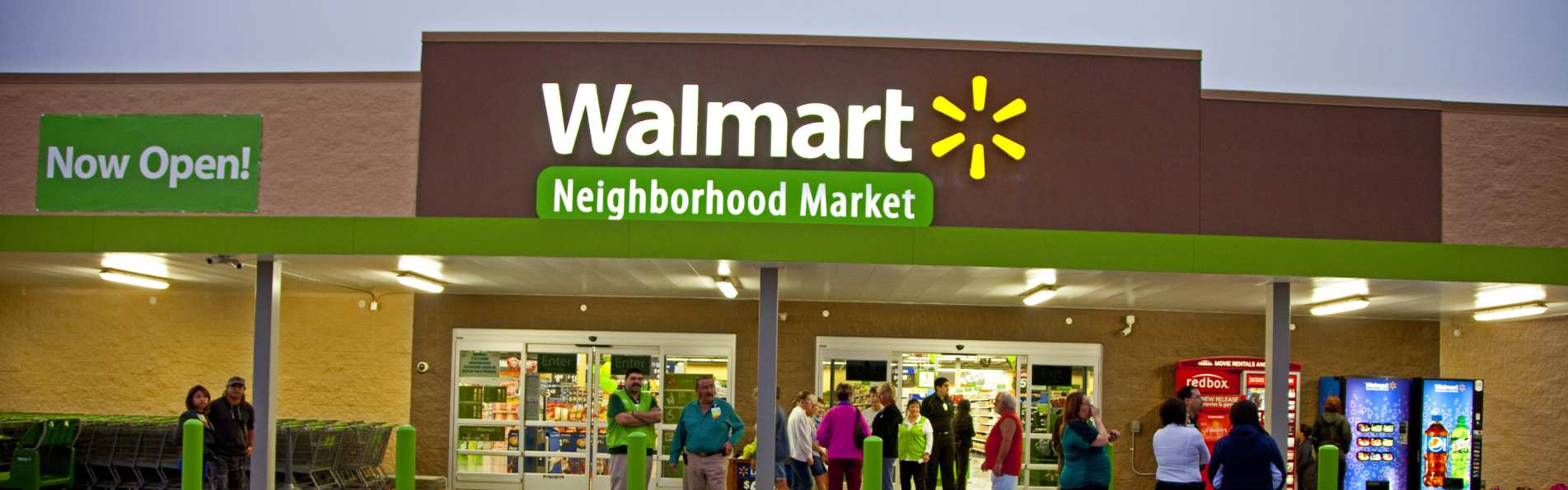
Image Source: corporate.walmart.com

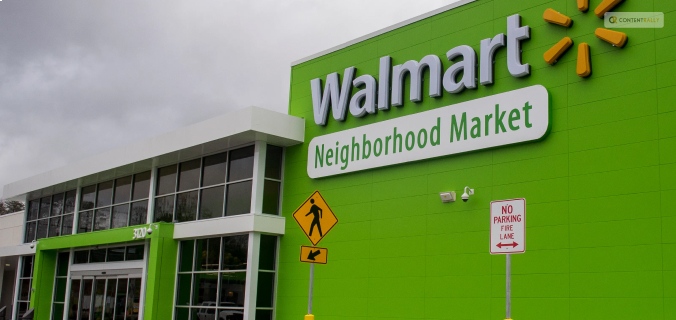
The multi-billion dollar convenient cum departmental store company Walmart launched its subsidiary the Walmart neighborhood market in the year 1998. They are reportedly about one-fifth the size of the regular Walmart Supercenters and are typically found in urban areas, in contrast to regular Walmart stores.

Walmart Neighborhood Markets give a choice to the individual customers who are in need of better assistance and service, local food ingredients, and better food choices. However, what makes them unique is the fact that they compete with Whole Foods Market and Trader Joe's for similar store concepts.

In case you are wondering what was the need to launch this section, let me tell you something. The Walmart Neighborhood Market opened to assist provide customers access to more affordable ingredients. The subsidiary is an endeavour to grow and adjust to the expanding demand for superior yet more affordable ingredients.

In simpler words, Walmart Neighborhood Markets are the smaller stores that provide to the customers goods that are related to household as well as pharmacy at a much cheaper price.

How Is The Walmart Neighborhood Market Different From Other Stores?  
How Is The Walmart Neighborhood Market Different From Other Stores?
Image Source: supermarketnews.com

You might be wondering how these are different from the ordinary and regular stores. If that is what you are searching for, then I have you covered.

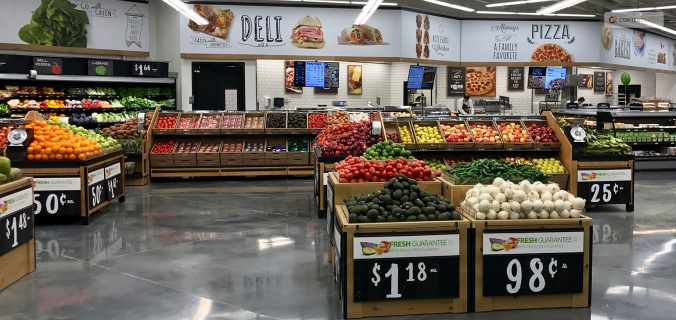
“The Markets are like mini Supercenters. The interior of some of the stores is very similar to Wal-Mart's big warehouses, with exposed ceiling beams, wide aisles and fluorescent lighting,” according to Business Insider.

The Walmart Neighborhood Markets have a distinct competitive advantage over virtually everyone because the stores offer the same low prices as the massive warehouse stores owned by Walmart, but they are located in much smaller and easier-to-reach locations.

These markets put focus on mainly three categories of items— pharmacy, fuel, and grocery.

With aisles that are devoted to wines and sections that provide the freshest produce to the users and the customers, the Markets serve everything at a rate that is similar to the stores like Trader Joe’s.

When talking about the difference, there is only one that makes the Walmart Neighborhood Markets different from other stores. And it is the fact that these stores are located in many urban and suburban localities.

Services At The Walmart Neighborhood Markets  
Services At The Walmart Neighborhood Markets
Image Source: i.insider.com

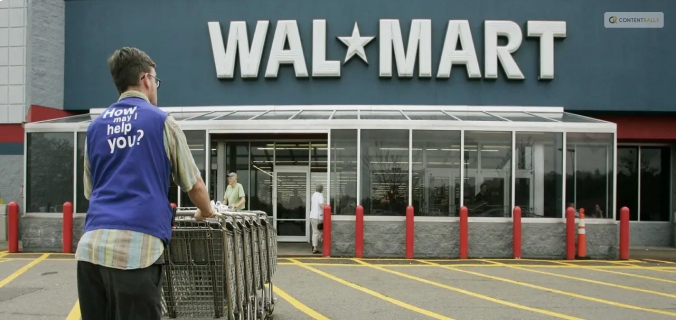
As I have already mentioned, the Walmart Neighborhood Market is an organization that utilizes a more modest impression, while as yet offering a drug store and family merchandise notwithstanding full-line staple.

Neighborhood Market stores are distinguished from the popular Supercenters by the format's distinctive exterior and interior finishes. And when it comes to the services that they provide to the customers, there are plenty of them.

Here is a list of the primary services or categories of products that they provide at the Neighborhood Markets:

  • Foods
  • Wine
  • Grocery
  • Pharmacy
  • Gasoline

Are They Closing Walmart Neighborhood Markets?  
Are They Closing Walmart Neighborhood Markets?
Image Source: gannett-cdn.com

In the United States, Walmart began closing hundreds of Supercenter and Neighborhood Market locations in the year 2016 alone. The company closed eight additional Neighborhood Market locations in 2019. This gave rise to a question, whether they are closing down the section of the Neighborhood Market or not.

With regards to Walmart Area Market, the organization has shared that the specialty store initially presented in 2015 hasn't proceeded as well as they'd trusted. The Walmart Neighborhood Market experiment appears to have not gone as planned, and Walmart is having difficulty determining what customers want.

And even though a number of stores were closed in the year 2022, as per reports by the Wall Street Journal, there is no way the Neighborhood Markets are getting closed!

Wrapping It Up!  

Walmart Neighborhood Markets give a choice to the individual customers who are in need of better assistance and service, local food ingredients, and better food choices. However, what makes them unique is the fact that they compete with Whole Foods Market and Trader Joe's for similar store concepts.

In case you were searching for information regarding the Walmart Neighborhood Market, I hope that this article has been of help to you. If there are any other queries and queries related to the same, please do not hesitate to let me know. All that you need to do is scroll down till you reach the bottom of the page. And then leave your suggestions and questions in the comment box below. If there are any other stores that you might want to know about, let me know as well. And I will be there to answer them all for you!

Read Also:
Ankita Tripathy loves to write about food and the Hallyu Wave in particular. During her free time, she enjoys looking at the sky or reading books while sipping a cup of hot coffee. Her favourite niches are food, music, lifestyle, travel, and Korean Pop music and drama.

View all posts

Leave a Reply

Your email address will not be published. Required fields are marked *

Related

businesses hiring

Top 5 Businesses Hiring Skip Bins For Their Use

Are you looking to promote a more efficient garbage collection system? Do you want to implement a more proactive waste management plan at work? The most efficient approach to deal with rubbish removal is to avail the skip bins rent services. However, if you are residing in Australia, then you must consider the skip bin businesses hiring companies such as Find Skip Bin.  All of the skip bin hires are easy to recruit and will save you time, effort, and money in the long run. It comes with a slew of benefits and will undoubtedly meet your needs. Hiring professional skin bins is counting as your best effort contributing to the environment. Save the environment and hire skip bins. 5 Types Of Industry Who Hired Skip Bins Here's a list of five industry companies that could profit from businesses hiring a professional skip bin. 1. Construction Companies: Construction is a busy industry, with most, if not all, materials being used upon each project. This contains cinder, gravel, sand, stone, and a variety of other construction materials. These materials cannot be utilized lightly in order to assure the stability of whatever is being created. Cutting shortcuts is a no-no for construction companies since they want to develop a structure that can resist practically anything. However, with the quantity of work being done, garbage accumulation is unavoidable. During the building and construction process, a lot of waste is generated. The skip bins businesses hiring is one approach to solve this problem. You can use skip bins to dispose of rubbish swiftly and efficiently if you have a fully developed waste removal system.  2. Industrial Businesses: Skip bins can also be beneficial to commercial businesses. Waste collection can be accomplished efficiently, especially in metropolitan areas. The rubbish collection should also be prioritized in order to ensure that garbage is properly disposed of and managed. Components and materials can be transported to different locations using skip bins.  Following this environmentally friendly strategy may even provide your company an edge and improve your reputation. This may even inspire other industries to follow suit! By prioritizing appropriate trash management, you have successfully expanded environmental awareness. 3. Mining Companies:  The mining industry has a divisive impact on the environment. The majority of these businesses harvest nonrenewable commodities, including uranium, gold, and oil. As a result, all reasonable actions must be taken to help reduce harmful environmental impacts.  This begins with a well-functioning waste removal system. The way businesses handle their trash influences whether they have a positive or negative impact on their surroundings. In the long run, the damaging effects will undoubtedly hurt the environment.  All of this can be avoided by using long-term waste management strategies. You can also prevent dumping hazardous chemicals and rubbish in the wrong places by hiring a trash bin service. You are truly reducing your carbon footprint and assisting in the reduction of negative environmental consequences in this manner.  4. Logging Companies:  Logging firms, like construction enterprises, can be challenging to keep running. With the amount of trash generated by the complicated processes, an efficient waste management system is required. Businesses hiring skip bins are simply transported trash from one location to another. They are simple to detach from vehicles when needed, and they're strong enough to do the job. 5. Homemakers: If you believe that skip bins businesses hiring are solely beneficial to large organizations, you are mistaken. This service is also available to homemakers. Skip bins can be used by home workers to rapidly dispose of any waste or trash that comes their way, even the fluorescent tube disposal too! Yes, right!  Skip bins are especially beneficial when your home is undergoing development or remodeling. Skip bins are useful in a variety of situations, including the bedroom, kitchen, and backyard. When attempting to lessen your lawn area or remove soil and gravel, having a skip bin on hand is really beneficial.  3 Top Uses Of Skip Bins: According to recent data, more than 4 billion tonnes of waste are generated annually around the world. The most efficient approach to dispose of unwanted trash or waste is to use a skip bin. Businesses hiring skip bins can be utilized in various settings, including residential, commercial, and industrial. 1.  Residential Sector:  You can save money and time by hiring a skip bin for your residential project. A skip bin can be used to dispose of any form of rubbish. A skip bin can be used to dispose of anything from old furnishings, white goods, sports equipment, camping gadgets and equipment, rugs, carpetings, all forms of construction supplies, and lawn wrecks. 2.  Industrial Sector:  As a Central Coast industrial operator, the need for quick, dependable, and efficient service is critical to keeping things going. Metals, cardboards, office paper trash, and other general rubbish and scratch are dumped in industrial premises. And when you have lots of employees in your factory, there is the chance of a lot of garbage and trash daily.  3.  Commercial Industry: Waste management is an essential component of the business for the commercial sector, such as building companies. For every commercial industry, time management is the real boss. Most of the commercial construction sites are moving. For keeping the site clean, everything from the building materials to electrical wiring, metals, and soils need to be removed quickly and efficiently. Conclusion: The businesses hiring professional skip bins move all the garbage and the debris to the correct location. For every industry, debris and trash are the biggest headaches. And now, as per the government’s strict policy, the environment’s safety and cleanliness are the priority. For keeping the environment clean, skin bins can help you. Read Also: Reduce, Reuse, Recycle: 3 Ways to Find Recycling Information in Perth Reasons to Support Nonprofit Organizations That Help Save the Environment Why You Must Embrace Green Home Technologies?

READ MOREDetails
Automation

Job Security In The Age Of Automation: What To Expect

Automation has been a source of concern for centuries. Starting from the 16th-century mechanization of stockings production to the 19th-century industrial revolution that led to the UK’s textile riots. From the late 20th-century automation of car manufacturing to the 21st century, worries that Artificial Intelligence will eventually take up our jobs. Job security is an issue that brings forth conflict among manual laborers, resulting from the automation of repetitive manual tasks. Automation has replaced many jobs over the years but has also given rise to other specializations in industries. Major manufacturers have employed robots to level with consumer demands. This is because they are efficient and fast in task completion. All the while playing a massive role in keeping these businesses highly competitive. To provide a clear understanding of the impact automation has had in industries, let’s dive deeper into the jobs’ technicalities. Automation By Job Type Robots execute blue-collar jobs faster and more efficiently than the human workforce, an effect that has highly optimized the production process. However, jobs requiring intuition and creativity, such as product design, and artistry require empathy, making them reserved for the human workforce. The human workforce also retains jobs that appreciate soft skills, such as effective communication, collaboration, leadership, and a problem-solving mindset. That being an overview of the automation effect, let’s dive deeper into factory-related jobs and how automation has affected them. Creative Jobs These jobs require a human eye and mind and combine procedural tasking with intuition in their execution. While proper product design does require a certain level of technical know-how, it also asks for a deeper understanding of why people like the look and feel of these products. In manufacturing industries, designing products may require a focus on the technical application of the product and cater to these matters. An API valve manufacturer, for example, may decide to automate the production of the product. However, to tailor for customers that care for factory aesthetics, they require a human understanding of the design process. Automation can play a role in tasks such as drawing, 3D printing, and data analysis. These artistic job descriptions probably have a higher sense of security than others. Technical Jobs Following product design is the manufacturing process involving technical activities such as assembling parts to come up with a wholesome product. A car manufacturing factory may implement robotic arms, each responsible for joining parts of a vehicle together, working with more efficiency and speed than a human. After putting together the product, there is a proper packaging requirement in preparation for shipping. A robot performs packaging tasks as they are repetitive and technical. The packaging process does not engage in human creativity; thus, automation is probably the better option for such work. However, in other industries such as food processing, products’ packaging may require customization. A process requiring making phone calls, listening to ideas, and making constant changes to the product’s packaging. We employ automation for the job’s technical and repetitive parts; however, to understand human needs, a human being is needed. Transportation of the products to the expected locations is the final process in manufacturing. We can automate the package addressing systems in preparation for transport. Soon, however, there is a possibility that autonomous vehicles will replace transport drivers. Currently, smaller package delivery companies employ drones in some parts of the world. Leadership And Collaborative Jobs Top managerial job descriptions have the least possibility of automation because they require effective coordination, communication, and decision-making. These professionals employ a combination of technical know-how, emotional intelligence, and in some, risk-taking– we cannot reach a balance through automation. Automation cannot replace these individuals, partially because they might resist losing their jobs since they decide which tasks to automate and which not to automate. The Solution To The Conflict The fear that automation will eventually take up all jobs exists. To keep the conversation healthy, positive, and practical, we need to educate the masses on what automation means. Including the types of jobs it can take over. The first step towards education is learning, learning fear, and learning communication strategies. Understanding communication techniques will ensure that proper education occurs. The second step is the actual training of professionals. This involves educating employees in preparation for the jobs they are to transition to during automation. However, it is essential to note that automating the training process might result in a larger conflict. Partially because we know that resolutions cannot be sufficient when executed by who causes the conflict. The third step is to ensure regular training occurs by providing relevant and up-to-date information and training materials. At first, individuals will be reluctant to change job descriptions, which we can resolve through the previously discussed process. Factory Jobs That Cannot Be Replaced Although automation has taken over many factory jobs, some still require human beings' special skills. Here are a few such jobs that machines can’t completely do for now. Quality Check Inspector Robots can be programmed to do certain things, but when it comes to catching a small defect or making sure that the product is of the quality you’re looking for, people are much better at it. A quality control inspector uses their experience, intuition and good old fashion “look closely” to make sure that every single product is perfect. A machine can see if there is clearly something wrong with a product but won’t catch everything. If you had automated inspections in place, and you were shipping out luxury products; and something goes wrong. This is where human intervention becomes important. Let’s say there was hardly a speck of dust on your pet hair remover (obviously checked by a robot). Then, suddenly, there was one review on Amazon where someone said they found one pet hair caught in it. You’d lose all your sales because everyone would assume that now your inspection isn’t working as well as humanly possible or you just don’t care about quality anymore. This is where you should always hire a human inspector. Maintenance Technicians Robots can’t fix themselves, at least not yet! Factory machinery requires regular maintenance to function at peak performance. Maintenance technicians are skilled professionals who ensure that machines run smoothly. When something breaks down, these technicians troubleshoot the problem, perform repairs, and get everything up and running again. Automation can monitor equipment. If you want to know what is wrong with it, often, you need to use human creativity and problem-solving skills, which require knowledge that only a human has. Until robots can physically fix something, if they determine a problem, humans will always be required. Health and Safety Officers It is the most important job to ensure that employees are safe in factories. A person could develop an allergy or get their hand crushed by a machine. The fact that machines of such high risk can be worked on by robots does not mean human judgment about the needs of other humans will disappear. Custom Design And Prototyping Repetitive tasks can be automated, but human creativity is necessary for custom design and prototyping. Factories producing one-off products or prototypes on a small scale will require workers who can conceptualize and modify designs manually. This is to produce the desired result each time. As automation advances it becomes apparent that there are some jobs for which relying on human creativity, problem solving, or emotional intelligence is necessary. Therefore, as machines replace the mundane, humans will remain an integral part of factory life. Should You Be Worried? Automation and job security have been and will always conflict. However, a balance is struck each time it has happened. We currently live in a world with fear of automation from watching various films, such as The Terminator, the Transformers, and others. Some still expect to see a world like that in the movies. The reality is that we use robots to perform repetitive tasks that we have complained about for ages. Do not be fearful; instead, educate yourselves on automation. Do this with a keen eye on the jobs that seem impossible to automate. All the best. Read Also: 3 Encryption Trends and How They Make Communication More Secure Why Sensors are Essential in Machine Automation Seven Great Reasons to Use a Car Transportation Company

READ MOREDetails
Virtual Assistant

How a Virtual Assistant Is Beneficial to Businesses

Are you trying to scale your business, but don’t have the proper help? Or on the flip side, are you scaling too quickly without the proper infrastructure in place? Adding a virtual assistant to your team can be a better answer to your scaling issues by taking administrative tasks off your plate, saving on operational costs, and much more. Let’s take a deeper look at how virtual assistants are beneficial to businesses. Remove Yourself From Admin Tasks While administrative tasks are crucial and inevitable in your business, they can also easily be taken over by a qualified virtual assistant. As a business owner or department manager, your time should be spent on the most important aspects of the business. Allowing a VA to take over mundane, repetitive tasks will let you focus on scaling your business, building up your marketing efforts, improving processes, and maintaining quality output. Virtual assistants can take over tasks like scheduling meetings, data entry, bookkeeping, customer service, and monitoring your email inbox. Save on Operational Costs Hiring a virtual assistant means you won’t have to worry about providing equipment or finding available office space for them, which saves on your operational costs. VAs also only get paid when they are working on an assigned task, which means you can hire one on a part-time basis or a few times a week — whichever you think is necessary for your business. Hiring a virtual assistant will also save you money because you won’t have to pay an employee a full-time salary, which includes all the benefits that come with that position, like additional taxes, PTO, benefits, and severance pay. Increased Scalability Adding a virtual assistant to your team of experts allows you to scale your operations with fewer potential risks. Rather than hiring full-time employees, you can hire virtual assistants to test out the processes you built out after removing yourself from the day-to-day tasks. Having a new set of eyes on your operations and processes will help you refine them and note where issues occur. While you might think you have things running smoothly, a virtual assistant can help spot inefficiencies. By using a virtual assistant to increase scalability, you can manage your volume of output based on demand. Then, the money you save on hiring employees can be reinvested into your business. Adding Skilled Professionals Adding a virtual assistant to your staff also means you can choose to hire someone with a unique specialization that your company lacks. For instance, virtual assistants commonly have specialized skills in the areas of customer service, tech, lead generation, marketing, and administration. You have the freedom to hire someone based on the skills you want in your assistant. Hiring someone who is specialized in the right field allows you to rest easy knowing that whatever task you give them will be handled without error — or at least, very limited errors. You can also teach your virtual assistant the skills they need to accomplish their task, as they are usually fast learners who are used to jumping right into an organization. How To Train A Virtual Assistant Better! Since you won’t be able to train them on location (because most of them will be working remotely)  Training a virtual assistant (VA) can be tricky, especially since they’re not right there in your office.   But with the right approach, you can still get them up to speed and make sure they’re on point with what your business needs. Here’s how you can do it:  Set Clear Expectations  First, it’s important to communicate what you want clearly. Ensure that you outline the tasks you need your VA to handle, the standards you expect, and any specific workflows they should follow.   Start with giving them a detailed job description and a list of tools or software they’ll need to use. This way, they’ll have a better understanding of their role, and it reduces the chances of things getting lost in translation.  Provide Comprehensive Training Resources  To make sure your VA can handle their responsibilities, you should offer them some solid training resources.   This could be things like video tutorials, written guides, or maybe even access to online courses that are relevant to what they’ll be doing.   Screen recording software can be super helpful here. For starters, it lets you create step-by-step guides that show them exactly how your processes work.   Trust me, this visual approach is a lifesaver, especially for more complicated stuff.  Use Project Management Tools  The pandemic did give us a plethora of project management tools. So, why not take advantage of these tools, to organize the tasks better.  Project management tools like Asana, Trello, or Monday.com are great for keeping track of what your VA is up to.   They let you assign tasks, set deadlines, and check in on progress to make sure everything’s moving along as it should.   Plus, they give you a place to communicate, where you can leave feedback or ask for updates whenever you need them.  Regular Check-Ins  Having regular check-ins with your VA is key to keeping everything running smoothly. Set up weekly or bi-weekly meetings to go over what they’ve done, talk through any issues, and give feedback.   These meetings also give you a chance to tweak their workload or responsibilities if needed.  Hire Your Virtual Assistant Today Ultimately, hiring a virtual assistant will make your life easier while growing your business. You can bring on new talent to save on operating costs, increase your team’s knowledge base and skillset, and remove yourself from mundane day-to-day tasks. Hiring a virtual assistant will allow you to focus on improving your process so you can quickly scale your business. Read Also: Alexa Voice Assistant: Why It Succeeds Where Others Fall Balancing the Books with Outsourcing – Virtual Receptionists

READ MOREDetails