












Choosing The Best Lifting Gantry For Your Factory Needs

by

20 November 2021

Business

Lifting Gantry

If you are working in a factory or the construction business, having the proper equipment is key to the efficiency of the business and the safety of your employees. Not only will having the right lifting equipment help you with the speed of your daily tasks, but it will help keep yourself and your workers safe.

Just think about it – if you are taking your workers lifting heavy objects repeatedly, there is a higher chance of injury to their muscles, repetitive joint injuries, accident possibilities, and physical stress.

Not to mention, some loads are just too heavy for workers to carry and lift off of the ground – if you find that you are having trouble completing your daily tasks in a factory due to the inability to lift heavy items, then you might find it beneficial to use a lifting gantry.

But how can you choose the best lifting gantry for factories? What is the best lifting gantry to lift heavy objects from your factory? By understanding the different types of lifting gantries, how you can choose the best one, and the different characteristics of lifting gantries, you can choose the top option for your factory.

Let’s see more information about what a lifting gantry is, why you need one, and how to choose!

Need help with your factory? Use a lifting gantry to lift heavy objects!

Need help with your factory? Use a lifting gantry to lift heavy objects!

If you are new to the factory or construction world, then finding out how to choose the best lifting gantry is key to being able to safely and effectively complete your daily factory tasks.

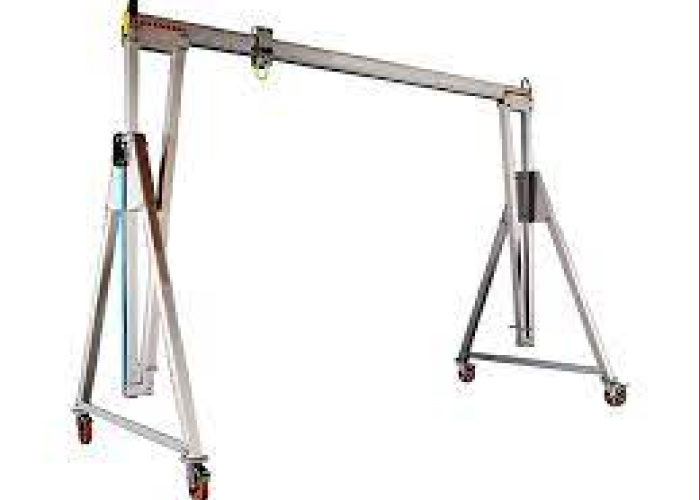
Portable lifting gantry (adjustable) –

If you need to move the lifting gantry between various spots in your factory, using an adjustable lifting gantry is an absolute must!

If you are using your portable lifting gantry in a workshop, factory, or business and you frequently need to lift heavy objects in multiple places, then using the adjustable lifting gantry is a must. Use the adjustable lifting gantry to change the height so you can accommodate various shapes and weights of objects!

Adjustable lifting gantry with a thicker beam –

If you are looking to lift heavier objects and need a less portable lifting gantry, using one that has a thicker middle beam is a must to lift weights that are between 120kg and 175kg. Using the stronger aluminum lifting gantry is the best way that you can avoid using multiple workers in your business to lift excessively heavy objects.

External trolley –

Another way that you can choose the lifting gantry for your needs is to be able to accessorize and customize the gantry. For some factories, you might need to use an external trolley to work in tandem with your aluminum lifting gantry to add extra versatility, movability, and transportability.

Parking jacks –

Another accessory that you can use with your lifting gantry is parking jacks – these stabilizers are ideal for helping keep your loads steady and avoid any mishaps.

Bigger gantry cranes
Bigger gantry cranes

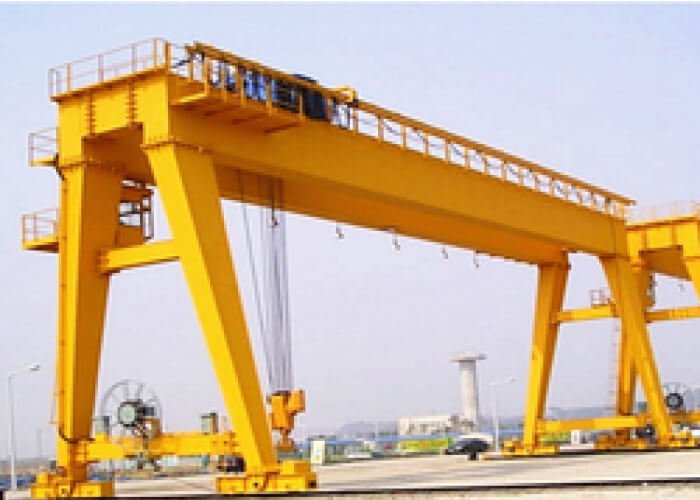
Another option you can consider using for your factory is a bigger gantry crane. Although these are typically used in a shipyard and outdoor spaces, if you have a big factory you can use the oversized gantry cranes to lift heavy and unwieldy objects, like big shipping containers and multi-ton objects.

Full gantry crane –

If you need to use a gantry crane to lift extremely heavy objects, consider using a full gantry crane to lift ships, big pieces of equipment, and heavy objects that cannot be moved with portable lifting gantries. Some of the biggest gantry cranes are as long as 140 meters!

Rubber tired gantry crane –

Smaller gantry cranes are another option for smaller factories that still need to lift heavy objects in outdoor spaces, such as containers and big pieces of equipment. Typically, you’ll find that small rubber tire gantry cranes are straddle cranes that can effectively lift containers with ease.

Portable gantry crane –

As we mentioned before, portable gantry cranes are usually the best idea for those who are running factories. These portable gantry cranes are used to move small items that are usually less than 10 tons in weight.

Used frequently in the construction and machinery businesses, you will find that using a portable gantry crane is the best way that you can lift heavy objects with the added versatility of being portable and customizable

Benefits of lifting gantry

So why should you use a lifting gantry crane for your business? There are many reasons why it will help your effectiveness, flexibility, and safety in the workplace.

Mobility –

Lifting gantries are more movable and contain more flexibility than other options. Instead of being stuck in one place where you cannot move the loads, or being tied down in one location, the flexible moving gantry lets you wheel the apparatus around your factory. This way, you can lift various objects between locations without having to worry about the safety of your workers or other equipment

Capacity

The majority of mobile lifting gantries are very sturdy and durable. Typically, you will find that the lifting gantry options that are used for factories can lift up to 5 tons with ease. If you need stronger lifting gantries for your factory, consider using a full gantry crane for your outdoor spaces.

Custom height and accessories –

The last reason that you should consider using a lifting gantry for your factory is that you can customize the height of the gantry to work with various shapes of boats that you are lifting. Not to mention, you can add accessories to make your lifting gantry more versatile, easier to maneuver, and more stable.

Conclusion

Are you working in the faucet or construction industry? If so, using a construction lifting gantry crane is ideal to be able to lift heavy loads, keep your workers safe, and increase the flexibility of your workplace. By having portable lifting gantries, you can lift heavy objects between locations in your factory without worrying about the safety and health of your employees – not to mention, you will increase the efficiency and productivity of your workplace!

Read Also:

Content Rally wrapped around an online publication where you can publish your own intellectuals. It is a publishing platform designed to make great stories by content creators. This is your era, your place to be online. So come forward share your views, thoughts and ideas via Content Rally.

View all posts

Leave a Reply

Your email address will not be published. Required fields are marked *

Related

Optimizing Storage In A Warehouse

Optimizing Storage In A Warehouse

Welcome, warehouse wizards and storage enthusiasts, to a world where storage solutions become extraordinary! Prepare to embark on a thrilling journey as we unveil the secrets to transforming your warehouse into a space of efficiency, organization, and, dare we say, a touch of magic. Imagine a realm where every inch of your storage space is optimized to its fullest potential, where inventory is easily accessible with a mere flick of a wand (or swipe of a finger), and where productivity soars to spellbinding levels. In this blog post, we will delve into innovative techniques, cutting-edge technologies, and practical strategies you manage and optimize storage in your warehouse. So gather your wands of ingenuity, don your capes of efficiency, and get ready to unlock the secrets to maximizing space utilization and streamlining warehouse operations! The Importance Of Optimizing Storage In A Warehouse Efficient storage management is not just a matter of convenience; it plays a crucial role in the success of any warehouse operation. The optimization of storage space holds numerous benefits, including: Maximizing space utilization: Warehouses often face the challenge of limited space. By optimizing storage, you can make the most of the available space, allowing for increased storage capacity without the need for expansion. Utilizing every square foot effectively ensures that inventory can be stored and accessed efficiently, minimizing wasted space and reducing the risk of overcrowding. Streamlining inventory management: Efficient storage systems enable better organization and categorization of inventory. With optimized storage, items are logically arranged, labeled, and easily accessible, facilitating streamlined inventory management processes. This reduces the time spent searching for items, eliminates errors in picking and packing, and improves order fulfillment speed and accuracy. Enhancing workflow efficiency: An optimized storage layout enables smooth workflow patterns within the warehouse. By strategically placing items closer to high-traffic areas or frequently accessed zones, you can minimize travel time, reduce congestion, and increase overall operational efficiency. This translates to improved productivity, faster order processing, and enhanced customer satisfaction. Preventing damage and loss: Proper storage optimization includes considerations for the safe and secure handling of inventory. By utilizing appropriate storage solutions such as racks, shelves, or automated systems, you can prevent damage caused by improper stacking, mishandling, or environmental factors. This reduces the risk of product loss, minimizes inventory shrinkage, and protects the overall value of stored goods. Cost savings: By optimizing space utilization, you can avoid unnecessary expenses associated with expanding or relocating to larger facilities. Additionally, streamlined inventory management reduces the risk of overstocking or understocking, optimizing stock levels and minimizing holding costs. Lastly, improved workflow efficiency enhances labor productivity, reducing labor costs over time. Safety and compliance: An optimized storage system promotes a safer working environment by reducing clutter, eliminating obstacles, and ensuring compliance with safety regulations. By implementing proper storage techniques and utilizing safety features such as guardrails, signage, and designated walkways, you can mitigate the risk of accidents, injuries, and potential liability issues. Top 3 Ways To Optimize Storage In Your Warehouse Now that we understand the importance of optimizing storage in a warehouse, it's time to unveil the top three strategies that will help you unlock the full potential of your storage space. These strategies will guide you toward achieving maximum efficiency, organization, and productivity. 1. Efficient Space Planning Efficient space planning is a fundamental step toward optimizing storage in your warehouse. By carefully analyzing and organizing your available space, you can make the most of every square foot, effectively utilizing the area to its maximum potential. Here are some vital considerations for efficient space planning: Evaluate layout: Start by assessing your warehouse layout and identifying areas where space is underutilized or inefficiently used. Look for opportunities to rearrange shelving, racks, and workstations to create a more streamlined and accessible flow. Categorize inventory: Classify your inventory based on the frequency of use, size, weight, and other relevant factors. This allows you to allocate appropriate storage space based on the specific needs of each item. Consider implementing an inventory management system to aid in categorization and tracking. Optimize aisles: Optimal aisle width is crucial for efficient movement within the warehouse. Strive for a balance between aisle space and storage capacity. Narrower aisles can maximize storage density, while wider aisles facilitate ease of navigation and equipment maneuverability. Implement clear signage: Clear and visible signage plays a vital role in efficient space planning. Labeling storage areas, shelves, and sections helps employees locate items quickly, reducing time spent searching and minimizing errors. 2. Utilizing Vertical Storage Solutions One of the most effective ways to optimize storage in your warehouse is by harnessing the power of vertical space. Vertical storage solutions make efficient use of the height of your facility, allowing you to store more items without expanding your floor area. Here are key strategies for utilizing vertical storage: Vertical racking systems: Install vertical racking systems, such as pallet racking or cantilever racks, to stack items vertically. These systems provide sturdy support and can accommodate various types of inventory, optimizing space utilization. Mezzanine floors: Mezzanine floors effectively double your storage space by utilizing vertical height. They are ideal for storing smaller or lighter items. Vertical lift modules (VLMs): These compact units consist of vertically arranged trays that store and retrieve items with the push of a button. VLMs are particularly useful for storing small to medium-sized items and optimizing picking and retrieval processes. Carousel systems: Carousel systems, also known as vertical carousels or lift modules, consist of rotating shelves or trays that bring items directly to the operator. These systems minimize travel time, increase picking efficiency, and maximize storage capacity in a compact footprint. Automated storage and retrieval systems (AS/RS): AS/RS solutions combine advanced technology and automation to optimize vertical storage. These systems use robotic cranes or shuttles to retrieve and store items, maximizing storage density and streamlining operations. Modula Inc. revolutionizes inventory management with its vertical storage solutions. Their efficient products, like the Modula Vertical Lift Module (VLM), optimize space in warehouses worldwide. Contact them for tailored storage solutions and expert guidance. 3. Implementing Inventory Management Systems Implementing an inventory management system is a crucial step in optimizing storage and streamlining warehouse operations. These systems provide real-time visibility into inventory levels, locations, and movement, enabling better control and efficient utilization of storage space. Here's how implementing an inventory management system can enhance storage optimization: Centralized inventory tracking: An inventory management system allows you to centralize inventory tracking, providing a comprehensive view of your stock levels across various locations. You can easily monitor inventory movement, identify slow-moving or obsolete items, and make data-driven decisions to optimize storage allocation. Demand forecasting and planning: Advanced inventory management systems often include demand forecasting capabilities. By analyzing historical data, sales trends, and market insights, these systems can help you forecast future demand accurately. This enables proactive inventory planning and optimization, reducing excess stock and ensuring adequate storage space for high-demand items. FIFO and lot control: For businesses handling perishable or time-sensitive goods, implementing inventory management systems that support First-In, First-Out (FIFO), and lot control is essential. These features ensure proper rotation of inventory, minimize waste, and prevent expired or obsolete items from occupying valuable storage space. Real-time alerts and notifications: Inventory management systems can send real-time alerts and notifications when inventory levels reach predefined thresholds. This ensures timely replenishment and prevents stockouts or overstock situations, optimizing storage space by maintaining optimal inventory levels. Barcode or RFID integration: Integrating barcode or RFID technology with your inventory management system enables seamless tracking and accurate identification of items. This streamlines picking, receiving, and inventory reconciliation processes, reducing errors and improving overall efficiency. Final Thoughts Optimizing storage in your warehouse is not just a mundane task but a transformative journey that can have a significant impact on your overall business success. It requires strategic planning, efficient use of space, and implementation of advanced systems. By embracing warehouse optimization, you can maximize storage capacity, streamline operations, and improve overall efficiency. So, don't wait any longer—start implementing these strategies today to transform your warehouse into a well-organized and highly productive space! Read Also: How To Get Product Ideas For Your Ecommerce Business Tips To Choose The Best Inventory Management Software 6 Things To Consider Before Choosing Web Hosting For Your Ecommerce Website

READ MOREDetails
Financial Health

Ways To Improve Your Business’s Financial Health

Improving your business's financial health is essential to a successful enterprise. In today's increasingly competitive environment, companies of all sizes must take steps to ensure their long-term success and profitability. This article will provide advice on how you can assess the financial health of your business and tips on what actions you can take to improve it. Ways To Improve Your Business’s Financial Health As mentioned above, maintaining a business's financial health is crucial to the business. There are instances when the stakeholders need help understanding the ultimate objective of the business. Consequently, the business may fail. Therefore, as an entrepreneur, you need to understand the situation thoroughly.  This section discusses some of the ways through which you can assess the financial situation of your business.  Assessing Your Business's Financial Situation Take note of cash flow, assets, liabilities, profits, and losses. Your efforts to improve the financial health of your business may falter.  Analyze any trends in these areas over time—what has been working? What could be improved? Make sure to factor in changes due to inflation or economic conditions. Therefore you must take the help of experts who can deliver your needs. They are professionals and can carry out audits to ensure you better understand the business, and that too with utmost clarity. Analyzing Your Current Profit And Loss Analyzing your current profit and loss is critical to understanding the financial health of your business. Start by gathering all of the relevant data from last year's performance--income, expenses, net income, etc.--and analyzing it thoroughly. Calculate ratios such as return on assets (ROA) or profitability index (PI). Compare historical trends in these measures to understand how your business has performed over time and where you can improve. Look for areas that are performing well as well as those needing attention and come up with strategies to improve them. Discuss the elements with the leader of your team. At the same time, make sure that you calk out the plans together to get better results on your investment. Therefore what you need is to have a thorough discussion on your project outcomes. Strategize your business based on the outcomes and can help you find solutions to your problems. Evaluating Your Cash Flow Good cash flow management is essential for business success. It’s important to understand where your money comes from, how much you have, and when it leaves the company. An effective way of evaluating your cash flow is by creating a financial forecast that accurately predicts income and expenses at different points throughout the year. If you have a strong knowledge of the cash flow in your business, you can have a better evaluation. It can help you identify your needs. It is indeed one of the approaches to understanding the health of your business. Additionally, tracking your invoices and payments closely can be beneficial as it allows you to spot any potential problems with customers who may not be paying on time or at all. Optimizing Your Expenses Optimizing your expenses is an essential step in improving the financial health of your business. It's critical to review and evaluate all expenditures, as well as identify any areas where money can be saved without sacrificing the quality of goods or services. One of the best ways to identify your expense is by utilizing an enterprise spend management system. Also, looking closely at your spending on labor, materials, overhead, taxes, and other business costs can help you reduce unnecessary spending. Additionally, some practices that may help improve efficiency include negotiating with vendors for lower prices, creating budgets and sticking to them, tracking expenses regularly, and automating processes whenever possible Take the assistance of the experts in finance to understand what you need to have at this point in time. It can help you successfully manage your expenses. Hence what you need is to form an understanding of the finances that you need. Finally, plan on the optimization.  Utilizing Tax Strategies To Your Advantage Taxes can be a significant burden for businesses, but there are ways to leverage tax strategies to your advantage. By taking the time to understand how taxes apply to your company you could qualify for, you can reduce how much of your hard-earned money goes toward paying taxes. Additionally, staying on top of changing rules and regulations helps ensure you're always compliant with applicable laws and taking full advantage of all available tax benefits. Generating New Sources Of Revenue Creating new revenue streams can be a great way to improve your business’s financial health. Finding creative ways to generate income and reduce costs is essential for long-term success. Increasing sales or finding more cost-effective suppliers are two significant areas to consider when increasing profitability. Additionally, creating partnerships with other businesses in the industry may open up opportunities that would not have been available before. With careful planning and implementation of strategies, it's possible to create sustainable sources of income which will keep your business afloat during difficult times. Reducing Debt Reducing debt is a crucial part of improving the financial health of any business. To do this, you should prioritize paying down high-interest debts first while making regular payments on lower-interest loans. You should then focus on developing a budget and sticking to it to ensure that your business does not take out more debt than necessary. It's also essential to shop for lenders who can provide better terms or rates if you buy new loan products. Finally, creating a plan to save money and create additional revenue streams will help improve your bottom line and stabilize your finances. Conclusion To wrap up, it's essential to take a holistic approach to improving your business's financial health. You should evaluate your current profit and loss statement because these steps will help you ensure that you take the necessary measures to improve your company’s financial standing. With proper planning and dedication, you can make sure that your business remains as financially healthy as possible in the future. Read Also: What Are The Most Important Insights Which the People Should Know About Coronavirus Health Insurance? 7 Wise Financial Choices That Will Help You Follow Your Budget How to Become Financially Stable Before Age 30

READ MOREDetails
Background Check

What Do Employers Look For In A Background Check?

Background checks have a significant impact on the job search process. These checks are used by employers to establish a secure and reliable work environment rather than to spy. It's not a spy; it's a shield. This piece delves further into the what, why, and how of these checks, elucidating their place in recruiting. Think of it as the employer's safety goggles, ensuring they hire people ready to learn. Here, the goal is to shed light on the procedure rather than to lower morale. Now, let's take a leisurely stroll through the realm of background checks, revealing the meticulous procedures that companies apply to cultivate a workplace based on dependability and trust. Legal Considerations Employers negotiate a legal minefield regarding background checks to guarantee a complete and equitable screening procedure. Complying with federal and state standards and comprehending the legal structure guiding background checks are crucial factors. Accès Identité, specializing in background checks, investigations, and pardon petitions, is a significant player in this scene. They have an exclusive license from the RCMP to transmit fingerprints, demonstrating their reputation for excellence. This Private Investigative Security Bureau-licensed organization upholds the highest standards of operation. It places a great value on confidentiality while catering to a wide range of consumers. Basic Personal Data Basic personal data is the next item on the list. They are verifying that you are who you claim to be. This is when your Social Security Number (SSN), which functions as your professional ID, comes into play. In addition, they verify your name, address, and contact method. Easy enough, huh? It resembles a handshake of trust. Nothing to hide; just checking to make sure everything lines up. So, don't worry when that background check shows up; it's just a pleasant conversation to ensure you and your information agree. Criminal History Reviewing a person's criminal background is the next item on the schedule. Companies try to find any prior convictions that could hurt the company's harmony. Felons and misdemeanors are examined carefully since the seriousness of the offense can affect the assessment procedure. Painting a clear image and comprehending a person's past context are key. Work Experience As one proceeds through the checklist, employment history comes in first. Employers go above and beyond simply confirming the information on a well-formatted resume; they also take the time to confirm that a candidate's employment history and dates are accurate. The past talks loudly, and reaching out to former employers is like opening a time capsule—you can see performance reviews and references that have the power to influence the hiring decision. Educational Background The educational background is the next place this research voyage will stop. Companies work hard to verify that the academic honors proudly displayed on a resume are real. Was that degree truly earned by the candidate? Did they go to the schools they said they did? Seeking the facts to ensure the educational foundations are as strong as they appear. Credit Record Evaluating a person's credit history is an unexpected but crucial aspect of the background investigation. Employers use credit checks to determine financial responsibility outside money and cents. It is considered how this relates to the employment position, keeping in mind that financial reliability can be crucial in some professional settings. Social Media Screening Social media is becoming a digital stage for examination in the age of digital footprints. Companies search publicly accessible data for insights that cut through the formality. However, this isn't unrestricted; moral issues and legal constraints raise questions about the extent of this social media exploration. Professional Licensing Official endorsements are frequently necessary for professional excellence, and employers confirm the legitimacy of professional licenses pertinent to the position. It goes beyond a person's formal credentials to ensure they meet industry norms and the legal requirements for their line of work. Verification of References Like ghosts of the past, references tell a story written by people who have collaborated closely with the candidate. Employers contact these references to have comprehensive knowledge. However, here is where a nuanced dance between professionalism and secrecy occurs when character traits and work habits are revealed. Conclusion Employers set out on this complex path to make educated decisions rather than to act as detectives. In summary, they seek a balanced online presence on social media, legitimate professional recommendations, truthful character references, honesty in job and school claims, and an accurate criminal background. They are also looking for fiscal discipline in credit histories. A comprehensive and impartial evaluation procedure is more important than simple dissection in this complex inspection dance. Employers maneuver through this environment, knowing that every jigsaw piece adds to an individual's professional identity. Finding the ideal fit for an elaborate workplace mosaic is more important than looking for defects. So, it's more than just putting up a polished front when people go on their career search journey. It's about accepting honesty, appreciating the layers, and realizing there's a tale waiting to be revealed behind each application checkmark.  Read Also: Commonly Misunderstood Facts About The Employee Retention Tax Credit Only the Best for Your Business: Check These Hiring Strategies What Are the Ways to Prepare a New Employee?

READ MOREDetails