Building Your Conceptual Skills – A Guide for Career Growth

Published on: 09 September 2024 Last Updated on: 03 February 2026
inner-img

“The ability to work with abstract ideas & concepts-” or, how Americal social psychologist Robert Katz would describe conceptual skills.

In fact, he said it was one of the basic skills which every manager should have!

Interestingly when psychologists test an individual’s aptitude of whether they will be a good leader, conceptual skills are one of the top meters of measurement.

Now, what are conceptual skills?

Is it just some abstract word? Or is there a scientific definition of this soft skill required from their employees by corporations nowadays?

Most importantly!

Can you hone your conceptual skills as an adult again?

Without any further ado let’s discuss the improvement areas required to build a conceptual skill, and the different means by which you can improve it.

What are Conceptual Skills?

What are Conceptual Skills_

Everyone can decipher something simple and covert, but it takes special skills to understand the deeper meaning behind abstract issues.

Most importantly, if these abstract matters pose a challenge and will require impromptu solving.

conceptual skill is about leaping beyond the daily mundane activity or being short-sighted. It is about seeing and articulating the bigger picture so that others sense it too.

For example, if you are working on a particular Search Engine Optimization strategy for your new website, you cannot ask for quick results.

You will require a long-term vision to see what can happen if you continue with the formula for at least a month or two. 

This skill also requires a fair amount of research and dissection knowledge, seeing beyond the written words and literally deciphering the concept within.

People with good conceptual skills are often good at sales, market prediction, consumer/customer psychology, and chess (during their off time).

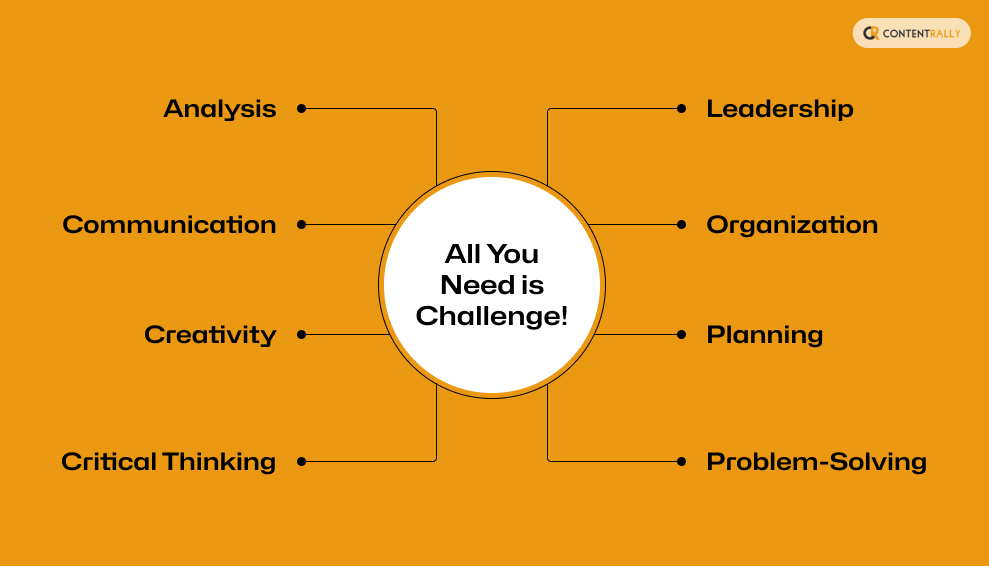
Conceptual skill is not a vague word but rather a compilation of eight examples of conceptual skills that you should always be working on.

  • Analysis (there is a difference between seeing & observing what you see thoroughly).
  • Communication (the ability to articulate in understandable words what you observe).
  • Creativity (the ability to observe something with a unique imagination as opposed to everyone else).
  • Critical Thinking (trying to understand what the view is not showing at first glance).
  • Leadership (the ability to show the same to others and help them on that path).
  • Organization (this is not just organizing tangible items but organizing one’s own thoughts & understandings).
  • Planning (Only observation & comprehension is not enough. Enough planning skill is required for proper implementation)
  • Problem Solving (the ability to execute resilience in the face of challenges).

Building Steller Conceptual Skills

Building Steller Conceptual Skills

Do not worry, when I saw everything, I needed to do to build conceptually skillfully, I was also overwhelmed.

Where to start & where to finish?

Most importantly, do I tackle it all at once? Or do I go about it one by one?

To begin with, when you are learning a new skill, you only tackle it in a timely manner. If you try to do everything at once, you do nothing properly. So, it is always better to learn one skill at a time.

However, these are soft skills. How can I learn them like I am learning from a college lesson?

This is also another valid question, do not worry, there are mindful activities, and daily challenges you can pursue to learn these better.

How to Learn Conceptual Skills Better

How to Learn Conceptual Skills Better

Here is a step-by-step guide to begin learning your conceptual skills.

Remember, these skills take time to learn! 

It is not a matter of six months or a year, but a lifetime journey. 

However, there are means in which you can check your progress. One of the biggest ones would be how your lifestyle & work personality changes from the time you begin learning this skill.

Step 1: Know Your Strengths & Weaknesses

Never start with an unknown skill; rather, begin with something that you are already aware of.

A good way to start is by doing a SWOT analysis of yourself.

Begin with marking the things you are good at (among the eight criteria given above), and the ones you need to work on.

If you are hypersensitive & can get easily overwhelmed, then begin with perfecting your strengths rather than concentrating on your weaknesses.

For example, I am anxious, so I began by polishing my creativity skills, which I was already good at. This gave me the motivation to tackle my weaknesses next.

However, if you are a motivated person , begin with targeting your weaknesses. Especially if this is all for interview prep.

Step 2: Do Something Everything

If you have been on a learning journey for quite some time, you must have heard these words of wisdom –

“Consistency is better than striving for perfection.”

Therefore, whenever you of building any skill, the first task is to ensure you do something every day.

Yes, there will be days when you will need more optimal motivation to sit with your skill-building activity. But, if you’re incorporating the activities into your daily routine, you should be able to see changes in time.

Step 3: Real Life Execution

A learned skill is useless if you cannot execute the same. Unfortunately, no one is going to stand with a placard shouting –

“This is your moment.”

Whether it is a situation at home or a conflict in the office, you will have to step out of your comfort zone and step into the challenge.

No, it won’t be easy, but rather a mindful decision you take every day. Before you feel overwhelmed with the idea of stepping in and solving a situation you are not called for, remember –

Everyone feels insecure about their professional skills at some level (no matter the years of experience). 

You could work in the same industry for decades and still face something new. Learning has no end, so find your opportunities in everyday instances.

Conceptual Skills – How to Improve it

Conceptual Skills – How to Improve it

We have already discussed conceptual skills. Now, let’s understand how to improve these conceptual skills.

All You Need is Challenge!
All You Need is Challenge!

Achieving professional success is more than just meeting deadlines or ticking boxes. It’s about mastering the right skills & focusing on conceptual management skills that give you an edge. 

Let’s break down eight essential skills you should focus on—and a weekly challenge of self-intervention for each to help you improve.

Analysis

The difference between seeing and truly observing lies in depth. Analyzing is all about dissecting what you see and finding hidden patterns.

Challenge: Pick one topic or event daily and write a quick summary. Then, dig deeper—what did you notice beyond the obvious?

Communication

It’s not just about speaking or writing; it’s about making your thoughts clear to others. Effective communication bridges the gap between observation and understanding.

Challenge: Practice summarizing complex ideas in simple terms. Try explaining a work concept to a friend with no background in your field.

Creativity

Creativity isn’t just about thinking differently—it’s about connecting the dots in unique ways others might miss.

Challenge: Choose a random object daily and brainstorm five unconventional uses. Push your imagination!

Critical Thinking

Sometimes, what’s not immediately visible holds the key. Critical thinking pushes you to question the obvious and explore hidden layers.

Challenge: Read a news article or watch a documentary. Then, list three assumptions it makes and challenge them.

Leadership

Leadership isn’t just about guiding others; it’s about showing them a clearer path by sharing your unique insights.

Challenge: Each week, identify a workplace situation where you can take initiative. For example, you could guide a colleague through a process or host a quick knowledge-sharing session.

Organization

Beyond tidying up your desk, organizing involves structuring thoughts and ideas efficiently.

Challenge: At the end of each day, spend 10 minutes categorizing your tasks, ideas, and notes. Organize them into clear categories for better clarity.

Planning

Good ideas need solid plans to come to life. Proper planning bridges the gap between ideas and successful execution.

Challenge: Pick a small project this week (e.g., organizing a team lunch or personal task). Break it into detailed steps and set mini-deadlines for each.

Problem-Solving

Life throws curveballs. Resilience in problem-solving helps you bounce back, adapt, and find innovative solutions.

Challenge: Take on one issue nagging you at work or in life. Brainstorm multiple solutions, pick the best one, and act on it.

Final Note!

Incorporating these challenges weekly could transform how you approach your work. The more you practice, the sharper these skills become. 

Building conceptual skills isn’t a one-time task; it’s a continuous journey. Each skill strengthens your foundation for long-term career growth. 

By practicing regularly and embracing challenges, you’ll develop a sharper mind, better communication, and a unique approach to problems. Remember, growth isn’t just about working harder—it’s about thinking smarter.

Ready to level up? Start your first challenge today!

Read Also:

Content Rally wrapped around an online publication where you can publish your own intellectuals. It is a publishing platform designed to make great stories by content creators. This is your era, your place to be online. So come forward share your views, thoughts and ideas via Content Rally.

View all posts

Leave a Reply

Your email address will not be published. Required fields are marked *

Related

slider-img

What Is a Remote Job? Everything You Need to Know

There was a time when companies feared that remote work might affect healthy company culture and productivity. However, the pandemic made us realize that remote work can be a great work experience.  When it comes to remote work, companies allow employees and employers to control where, how, and when they want to work. Multiple studies have confirmed that it helps to establish a positive work environment. Since 2020, remote work has become popular among all industries. We can observe that remote opportunities are all over the job boards. Some companies even describe themselves as fully remote. But the real question is, what exactly is remote work, and how successful is it to work from a remote location? Don’t worry, we have covered everything you must learn about remote work in this blog post. We will pay attention to the benefits and challenges of remote working. I will also discuss the recent remote job posts in high demand. What Is a Remote Job? In simple terms, remote jobs specifically talk about such work which does not require you to be physically present in the office space. Previously, remote working was considered just the same as working from home. However, in recent years, the term has evolved. Now, remote working means working from anywhere other than the traditional work setting. Whether working from a co-working space, your couch, or even a hotel room in another country, it is considered a remote job. Ultimately, the main aim is to get the job done regardless of the location from which you are working. If you have your laptop or proper internet, you can work from wherever you want. Remote working includes two specific types: Full remote. In this case, all the interactions take place on a virtual platform. Partial mode. This is also known as hybrid working. In case of partial more, the team splits up, and some of their employees work from multiple locations. Most of the companies follow their definition of remote working. You can find the specifications on their job descriptions and websites. For example, a company may offer you remote work, but you may have to work while residing in a particular city. Why Have Remote Jobs Become So Popular Lately? The traditional 9 to 5 and 40 hours of week still exists in various companies. However, more companies are moving towards the remote working policy. As per the remote working policy, employees are free to choose whether they want to work from the office or from a remote location. They get the opportunity to choose whatever suits them the best. Remote working has made a massive transformation in our way of working. It offers both flexibility and productivity in an organization. On top of that, it provides excellent access to the global talent pool. The remote working process has helped redefine the overall company culture. It also helps to adopt new and advanced technologies. Alongside the benefits, remote working has become a central part of the professional landscape. Thus, both employees and employers must adapt or instead embrace the opportunities and challenges it offers. In such ways, the companies can combine remote working with their daily operation. This will further empower individuals as well as organizations to connect through the digital world.  The Major Benefits Of Remote Jobs There are a lot of benefits to working as a remote worker. In this section, we will discuss the benefits of remote jobs and why they appeal to employers and employees. You can work virtually To learn about what a remote job is, it is necessary to understand the significant benefits that it offers. One of the most prominent benefits of remote jobs offer is that you can work from anywhere . You just need to have better internet access. While working as a remote worker, you can choose your location. It can be a cafe or your own house. You can also work when you are traveling. You have a good internet connection, a well-functioning computer setup, and the time to complete the allocated tasks. However, some companies have specific rules and regulations regarding location. It would be helpful to understand the company policies regarding remote working. A flexible working schedule Remote working offers you a flexible working schedule. Suppose you are mostly productive during the early morning hours. In such cases, you choose the morning shift and tailor your working schedule accordingly. Remote working allows you to seize the opportunity and choose flexible working hours, leading to great productivity. It enhances your motivation Remote working helps you decrease additional distractions from your co-workers, further increasing your motivation. Additionally, it allows you to develop good habits. You also start following best practices that can help you to optimize your day-to-day activities. It saves you time and money When working as a remote worker, you can quickly minimize the time you spend commuting. It also helps you to save money on gas or maintaining your car. Moreover, you can invest less in working clothes or the meals you have outside. As a result, you can keep a proper balance between work and personal life while saving money.  Are There Any Challenges? While remote working has a lot of benefits to offer, there are a lot of challenges that you might face while working as a remote worker. But that doesn’t mean that you cannot avoid the obstacles. You need to have proper planning to overcome the challenges. In this section, we will discuss the significant challenges of remote working.  Long working hours There can be instances where you may have to work longer than your usual shift timing. As we have learned, remote working promotes flexible working hours. Thus, you must ensure you are logging off right on time. Consider setting an alarm to help you stay updated about your working hours. Complexity in establishing communication When working as a remote worker, you communicate with your co-workers virtually. This can lead to a massive communication gap. If you feel like such things are happening, consider talking to your manager and scheduling a meeting. This can help you to speak to everyone directly and further resolve the communication issue. Massive workload As a remote worker, you are more productive than in an office setting. This can lead to an increased workload. In such cases, do not hesitate to speak to your manager about it. Let the management know about the excessive responsibilities. The manager can help you to rearrange all your priorities. This can help you to maintain a manageable workload.  What Are The Different Types Of Remote Jobs Available In The Job Market? Remote working frees you from a 9 to 5 desk job just to complete some meaningful work. In 2024, a lot of industries and companies prefer to provide remote jobs. In this section, I have provided you with a list of remote work available in the job market. The industries that are preferring remotes working in 2024: Computer and IT industry HR and recruitment Customer service Medical and health industry Accounting and finance industry Marketing Project management The top and most common remote jobs of 2024: Accountant Front and back-end developer Content writer Marketing executives Financial analysts Product marketing managers ‘ Brand managers Customer service representative Graphic designer HR recruiter Technical writer Project manager Can I Do Work From Home? Is the remote job the one for you? Remote jobs may be an ideal deal for all employees. Imagine taking frequent breaks, balancing your work and personal life, and working in a flexible shift- who doesn’t want it? Even if remote work is ideal for all, practically, only some are perfect fit for remote work. There are many cases where the employees felt left out, isolated, and lonely. As a result, it had a significant impact on their productivity. But you can still try to determine whether it is ideal. Firstly, you can start working as a remote worker and try it. See if it works out for you or not. Secondly, you can ask yourself whether you will be motivated to work even when your supervisor is not around! Are you going to feel isolated, or if remote working can actually increase your productivity? Asking such questions yourself can help you get a proper idea about it. This article has been helpful for you in understanding what a remote job is and everything you must know about remote working. , don’t forget to stay connected with us for more blogs and articles. Read Also: 5 Of the Highest Paid Remote Jobs 10 Work From Home Jobs For Moms And Dads

READ MOREDetails
Improve Your Resume

How to Get Noticed in Marketing: Improve Your Resume With These Tips

How many jobs have you applied for in the last few weeks — one, ten, or 110? And how many have responded to your emails — zero? Sending off online applications can feel like you’re throwing hard work into a dark, abysmal black hole. Marketing is a competitive field, and you're up against hundreds of others in the industry. How can you tell if the marketing managers see your applications? There's no way of confirming. You could try following up, but these people are busy, they may not have the time to email every applicant. While it’s stressful and time-consuming to apply for job after job, there are ways to make sure your application stands out from the others. Marketing and hiring managers look for specific qualities in resumes. Read on to discover what those qualities are and how to incorporate them into your resume. 1. Provide Online Samples of Your Work: If you say that you’re an excellent copywriter, prove it! Provide tangible evidence of your work so hiring managers can quickly get a sense of your style and skill level. Your best bet is to create a personal website where people can easily look through your portfolio, but if you currently don’t have one, provide a link to live samples instead. Include the link within the body of the resume, at the top, with the rest of your contact information. 2. Keep It Simple: When it comes to submitting applications, make sure that your marketing cover letter is as professional and personalized as possible. If you do not know how you should write one, it is best to take help from experts that can help you craft the most successful marketing cover letters. Hiring managers like nothing more than receiving a one-page resume to review. Anything longer can become tiring, and there's a high chance they won't even look beyond the first page. If you can't fit everything into the first page of a resume, there's too much unnecessary information. Marketing professionals want to see: Your Name and Contact Info Educational Credentials Previous Work Experience Relevant Skills You can briefly outline your roles and responsibilities at each former job, but the bulk of this will go in your cover letter. And, even better — during the interview. One sentence or two for each job you’ve had is all you need to include in the resume. The point is to show a future employer that you’re capable of condensing information and convey the necessary skills and experience for the position in question. There's no need to write a novel about each role you've had. 3. Custom Design: Show hiring managers what you’re made of and custom-design your resume. Are you a graphic designer? Create a unique template that only you could design. Get creative with the presentation. For example, promote yourself by turning your resume into an advertisement in the style of the company. Managers will notice this and want to learn more about you. 4. Work With a Recruitment Agency: To save yourself the pain of sending what feels like 100 resumes to hiring managers, work with a professional marketing recruitment agency. There are so many benefits of working with marketing recruiters — from getting one-on-one advice about resumes and cover letters to getting an insider’s look into marketing positions you didn’t even know existed. A recruiter will tailor your resume and help you find the job that you deserve. With a little help and a lot of patience, you’ll land that dream job in no time. Read Also: Tips on Building Your Resume for a Website Design Company How to Write an Effective Resume that Get Noticed? Cover Letter Sample to get a Resume

READ MOREDetails
Consulting Jobs

What are the Different Consulting Jobs?

Becoming a consultant is a popular career choice now, but the variety of options available to you may leave you feeling confused. A consultant is a person who has achieved a level of expertise in a certain field. They use their expertise to enable their clients to perform better in their businesses and offer solutions to short-term and long-term problems. When starting out, a business or an entrepreneur may not know all the secrets about running a successful business. Even large organizations need to hire consultants from time to time to gain insights on projects and processes. But how do you know what kind of consulting is right for you? Before you can select your niche in the world of consulting, you'll first need to look into the different kinds of consulting jobs that are relevant and in demand. What is consulting and what kinds of consulting jobs are out there? A consultant is usually brought in when a business is facing a problem with operations. The kind of consultant brought in will depend on the kind of problem. A business that is looking for talented employees will hire a Human Resource consultant. A business that needs help with their technology will hire an IT consultant, and so on. Consultants are specialized in certain areas, and they strive to improve the client's business operations or increase sales and profits. They work by researching, analyzing, and offering actionable solutions to problems. A consultant isn't expected to have a diversified portfolio. The more specialized a consultant is, the bigger the expert they'll appear to be in their field. Some kinds of consultants, like a business consultant, can be an expert on many different areas of running a business. But they also have years of experience that offers them unique insights on running and managing businesses. Business consultants are typically hired after working in the field of business for many years, and this is one of the few consultant jobs where experience trumps qualifications. As a consultant, your qualifications will be important. These are proof that you are indeed an expert in the field you claim to specialize in. For certain kinds of consultants, like science consultants, having a Master's degree or higher in a relevant scientific field is essential. The kind of consultant you become will depend on the kind of academic qualifications you have. A management consultant may be expected to have a management degree, and a software consultant should have proof they have in-depth knowledge of their trade. But even within the field of consulting, there are various niches that consultants build their reputation in. You also have to keep in mind that some kinds of consulting careers are more lucrative than others. Here are the top consulting careers for people who want to run a successful consulting business: 1) Business Consultant A business consultant is a person who has real-world experience in running a business and is aware of all the pitfalls a business can face on the road to growth and success. They usually have more than ten years of experience working in the management sector of a business. Usually, people starting out as a consultant have to wait many years and work as management consultants, strategy consultants, and other kinds of consultants. Only then can they gain the skills and reputation to be a business consultant. A business consultant: Understands business operations and processes Can develop a business plan that helps clients reach their goals and achieve sustained growth Can recognize weaknesses within the running of a business Offers solutions that solve the client's problems while also maximizing profits. 2) Management Consultant A management consultant is a person who is knowledgeable about how to effectively lead a business to success. They understand that how the management team works would resonate across the business. They are capable of helping management teams improve their processes, communications, and strategies. Works with business executives or top-level management teams. Conducts training and workshops on leadership and management. Identifies leadership solutions for keeping employees happy. Helps develop organizational infrastructure within a business. 3) Marketing Consultant A marketing consultant is a person who has specialized knowledge in increasing sales and boosting revenue. They know how to build customer portfolios, identify the target audience, and implement marketing strategies that increase customer engagement and drive product sales. Social media consulting is another part of marketing consultancy, except here, the focus is exclusively on marketing through social media. 4) Risk and Compliance Consultant A business needs to be aware of all the laws, statutes, rules, and systems around the operation of their business. Environment consulting is also similar to this form of consulting. The consultant has to have a thorough knowledge of the local and national laws pertaining to the client's business. They then need to investigate and ensure that the client is not breaking any rules. If they are, the consultant needs to find alternative solutions for the client. 5) IT Consultant Technology is now deeply integrated into business operations. However, specialized knowledge and training are needed to ensure that all the technology being used by a business is operating smoothly. An IT consultant is an expert on topics like data analytics, systems integration, software management, and more. Software consulting falls under the purview of IT consulting as well. IT consultants review and check existing technological systems within a business. If there are improvements or updates available, they make the necessary recommendations. Their role is to ensure that the client is using the best technology available to them to get the best results for their business. 6) Industrial/Scientific Consultant These are people who are experts in their field and have established thought leaders in their niche. They are brought in when businesses and organizations face problems specific to their area of expertise. They need high academic qualifications and need to be updated about the latest progress in their industry. They offer solutions to existing problems and help maintain efficient processes. 7) PR/Brand/Image Consultant From politics to entertainment, entrepreneurs to businesses, how the client projects themselves to the world is necessary to bring in success. These kinds of consultants are experts in helping brands establish reputations, build powerful narratives, and even deal with customer satisfaction. To conclude There are as many kinds of consultants as there are areas to specialize in. These are the most common and well-established career trajectories for consultants. Learn more about how much do consultants make in this article on the Bizinsure website. Read Also: Why Should You Hire a B2B Digital Marketing Consultant? Understanding How Employee Recognition Can Aid Your Consulting Firm Standard Consulting Updating Businesses Now On ISO 9001 Changes

READ MOREDetails