











Google Cloud VPS: Learn About Google’s Virtual Private Server In 2023

Published on: 22 June 2023 Last Updated on: 29 December 2025
Google Cloud Vps

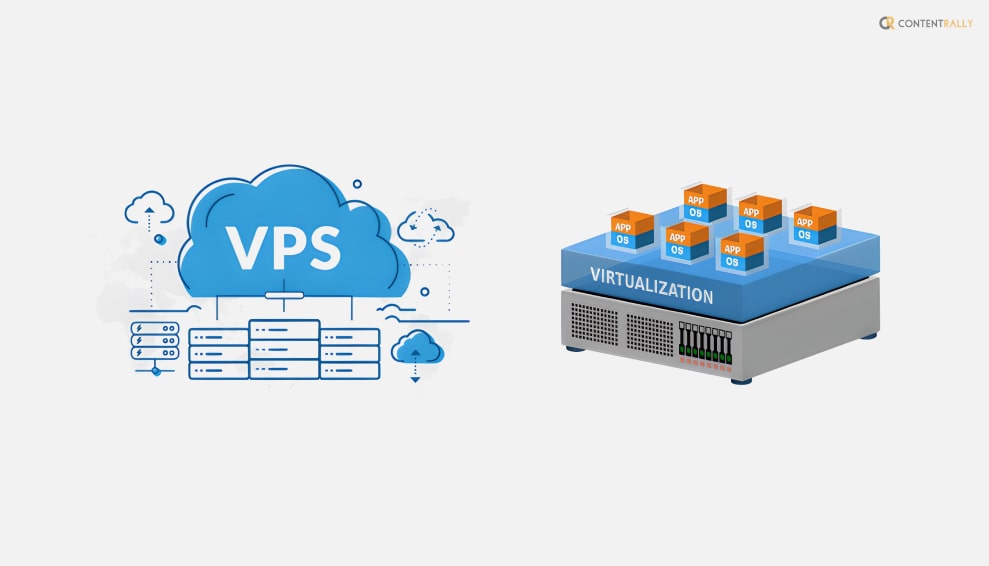
Are you considering subscribing to google cloud VPS? Read the article to know more. Virtual Private Server (VPS) is installed on a physical computer and is a virtual server. The user perceives the VPS as their private server, which can run multiple operating systems.

VPS is serving an individual in the form of a virtual machine that caters to their needs. It is installed on a separate physical computer and is specifically dedicated to one user. The privacy and functionality of VPS are similar to a physical computer.

The advantage of a VPS is that multiple virtual private servers can be installed on a single physical server. Each virtual remote server runs its operating system effectively.

Google Cloud VPS: Learn About Google's Virtual Private Server In 2023!  
Google Cloud Vps Learn About Google's Virtual Private Server In 2023
Image Source: datatan.net

A Virtual Private Server (VPS) consists of a File Transfer Protocol program, Web server software, different types of application software, and a mail server program. The VPS also connects dedicated and web hosting services by filling the gap between them.

The user gets super-user privileges by the VPS in the operating system. The virtual dedicated servers can access their copy of the operating system. Users can install any software if they have a VPS because it can run all kinds of software on the operating system.

With the advancement of technology and virtualization software, companies like Google offer virtual private server hosting at a reasonable price. Users can transfer unlimited data and monitor and manage the server on a fixed bandwidth line. The companies do not monitor or manage data; hence, the user has complete privacy.

What Is Google Virtual Private Server (VPS)?  

What Is Google Virtual Private Server (VPS)?
Image Source: dataplugs.com

The Google Virtual Private Cloud (VPC) or (VPS) is a virtualized server that runs on the host computer. The software acts like a separate computer running large-scale systems with services such as email, databases for millions of customers, and websites.

The google cloud vps spans the globe with a single VPC operating for an entire organization. There is no downtime while the IP space is increased. The platform has "how-to guides" for users to use VPC networks.

The Network spans 37 regions; the uptime is 99.99% across 200+ territories and countries. A single VPC can cover multiple areas. Hence, the public internet is not required to communicate.

What Are The Features Of Google VPS?  

What Are The Features Of Google VPS? 
Image Source: maktechblog.com

The Google VPS cloud offers a range of tools such as Google Compute Engine, Google Cloud Storage, and Google App Engine. It has a free trial subscription; however, after a period, the average google cloud vps subscription pricing is $5 to $10 forever month.

The subscription cost of VPS Google Cloud also depends on the size of the account and the services it utilizes. There are many features of the Google VPC platform which help users to function and operate effectively.

Network  

The configuration of the VPC Network is automatically established through the virtual topology of the users. The network policies are effectively followed. The configuration of prefix ranges of the user's subnets is established. The CIDR ranges are also expanded without any downtime.

Flow Logs  

The information is captured through Flow Logs regarding network interfaces and the IP traffic on computer engines. It helps in forensics, expense optimization, real-time security analysis, and network monitoring.

The flow logs of Google Cloud have regularly been updated, almost within 5 seconds. Due to the regular update, the flow logs are immediately visible.

Peering  

There is hardly any point of failure and bandwidth bottlenecks, especially with google cloud vps peering. It helps in configuring private communication across the same and different organizations.

Bring The IPs  

The Network Google can be accessed across all regions while reducing the networking infrastructure cost. If users bring their IPs, it will help them to have less downtime, and Google Cloud will advertise the brand globally.

It creates more flexibility across the world, and the resources of the company are well-advertised around the globe.

Routes  

In the same Network, the google cloud platform vps establishes effective forward traffic from one instance to another without downtime. Across subnets, the shift is smooth without needing external IP addresses.

Private Access  

The services provided by Google, such as analytics, machine learning, big data, and storage, can be used without using the service of a public IP address. Private access is given by Google services, where users get complete privacy.

The backend services are shielded from public endpoints, and the application's front end is configured to access Google Cloud Services.

Packet Mirroring  

The network traffic is inspected, and the troubleshooting present in the existing VPCs is resolved through application performance monitoring, compliance controls, and providing intrusion detection with packet mirroring.

Service Controls  

The configuration of the private communication between on-premise deployments and cloud resources from VPC networks is scanned by enforcing a security perimeter. The data uploaded by a user is sensitive and complete privacy is maintained from the brand's perspective.

The data processing capabilities and storage are managed with complete control given to the users.

Shared VPC  

The firewalls and connectivity routes are managed effectively. It is integrated centrally and the brands' projects through separate quotas and billing. Through a shared private network, communication is accessible.

Firewall  

There is a globally distributed firewall by Google VPC across the segmentation of the networks of the organizations. It helps restrict access to instances that integrate effective VPC Firewall Rules Logging.

The firewall also helps in auditing, verifying, and analyzing the Network so that the VPC flow logs have the same responsiveness.

How Does A Google Cloud VPS Work?  

How Does A Google Cloud VPS Work?
Image Source: hostcolor.com

Google Cloud VPS is an adequate server and host which hosts other websites. A range of tools present in the VPS effectively manages the site. The data center of Google manages the user's network, be it individual or organization.

  • The following steps are to be followed to see how a Google Cloud VPS works.
  • You have to buy a domain name. It's mainly like a domain registrar with a name.
  • Then you need to sign up for a Google Cloud account. The website on Google is then hosted.
  • A Google Compute Engine is set up by determining a CPU or RAM.
  • Then you have to set up a LAMP web server. You then need to install all software to run the website on the VPS.

Reviews   

Google Virtual Private Server (VPC) has leading and well-known brands working with them, such as McKesson, Twitter, Airbus, gojek, Deutsche Bank, and others. The reviews are highly rated as Google VPC is praised for its expertise and industry-first solutions.

Companies like AFL have partnered with Google and delivered machine learning-powered Footy Skills Lab. A web application enables training resources and football handling activities in Australia.

According to TrustRadius, Google VPC scores 8.5 out of 10 based on the reviews and ratings. The free trial option is appreciated, and users are informed that Google VPC is much better than its competitors.

Conclusion   

Please read the article to learn more about Google Cloud VPS. The google cloud vps are discussed with its features and how it works.

Comment down below regarding your use of VPS.

More Resources:

Content Rally wrapped around an online publication where you can publish your own intellectuals. It is a publishing platform designed to make great stories by content creators. This is your era, your place to be online. So come forward share your views, thoughts and ideas via Content Rally.

View all posts

Leave a Reply

Your email address will not be published. Required fields are marked *

Related

On The Display Network, Your Ad Is Eligible To Show On A Webpage If Your:

On The Display Network, Your Ad Is Eligible To Show On A Webpage If Your:

Q1. On The Display Network, Your Ad Is Eligible To Show On A Webpage If Your: The correct answer to the question is “Keywords that match Webpage’s Content” On The Display Network, Your Ad Is Eligible To Show On A Webpage If Your - Detailed Explanation To The Question Now that you know the right answer to “on the display network, your ad is eligible to show on a webpage if your:” I hope now you are eager to know why we have chosen “Keywords Match That Webpage’s Content” as the correct answer! Basically, the display campaign ads will show on a webpage once your keywords match the webpage content. Okay, how do you think the Google ads get ranked? It is because Google’s algorithm is capable of analyzing the content of your webpage and denotes the main theme based on the keywords. If it matches your ad, then Bingo!, nothing can stop your ad from getting visibility. There are several factors based on which the compatibility of your ad is tracked. Examples include language, keywords, topic, latest browsing history of a visitor, location targeting, etc. In essence, this type of target ad is called “ Contextual targeting. ”  What Is Contextual Targeting? Understanding the details of contextual targeting would help you get more relevancy to the question “on the display network, your ad is eligible to show on a webpage if your: ” In simple terms, Contextual targeting is a type of personalized advertising that helps pay-per-click ads to display on related sites. Wanna get started with contextual targeting? Input topics or keywords and your campaign will be all set to appear on Display Network. This procedure kickstarts with adding content topics or keywords to the ad groups in your Display Network Campaigns. Google’s system automatically evaluates each content considering link structure, page structure, text, etc. What To Do To Build A Contextually Targeted Campaign? Keyword Contextual Targeting is actually the procedure of making the automatic placements (keyword-targeted ads) the same as to the Display network sites. Pondering over how to create a contextual targeted campaign? Check out the guidelines of Google in the below section: 1. Optimize Optimization is mandatory in contextually targeted campaigns. For instance, you can keep monitoring the Networks tab and eliminate weak matches. Furthermore, focus on including or deleting keywords, adjusting bidding, and pausing optimized ad groups.   2. Generate Keywords The contextually targeted campaign is all about keywords. Hence, keyword generation forms a crucial part here. Ensure that each group has 5-50 unique pieces keywords contextual to the theme of the ad groups.  3. Define The Ad Groups Make sure that every ad group has particular descriptive themes to explain more about the services or product. Also, you can add branded keywords in keyword-targeted ad groups. 4. Conversion Tracking Implementing conversion tracking is another way to analyze how your campaign is performing. Want in-depth insights about conversion data (site-level)? Then set up Google Ads Conversion Tracking.  5.  Set Bids For Ad Groups Here comes another most crucial requirement for building a contextually targeted campaign- setting ad group bids. To do this, fix the search bid to the prior display network bid at the same level.  ➤ One pro tip - Add Negative Keywords: This might sound astonishing, but adding negative keywords will refrain your ads from appearing on extraneous searches. In this way, the relevancy of the ads will sustain on display network sites.  So on the display network, your ad is eligible to show on a webpage if your keywords match webpage content - It’s justified! Frequently Asked Questions (FAQ) Q1. What Is The Correct Answer? - On The Display Network, Your Ad Is Eligible To Show On A Webpage If Your: On the display network, your ad is eligible to show on a webpage if your keywords match that webpage’s content Q2. What Is An Example Of Contextual Targeting? Contextual targeting facilitates an advertiser in displaying the right ads to the right context. For instance, if an ice cream parlor publishes an ad on a website about Waffle ice cream, it will be a contextual targeting.  Q3. How Effective Is Contextual Targeting? Contextual targeting is all about personalization for users. Eventually, it gives a redefined edge of profitability to the business.  The Bottom Line To conclude, contextual targeting is the main funda in making ads relevant to the Display Network sites. Only upon following it, your ad will be eligible to be displayed on the webpage. Now you know the answer to “ on the display network, your ad is eligible to show on a webpage if your: ” Why don’t you take the next step and apply it on your own business? You will simply rock in terms of visibility and conversions. Did you find this guide informative? Let us know your opinion in the comment area below. We will be pleased to hear your valuable viewpoints. Read Also: Two SEO Trends to Take Advantage of In 2022 Content Optimization: What It Is and How To Do It Things to consider while doing SEO What Do Ad-in And Ad-out Mean In Tennis?

READ MOREDetails
how does google ads generate responsive search ads?

How Does Google Ads Generate Responsive Search Ads?

 How Does Google Ads Generate Responsive Search Ads? Google Ads works on the probability of mix and matches headlines and description lines that have been provided Detailed Explanation Of How Does Google Ads Generate Responsive Search Ads? Google ads generate responsive search ads by matching all the headlines and description lines that have been provided. Keep in mind that responsive search ads and responsive display ads are two different terms, and you must not mix them.  Actually, responsive search ads can assist you in creating an ad that modifies to show more texts and messages to your visitors. But how it works? The more descriptions and headlines you enter, the opportunity to serve ads by Google increases significantly.  This matches the queries of your customers, and hence, it can improve your ad performance to a great extent. Meanwhile, Google assembles the text into several ad combinations in a way that eliminates redundancy.  Benefits Of Responsive Search Ads There are several benefits of responsive search ads and some of them are listed below: Increase ad group performance by attracting more conversions and clicks.  Reach more potential clients with many descriptions and headlines. You can tailor your descriptions and headlines to your normal location or customer’s location. Save time by providing several headlines and description options that give your ad a chance to display to your potential customers. Create flexible ads that provide you more room to share your message and adapt to devise widths with potential customers.  What's The Benefit Of Having Multiple Ads? Yes, there are many benefits of having multiple ads in an ad group. You need to have many keywords and matching ads in the same ad group.  One of the best advantages of having multiple ads is that you can have ads in all types and sizes in the form of images or text sizes. This is only when you advertise on the search network or display network.  Another is you can advertise different varieties of ads via Google Ads than other kinds of text ads. You can have rich text ads, mobile ads, dynamic search ads, and image ads. Each ad should consist of multiple ads in order to increase the better return on investment. How does Google ads generate responsive search ads? will no longer be a matter of great concern for you.  One more benefit of having multiple ads is that you get variations in keywords and finally, you have better ad performance. Therefore, this is all about the benefits of having multiple ads in an ad group. What Should Your Search Ad Have In Order To Promote More Clicks? Your search ad must have a Call to Action button in order to promote more clicks. The main objective of your ad is to get conversions, and at the end of the day, your ad must get it. Otherwise, it is a failure of your business strategy. Besides, there are also reasons why search network campaigns show conversions but no view-through conversions, and you need to understand this in detail by analyzing the performance of your ad.  How To Create A Responsive Search Ad? The main question that arises here is “how to create a responsive search ad?” and below described are the steps to perform the same. Go to Ads & extension.  After clicking the plus button, select Responsive Search Ad Enter final URL and display path text  Then, type the headlines. You need to type a minimum of three and a maximum of fifteen. Now, enter the descriptions. You can enter descriptions from two to four. Click Save.  Which Are The Three Required Parts Of A Text Ad? The three required parts of a text ad are Headline, Description, and URL. Your text ad includes three headlines where you can enter up to thirty characters each to promote your goods and services.  A text ad is actually a form of marketing communication that advertisers can use to promote their goods and services on the Google Network. how does google ads generate responsive search ads? Moreover, there are places where the text ads can appear or display. The ads can appear across the Google Network and search result pages that consist of Display Networks, Search Partners, and Search Network. How does Google Ad generate responsive search ads?  Summing Up The answer to your question how does google ads generate responsive search ads? is “Google Ads mixes and matches headlines and description lines that have been provided.” The above-described information explains the same, and you must know how to generate responsive search ads to drive high conversion rates and target your potential customers. Read Also: How Many Jobs Are Available In Real Estate Investment Trusts? Which Client Would You Advise To Advertise On The Search Network? How Do Upgraded URLs Help Advertisers With Third-Party Conversion Tracking?

READ MOREDetails
which practice would violate google’s editorial and professional requirements?

Which Practices Violate Google’s Editorial, Professional Req?

Question: Which practice would violate Google’s editorial and professional requirements? Showing a ValueTrack tag in the text. ✓ Including a question mark in the headline. Directing people to a page other than the advertiser’s homepage. Including a border on the ad. Correct Answer: Showing a ValueTrack tag in the text Detailed Explanation Of “Which Practice Would Violate Google’s Editorial And Professional Requirements?” As we all know that Google is the most popular search engine all over the world and people use this constantly for all queries. Now, if you are running an online business, then you must be aware of the practices that violate Google’s professional and editorial requirements. However, if you are not, then we are there to help you to make you aware of Google’s algorithms.  Now, the practice that would violate Google’s editorial and professional requirements is by showing a ValueTrack tag in the text. Therefore, by using ValueTrack parameters, you can start track information about your ads; this is one of the easiest ways to consider. On the other hand, in order to implement a variety of user experiences, Google requires that all destinations, extensions, and ads fulfill high professional and editorial patterns. What Type Of Content Google Doesn’t Allow? You need to understand that there are certain types of content that Google doesn’t allow at all, and you need to implement the same for your ads. Now, let’s discuss the various types of content that Google doesn’t allow at all. i). The Promotional Content Where Landing Page Is Missing If your content does not reflect where the users are redirected, then it can be a violation in the eyes of Google. Let’s take an example, using the display URL “contentrally.com,” but it is leading to a landing page “www.google.com.” Thus, this does not make any sense for the user as well as Google. ii). The Promotional Content Without Identifying Information Now, if your question is “Which practice would violate google’s editorial and professional requirements?” then the next practice would be promoting content without identifying proper information, i.e., display URL, product, or company’s name on the final static frame. iii). The Promotion That Doesn’t Make Sense Another practice that violates Google’s editorial and professional requirements is encouraging promotion that does not make any sense for the user. For example, promotions have blurry images, videos, or making ValueTrack tags that are visible in the ad text. Importance Of ValueTrack Parameters - All You Need To Know ValueTrack parameters are URL parameters that you can attach to your ad’s landing page URLs. These parameters assemble data about the origin of your ad clicks. At the same time, these parameters work with Google Analytics or your personal tracking explication to present useful information on your paid search ad. Now, to use ValueTrack, you must include a unique tag to your ad’s destination URL, and the parameters store precise specifications about the ad in the URL. To make your concept simple, we have listed the top ValueTrack parameters that all B2B advertisers should include in their PPC campaigns. {adposition} This is the position of the page that your ad is visible on the SERP. It enables you to get an idea of what type of value you are getting from bidding on several positions. {random} The name of this ValueTrack parameter itself signifies that it is a random Google-generated number. To make your CRM properly read and access the data, you need to designate unique identifiers to your keywords. {placement} This parameter is utilized for display campaigns and this is one of the most important tags as it is equivalent to the {keyword} tag.  {keyword} This tag is for the keyword that triggered your advertisement. You can use ValueTrack to assign a particular keyword string to a lead or sale.  {network} Another ValueTrack parameter is {network} which signifies whether the click dawned on the main Google Search page. The Final Thoughts  Now, you don’t have to worry about “which practice would violate google’s editorial and professional requirements?” because the above listed are the solution to it. You just need to avoid showing a ValueTrack tag in the text.  More Resources: How Do Upgraded URLs Help Advertisers With Third-Party Conversion Tracking? Your Ad Can Show To A Potential Customer When Your Targeted Language Matches

READ MOREDetails