












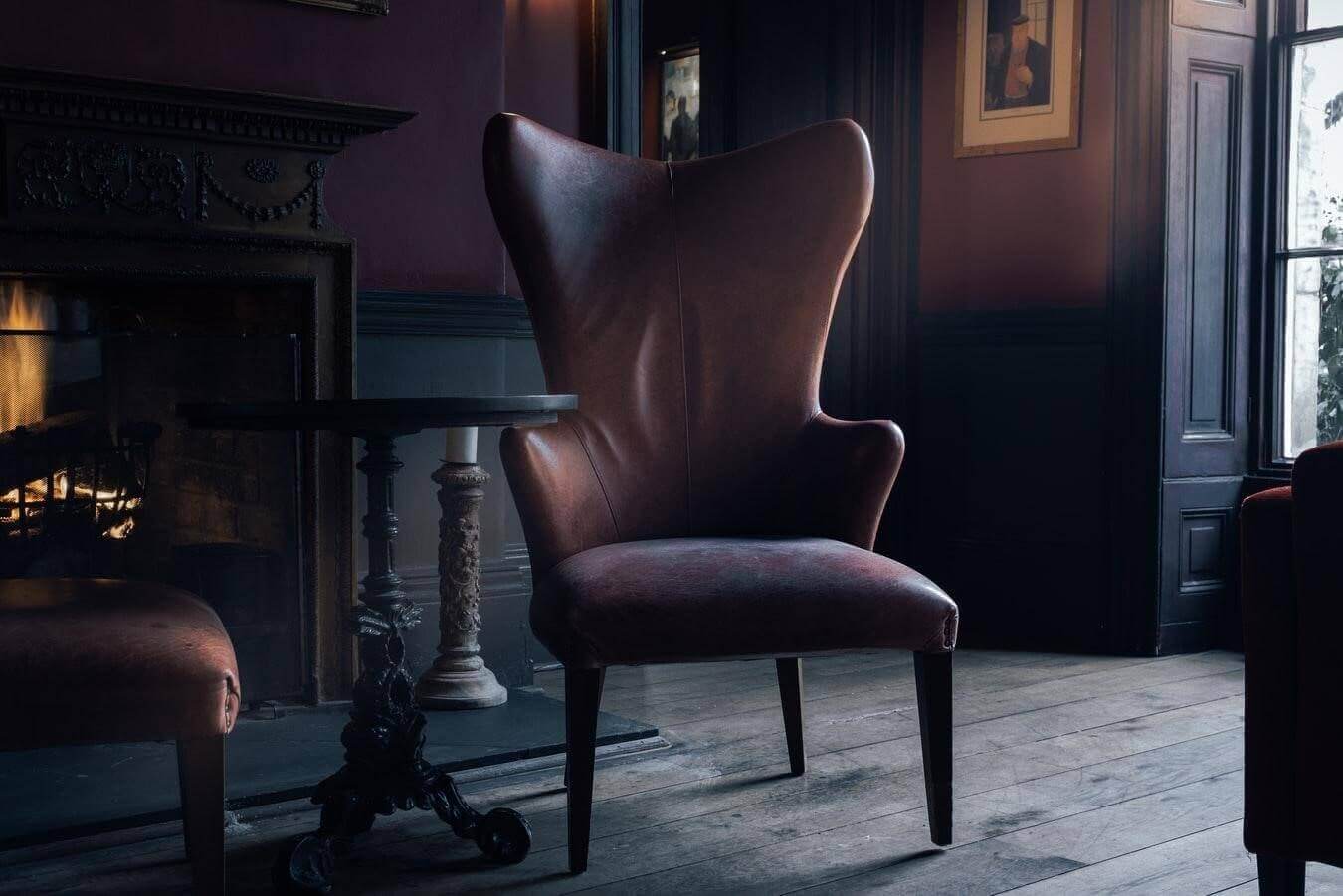
How Do You Match Sofas With Accent Chairs?

Published on: 19 April 2021 Last Updated on: 31 December 2024
Match Sofas With Accent Chairs

It is unarguable that decorating our own home will surely excite us. The thoughts of what color palette to use or what furniture to put or how to arrange them will get us a bit carried away for sure. The entire decoration plays a key role as it sets up the mood for the house. Whether you want a refresh or moving into a new space, it is vital to purchase durable furniture to incorporate your home. Choosing your furniture can take you a lot of time to consider its design and quality. In Chesterfield furniture, they offer a wide range of designs that will not compromise your comfort as they only intend to use the finest materials for their sofas and chairs.

The most crucial spot of the house to decorate is the living room. Being the center of the house, a heart is considered a symbol for the living room. The living room is the primary room you will see upon entering a home, and it is where guests are entertained. The living room should be an area to indulge and lie on the couch as you enjoy a bowl of popcorn watching your favorite movie. Most importantly, the living room is where families should spend time together to relax and share stories.

There is a long list of furniture to consider putting in the living room. The essentials are the sofa, coffee table, accent chairs, media stand, and side table. Putting together all these are overwhelming; thus, one should consider hiring an interior decorator to do the job, or if not, dig deep on Pinterest for design inspiration.

One of the common mistakes in arranging your furniture is the improper incorporation of your sofa with your accent chair. If you want to create a pleasing space to the eye and a solid setup, you should consider a few tips and tricks to have a successful mix and match.

What Do I Have To Put In Mind:

In pairing your sofa with your accent chair, contrasting them is most crucial. You will have to make these pieces complement each other and, at the same time, can stand on their own. You shall also consider the style, color, and form of your selections.

1. Style

Style is an essential element to consider. If you opt for minimal decoration, both your sofa and accent chair should embody that style.

2. Color

Carefully decide on the color palette you will use for your sofa and your accent chair. Your choice can either be a monochromatic or complementary color scheme; always make sure they don’t crash with each other.

3. Form

Always be mindful of the form. A skirted sofa would go along well with an accent chair that has an intricate or evident leg style.

How Do I Arrange These Pieces?

There are various ways to arrange your sofa and your accent chair: front and center, and section-off space. When you follow the front and center arrangement, you must consider where you will be facing as you sit down. The section-off space arrangement considers arranging the furniture in ways that can accommodate visitors and guests.

There are no rules on how you should decorate your place; as being said, it is your home and your own space. However, it would help if you always put in mind that the design must go together harmoniously.

Read Also: 

Subham Saha started his career as a professional web content writer. He has more than 3 years of experience in digital marketing. He also has a great knowledge in SEO, SMO, Website development, etc. He completed his graduation in Electrical Engineering. He is very passionate about building his career in the Digital marketing industry. Subham has a great interest in reading books about Business, Economics, Psychology, Technology, and History.

View all posts

Leave a Reply

Your email address will not be published. Required fields are marked *

Related

Roofing Painting

Roofing Painting Contractor Leads: Ask Before Hiring One

Are the shingles of your roof starting to get loose? Or perhaps the entire roof itself is in need of a fresh paint job but you can’t do it yourself? For roofing and painting contractors in your area – especially those working alongside a lead generation firm like Ippei Leads – anything you want them to do to your roof is a blessing as it means yet another business opportunity. But before hiring one to fix or repaint your roof, here are four questions you might want to ask them first: 1. Can they meet your roofing needs no matter what type your roof is? The roofing and painting contractor you want to hire should be able to service these two major types of roofs: Residential roofing, which is typically easier to repair and repaint Commercial roofing, whose massive size and lower slope make fixing and repainting it more challenging yet profitable at the same time If the roof of your place of business is leaky, for example, and the contractor you talked to doesn’t have any experience with fixing commercial roofing, you shouldn’t hire them since they most likely wouldn’t know how to tackle the said problem. Also, if you need to have the whole roof of your house replaced with a brand new one, and the contractor you contacted hasn’t dealt with residential roofing before, you should skip them lest you want them to install an oversized one that’s more suitable for commercial use. 2. Do they have the license to operate as a roofing and painting contractor? Aside from their knowledge of both residential and commercial roofs, the roofing and painting contractor you plan on hiring should have a license to operate, most especially in the following states where it’s a requirement: Alabama Alaska Arizona Arkansas California Florida Hawaii Idaho Illinois Louisiana Massachusetts Michigan Minnesota Mississippi Nevada New Mexico North Carolina (but only if the roofing job will cost you at least $30,000) RhodeIsland South Carolina Utah Virginia If you reside or run a commercial building in any of these states, and the contractor couldn’t show you an authenticated copy of their statewide license, don’t hire them. 3. Do they have both liability and workers’ compensation insurance? The roofing and painting contractor you want to hire may know the difference between a residential and commercial roof. They may also have the license to operate in the state where you reside or do business. But aside from these, you should ask them upfront if they’ve got the following two types of insurance that will shoulder them financially in case of any mishap during the roof repair or repainting job: Liability insurance: There’s no telling when a contractor’s worker may accidentally drop a rusty nail or any tools on top of your (or your customer’s) head while doing the job or someone suddenly passes out after smelling the noxious fumes emitted by the paint. It’s important for the contractor to have liability insurance so their insurer can cover some or all of the medical expenses resulting from an injury during the repair or repainting job. Workers’ compensation insurance: Even if you or anyone else not connected to the contractor you hired didn’t sustain any injuries at all, a worker of theirs might suddenly get caught in a slip and fall accident while fixing or repainting your roof. The contractor should secure a workers’ compensation insurance so financial assistance can be provided to cover their crew’s medical costs and lost wages until the said person is physically capable of working for them again. It’s also a big plus if the roofing and painting contractor also carries commercial vehicle insurance aside from the two mentioned above to protect the cars, trucks, or vans that they use to do their job. 4. Do they have a contract prepared for you? As evident in their name, a roofing and painting contractor should show you a contract before repairing or repainting your roof. The said document should be legally binding and must contain the following: A detailed description of the repair or repainting job the contractor will do to your roof Breakdown of materials they’ll use for the roof repair or repainting job The estimated total cost of the said job Dates when they'll fix or repaint your roof A warranty of at least one to two years wherein you can have any part of your roof replaced if ever they accidentally damage it while fixing or repainting it A termination clause wherein the contract itself could become null and void if either you or the contractor violates any of its terms and conditions Don’t hire a roofing or painting contractor who plans to take on fixing or repainting your roof with only a handshake or verbal agreement to seal the deal. Conclusion: Roofing and painting contractors in America have been experiencing an upward profit margin growth since 2014. No wonder then that there are several of them as of late. But you can’t afford to get stuck with one who might do a sloppy job of fixing or repainting your roof which can lead to further problems down the road for you. So, before hiring a roofing and painting contractor for your roof, you should ask them first the four questions listed above to avoid any regrets on your end. Read Also: 5 Myths About Roofing Services To Avoid Professional Roofing Services And Different Decorating Styles

READ MOREDetails
Content Rally

Interiors to Reduce the Heat Build-up in Your Homes

In countries like where though we experience all climate types, summers and humidity are still the dominant types. The soaring temperature the rising sun plays its role most of the year to give us a good splash of nature. Hence, beating the heat is one of the major concerns in most parts of India throughout the year.   Most of the time, the hot weather falling on the roof exacerbates the problem. To fight this, experts suggest passive cooling techniques which provide interiors with comfortable conditions using natural means. This refers to reflective and radiative techniques and processes which are used to reduce heat gain or absorption by facilitating the elimination of excess heat in your interiors. Heat gain in internal spaces can be controlled by modulating the temperature by using shading techniques, the color of the external surfaces of roof paint, and the color of the paints on external walls. Dark color tends to absorb more heat while light colors have a tendency of absorbing less heat. Therefore in countries like India, lighter colors like whites, light green, pale yellow, etc. for external walls are preferred. The key lies in utilizing external heat sinks like the night sky, air, soil, water, etc. properly and sufficiently. The internal design and color scheme play a vital in optimizing to their best capability to maintain the thermal atmosphere of your space properly. Evaporative cooling practices introduced in the interior design also helps in keeping the temperature of the house comfortable. In summers, the dry outside air supports this technique. Being a little innovative here helps to a great extent. Some of these are part of our enriched culture which can be used to amplify the design as well as serve the purpose of keeping the space cool. Indoor water features will create the perfect cooling and relaxing atmosphere for your home. For instance, the water rangoli, a small water fountain in internal space, indoor plants which will have wet soil are all good for this. Reflective surfaces like glossy mirrors, glasses, vases, framed paintings, etc. react positively to the air floating around in the room which bounces to and fro and improves ventilation from the window in the direction of the air. Moreover, if the window has a green cover with branches of trees or stalks climbing over it, the view will also have a cooling effect. After all, said and done, we come back to wall paint which definitively gives you the best bang for your buck. Having all your walls in the mildest shades and creating one wall as the focal point is the trendiest way ever. If the interiors remain very hot, and you still want to follow this art of accenting the central wall, you must use a cool color in a light hue. From a baby pink to lavender or even a delicate mauve will accent your wall and still create a soothing focal point. You can then hang a mirror décor or a mesmerizing painting here to complete the look. This kind of design will help to overcome the build-up of heat in your homes and building and you create a calming environment to create beautiful memoirs you can cherish all your life.

READ MOREDetails
Houseplants

5 Reasons Why You Absolutely Must Have Houseplants In Your Life

You won’t find more comfort and beauty in your home or office than when having foliage and lush flowers in your vases. Houseplants can do well in all spaces, either in the kitchens, bathrooms, or bedrooms. It isn’t hard to manage houseplants, but you only have to provide them with enough water and light in your room. Plants are aesthetically amazing and pleasing in your home because they have many real-life health benefits. According to research, indoor plants bring happiness and keep you healthier in your home. Before going any further, you should download the Lilia app on your device. This app is the best app for plant innovative intelligence. The Lilia app can identify every plant type by simply scanning. This plant identifier app can also give you more suggestions and information about the plant. The plant app gives you the best ideas to simplify your database on the best plants you would like. This app for iPhone is compatible and works well with apple devices. Plant your favorite houseplants and download the Lilia app to help you in monitoring their nature. If you love green nature, you can simply install Plant Identification app on your device, which will work for you well.  This is one of the must-have apps for you to understand nature well. It is absolutely free to use this app, therefore, you won’t incur any charges. Here Are Seven Important Reasons Why You Absolutely Must Have Houseplants In Your Life Below are the reasons why you must have houseplants in your life. 1. Working Near Plants May Help Your Productivity How are indoor plants useful to us? According to experts, green plants in the office results in higher job satisfaction and better productivity. On the other hand, another study in the past had the same findings. Therefore, there will be fewer sick leaves and high productivity. This proves that including indoor plants in our workplaces is much beneficial. 2. Working With Plants Can Be Therapeutic Indoor plants can be greatly helpful to those people who are experiencing mental illness. Experts have tried using horticultural therapy to boost positive feelings for those people with anxiety, depression, dementia, and other related conditions. Although horticultural therapy has been there for a long time, doctors are now recommending potted plants to patients experiencing anxiety and depression symptoms. 3. They Bring Color And Vibrance To Our Worlds How do plants impact my life? An empty environment can be very boring, but the presence of colored flowers can improve your mood. Houseplants with cheery flowers are known to boost positive moods because individuals' minds take plant life as a comforting and motivating realm of nature. Experts did research and found out that the color green makes the body calm and gives it a sense of comfort and positivity. On the other hand, yellow and red create an added dose of happiness. 4. Plants Improve Our Environment Knowing more about how plants elevate our mood and improve our feelings, we know they are also important in keeping our environment tidy. Houseplants can make your living space more beautiful to live in, they can also boost other factors we can't see, like the quality of air in our living rooms. Houseplants can boost the quality of air in our houses in many ways. Plants release oxygen and absorb carbon dioxide through the process of photosynthesis. This is possible through evapotranspiration and transpiration, which results in a higher humidity by plants releasing moisture vapor. 5. Real Plants May Sharpen Your Attention Have you ever known that plastics won't help you pass exams? But have you ever asked yourself, ‘how are indoor plants useful to us?’ A study involving 23 individuals was carried out. Participants were classified; others were put in classrooms with a fake plant, others in a real plant, and others in a room with no plant. A brain scan was done on all students, and results show that students who studied in classrooms with real houseplants were better able to concentrate and were more attentive in class than the other groups of students. 6. Indoor Plants May Help Reduce Stress Levels According to research done and published in the Psychological Journal of anthropology, plants in your surroundings make you feel soothed, natural, and more comfortable, relieving stress levels. Each individual in the research was given a computer task. After completing each task, each individual was examined, and stress, including blood pressure and heartache, was measured. The final result shows that individuals in a room with plants were more relieved from stress. 7. Plants Improve General Work Outlook Working beside the city park increases the job satisfaction of every individual; you could also be surprised that a potted plant could have the same effect. Experts approached 440 individuals who are employees at Amazon. in two countries. Even though the research was done in different locations at different times, the results show that employees who had indoor plants in their offices were more committed to work and had more job satisfaction than others who worked without natural elements in their surroundings.   Have you been wondering how plants make your life better? With all these benefits, this is your time to motivate yourself and plant houseplants in your living rooms. For better recommendations on handling plants, visit the experts in plant stores or shops so you can know what plants are more suitable for your home. We hope that all the information we have mentioned in the article was helpful. Read Also: What Are Trailing Plants? – What Are The Types Of Trailing Plants? Top Useful Tips On How To Make Your Home Allergy-Free 10 Best Spiky Plants To Decorate Outside Your House

READ MOREDetails