










7 Ways to Find the Best Auto Repair Shop for Your Vehicle
Published on: 23 March 2021
Last Updated on: 27 December 2024
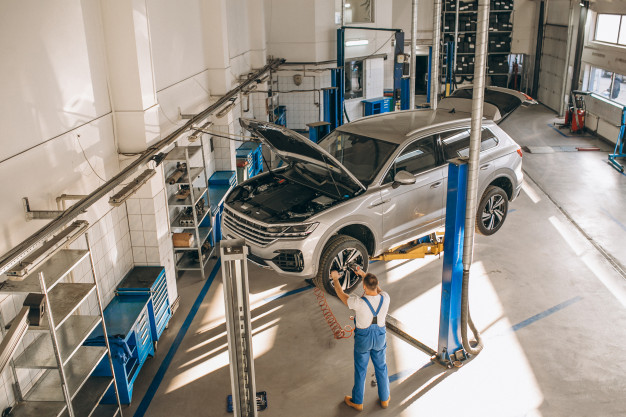
Regardless of how careful a driver you are, it’s likely that your vehicle could either deteriorate over time or experience a road accident that has left the body in bad shape, and you’ll have to take your car to an auto repair shop and restore it to its former glory. With hundreds of shops to choose from, it may be difficult to pick one that specializes in the type and brand of your vehicle. Here are a few steps to find the best shop to take care of your car:


Popular

Technologies For Creating A Startup Idea
20 Feb 2023

How to Download Facebook Videos on Android?
07 Feb 2019

7 Rules of Effective Ecommerce Web Design
28 Jan 2021

Why Are Online Transactions Convenient?
07 Dec 2023

Recent


Related

How To Find Affordable Commercial Truck Insurance
The dawn of the delivery age has given rise to many new businesses. With more and more companies offering delivery options, companies that deliver retail goods are often left searching for cheap commercial truck insurance. While these are the most popular companies using this type of insurance, they aren’t the only ones. Moving companies, couriers, and furniture delivery companies are just a few more examples of companies who may benefit from cheap commercial truck insurance. Just about any business utilizing a large truck will be required to carry certain insurances by state law, leaving many business owners searching for the best cheap commercial truck insurance. Here’s what you need to know about finding the best cheap commercial truck insurance. Know Your State Requirements Each state has its own minimum requirements, even for cheap commercial truck insurance. While the state minimum may have attractive premiums, it may not always be the best choice for your business. The minimum state requirement is often only enough to cover the cost of repairs to other people’s property when you are involved in an accident. Without insurance to repair your own property or your box truck, even a small accident can be catastrophic. If your commercial truck travels between states, there may be a federal minimum that must be met. The Federal Motor Carrier Safety Administration (FMCSA) sets its own federal minimum requirements for commercial trucks that travel between states. Many companies choose to meet these federal minimum requirements rather than just the state requirements. Get Multiple Quotes When shopping for cheap commercial truck insurance it always helps to get multiple quotes from several different companies. Each insurance company has its own underwriting team and acceptable risk amount, so the quotes may vary significantly. Insurance companies sometimes specialize in certain sectors, like large trucks or commercial vehicles, which allows them to offer specific discounts. Sometimes you may get a discount for bundling multiple policies with the same insurance company. Other times, you may get better coverage for less by doing business with more than one insurance company. The type of industry you operate your business in, and your driving record will also affect your premium rates. Consider Your Payment Options Believe it or not, your payment options can affect your insurance premiums. Insurance companies often offer a discount for paying in full rather than making monthly payments. If you must opt for monthly payments, some insurance companies offer a discount for having payments automatically debited from an account. You can sometimes lower your insurance premium payments by raising your deductible. An insurance deductible is the amount you pay out of pocket for a covered claim. When shopping for cheap commercial truck insurance, get quotes for different deductible amounts if you can afford it. It is important to have enough money in savings to cover your deductible amount or the results can be disastrous. It doesn’t make sense to purchase cheap commercial truck insurance with a $5,000 deductible if you only have $1,000 in savings. Why Commercial Truck Insurance Costs More When shopping for cheap commercial truck insurance it’s important to understand why commercial truck insurance costs more in the first place. Commercial trucks are some of the largest vehicles on the road and they can cause a lot of damage when an accident occurs. Long business hours also tend to cause driver fatigue and increase the chances of an accident on the road. Lastly, large commercial trucks sometimes carry hazardous materials, which also increases the risk of an accident. All these factors combined cause the cost of even cheap commercial truck insurance to be more expensive, and it tends to go up a little every year. It helps to shop around and install anti-theft devices in your commercial vehicles. Hire drivers with good driving records and keep a logbook. Maintain your commercial trucks and take advantage of safe driving apps or devices offered by your insurance company. Getting Cheap Commercial Truck Insurance Cheap commercial truck insurance does exist, even if it can be elusive. It’s best to get multiple quotes and play with the deductible amount to see how it affects your premiums. If possible, pay your premiums annually instead of monthly or quarterly. Most of all, it sometimes helps to work with an insurance broker who can help you get multiple quotes from several different insurance companies. This is the best way to find cheap commercial truck insurance that gives you the most bang for your buck. Read Also: How To Protect Yourself Legally During An Accident With A UPS Truck Legal Ways to Determining Fault for an Arizona Truck Accident 4 Things You Need To Know About Commercial Truck Insurance
READ MOREDetails
7 Ways Truck Accidents Differ from the Regular Car Crashes
Truck accidents happen due to severe weather conditions, road hazards, and exhausted driving. When accidents occur, the laws require further steps than are needed for a standard auto accident. Federal and state laws apply to truck accidents, and law enforcement must follow these laws when determining what happened. Victims who were involved in a trucking accident review the 7 ways truck accidents differ from regular car accidents. Here are the 7 Ways Truck Accidents Differ from the Regular Car Crashes: 1. Federal Motor Carrier Safety Administrator Regulations Apply Federal Motor Carrier Safety Administrator regulations require all commercial drivers to take a resting period after each 12-hour driving schedule. A failure to follow the regulation increases the risk of a trucking accident. All miles traveled in the truck are recorded in the driver's log. Additionally, the drivers are required to stop at weigh stations that are open throughout the interstate. An imbalanced load increases the risk of the rig jackknifing and causing a trucking accident. All drivers and trucking companies must follow all federal laws pertaining to operating an 18-wheeler. 2. A Higher Potential Payout Through Insurance Trucking companies have more insurance coverage than most auto owners. Victims involved in the trucking accidents have a chance of receiving far more substantial payouts to cover medical expenses and property damage if the truck is owned by a trucking company. The coverage applies to all victims involved in the accident when the commercial driver is responsible for the accident. If the victim's injuries and property damage costs exceed the coverage maximum, the victim can file a lawsuit to collect compensation. 3. A More Thorough Investigation is Required Federal laws require more thorough investigations for all trucking accidents. An investigation determines if the commercial driver followed federal regulations or if the driver was under the influence of drugs or alcohol. The truck is evaluated for mechanical failures that contributed to the accident, too. 4. More Substantial Injuries and a Higher Risk of Fatalities The risk of more substantial injuries or fatalities is greater than with regular car crashes. The weight of the commercial truck alone increases the likelihood of a fatal accident. Trucking accidents often include several vehicles and multiple injuries. 5. More Potential Individuals Could be Involved in the Accidents The accountable party isn't always clear at first when it comes to trucking accidents. First, law enforcement evaluates the driver. If the driver didn't cause the accident, the next step is to evaluate the truck for mechanical failures and faulty parts. Any mechanical failures that were due to the trucking company's failure to serve the truck make the trucking company liable. 6. Medical Bills Often Cost More After a trucking accident, the victim's medical bills could cost a lot more than if the victim was involved in a regular car crash. Since injuries are often more severe, the medical costs are greater, and some patients sustain permanent injuries. Traumatic brain injuries are more likely in commercial trucking accidents. 7. More Property Damage Than in Regular Auto Accidents Extensive property damage is possible in a trucking accident. The path of the accident defines how much property damage occurs. If the accident happens on a major highway, it is possible for the accident to involve multiple vehicles and properties that are nearby. Commercial trucking accidents increase the risk of serious injuries and fatalities. Whenever a large-scale truck is involved, the weight and the speed of the truck play a role in the outcome. Victims who were involved in the accidents follow tips for filing lawsuits and collecting compensation for their injuries and financial losses. Read Also: Get to Know Interstate and Intrastate Heavy Haul Transport The Hidden Damages In Workspaces: 5 Steps To Reduce The Risk Of Workplace Injuries!
READ MOREDetails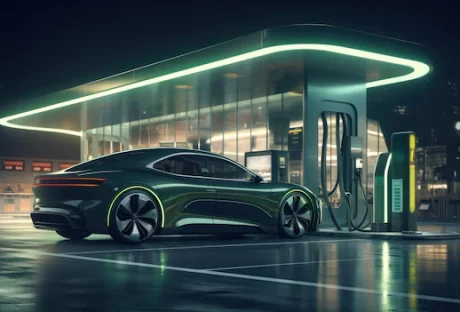
Maximizing The Efficiency Of EV Charging Stations: Best Practices And Tips
Efficient EV charging stations are central to the electric vehicle revolution, supporting a sustainable transition to electric mobility. With the rapid adoption of electric vehicles, the need for optimized charging solutions is more critical than ever. Keep reading to discover the best practices and tips for maximizing the efficiency of EV charging stations, an essential element in the evolving landscape of electric transportation. Understanding the Basics of EV Charging Stations Electric Vehicle (EV) charging stations are pivotal in supporting the shift to electric mobility. They come in various forms, including Level 1, Level 2, and DC Fast Charging, each serving different needs. The efficiency of these charging stations impacts not only the charging time but also the overall experience of EV owners and operators. Level 1 Charging: When and Where It Works Best Level 1 charging, the most basic form of EV charging, is ideally suited for situations where time is not a pressing factor. This type of charging is perfect for overnight use at home, utilizing standard 120-volt AC outlets. It allows EV owners to conveniently charge their vehicles while they sleep, ensuring a full battery for the next day's commute. In workplaces, where cars are often parked for the majority of the day, Level 1 charging also finds its place. It provides a slow, steady charge, sufficient for topping up an EV during an eight-hour workday. This slow charge rate is actually beneficial for battery health, as it causes less strain and potential long-term wear on the battery compared to faster charging methods. Moreover, Level 1 charging is a cost-effective solution for businesses and public spaces that aim to offer EV charging without the need for expensive infrastructure upgrades. It's an accessible option for visitors and employees alike, who can plug in and charge their vehicles without special equipment. Despite its slower charging speed, Level 1 charging remains a viable and practical option, particularly in residential settings and for businesses looking to provide a basic charging service. Its simplicity and compatibility with standard outlets make it an indispensable part of the EV charging ecosystem. Level 2 Charging: Balancing Speed and Efficiency Level 2 Charging represents a significant step up in efficiency and speed from Level 1, making it a popular choice for both home and public use. Operating on a 240-volt AC supply, similar to what large household appliances like dryers and ovens use, Level 2 chargers offer a much quicker charging experience than their Level 1 counterparts. For residential settings, Level 2 charging is an excellent investment for owners looking to have a home EV charging station. While it requires a dedicated installation, the ability to charge an electric vehicle significantly faster (typically in just a few hours) adds a great deal of flexibility for EV owners. This makes managing daily commutes and unexpected trips far more manageable, without the overnight wait required by Level 1 chargers. In public settings and workplaces, Level 2 charging stations serve as a practical middle ground between the slow Level 1 and the rapid but more complex and expensive DC Fast Charging options. They are capable of providing a substantial charge during a shopping trip, workday, or meal, making them ideal for installation at malls, offices, restaurants, and similar locations. Level 2 chargers are not just about speed; they also maintain a balance in terms of energy efficiency. They are fast enough to offer convenience and adaptability, yet they still operate within a range that is generally manageable for both residential and commercial electrical systems. This balance makes Level 2 chargers a versatile and widely applicable solution in the expanding infrastructure of EV charging. DC Fast Charging: Meeting the Needs of Fast-Paced Lifestyles DC Fast Charging caters to the fast-paced lifestyles of modern EV users, offering the quickest way to replenish an electric vehicle's battery. This type of charging, utilizing direct current (DC) instead of the alternating current (AC) used in Level 1 and Level 2 chargers, can significantly reduce charging times, often adding 60 to 80 miles of range in just 20 minutes. A key advantage of DC Fast Charging is its ability to support long-distance travel and quick top-ups. This makes it an ideal solution for highway rest stops, urban areas with high turnover parking spots, and locations where drivers need a rapid charge to continue their journey. The ability to quickly charge is particularly beneficial for EV users who cannot charge at home or for those embarking on longer trips where time is a constraint. The rapid advancement of EV technology is also evident in the evolving capabilities of DC Fast Chargers. With continual improvements, these chargers are becoming more efficient and powerful, reducing charging times even further and enhancing the overall user experience. Best Practices for EV Charging Station Installation The strategic placement of charging stations is crucial. They should be accessible and visible, yet mindful of the local power grid's capacity. Upgrades to the power infrastructure may be necessary to support these installations, especially in densely populated areas. Integration with Renewable Energy Sources Pairing charging stations with renewable energy sources, such as solar panels, can significantly enhance their efficiency and sustainability. This integration not only reduces the carbon footprint but also can offer cost benefits in the long run. Smart Charging Technology Incorporating smart technology into charging stations can lead to more efficient energy use. Technologies that allow for demand-response interaction and scheduled charging during off-peak hours can optimize energy consumption and reduce costs. Tips for EV Owners: Maximizing Charging Efficiency For EV owners, the journey towards enhanced charging efficiency not only improves vehicle performance but also nurtures the longevity of their beloved electric companions. Embracing smart charging practices is more than a technical exercise; it's about harmonizing your daily rhythm with your vehicle’s needs. Imagine aligning your charging schedule with the quieter hours of the day, when electricity rates take a dip, allowing you and your vehicle to recharge cost-effectively in unison. Caring for your EV’s battery goes beyond mere routine; it's akin to nurturing a valuable relationship. Regularly checking the battery and steering clear of charging in harsh temperatures can be seen as acts of kindness towards your vehicle, ensuring its heart beats strong for longer journeys. When it comes to public charging stations, especially the swift fast chargers, integrating charging into your daily errands or coffee breaks can turn a mundane task into a seamless part of your day, reducing waiting times and enhancing your overall experience. The Role of Government and Policy in Supporting Efficient EV Charging Infrastructure The role of government and policy in nurturing efficient EV charging infrastructure is pivotal in accelerating the transition to electric mobility. Through strategic policy frameworks and incentives, governments can significantly influence the development and accessibility of EV charging networks. By implementing subsidies and tax rebates for the installation of charging stations, they make it more feasible for businesses and homeowners to adopt EV technology. Furthermore, governments can drive innovation and efficiency in this sector by funding research and development initiatives. This support can lead to advancements in charging technology, making it faster, more efficient, and more accessible. Regulations that encourage the use of renewable energy in EV charging stations also play a crucial role in ensuring the sustainability of the EV ecosystem. The Future of EV Charging: Innovations on the Horizon Emerging technologies in EV charging, such as wireless charging and battery swapping, hold the potential to revolutionize this space. These innovations could lead to faster, more efficient charging solutions, making EVs more accessible and convenient for a broader audience. Efficient EV charging stations are key to the widespread adoption of electric vehicles. As we move forward, the continuous evolution of charging technologies and supportive policies will play a critical role in shaping a sustainable, electric-powered future. Read Also: Best New Cars For Teenagers Important Tips To Maintain Your Luxury Car Reap The Benefits Of An EV Charger Rebate In California
READ MOREDetails