













What Are The Characteristics Of Entrepreneurs? Things You Should Know In 2022!!

by

14 July 2022

Business

Characteristics Of Entrepreneur

How to become an entrepreneur?

What are the characteristics of entrepreneurs?

 What do the characteristics of successful entrepreneurs include?

All these questions hover on the internet here and there. Read this blog till the end to put an end to all of your doubts……

What Is An Entrepreneur?

What Is An Entrepreneur?

I am gonna kick start this blog with a quick answer to “what is an entrepreneur?” before jumping on to the characteristics of entrepreneurs.

So, according to Investopedia, the entrepreneurship definition is…

“A person who undertakes the risk of starting a new business venture is called an entrepreneur.”

An entrepreneur is a person who creates an entity to understand and imply their idea of aggregating capital and labor to produce services or goods for profit.

What Does An Entrepreneur Do?

What Does An Entrepreneur Do?

“All our dreams can come true, if we have the courage to pursue them.”

You may think the answer to this question to be very simple, but it varies from one entrepreneurial mindset to the other. This makes the entrepreneurship definition as well as the characteristics of entrepreneurs much more complicated.

Well, it won’t be anymore because here is a perfect answer to “ what does an entrepreneur do? ”

In simple words, an entrepreneur creates a new business, bearing the majority of the risks and cherishing most of the rewards. He/she is the source of goods, services, ideas, and business or procedures.

Read More: 7 Startup Ideas for Young Entrepreneurs

Q1. Which Entrepreneur Made Tractors Before Entering The Sports Car Business?

Ans: It was Ferrucio Lamborghini who made tractors before entering the sports car business.

Types Of Entrepreneurs
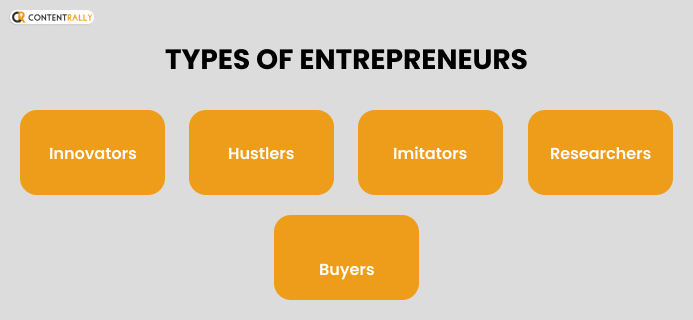
Types Of Entrepreneurs

“Inhale Confidence, Exhale Doubt”

Entrepreneurs turn all the bold ideas into reality, and when it comes to the types of entrepreneurs, the divisions are 5. These categories go hand in hand with the characteristics of entrepreneurs.

Take a look👇

1. Innovators

They come up with completely innovative and out-of-the-box ideas and turn them into viable businesses. While innovators create the rules in business, they often face resistance from the shareholders.

Hustlers

Hustlers basically start with small goals and make them bigger achievements in the future. On the one hand, they outwork the most and tend to burn out on the other.

2. Imitators

Imitators are those entrepreneurs who copy existing business ideas and build them by putting in their own efforts and strategies. They make a business idea less stressful although keep comparing to the original idea.

3. Researchers

Researchers take time to gather all the relevant information that might help in the business and to boost its brand awareness. They are the ones who are responsible for figuring out the right strategies that would work for the company.

4. Buyers

Needless to say; these 5 types can also be regarded as 5 different types of mindsets entrepreneurs have.

What type of mindset do you have?

Let us know in the comment box.

What Should Be The Most Dominating Characteristics Of Entrepreneurs?
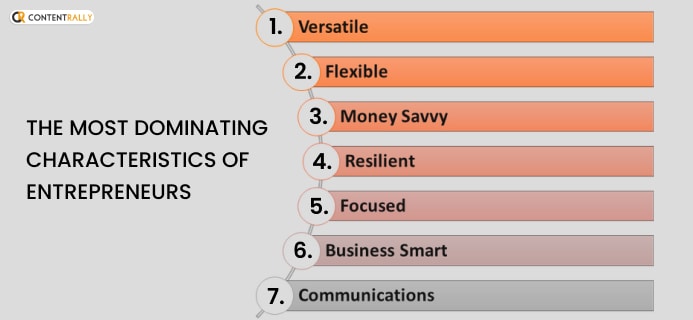
What Should Be The Most Dominating Characteristics Of Entrepreneurs?

“If you don’t have big dreams and goals, you’ll end up working for someone that does.”

Have you ever thought about why the characteristics of successful entrepreneurs are somewhat similar? It’s because their final objectives are more or less the same – magnifying their ideas.

And that’s why there are 7 common characteristics of entrepreneurs which are seen as 7 Thumb Rules to be an entrepreneur.

1. Versatile

Versatility comes first to describe the characteristics of successful entrepreneurs. You have to think a lot and do a lot to make your career successful as an entrepreneur.

2. Flexible 

How to become an entrepreneur?

Be as flexible as possible when required.

Stay in touch with the industry trends, current business requirements, ongoing consumer behaviors, and devise flexible plans to cover these areas.

Click Here To Read: What Is Scalable Startup Entrepreneurship: Definition & Examples

3. Money Savvy

As an entrepreneur you have to raise your business, and manage everything; from top to toe. You have to monitor every corner of your business at least in the initial days.

4. Resilient

This is one of the most crucial characteristics of entrepreneurs. A successful entrepreneur has to show resilience to all the obstacles on the road.

5. Focused

Entrepreneurship is all about staying determined and focused on your end goal. Eliminate the doubts and always hold on to why you have started.

6. Business Smart

To shine in the field of entrepreneurship, your business idea and management procedure have to be smart enough. Coordinating the revenues/costs and knowing your strengths and weaknesses will keep your business alive.

7. Communications

Communication is the most crucial key to succeed as an entrepreneur. Be it conveying the ideas or sharing B-plans with employees, communication moves your business forward.

Some Remarkable Characteristics Of Successful Entrepreneurs Around The World

“You Have To Believe It Before You See It.”

Well, enough of the speeches on characteristics of entrepreneurs. It’s time to talk about the real entrepreneurial characteristics of some successful personalities across the world.

We have considered the CEOs of Tesla, Facebook, Amazon, and Microsoft to highlight the characteristics of successful entrepreneurs.

Take a quick look and see if you can adapt some of them.

Successful Entrepreneurs Characteristics of successful entrepreneurs include
Elon Musk Strong risk tolerance Believes in an “Always Keep Learning” attitude Has a tendency for vertical integration. Puts most of the faith on the team.
Mark ZuckerbergHe is an aggressive and encouraging leader. Moves fast and breaks things Follows the feedback approach Has a drive to turn ideas into reality.
Jeff BezosHighly competitive Extreme frugal Highly experimental Calculated risk-taker Highly generous.
Bill GatesHe considers “Time” as the most valuable in the world Loves to take calculated risks Never gives up Learns from the past mistakes Thinks ahead of the time.

Frequently Asked Questions (FAQs):

1. Who Is An Example Of An Entrepreneur?

Examples of some best entrepreneurs are: Bill Gates, Steve Jobs, Mark Zuckerberg, Elon Musk. Pierre Omidyar, And Caterina Fake.

2. How To Become An Entrepreneur?

The steps of how to become an entrepreneur are as follows:
1. Network.
2. Sell your idea.
3. Plan the business.
4. Market.
5. Find the target audience.
6. Determine whether you should earn a special degree.
7. Find out the perfect business for yourself.

3. What Are The 4 Types Of Entrepreneurs?

The 4 types of entrepreneurs are as follows: small business, large company, social entrepreneurship, and scalable startup.

4. Do You Need Money To Be An Entrepreneur?

While starting as an entrepreneur, you need to make at least a small monetary investment. Be it from your friends or family, a minor investment is required.

“Remember Why You Started”

Now that you know the foremost characteristics of entrepreneurs, it’s just the beginning. Discover yourself more and keep finding that zeal within you. You do not have to be another Elon Musk Or Jeff Bezos, but you can also rule the world by being yourself.

What’s your thought on the characteristics of entrepreneurs? Do not hesitate to tell us in the comment section below.

Read Also:

Mashum Mollah is the feature writer of Search Engine Magazine and an SEO Analyst at Real Wealth Business. Over the last 3 years, He has successfully developed and implemented online marketing, SEO, and conversion campaigns for 50+ businesses of all sizes. He is the co-founder of Social Media Magazine.

View all posts

Leave a Reply

Your email address will not be published. Required fields are marked *

Related

Wireless Network Management

Wireless Network Management: 3 Best Practices For Enterprises

Wireless network management refers to configuring, monitoring, and optimizing a wireless network to ensure optimal performance, security, and reliability. Managing a wireless network can be challenging, as wireless networks are more susceptible to interference and security threats than wired networks. Wireless network management is critical for businesses to ensure their wireless networks provide optimal performance, security, and reliability. Proper planning, configuration, monitoring, and security measures can help ensure a wireless network meets the organization's and its users' needs. If your business is looking for network management services, the services are available at Splynx.com`s website. Top 3 Best Practices For Enterprise Here are three best practices for the enterprise that can help improve productivity, security, and overall business operations: Cybersecurity In today's digital age, cybersecurity should be a top priority for all businesses. Enterprises should implement a robust cybersecurity strategy that includes regular software updates, strong password policies, multi-factor authentication, data encryption, and regular security training for employees. A strong cybersecurity strategy can help protect against cyber threats like data breaches, malware, and ransomware attacks. Cloud Computing Cloud computing can offer many benefits to enterprises, such as increased scalability, flexibility, and cost savings. However, it is important for enterprises to implement a cloud computing strategy that includes proper data backup, disaster recovery, and data encryption. Enterprises should also choose a reputable cloud provider and carefully review their security and compliance policies to ensure their data is safe. Remote Workforce Management With the rise of remote work, enterprises should implement a remote workforce management strategy that includes secure remote access, virtual private networks (VPNs), and collaboration tools. Enterprises should also provide regular training for remote employees to ensure they know security best practices and company policies. Enterprises should also establish clear communication channels and performance metrics to ensure remote workers are productive and engaged. Overall, these best practices can help enterprises improve their cybersecurity posture, take advantage of the benefits of cloud computing, and effectively manage a remote workforce. By implementing these best practices, enterprises can improve productivity, security, and overall business operations. 4 Key Benefits Of An All-In-One Wifi Network Management Software An all-in-one WiFi network management software can provide several key benefits for businesses. This includes - Full Remote Network Recovery With Easy Backups And Real-Time Alerts Full remote network recovery with easy backups and real-time alerts is a comprehensive solution for businesses to ensure that their network is always up and running, even during a disaster. Here are some key features of this solution: Remote Backup and Recovery: With this solution, businesses can remotely back up their entire network, including data, applications, and configurations. This ensures that the network can be quickly and easily restored to its previous state in the event of a disaster. Real-Time Alerts: This solution provides real-time alerts for network issues, such as connectivity problems, security threats, and performance issues. This allows businesses to quickly address any network issues before they become major problems. Remote Monitoring: With this solution, businesses can remotely monitor their network in real-time, including network performance, bandwidth usage, and security threats. This allows businesses to identify and address network issues before they become major problems. Comprehensive Recovery Plan: This solution includes a comprehensive recovery plan that outlines the steps that need to be taken in the event of a disaster. This ensures that businesses are prepared for any eventuality and can quickly and efficiently recover their network. Proactive Support: This solution includes proactive support from experienced network engineers who can assist with network issues, backup and recovery, and disaster planning. On-Demand Scalability For MSPS On-demand scalability for MSPs (Managed Service Providers) is a solution that allows MSPs to quickly and easily scale their services to meet the needs of their clients. Here are some key features of this solution: Cloud-Based Infrastructure: This solution is built on a cloud-based infrastructure, which allows MSPs to provision resources quickly and scale their services up or down as needed. This ensures that MSPs can provide the resources their clients need without having to invest in additional hardware or software. Automated Provisioning: With this solution, resources can be automatically provisioned in real time based on the demands of the client. This ensures that MSPs can quickly respond to client needs and provide the resources needed to meet those needs. Flexible Pricing: This solution provides flexible pricing options that allow MSPs to pay only for the resources they use. This ensures that MSPs can provide cost-effective services to their clients while still maintaining profitability. Comprehensive Management: This solution includes comprehensive management tools that allow MSPs to monitor and manage their services from a single dashboard. This ensures that MSPs can efficiently manage their resources and provide quality client services. Robust Security: This solution includes robust security features that protect MSPs and their clients from security threats. This ensures that MSPs can provide security services to their clients and maintain the trust of their clients. Reduce Operating Costs Of Wifi Networks Reducing the operating costs of WiFi networks is important for businesses to improve their bottom line. Here are some ways businesses can reduce the operating costs of their WiFi networks: Upgrade to Energy-Efficient Devices: Upgrading to energy-efficient devices can help reduce the operating costs of WiFi networks. Energy-efficient devices consume less power, which results in lower electricity bills for businesses. Optimize Network Performance: Optimizing network performance can help reduce the operating costs of WiFi networks. By optimizing network performance, businesses can ensure that their network is operating at peak efficiency, which reduces the need for additional hardware and software. Implement Network Management Tools: Network management tools can help reduce the operating costs of WiFi networks. Network management tools give businesses visibility into their network, allowing them to quickly identify and address issues before they become major problems. Implement Automation: Implementing automation can help reduce the operating costs of WiFi networks. Automation can help streamline network management tasks, reduce the need for manual intervention, and minimize human error. Implement Cloud-Based WiFi Networks: Implementing cloud-based WiFi networks can help reduce the operating costs of WiFi networks. Cloud-based WiFi networks eliminate the need for on-premise hardware and software, reducing maintenance, upgrades, and security costs. Faster And Simplified Network Management Faster and simplified network management is important for businesses to improve efficiency and reduce operational costs. Here are some ways businesses can achieve faster and simplified network management: Use Network Management Software: Network management software can help businesses manage their network more efficiently by providing a centralized dashboard to monitor and manage network devices, traffic, and performance. This can help save time and reduce the complexity of managing a network. Automate Routine Tasks: Automating routine tasks such as backups, updates, and configuration changes can help businesses save time and reduce the risk of human error. This can also free up network administrators to focus on more strategic tasks. Implement Remote Network Management: Remote network management enables network administrators to manage the network from anywhere, anytime. This can help reduce the time and costs associated with onsite management. Use Cloud-Based Networking: Cloud-based networking provides businesses with a scalable and flexible network infrastructure that can be managed through a single portal. This can help simplify network management by reducing the need for on-premises hardware and software. Leverage Artificial Intelligence and Machine Learning: Artificial intelligence and machine learning technologies can help businesses manage their networks more efficiently by analyzing network data and providing insights and recommendations for optimization. Conclusion Wireless network management is critical for businesses that rely on wireless connectivity to operate. Implementing best practices for wireless network management can help businesses optimize their wireless network for performance, security, and scalability. By following these best practices, businesses can ensure their wireless network is optimized for performance, security, and scalability and is better equipped to meet the demands of an increasingly digital business landscape. Read Also: Transform Your Garage into a Home Office Seasonal Unemployment – Definition, & Examples [Complete Details] How Does Creativity Help In Entrepreneurship?

READ MOREDetails
Crisis

IT Quick Fixes for Your Business During the Crisis by Paul Belogour

The incipient economic crisis leaves most businesses without customers and profits. The economy is losing billions of dollars every day, and there is no saying when the crisis is resolved, and we can all go back to business as usual. If your company is struggling during the switch from offline to online operations, there is still time to implement quick fixes and keep the business afloat until the end of the economic slump. Today Paul Belogour, Boston Unisoft Technologies CEO, shares two proven ways IT vendors can help you outlast the crisis and make most of the new reality. Update Your Website to Withstand Increased Traffic With mandated social distancing protocols in place, your customers turn to websites and mobile apps for goods and services. According to Vox, US traffic has increased by 23% since the beginning of the year. New York has seen the biggest increase of 36%. The Internet traffic will continue to grow as more people are forced to stay indoors, and companies switch to remote operations. While this provides endless business opportunities, traffic growth can also spell trouble if your website is not ready to handle the additional load. You should act fast and audit the technology stack and hardware behind your online presence and get it ready for a boost in traffic. If you cannot afford an in-house IT department, outsource the audit and updates to a professional team, such as Paul Belogour and Boston Unisoft Technologies. Our experts will assess the current state of your website and offer solutions that can stabilize it in time for increased load. Professional developers will ensure your site stays online through the rush and prevent failures. Do not wait for your website to crash, contact our team today to ensure your business stays strong throughout the crisis. Automate Business Processes to Increase Efficiency Amazon and Walmart are opening over 250,000 new positions amid the worldwide crisis to handle the increased customer demand. Even international giants struggle under the growing number of orders and have to adjust quickly or risk losing business and profit. If your company is seeing an increase in demand, you can follow Amazon’s lead and hire new employees or increase efficiency through careful analysis and automation of business processes. You would be surprised how much faster and smoother your company can run with process organization and automation in place. Boston Unisoft Technologies can help you achieve increased efficiency quickly by implementing one or more of these solutions:  CRM updates or implementation. Small and medium business owners rarely see the need to incorporate customer relationship management solutions into their daily operations. However, those who do will win in times of crisis, as they can easily communicate with customers, engage them, run promotions, process orders, and increase profit. Boston Unisoft Technologies team specializes in developing intuitive CRM systems for businesses of any size and industry. With our experts on your side, you will prevent business losses and make most of the growing demand.  Order payment automation. If you are not ready to start a large-scale business operations overhaul, start with essentials, such as payment processing. Our software engineers can incorporate a secure and user-friendly payment system to ensure your customers can add items to a bag, pay for them, and receive order confirmation without engaging any of your employees. The automated order system will stave off the need to inflate your order processing staff.  Third-party software integration. Yet another way to improve operational efficiency is by making most of the ready-made solutions available for your business. Boston Unisoft Technologies team has been working on integration and synchronization projects for years, and we can make your business run like a clock despite increased load and employee shortage. Trust Paul Belogour: UAE, US, UK, EU – wherever your business is based, you can turn this crisis from a death sentence into a growth opportunity for your company. Contact Boston Unisoft Technologies business analysts for more information on efficient, quick fixes during the crisis. Read Also: 6 Tips for Effective Crisis Management 6 Benefits of Working with a Managed IT Support Company

READ MOREDetails
Personal Debt! Tips For Small Business Owners Just Starting Out

Avoid Personal Debt: Tips for Small Business Start-Ups

Starting a small business is an exciting yet challenging endeavour. The thrill of creating something from scratch and potentially achieving financial freedom is exhilarating. However, many aspiring entrepreneurs find themselves entangled in debt and financial complications. This scenario can be avoided with careful planning and innovative strategies. Personal debt, especially when related to your business, can become a looming threat that hampers growth, causes stress, and can even lead to the failure of your venture. What Are The Risks Associated With Personal Loans? There are risks and uncertainties associated with personal loans. When you are taking responsibility for the entire money (not of your own), you are unquestionably at risk. Here, we discuss some of the things that are associated with personal loans.  Personal debt in business may drag businesses towards the corridor of risks and uncertainty. They must ensure that the business makes the best use of the resources to stay ahead in the competitive framework of business. This is the reason moving into personal debt can be extremely difficult for one to manage in business.  Taking Too Much Loans When you are running your own business, it involves your sole risks. Sometimes, the lender goes for a loan that enters the periphery of risks and uncertainty. It may invite issues. Therefore, you must go for a big amount but not too big to manage. With a lump sum loan, you will always be in the corridor of risks and uncertainty. Damaging Your Credit When you are applying for credit, the banks always look for your credit score before giving you the loan amount. With one single missed loan, it can completely damage your credit score. Since you know that the credit score heavily impacts your financial DNA, you need to keep it in check. So, you need to ensure that you do not damage your credits. Developing a good understanding of it can indeed help you manage your loans.  Getting Stuck With the Fees A loan may seem perfect if it has a competitive interest rate and in quite a strong term. Many charge hefty fees for the origination of the loan amount.  At the same time, some charge extra. You may fall into a debt spiral if you try to build up a tendency to take bulk personal loans.  Tips For Small Business Owners To Avoid Going Into Personal Debt Here are some tips for small business owners to avoid going into personal debt when they're just starting out: 1. Separate Business And Personal Finances The first mistake that many new entrepreneurs make is mixing their personal and business finances. This not only complicates accounting but also puts personal assets at risk. By setting up a separate business bank account, you can easily keep track of business-related expenses and revenues. To get a more nuanced understanding of how to separate these two entities effectively, check this website for detailed guidelines and tips. Also, consider consulting a financial advisor to ensure you're taking the right steps in keeping your personal and business finances distinct. 2. Have A Detailed Business Plan A well-crafted business plan can serve as your roadmap, outlining crucial elements like market research, financial projections, and operational plans. It provides a clear pathway for your business and assists you in avoiding unnecessary expenses that can lead to debt. Most importantly, a robust business plan can help you attract investors and secure loans, which are safer and more structured ways to raise capital compared to using personal credit. 3. Budget Wisely Being a business owner means you have to be proficient, not just in your area of expertise, but also in managing finances. Create a realistic budget for all aspects of your business and stick to it. A budget will allow you to allocate funds for different parts of your business, prevent overspending, and help you identify areas where you can cut costs. 4. Consider Alternative Financing Options Personal debt often accumulates when business owners use their credit cards or savings to finance their business. Before doing this, explore alternative financing options like grants, crowdfunding, or venture capital. These options not only help you avoid using your personal credit but also offer the opportunity to validate your business idea in the market. 5. Build An Emergency Fund Having an emergency fund for your business acts as a financial cushion in times of unexpected expenses. Whether it's for replacing faulty equipment or covering costs during a slow business period, this fund can be a lifesaver. This way, you won't have to rely on personal savings or loans to keep your business afloat during tough times. 6. Monitor Cash Flow Cash flow is the lifeblood of your business. Effective cash flow management ensures that you have sufficient funds to operate and grow without relying on debt. Utilize accounting software and, if possible, hire a professional to keep tabs on your cash flow. This will help you make informed decisions about your business and minimize the chances of falling into debt. 7. Be Cautious With Credit While it might be tempting to use a credit card to make quick purchases for the business, it can quickly lead to accumulating debt. If you must use credit, opt for a business credit card and limit its use to essential expenses. Always pay off the balance in full every month to avoid interest fees and the potential for accumulating debt. Conclusion Starting a small business doesn't have to mean plunging into a pit of personal debt. By separating your personal and business finances, budgeting wisely, and exploring alternative financing options, you can significantly reduce the risk of financial complications. A well-crafted business plan, an emergency fund, and a close eye on cash flow will further solidify your business’s financial foundation. Remember, the best businesses are not necessarily those that started with a lot of money, but those that managed what they had effectively. Be mindful of your financial choices, and your business can thrive without compromising your personal financial health. Read Also: How You Can Invest In Your Small Business 6 Incredible Tips To Reach Your Small Business Customer How To Apply For And Get The Employee Retention Credit (ERC) For Small Businesses

READ MOREDetails