












Organic Traffic vs. Paid: Where Should You Focus Your Budget?

by

03 September 2019

SEO

organic traffic vs paid

Getting potential and paying customers, who will bring your business success and ranking, demands many efforts. You will need to have a certain plan to understand your business goals for attracting visitors and making them your “happy clients”. People will hardly find your business if you do not “help” them. Here a question arises: How? Surely with the help of eCommerce marketing tactics. You will need to invest some money in order to have success in this competitive online marketplace. You can have your success either with organic traffic, or eCommerce PPC management. However, first, it is important to find out which of these two approaches will drive more traffic to your website and convert them into paying clients.                                      

SEO and PPC are two completely different approaches, although they share the same goal: bringing more traffic and high ranking. One of the vital differences that we can mention is that you invest your time for SEO, while for PPC you invest money. However, if you hire an SEO agency, in order to implement the best tactics for your success, here not directly, but you as well pay money.

Both SEO and PPC are effective. However, let us find out the best option for you to focus your budget.

1. Benefits of Organic Traffic

Organic Traffic

Organic traffic comes from an organic search. Its role in your business is really important. It brings you real visitors providing you with conversion rates. Its benefits are a lot. However, the main ones include:

  • Better User Experience;
  • Higher Conversion Rates;
  • Higher Brand Credibility;
  • A long Term Marketing Strategy;
  • A Cost-Effective and Sustainable Approach.

Targeted keywords help potential clients to meet your business very quickly, as mostly when they want something, first of all, they try to find it in search engines. Many people give their preferences to the organic search results rather than advertisements. It means that through SEO you can increase your traffic, without any additional expenses for each click. Besides, organic SEO is long-lasting, regardless of the fact that it takes longer than PPC.

2. Benefits of Paid Traffic

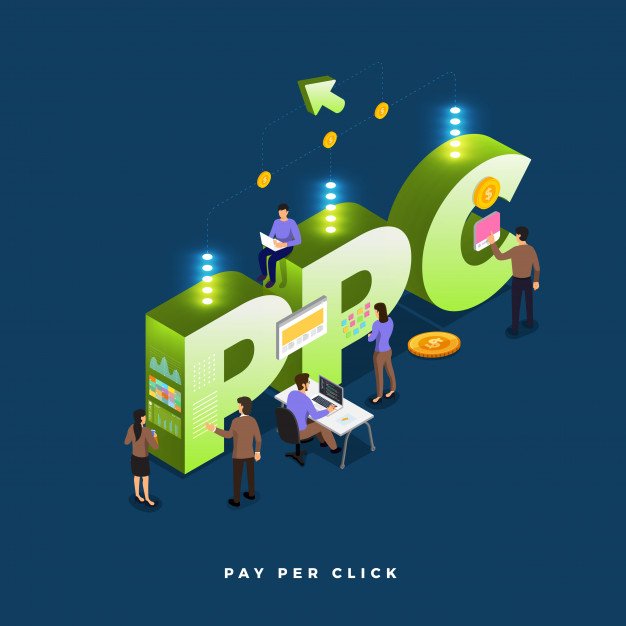
Pay per Click (PPC) demands a certain amount of money for each click. In case of SEO you “earn” visits to your website, while in case of PPC you “buy” them. It allows you to reach a targeted audience. However, you need to pay a fee when someone clicks your ad. Among the main benefits, you should remember that PPC:

  • Increases brand recognition;
  • Helps to get fast results;
  • Offers fast entry;
  • Works well with different marketing channels;
  • Gives the opportunity to choose your audience (based on location, place, gadget, etc.).

One important fact about PPC is that it is independent of Google Algorithmic changes. In comparison to SEO, its results are faster. You can see them almost immediately.

3. Combining SEO and PPC

Both SEO and PPC are great channels and each of them includes unique approaches for your business growth. While deciding which one is better for your business, you can detect one more option as well: combining them together to gain more customers and boost revenue. It will really provide you with greater and more effective results rather than using them separately. However, you need to review your tactics when using them together.

You can easily replace the word “VS” with the word “AND”. Each of these methods has its important impacts on your business. You can mix their tactics and best practices taking advantage of both. This is a great step for not only SEO marketing but for PPC as well.

Read Also:
Content Rally wrapped around an online publication where you can publish your own intellectuals. It is a publishing platform designed to make great stories by content creators. This is your era, your place to be online. So come forward share your views, thoughts and ideas via Content Rally.

View all posts

Leave a Reply

Your email address will not be published. Required fields are marked *

Related

content

What Should my Content Cover to Rank on Google?

As recently as between five and 10 years ago, uploading any old text on a page with a selection of keywords stuffed in was enough for your website rank on Google. In the last few years, however, the search engine has wised up to such techniques and content must strike the correct balance between quantity and quality. As a general rule of thumb, any search term that you enter in Google should yield the very best result at the top of the page (below any AdWords listings, of course). This means that, in the eyes of Google, that page’s content covers all or, if not, most of the valid points that the user is looking for. In order for your page to rank number one, overtaking what is deemed to be the most authoritative page, your content must exceed and improve upon the information that is already available. Review First Page Results : In order for your content to cover all bases, the relevant research must be undertaken. Start by reviewing each of the first page results and list the points that have been covered in each – hopefully, you will notice gaps in each of the page’s content. Take, for example, page one covers points A, B, C, D, E and F, page two covers points A, B, D, F and G, and page three covers points B, C, F and H. While this does mean that the top-ranked page covers more points on the topic, there are two points (G and H) missing. If your content manages to cover points A-H, expanding on each point and offering new information not present on any of the other pages, you stand a great chance of ranking top of Google’s search results. Content Layout : As well as your content covering all of the points on your given topic, its layout also has a big say as to how well your page ranks. Google values user experience and, if your page is not easily digestible, your web page will not be received well at all. Regardless of whether the design of a website is for an academy school, blog or e-commerce site, the pages must be laid out to incorporate content. Keeping in mind that we are currently in the middle of the transition from desktop to mobile-first listings, websites should incorporate a responsive design – or a completely different mobile version of the website. How Long Should my Content Be? There is no minimum or maximum length in order to rank on Google, but it is generally accepted that a worthy piece of content should come to at least 400-500 words. Of course, if you aim to cover as many as eight main points, 400 words leaves you only 50 words per point – not including introduction and conclusion. It just isn’t enough. This is again where you should go back to the top-ranking pages and assess how long your competitor’s content is. If your competition is coming in with 800 words, then you should look to go better with 900-1000 words, although it must be stressed that quantity doesn’t necessarily mean quality – it must be well-written. Does Your Content Serve its Purpose? Once written, read through your content and ask yourself whether it serves its purpose. While you are familiar with the topic you have written about, would the content make sense and answer the questions of those who aren’t as familiar? If your content provides more questions than answers, it isn’t serving its purpose, even if it does cover more points than the competition. Google will give preferences to pages that serve the purpose that they have been created for – this will likely be gauged by the number of backlinks that the page as, confirming its validity as a useful resource. With quality content that answers the reader’s questions, your page should quickly earn authoritative backlinks and soon take its rightful place at the top of page one. Read More : Best SEO Tools For Ranking The Website The Basics On Google Local Algorithm Local SEO Is A Vital Aspect Of Any SEO Tactic; Let’s Find Out Why?

READ MOREDetails
SEO Tools

SEO For Beginners – Which SEO Tools Are Most Recommended by Experts For SURE SUCCESS! 

Without a doubt, this year brought its fair share of challenges and left businesses in an interesting spot. The rise of the pandemic caused unfortunate situations, but business owners still learned valuable lessons. It wasn’t easy, but there’s a silver lining.   The year 2024 offers a clear path forward for marketing, mainly through search engine optimization (SEO). Especially when we are already recovering from the current Google March Update.  More people now rely on the online space for both luxuries and necessities.   As businesses fully transition online, they must address online reputation management (ORM) quickly. Quality agencies like Phoenix SEO have already given many companies a head start in 2024.   For those wanting a strong start this year, using top SEO tools is essential. It’s crucial to master these tools because they’ll help future-proof any business. Here are some of the best SEO tools for 2024. Leveraging Content Marketing with Copyscape Content marketing became a priority last year, leading companies to create informative articles and blogs for their websites. However, the risk of accidental plagiarism is always present.   That’s why savvy companies use Copyscape, a powerful SEO tool that ensures content originality.   Given the volume of articles businesses produce, every piece must be informative and, more importantly, unique. Copyscape eliminates plagiarism concerns. General Quality Control with Serpstat While specialized SEO tools are essential, it’s also smart to have a tool that provides overall quality control.   Many programs handle specific tasks, but Serpstat offers comprehensive website and SEO functions. One of its most useful features is the “missing keywords” function, which tracks competitors’ top keywords.   This all-in-one tool is particularly beneficial for business owners unfamiliar with multiple SEO tools. Serpstat simplifies the learning process and offers a strong foundation for SEO marketing.  Creative Strategies with SEMRush Content marketing is effective, but there are other ways to build a solid SEO foundation.   SEMRush offers numerous options, including pay-per-click (PPC) advertising, where advertisers pay a small fee per click. PPC campaigns also provide valuable data that businesses can use to refine marketing strategies.   SEMRush is user-friendly and favored by many professionals. Its versatility makes it a top choice for digital marketing. Keyword Efficiency with Keyword Density Checker A startup can thrive using effective marketing strategies. However, focusing on keywords can backfire if companies overstuff content. This mistake makes content unreadable.   The Keyword Density Checker ensures that content includes the right keywords without overwhelming it. This tool is an excellent addition to a company’s SEO toolbox. Decoding Marketing Data with WooRank Using relevant keywords is key to improving search engine rankings. However, determining which keywords are most effective can be confusing.   WooRank helps by analyzing data and providing insights on keyword relevance. This tool is especially helpful for businesses still mastering SEO strategies.  Agencies like Phoenix SEO guide business owners through marketing solutions and online reputation management. By using the right tools and strategies, companies can confidently navigate 2024 and beyond. Post March 2024 -What to Do! The March 2024 Google update really shook things up in the digital world. If you were operating based on an old SEO strategy, things are going to have to change fast.   It’s no longer business as usual when it comes to SEO for Google. In fact, right now, most businesses don’t have a clue about what kind of tools they can use to thrive in the new post-update environment.   Using Artificial Intelligence One major way things changed is that Google will be even more reliant on artificial intelligence (AI) than ever before for search rankings.   So that means if you’re not using AI-generated content or AI-enhanced optimization tools with your site pages and authority links, you cannot expect to rank.   Not anything is going forward when it comes to meeting Google’s augmented E-E-A-T criteria — Expertise, Experience, Authoritativeness, and Trustworthiness.  This is why getting the right help from AI is very important.  SurferSEO Tools such as SurferSEO or Clearscope have improved with AI over the update-ridden years but now have new enhancements themselves.   These machine-powered editors aim not only to give less focus on the page keywords but also to focus on semantic relevance.  Yes, these are actual words within websites that rank above assumed “KW density.”   This tool also has on-user-intent modifiers, which drive traffic higher through index-based publication schemes.  Think about User Experience  But content alone won’t get you to the top. With user experience as a bigger ranking factor, you must take care of your website's performance, too.   UX testing and improvement tools like PageSpeed Insights, GTmetrix, or Hotjar can become game changers.   They will help loading speed to mobile usability. This is because Google now analyses how users are using your website, so definitely don’t forget about this “little” thing.  Semantic SEO Tools And while we’re on the topic of user intent and context, semantic SEO tools were never more important than they are today.   Thanks to Google’s AI ability - it is now better at understanding relations between entities, topics, and user queries.   Tools such as MarketMuse or InLinks revolve around optimizing your article for entity-based search & natural language processing (NLP).   They both help you craft articles that go beyond keywords but rather focus on depth and context. Therefore, there are two things that Google values even more right now.  Competitor Analysis  Let’s not forget about competitor analysis. The update changed how rankings work across competitive industries.   That’s where competitor analysis tools like SEMRush and Ahrefs are getting smarter post-update.  They’ve been tweaked to reveal what is working for your competitors.   So, you can keep track of them, make changes faster than light, and get back into the rankings.  SEO Is Everchanging! SEO is an ever-changing dynamic field. This means you need to explore, change, and upgrade SEO strategies sometimes.  From 2020 to 2024, the change has indeed been quite the roller coaster.  So, how do you stay ahead after the March 2024 update?   Start by evolving with these new SEO changes. While the world of SEO may be complicated, there are tools that can help simplify things, and other marketers may not tell you about it for fear of competition.  Read Also: 3 Major SEO Predictions for 2020 Improve Your Local SEO via Content Marketing The Importance of SEO Based Digital Marketing Services Best SEO Practices Melbourne Businesses Should Follow

READ MOREDetails
Search Engine Optimization

SEO for Dummies

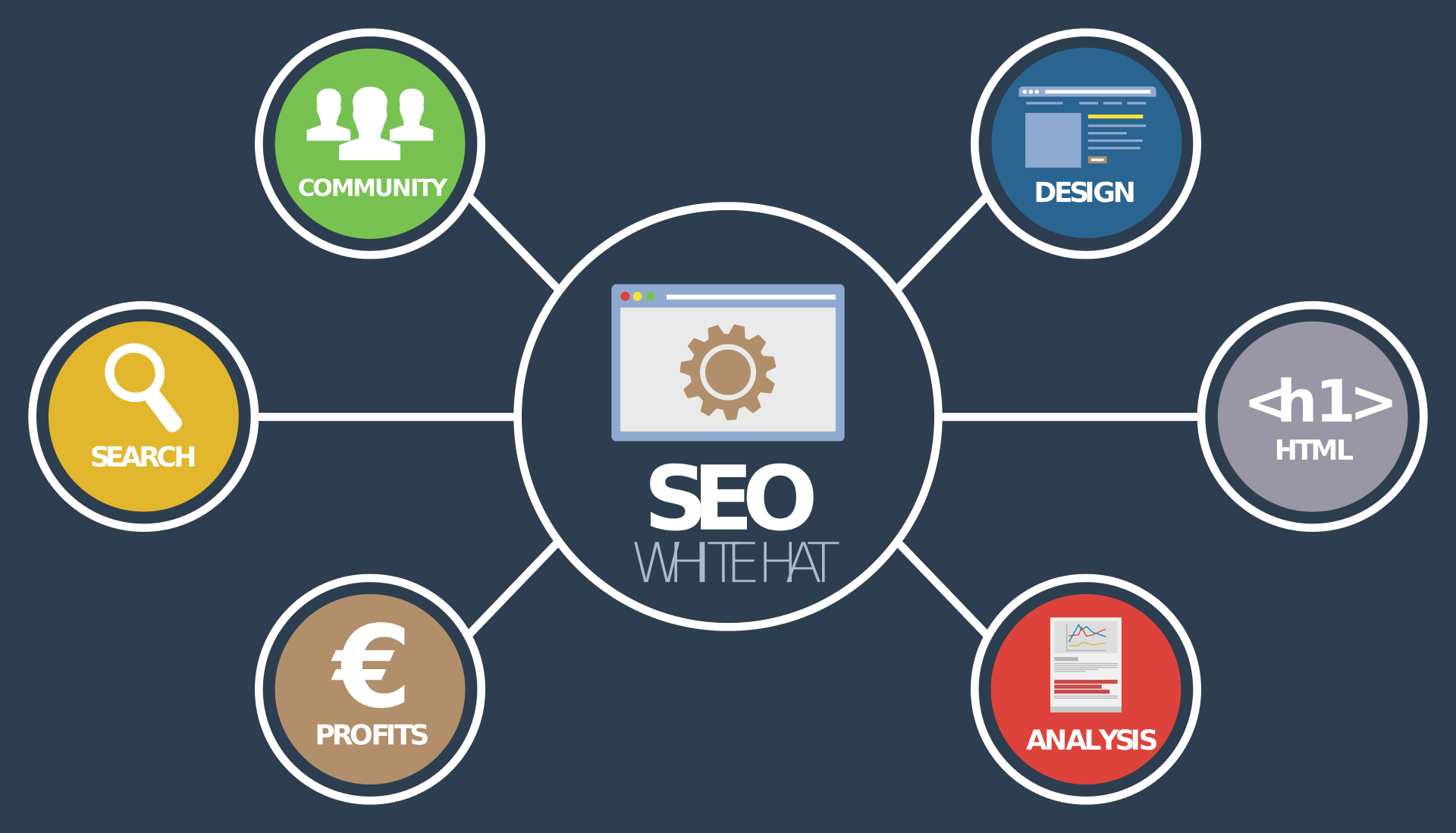
Yes, you can find tons of content out here on the internet if you plan to look up the same topic! Our effort though is to simply introduce you to some of the fundamental aspects of Search Engine Optimization (SEO) and what you can expect out of SEO services offered by just about any SEO company in India if you are not familiar with the subject. Let’s move on to see what SEO is, what it includes, and how best you can get it done. Search Engine Optimization – What is it? You are aware of the fact that search engines are the default go-to destination for people looking for information on the internet. They simply key in the “search term” or “keywords” in the Search Bar, hit the search button, and pages of results instantly flood the screen.  Understandably the websites featured on the first page of search results have content that is more relevant to the search (that’s how search engines work!). Search Engine Optimization is a process that makes websites search-engine friendly, enough to rank high on the first page of the search results, as typical internet users hardly have the time or patience to look past the top 10 or 20 websites listed on the Search Engine result pages (SERP).  Ranking high on the SERP simply means your website has higher chances of being noticed/visited, by potential customers looking for products or services that your business deals with. Increased visibility tends to increase traffic to your website but need not necessarily guarantee a conversion.  What information you feature on the website, how well it is presented, how useful it is for the visitor, how you strike an interactive rapport with the visitor via your website and of course the quality of your company’s products or services will decide the business outcome and also future rankings on the SERP. Search Engine Optimization – What does it involve? SEO is an umbrella term typically spanning a set of fundamental tasks that make a website search-engine friendly earning it a high SERP rank in the process. It ideally includes: Website Analysis Keyword Research and Optimization On-Page Optimization Off-Page Optimization Link Building Ideally, these services are available either as a bundle or independently from any SEO company in Delhi, based on the client requirements.  The website analysis will help get an idea of, website design, structure, and traffic, while keyword research focuses on unearthing and using industry-specific trending keywords (search terms) that ensure better visibility. Creating relevant content using the right keyword density, intelligent use of keywords throughout the website right from the URL, to html pages, links, and alternative text for images, linking out to high authority sources and building backlinks from reputed websites with high traffic are but a few standard services that are offered. When done in an ethical, organic manner (White-Hat SEO), website rankings do improve, ideally with time. The challenge however is to rank high and stay there. Search Engine Optimization – Best Approach Search Engines, for instance, Google has its own set of ranking algorithms that determine the rank of a website on the search results. These algorithms or programs focus primarily on making search results more relevant to the search terms or conditions entered in the search bar.  These programs look for and evaluate a number of aspects related to the website before ranking it. While there are ways to mislead these programs (Black-Hat SEO) to get better rankings, it is better to follow guidelines specified by Google to design or optimize a website to make it search-engine friendly so that it naturally qualifies for a high rank and continues to stay there as it meets standards defined by the search engine. Read More: The Importance Of SEO Based Digital Marketing Services Methods Of Optimizing Local SEO That Is Essential For Small Business Improve Your Local SEO Via Content Marketing Get A Return On Investment With Your SEO Why SEO Is Still The Digital Channel With Highest ROI Best SEO Tools For Ranking The Website

READ MOREDetails