











Google Cloud VPS: Learn About Google’s Virtual Private Server In 2023

Published on: 22 June 2023 Last Updated on: 29 December 2025
Google Cloud Vps

Are you considering subscribing to google cloud VPS? Read the article to know more. Virtual Private Server (VPS) is installed on a physical computer and is a virtual server. The user perceives the VPS as their private server, which can run multiple operating systems.

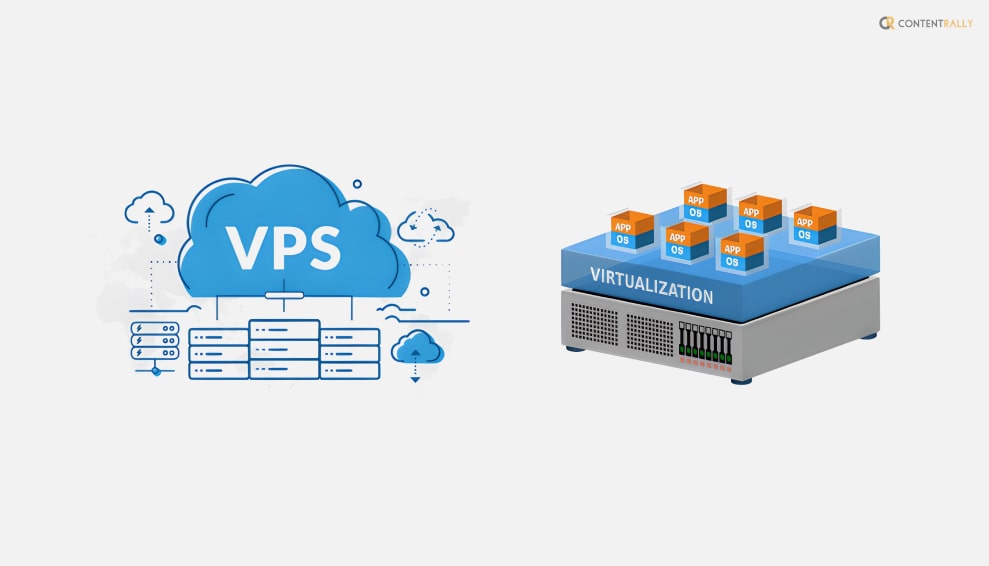
VPS is serving an individual in the form of a virtual machine that caters to their needs. It is installed on a separate physical computer and is specifically dedicated to one user. The privacy and functionality of VPS are similar to a physical computer.

The advantage of a VPS is that multiple virtual private servers can be installed on a single physical server. Each virtual remote server runs its operating system effectively.

Google Cloud VPS: Learn About Google’s Virtual Private Server In 2023!  
Google Cloud Vps Learn About Google's Virtual Private Server In 2023
Image Source: datatan.net

A Virtual Private Server (VPS) consists of a File Transfer Protocol program, Web server software, different types of application software, and a mail server program. The VPS also connects dedicated and web hosting services by filling the gap between them.

The user gets super-user privileges by the VPS in the operating system. The virtual dedicated servers can access their copy of the operating system. Users can install any software if they have a VPS because it can run all kinds of software on the operating system.

With the advancement of technology and virtualization software, companies like Google offer virtual private server hosting at a reasonable price. Users can transfer unlimited data and monitor and manage the server on a fixed bandwidth line. The companies do not monitor or manage data; hence, the user has complete privacy.

What Is Google Virtual Private Server (VPS)?  

What Is Google Virtual Private Server (VPS)?
Image Source: dataplugs.com

The Google Virtual Private Cloud (VPC) or (VPS) is a virtualized server that runs on the host computer. The software acts like a separate computer running large-scale systems with services such as email, databases for millions of customers, and websites.

The google cloud vps spans the globe with a single VPC operating for an entire organization. There is no downtime while the IP space is increased. The platform has “how-to guides” for users to use VPC networks.

The Network spans 37 regions; the uptime is 99.99% across 200+ territories and countries. A single VPC can cover multiple areas. Hence, the public internet is not required to communicate.

What Are The Features Of Google VPS?  

What Are The Features Of Google VPS? 
Image Source: maktechblog.com

The Google VPS cloud offers a range of tools such as Google Compute Engine, Google Cloud Storage, and Google App Engine. It has a free trial subscription; however, after a period, the average google cloud vps subscription pricing is $5 to $10 forever month.

The subscription cost of VPS Google Cloud also depends on the size of the account and the services it utilizes. There are many features of the Google VPC platform which help users to function and operate effectively.

Network  

The configuration of the VPC Network is automatically established through the virtual topology of the users. The network policies are effectively followed. The configuration of prefix ranges of the user’s subnets is established. The CIDR ranges are also expanded without any downtime.

Flow Logs  

The information is captured through Flow Logs regarding network interfaces and the IP traffic on computer engines. It helps in forensics, expense optimization, real-time security analysis, and network monitoring.

The flow logs of Google Cloud have regularly been updated, almost within 5 seconds. Due to the regular update, the flow logs are immediately visible.

Peering  

There is hardly any point of failure and bandwidth bottlenecks, especially with google cloud vps peering. It helps in configuring private communication across the same and different organizations.

Bring The IPs  

The Network Google can be accessed across all regions while reducing the networking infrastructure cost. If users bring their IPs, it will help them to have less downtime, and Google Cloud will advertise the brand globally.

It creates more flexibility across the world, and the resources of the company are well-advertised around the globe.

Routes  

In the same Network, the google cloud platform vps establishes effective forward traffic from one instance to another without downtime. Across subnets, the shift is smooth without needing external IP addresses.

Private Access  

The services provided by Google, such as analytics, machine learning, big data, and storage, can be used without using the service of a public IP address. Private access is given by Google services, where users get complete privacy.

The backend services are shielded from public endpoints, and the application’s front end is configured to access Google Cloud Services.

Packet Mirroring  

The network traffic is inspected, and the troubleshooting present in the existing VPCs is resolved through application performance monitoring, compliance controls, and providing intrusion detection with packet mirroring.

Service Controls  

The configuration of the private communication between on-premise deployments and cloud resources from VPC networks is scanned by enforcing a security perimeter. The data uploaded by a user is sensitive and complete privacy is maintained from the brand’s perspective.

The data processing capabilities and storage are managed with complete control given to the users.

Shared VPC  

The firewalls and connectivity routes are managed effectively. It is integrated centrally and the brands’ projects through separate quotas and billing. Through a shared private network, communication is accessible.

Firewall  

There is a globally distributed firewall by Google VPC across the segmentation of the networks of the organizations. It helps restrict access to instances that integrate effective VPC Firewall Rules Logging.

The firewall also helps in auditing, verifying, and analyzing the Network so that the VPC flow logs have the same responsiveness.

How Does A Google Cloud VPS Work?  

How Does A Google Cloud VPS Work?
Image Source: hostcolor.com

Google Cloud VPS is an adequate server and host which hosts other websites. A range of tools present in the VPS effectively manages the site. The data center of Google manages the user’s network, be it individual or organization.

  • The following steps are to be followed to see how a Google Cloud VPS works.
  • You have to buy a domain name. It’s mainly like a domain registrar with a name.
  • Then you need to sign up for a Google Cloud account. The website on Google is then hosted.
  • A Google Compute Engine is set up by determining a CPU or RAM.
  • Then you have to set up a LAMP web server. You then need to install all software to run the website on the VPS.

Reviews   

Google Virtual Private Server (VPC) has leading and well-known brands working with them, such as McKesson, Twitter, Airbus, gojek, Deutsche Bank, and others. The reviews are highly rated as Google VPC is praised for its expertise and industry-first solutions.

Companies like AFL have partnered with Google and delivered machine learning-powered Footy Skills Lab. A web application enables training resources and football handling activities in Australia.

According to TrustRadius, Google VPC scores 8.5 out of 10 based on the reviews and ratings. The free trial option is appreciated, and users are informed that Google VPC is much better than its competitors.

Conclusion   

Please read the article to learn more about Google Cloud VPS. The google cloud vps are discussed with its features and how it works.

Comment down below regarding your use of VPS.

More Resources:

Content Rally wrapped around an online publication where you can publish your own intellectuals. It is a publishing platform designed to make great stories by content creators. This is your era, your place to be online. So come forward share your views, thoughts and ideas via Content Rally.

View all posts

Leave a Reply

Your email address will not be published. Required fields are marked *

Related

which kinds of hits does google analytics track

Which Kinds Of Hits Does Google Analytics Track?

Question: Which kinds of hits does Google Analytics track? Ecommerce-tracking hit Event-tracking hit Page-tracking hit All of the above Any of the interactions which are showing in the results are being sent to the Analytics. The frequent hit types include package tracking hits. From the event tracking to the E-commerce site hits every time when the user’s behaviours trigger tracking code, Google Analytics keeps tracking of every movement. Google Analytics keeps records of every movement. The common hit types all include page tracking to the event tracking hits along with the E-commerce hits. Each interaction is counted, packaged into the hit, and sent to the Google servers. Here are the four types of hits Google Analytics is tracking. 1. Page Tracking Hits 2. Event Tracking Hits 3. E-commerce Site Hit Tracking  4. Social Interaction Hits Now you know the last option is the answer of which kinds of hits does Google analytics track. Read through the end and know the hits, which are counted by Google Analytics. 4 Types Of Hits Google Analytics Is Tracking Image Source: d1qwl4ymp6qhug.cloudfront.net Google Analytics is a platform which is collecting data from your website and applications. The target of Google Analytics tracking is to create a report and provide insights into your business. Page Tracking, Event Tracking, E-commerce Tracking Hits, along with the Social Interaction hits all are counted by Google Analytics. Now let’s see what the basic functions of these hits and how Google Analytics is interpreting them are. So let’s see why all of the above options are the correct answer for what types of hits does google analytics track. 1. Page Tracking Hits Image Source: help.leadsquared.com You know, the page tracking hits comes as the first option for which kinds of hits does google analytics tracks. A hit impact is specific interactions between the users and the websites. These hits created when your placing tracking codes are triggered by the behaviours of the users.  The interaction data which you recorded and collected is going to count as a hit. The interaction data is recorded and counted as a hit. Then it is sent to Google Analytics. What are the page tracking hits counting on? Every time when the users view a page or the browser, the Google Analytics page tracking mechanism keeps tapping on that. No matter if you have been on the same page or not, page tracking hits always keep tapping on that. 2. Event Tracking Hits Image Source: user-images.githubusercontent.com The event tracking hits keep records of all sorts of interactions on the web pages when someone is clicking on the links or playing the video. First, you have to submit the forms and then download something on the web pages. The main purposes of the event tracking hits are to measure up the visitor engagements on your sites. Then track the outbound links and clicks of the other websites from your sites. You can also track PDF and other media downloads.  Also, you can measure up any of the interactions with the video content. You will get ideas about how the event tracking is performing by monitoring the single clicks. You can track every movement and observe a few of your digital event functions. Event tracking hits also count the last call-to-action parts of the contents. 3. E-commerce Tracking Hits Image Source: learndigitaladvertising.com The E-commerce hits record every interaction which occurs on your eCommerce pages. When you are selling any items on your eCommerce site, you must know all about the eCommerce site’s functions. When a user is placing any older to the site, they often see other items as well as also.  That is a very valuable part. When you are tracking all actions, you will know which items are going to be in your customer’s next purchase. The E-commerce hits record every interaction of the e-commerce page, even which products they are keeping in their bucket before finalizing the purchase.  So you will get the ideas about which all these above options come under the answer of which kinds of hits does google analytics track. 4. Social Interaction Hits Image Source: www.ovrdrv.com The social interaction hits, and the social interactions are made on specific web pages. From sharing to linking, every type of user’s action is counted under Google analytics tracking. It measures every bit of the social media interactions that their individual users are making. From webpage sharing to social media sharing, everything is counted under the social interaction hits. From social media sharing to linking, every content interaction is measured under the social interactions hit. Usually, blog publishers create a very small button right beside the content. Here the viewers can see the content share and like options. When your viewers click on that, the one social interaction hits the mark. Frequently Asked Questions (FAQs): 1. What Are The 4 Main Types Of Reporting Which Google Analytics Does? Ans: You can use the data from Google analytics. This is the most helpful report that the content marketing covers traffic, navigation summary, and traffic from the organic search along with the conversion rates. 2. What Are The Five Best Categories Of Analytic Tools? Ans: At every different stage of business analytics, a huge amount of data proceeds, and it also depends on the requirements of the type of analysis. Here are five types of analytics parts available one is descriptive, prescriptive, and cognitive analytics. 3. When Does The Tracking Code Send An Event Hit To Google Analytics? Ans: Analytics tracks every individual code and then sends a hit to Google Analytics. Whenever a user is performing an action with the event, tracking is tracking the hits, then sending it to Google Analytics. Wrapping It Up: I think you already get the ideas about which kinds of hits does google analytics track and what types of information you are getting through. Google Analytics is a well-designed tool. Analyzing the Google analytics hit ratios, you can also see every kind of user’s movement. What is your opinion? Do not forget to share your opinion about google analytics through the comment sections.

READ MOREDetails
ads.google.home

Ads.Google.Home: Create Google Ads And How

Do you want to try to use Google Ads to your benefit, the first thing that you need to do is head over to ads.google.home. Don't know what it is and how it can help you? Well, I have you covered! In this article, I will focus on the benefits of using AdSense and the ways of successful Adsense login. I will be focusing on the ways in which you can create ads on the platform and create money to boost your business. And, if that is something you want to do, you will find this article to be of help. Keep reading this blog till the end to learn more… Ads.Google.Home: What Is It?   To keep it short and simple, ads.google.home is the URL of Google’s AdSense home page. Entering this on your address bar of the search engine, helps you to head over to the official site of Google Ads. From there, you can choose your plans and create ads that suit your strategy of boosting your business. With the help of Google Ads, get in front of customers when they use Google Search and Maps to look for businesses like yours. You will have to pay just for the results, such as website clicks or phone calls to your company. This is undoubtedly one of the major benefits of digital marketing in recent times. Now that you know what it is, it is time to find out how to make it work for you. So, keep reading till the end to learn about setting up Google Ads for your business… Ads.Google.Home: How To Set Up Google Ads?   If you are interested in setting up Google Ads, I have you covered! Here are the steps that you need to do to set up your account and find the best ways to earn money through the ads that you put in: 1. Understand The Terms That Are Used   The first thing that you need to do when creating or using the Google Ads platform, is to know the terms that are used here. Some of these are as follows: Keywords: These are the key phrases or words that users enter into Google Search to make your ad appear. You will choose a list of keywords for your ad campaign that you believe potential customers may use to find what you are selling. Bid: This is the most you will spend when someone clicks on your advertisement. Because with Google Ads, you only pay when someone clicks on your ad to phone you or visit your website. Quality Score: This indicator lets you know how closely your keywords relate to both your ad and your landing page, which is the website that users will be directed to after clicking your ad. Your bid prices can be reduced and your ad rank in the search results can be increased with a high Quality Score. Ad Rank: When your ad is triggered to display on Google, this measure aids in determining where it will appear in relation to other ads. Your bid, Quality Score, and other factors are used to establish your rank. CPC (cost-per-click): the exact sum you pay when a user clicks on your advertisement. You don't have to pay the whole amount of your bid price for each click; this only establishes a range of potential costs-per-click you might incur. Conversion: An action you've identified as vital is called a conversion when someone who has clicked on your ad then completes it, such as completing a purchase, subscribing to your email, or giving you a call. 2. Organize Your Ad Account   How can your account be made successful right away? Create categories for your products or services to use as the foundation for your account structure. (An excellent choice is to utilize a structure similar to the one your website already uses.) The ads.google.home or Google Ads account is divided into two organizational levels: campaigns (the higher level) and ad groups (the lower level; each campaign may contain several ad groups). Consider campaigns representing broad business categories and ad groups as reflecting more specialized, compact sets of goods or services. To ensure that someone searching for "glitter glue," for example, doesn't accidentally encounter your ad for "embroidery thread," you should create distinct campaigns, ad groups, ads, and keyword lists for each of your items. This will keep your ads relevant and prevent people from concluding that you don't have what they're looking for. Your ability to attract customers who are specifically interested in what you have to offer increases with the level of focus and specificity of your adverts. 3. Set The Budget For Your Campaign   You can manage your spending with Google Ads by adjusting two separate settings: your daily budget and your bids. Your daily spending goal for each campaign is your budget. Your bid is the sum you're prepared to spend on a keyword in the event that someone searches for it and clicks your ad. Spreading your overall budget, or the sum you want to pay for your entire account, evenly among your campaigns when you first start out can be a good idea until you determine which strategy works best for your company. However, generally speaking, you should base your campaign budgets and bid quantities on the objectives of your firm. For instance, if you want to increase sales of your "kids crafts" products one month, you should think about increasing the budget for that campaign and decreasing it for a different, less significant one. If something isn't working, you can change your budget and bids at any time to suit your needs. You should choose a bid that will help your ad get a good position while remaining within your budget when setting bids for your keywords. 4. Select The Keywords   The objective of choosing keywords is to select phrases that you anticipate users will type into search engines when looking for what you have to offer. Additionally, you want your keywords to be as pertinent as possible to the advertisement they activate and the landing page visitors will see after clicking that advertisement. The Keyword Planner, a free tool included with Google Ads to assist you in getting started, can produce a sample list of keywords for your campaigns. I would advise reading through the list of ideas and utilizing only those that make sense for you. You can use the Keyword Planner to determine how much to pay for a specific keyword in order for your ad to appear in search results. This might help you determine which keywords will fit within your spending limit and which are too pricey for you to bid on. A keyword will often cost more to bid on the more competitive it is. Avoid high-competition keywords when you're initially starting out to prevent blowing your entire budget on a few clicks. By sticking with low- to medium-cost keywords, you can still gain a lot of exposure and measure the effectiveness of your campaigns. 5. Set The Match   You can further customize when your ad will appear on Google by using the "keyword match type" parameter in the Google Ads dashboard. You have five choices to choose from: Broad Match   With the "broad match" option selected, your advertisement appears for queries that include both related terms and your keywords in any order. The default setting for all campaigns, this option displays your ad in the widest range of queries. Broad Match Modifier   You can use this parameter to specify which terms from your broad-match keyword must appear in a user's search in order for your ad to be displayed. Therefore, you could guarantee that "wool" and "yarn" were always present in a search if your keyword was "high fiber wool yarn" by inserting a plus sign (+) before those words. As a result, high fiber + wool + yarn would be your broad match modifier keyword. Phrase Match   For searches that include your precise term, as well as searches that include your exact keyword plus words before or after it, this option displays your advertisement. (For instance, if "wool yarn" is your keyword, you might also appear when searching for "fine wool yarn" or "wool yarn for sale near me.") If you decide to go with this approach, any keywords—for example, "wool yarn"—should be encircled in quote marks. Exact Match   When you select an exact match, your advertisement will only appear when a user searches for the precise term or phrase you specify. Put your keyword in parentheses for this choice, such as [wool yarn]. Negative Match   With this match option, you may sift out irrelevant visitors by preventing bad terms or phrases from activating your advertisement. For instance, if all of your yarn is expensive, you might want to avoid using adjectives like "bargain" or "cheap." You can do this by placing a minus sign in front of the phrases, such as "cheap" or "bargain," that you don't want to appear for. 6. Organize Your Landing Page   When a potential customer clicks on your advertisement, they land on your landing page. visitors may locate what they're seeking more quickly by selecting a page that's relevant to your ad and keywords. For example, if your ad is offering a deal on yarn, choose a landing page where that yarn is prominently shown rather than just sending visitors to your website's main page. 7. Select The Device   Do your ideal clients conduct their searches on desktop computers, mobile devices, or both? Are those who want to make an immediate online purchase more important to you to reach than consumers who are out and about shopping? Consider the client categories you want to engage with when setting up your ads.google.home account (and, more significantly, the devices those customers use). So you can reach them. Consider showing your advertising just on mobile devices, for instance, if you own a car repair shop and want to draw clients when they're close and in need of assistance. 8. Create Your Ads   Make sure your advertisement conveys that you have what they need because it will likely be many people's initial impression of your company. This is made possible by segmenting your campaign into distinct ad groups and creating individual ads for each. For example, a yarn-promoting ad for your yarn keywords and a craft-promoting ad for your craft materials. This is made possible when the ad really contains the keywords consumers search for. Your ads will become more pertinent to potential buyers as a result, and your Quality Score may even go up. Additionally, it's a good idea to include a "call to action" in your advertisement, which is a brief statement that advises the reader on what to do after reading your advertisement. For instance, words like "shop now" or "learn more" can persuade viewers to click on your advertisement. Before publishing your ad, review it one more time to ensure that there are no grammatical or spelling issues. 9. Connect Google Account To Analytics   A free option to gain additional information into how visitors interact with your advertisements and website is through Google Analytics. However, you aren't required to use Analytics in order to use Google Ads, so feel free to move on to the next section if you'd rather. While Google Ads can show you how many times your ads are clicked, combining ads.google.home with Analytics allows you to monitor what those visitors do once they arrive at your website. For instance, your advertisement may not be reaching the intended audience if visitors come to your website but then leave right away. Or you could be directing them to the incorrect part of your website. You can organize your adverts more effectively with the aid of this information, thus maximizing the use of your marketing budget. 10. Make Money!   Well done! You are prepared to launch your campaigns and evaluate their effectiveness. Don't forget to return often to monitor which advertisements and keywords are generating the most traffic and conversions for you. You should eventually be able to identify which tactics are assisting you in achieving your goals and which still require improvement. Wrapping It Up!   In case you wanted to find out more information on ads.google.home, I hope that this article has been of help to you. If there are any other queries related to the same, kindly feel free to let me know. All that you need to do is scroll down till you reach the bottom of the page, Then leave your comments and queries in the box below. And I will be there to answer them all for you! Learn More About: Dos And Don’ts Of Marketing For Technology Companies Why Is Google Sucks Trending? Top Reasons And Justifications Learn Everything About Google Verification Code Scams In 2023

READ MOREDetails
when does the analytics tracking code send a pageview hit to google analytics?

When Analytics Tracking Code Sends Pageview Hit to GA

When does the analytics tracking code send a pageview hit to google analytics? Is this something that you are searching for? If yes, then you have reached the right place. Q: When does the analytics tracking code send a pageview hit to google analytics?A. Everytime a user loads the web page with embedded tracking code.B. Everytime a user searches the website.C. Everytime a video is clicked.D. Everytime the user adds an item to the cart. If your answer is "everytime a user loads the web page with embedded tracking code," then you are correct. But hey, why don't you read this article till the end for some explanation? Keep reading this article to learn more… What Is A Page View? Before explaining the answer to the question, it is important that you know what the Pageview or the pageview hit is. So what is it? A Pageview is a moment the page is being loaded. It is a page tracking hit that is sent to Google Analytics whenever a user loads the page of the website. This means every time the user opens the website Google Analytics is sent a Pageview hit. The Pageview is the metric that shows the total number of users viewing the page. Now that you know what a Pageview is, it is time for me to explain the answer to "when does the analytics tracking code send a pageview hit to google analytics?" Keep scrolling to learn more… What Is The Tracking Code? You may have already noticed that I have used the word "tracking code" a lot of times already in this article. So what are these tracking codes? Tracking Codes or tracking IDs are the unique identification numbers that are assigned to every website. These codes help Google Analytics to compile the set of data that is needed to track the performance of the website. These codes help Analytics to analyze the behavior of the users who are interacting with the website or the particular webpage. Explaining The Answer To "When Does The Analytics Tracking Code Send A Pageview Hit To Google Analytics?" Now that you know the meaning of the term Pageview, it might be easier for you to understand why and when a Pageview hit is sent to Google Analytics to record a hit. Every time a user opens the website and views the page, the tracking code of the website gets triggered. The data is then sent to Google Analytics which records it as a pageview hit. You must know one thing— the number of pageview hits from a single user can increase. To explain it a bit more, if the user visits the webpage more than once, the website page view will be counted for every time the user enters. These are additional website pageviews that Google Analytics also records to analyze how the users are interacting with the website. How To Find Google Analytics Tracking Code? In case you want to know where to find the Google Analytics tracking code, then I have got you covered. Here are some of the things that you need to keep in mind when looking for the Google Tracking Code for your website: Open your Google Analytics Account Login as Admin Click on Account Menu Search for your Account Select the Property Column Select Tracking Information Click on Tracking Code You might also watch this small video to find out where your tracking code is located: https://www.youtube.com/watch?v=l2tNKF7Wei8&t=2s Source Where To Put The Tracking Code On The Website? Now that you know what a tracking code is on Google Analytics, it is time for you to know where you should be putting the code on your website.  According to the Google recommendations, you should place your Google Analytics tracking code in the Header section of the website. You may also place it on the HTML footer. If you add the tracking code to the website, then it will not make any changes or have any significant effect on the performance of the website. However, it will efficiently affect performance if the tracking code is added to the header section of the website. Frequently Asked Questions (FAQs): Now that you have almost reached the end of this article, I hope that most of your questions have been answered. First, however, here are some of the questions that readers frequently ask about the same topic. 1. What Is An Event Hit? An event hit is a kind of interaction that is recorded by the Google Analytics tool. These hits help the platform to track the data that are sent to Google Analytics and learn more about the user behavior and their interaction with the website. 2. What Kind Of Hits Does Google Analytics Track? There are many kinds of event hits that are sent to Google Analytics from your website. Some of the kinds of hits are:1. Event tracking hits.2. Page tracking hits.3. Social interaction hits.4. Ecommerce tracking hits. 3. When Does The Tracking Code Send An Event Hit To Google Analytics? In case you want to know when the tracking code on your website sends an event hit to the Google Analytics account, the answer is every time a user performs an action with event tracking implemented. Wrapping It Up! Google Analytics is one of the most used tools that help users in managing and improving the performance of their websites. In addition, it helps the website owners to analyze and track the performance of the website and the content. In case you were searching for the answer to “when does the analytics tracking code send a pageview hit to google analytics?” I hope that you found this article to be of help. Also, if there are any other queries related to the same, feel free to comment them down in the box below.

READ MOREDetails